Loading...
Denis Sassou-Nguesso vs Ramon Castilla
Ramon Castilla leads by 10.3 pts · 2 figures compared
…
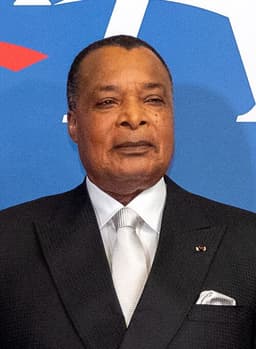
Denis Sassou-Nguesso
General · Modern
49.4Total
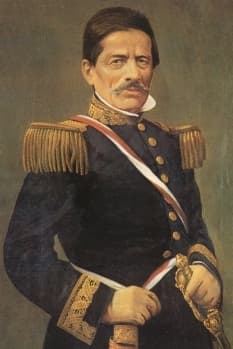
Ramon Castilla
General · Modern
59.7Total
Basic Information
Born
1943
1797
Died
—
1867
Era
Modern
Modern
Nationality
Congo Republic
Peru
Occupation
General
General
Civilization
Other
Western
Score Comparison
Military (10%)
10.2
40.0
Political (20%)
68.0
72.0
Influence (20%)
51.8
56.7
Legacy (20%)
46.7
52.0
Leadership (15%)
62.0
78.0
Strategy (15%)
42.3
60.0
TOTAL
49.4
59.7
Denis Sassou-Nguesso — Complete Timeline
1979 AD
Seized Power in CoupPolitical Action
Denis Sassou-Nguesso, a military officer, became President of the People's Republic of the Congo after a coup that ousted President Joachim Yhombi-Opango. He led the Congolese Party of Labour (PCT).
Coup d'étatCongoMilitary Rule
Impact: national
1990 AD
Transition to Multi-Party PoliticsReform◆ Major
Under pressure, Sassou-Nguesso's government introduced multi-party politics, ending the one-party Marxist-Leninist system. A national conference was held in 1991, leading to a transition to civilian rule.
Political ReformDemocracyCongo
Impact: national
1992 AD
Lost Presidential ElectionPolitical Action◆ Major
Sassou-Nguesso lost the 1992 presidential election to Pascal Lissouba. This was the first multi-party election in the country since independence, and Sassou-Nguesso peacefully handed over power.
ElectionDemocracyCongo
Impact: national
1997 AD
Returned to Power via Civil WarWar
Sassou-Nguesso's militia, backed by Angolan troops, captured Brazzaville, overthrowing President Pascal Lissouba. This ended a four-month civil war and returned Sassou-Nguesso to the presidency.
Civil WarCongoPower Struggle
Impact: nationaldestructive
2002 AD
Won Controversial Re-electionsPolitical Action◆ Major
Sassou-Nguesso won the 2002 presidential election with over 89% of the vote. The election was boycotted by major opposition candidates and criticized as neither free nor fair.
ElectionCongoControversy
Impact: national
2015 AD
Constitutional Referendum to Extend TermPolitical Action◆ Major
Sassou-Nguesso's government held a constitutional referendum that removed the age limit and two-term limit for the presidency. The change allowed him to run for re-election in 2016 and potentially remain in power.
Constitutional ReformCongoPower Consolidation
Impact: national
Ramon Castilla — Complete Timeline
1824 AD
Battle of AyacuchoWar
Castilla fought as a junior officer in the decisive Battle of Ayacucho, which ended Spanish rule in Peru. This victory secured Peruvian independence and marked the end of the Spanish Empire in South America, shaping Castilla's nationalist views.
Peruvian War of IndependenceBattleLiberation
Impact: regional
1845 AD
First Presidency of PeruPolitical Action◆ Major
Castilla was elected President of Peru in 1845, serving until 1851. His first term focused on economic development, including the guano boom, and infrastructure projects such as railroads and ports, modernizing the Peruvian state.
PresidencyEconomic DevelopmentGuano
Impact: nationalconstructive
1854 AD
Abolition of Slavery in PeruReform◆ Major
During his second presidency, Castilla issued a decree abolishing slavery in Peru on December 3, 1854. This reform freed approximately 25,000 slaves and was part of a broader liberal agenda, though it faced opposition from slave-owning elites.
AbolitionSlaveryHuman Rights
Impact: nationalprogressive
Abolition of Indigenous TributeReform◆ Major
Castilla also abolished the indigenous tribute tax in 1854, which had been a burden on native communities since colonial times. This measure aimed to integrate indigenous peoples into the Peruvian state as equal citizens, though its implementation was uneven.
Indigenous RightsTax ReformCitizenship
Impact: nationalprogressive
1855 AD
Second Presidency and Guano BoomPolitical Action◆ Major
Castilla served a second term from 1855 to 1862, during the peak of the guano export boom. He used guano revenues to fund public works, pay off foreign debt, and modernize the military, but also faced criticism for corruption and over-reliance on a single resource.
PresidencyGuanoModernization
Impact: nationalconstructive
1860 AD
Constitutional Reform of 1860Reform◆ Major
Castilla oversaw the adoption of a new constitution in 1860, which established a centralized republic with a strong executive. The constitution remained in effect until 1920 and shaped Peru's political structure, though it limited regional autonomy.
ConstitutionPolitical ReformCentralization
Impact: nationalconstructive
Expert Analysis
Ramon Castilla vs Denis Sassou-Nguesso
### The General and the Strongman: Two Paths to Power in Latin America and Africa
In the crisp winter of 1854, Ramon Castilla stood before a crowd in the Plaza de Armas of Lima and signed a decree that would forever change Peru: the abolition of slavery. One hundred and forty-three years later, in the humid chaos of Brazzaville, Denis Sassou-Nguesso rode into power on the back of Angolan tanks, reclaiming a presidency he had lost five years earlier. Both men were generals. Both ruled their nations for transformative periods. But their stories could not be more different—one a reformer who built a modern state, the other a survivor who bent a nation to his will. What explains the chasm between them?
### Origins
Ramon Castilla was born in 1797 in Tarapacá, then a remote corner of the Viceroyalty of Peru. His father was a Spanish miner of modest means; his mother, a mestiza from a local family. The son of the colonial frontier, Castilla grew up in a world where loyalty to the Spanish crown was the default, but the winds of independence were stirring. He joined the royalist army as a young man, then switched sides after the arrival of José de San Martín, a pragmatic decision that would define his early life. The era of the wars of independence was brutal and fluid—men changed allegiances as often as they changed uniforms.
Denis Sassou-Nguesso was born in 1943 in Edou, a small village in the northern forests of the French Congo. His father was a farmer; his mother, a homemaker. The world of his childhood was one of colonial subjugation, but by the time he came of age, the French had left, and the Congo was a newly independent state wracked by ethnic rivalries and Cold War intrigues. Sassou-Nguesso joined the army not out of patriotic fervor but because it offered a stable career in a country with few alternatives. He was trained in the Soviet Union and Algeria, a product of the global struggle between East and West. Where Castilla was forged in the fires of a continent-wide war for liberation, Sassou-Nguesso was shaped by the cynical politics of post-colonial patronage.
### Rise to Power
Castilla’s rise was slow, earned through service. He fought at the Battle of Ayacucho in 1824, the decisive engagement that ended Spanish rule in South America. As a junior officer, he witnessed the collapse of an empire and the birth of a republic. Over the next two decades, he served in various military and administrative posts, building a reputation for competence and moderation. When he was elected president in 1845, it was not through a coup but through a political process—however flawed—that reflected the fragile democracy of early republican Peru.
Sassou-Nguesso’s path was swifter and bloodier. In 1979, he seized power in a coup that ousted his predecessor, Joachim Yhombi-Opango. He was 36 years old. The Congo was then a one-party Marxist-Leninist state, and Sassou-Nguesso presented himself as the vanguard of the revolution. But his power base was narrow: the Mbochi ethnic group from the north, and the military officers who owed him their careers. Where Castilla had to win elections, Sassou-Nguesso only had to win the barracks.
### Leadership & Governance
Castilla’s two presidencies (1845–1851 and 1855–1862) coincided with the guano boom, a period when Peru’s coastal islands yielded mountains of bird droppings that became the world’s finest fertilizer. Castilla did not squander this windfall. He used guano revenues to pay off foreign debt, build railways, modernize the port of Callao, and fund public education. His greatest achievement came in 1854: the abolition of slavery. The decree freed thousands of Afro-Peruvians, compensating their former owners with guano money. That same year, he abolished the indigenous tribute tax, a colonial-era levy that had impoverished native communities for centuries. In 1860, he oversaw a new constitution that centralized the state but also enshrined civil rights.
Sassou-Nguesso’s governance followed a different logic. During his first term (1979–1992), he presided over a one-party state that nationalized key industries and aligned with the Soviet Union. The oil boom of the 1980s provided revenues, but much of it was mismanaged or siphoned off by the elite. Under pressure, he introduced multi-party politics in 1990, then lost the 1992 election. But he did not accept defeat gracefully. In 1997, he returned to power through a civil war, backed by Angolan troops. Since then, his rule has been marked by constitutional manipulation: a 2002 election boycotted by the opposition, a 2015 referendum that removed term limits, and a 2021 election that extended his tenure until at least 2026. His military score of 19.9 reflects a man who has never commanded a great army, only a loyal militia.
### Triumph & Tragedy
Castilla’s triumph was the abolition of slavery. It was a moral and political act that aligned Peru with the liberal currents of the nineteenth century. His tragedy came later: the guano boom created a dependency that would eventually lead to economic collapse after his death. But Castilla died in 1867, respected and remembered as a founder of the modern Peruvian state.
Sassou-Nguesso’s triumph is survival. He has outlasted the Cold War, the transition to democracy, and multiple civil conflicts. His tragedy is the cost of that survival: a country where power is concentrated in a small northern elite, where elections are a formality, and where oil wealth has not translated into broad prosperity. The Congo remains one of the poorest countries in the world, despite its natural resources.
### Character & Destiny
Castilla was a pragmatist with a conscience. He was not a visionary—he did not dream of utopia—but he understood that stability required justice. His abolition of slavery and indigenous tribute were not acts of radical idealism; they were calculated moves to build a unified nation. He was a general who believed in law.
Sassou-Nguesso is a pragmatist without a conscience. He has shown no commitment to democracy, human rights, or national unity. His rule is based on ethnic loyalty, patronage, and force. He is a general who believes in power.
### Legacy
Castilla is remembered in Peru as a national hero. His portrait hangs in the government palace; his name adorns streets and schools. His legacy is institutional: the constitution of 1860, the abolition of slavery, the modernization of the state.
Sassou-Nguesso is remembered in the Congo as a strongman who has outlasted all rivals. His legacy is personal: a family dynasty, a network of loyalists, and a country that remains trapped in the patterns of post-colonial authoritarianism. He is still alive, still ruling, still holding on.
### Conclusion
The difference between Ramon Castilla and Denis Sassou-Nguesso is not simply a matter of personal virtue or vice. It is a difference of eras and structures. Castilla governed in a moment when the nation-state was being built, when the abolition of slavery was a progressive cause, and when the guano boom offered a chance to invest in the future. Sassou-Nguesso governs in a moment when the nation-state has already been captured by ethnic and personal interests, when oil wealth is a curse, and when the Cold War has given way to a global order that tolerates autocrats as long as they maintain stability. Both men were generals. But one built a nation; the other merely held onto one. In the end, the difference between them is the difference between a reformer and a survivor—and history has a way of remembering which one matters.
Rankings
🥇
Ramon CastillaLeader
Mil: 40.0Pol: 72.0Inf: 56.7
59.7
🥈
Denis Sassou-Nguesso
Mil: 10.2Pol: 68.0Inf: 51.8
49.4
+10.3 behind
How This Comparison Works
Algorithm
Each figure is scored on 6 dimensions (0—100 scale) based on structured historical data: Military (10%), Political (20%), Influence (20%), Legacy (20%), Leadership (15%), Strategy (15%). The weighted total produces the final ranking.
Data Sources
Scores are computed from structured sub-indicators in the database. Scale factors adjust for era (Ancient ×0.85, Modern ×1.0) and civilization size (Eastern ×1.05, Other ×0.80) to account for differences in population and military scale.
Maximum 3 Figures
Comparisons are limited to 2—3 figures to ensure readability and statistical meaningfulness.
Error Margins
±5 points per dimension — Sub-scores are derived from historical records with inherent uncertainty. Two figures within 5 points on a dimension should be considered roughly equivalent in that area.
Total Score Accuracy
±3 points overall — The weighted combination of 6 dimensions produces a total score with approximately ±3 points of uncertainty. Differences of less than 3 points are not statistically significant— the figures are effectively tied.
Known Limitations
- Historical records are incomplete and uneven across civilizations
- Figures from oral-tradition societies may be underrepresented
- Occupation labels can misclassify multi-role figures
- Scores measure capability and impact, not moral character
- Quantitative scoring is a comparison tool, not absolute truth
Capability Radar
Military (10%) — Battles & Warfare
Battles
5
45
Win Rate
5
50
Expansion
5
30
Political (20%) — Governance & Reform
Reform
30
85
Diplomacy
50
70
Economy
30
75
Influence (20%) — Cultural & Global Reach
Cultural
20
55
Global
20
50
Legacy (20%) — Historical Impact
Historical
30
65
Longevity
40
60
Leadership (15%) — Power & Stability
Tenure
70
65
Stability
20
60
Strategy (15%) — Tactics & Innovation
Strategy
5
45
Tactics
5
40
Reform
10
55
Similar Comparisons
Comments & Discussion
NORTHERN REBEL6/16/2026
Let's be real: Castilla was fighting for independence against Spain while Sassou-Nguesso was just fighting for a power seat with Angolan tanks. One emancipated slaves in 1854, the other re-enslaved his country through oil corruption since 1979. Castilla abolished slavery with one decree; Sassou-Nguesso abolished democracy with one coup. Context matters, but action speaks louder. Nickname: Northern Rebel|zh|北境反叛者|zh|你们别忘了,卡斯蒂亚是19世纪的改革者,萨苏-恩格索是20世纪的强人。前者在1854年废除奴隶制,后者在1979年靠石油发家。卡斯蒂亚解放了秘鲁,萨苏-恩格索却用