Loading...
Denis Sassou-Nguesso vs Plutarco Elias Calles
Plutarco Elias Calles leads by 9.1 pts · 2 figures compared
…
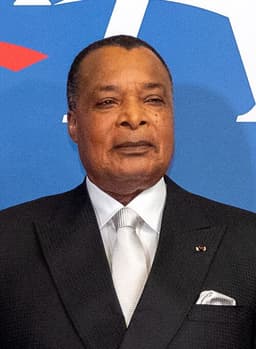
Denis Sassou-Nguesso
General · Modern
49.4Total
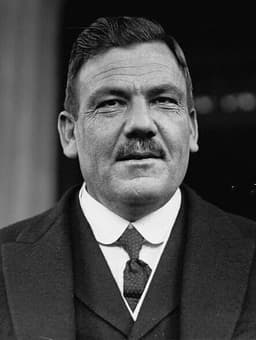
Plutarco Elias Calles
General · Modern
58.5Total
Basic Information
Born
1943
1877
Died
—
1945
Era
Modern
Modern
Nationality
Congo Republic
Mexico
Occupation
General
General
Civilization
Other
Western
Score Comparison
Military (10%)
10.2
40.0
Political (20%)
68.0
70.3
Influence (20%)
51.8
68.0
Legacy (20%)
46.7
40.0
Leadership (15%)
62.0
78.0
Strategy (15%)
42.3
52.5
TOTAL
49.4
58.5
Denis Sassou-Nguesso — Complete Timeline
1979 AD
Seized Power in CoupPolitical Action
Denis Sassou-Nguesso, a military officer, became President of the People's Republic of the Congo after a coup that ousted President Joachim Yhombi-Opango. He led the Congolese Party of Labour (PCT).
Coup d'étatCongoMilitary Rule
Impact: national
1990 AD
Transition to Multi-Party PoliticsReform◆ Major
Under pressure, Sassou-Nguesso's government introduced multi-party politics, ending the one-party Marxist-Leninist system. A national conference was held in 1991, leading to a transition to civilian rule.
Political ReformDemocracyCongo
Impact: national
1992 AD
Lost Presidential ElectionPolitical Action◆ Major
Sassou-Nguesso lost the 1992 presidential election to Pascal Lissouba. This was the first multi-party election in the country since independence, and Sassou-Nguesso peacefully handed over power.
ElectionDemocracyCongo
Impact: national
1997 AD
Returned to Power via Civil WarWar
Sassou-Nguesso's militia, backed by Angolan troops, captured Brazzaville, overthrowing President Pascal Lissouba. This ended a four-month civil war and returned Sassou-Nguesso to the presidency.
Civil WarCongoPower Struggle
Impact: nationaldestructive
2002 AD
Won Controversial Re-electionsPolitical Action◆ Major
Sassou-Nguesso won the 2002 presidential election with over 89% of the vote. The election was boycotted by major opposition candidates and criticized as neither free nor fair.
ElectionCongoControversy
Impact: national
2015 AD
Constitutional Referendum to Extend TermPolitical Action◆ Major
Sassou-Nguesso's government held a constitutional referendum that removed the age limit and two-term limit for the presidency. The change allowed him to run for re-election in 2016 and potentially remain in power.
Constitutional ReformCongoPower Consolidation
Impact: national
Plutarco Elias Calles — Complete Timeline
1915 AD
Governorship of SonoraPolitical Action
Calles served as Governor of Sonora from 1915 to 1919, implementing radical reforms including land redistribution, anti-clerical laws, and labor rights. His governorship established him as a key figure in the Sonoran dynasty and a proponent of revolutionary change.
GovernorshipSonoraReforms
Impact: regionalconstructive
1924 AD
Presidency of MexicoPolitical Action◆ Major
Calles was elected President of Mexico in 1924, serving until 1928. His administration continued revolutionary reforms, including land reform, labor rights, and secularization, but also faced opposition from the Catholic Church and conservative groups.
PresidencyMexican RevolutionReforms
Impact: nationalconstructive
1926 AD
Cristero WarWar◆ Major
Calles enforced anti-clerical laws, including the Calles Law, which restricted the Catholic Church's role in society. This sparked the Cristero War (1926-1929), a violent rebellion by Catholic peasants against the state, resulting in tens of thousands of deaths.
Cristero WarAnti-clericalismReligious Conflict
Impact: nationaldestructive
1928 AD
MaximatoPolitical Action◆ Major
After his presidency, Calles remained the de facto ruler of Mexico during the Maximato (1928-1934), controlling puppet presidents. He continued to influence policy, but his power waned as President L
MaximatoPolitical ControlCárdenas
Impact: national
1929 AD
Founding of the National Revolutionary Party (PNR)Political Action
Calles founded the National Revolutionary Party (PNR) in 1929, which later became the Institutional Revolutionary Party (PRI). This party dominated Mexican politics for over 70 years, institutionalizing the revolution's legacy and centralizing power.
Political PartyPRIInstitutionalization
Impact: nationalconstructive
Expert Analysis
Plutarco Elias Calles vs Denis Sassou-Nguesso
### The General Who Built a Dynasty
The difference between a revolutionary and a strongman can be as thin as a ballot box, or as wide as a civil war. Plutarco Elías Calles, the “Jefe Máximo” of post-revolutionary Mexico, and Denis Sassou-Nguesso, the “President for Life” of the Republic of Congo, both rose from military backgrounds to dominate their nations for decades. Yet one founded a political party that would govern for seventy-one years, while the other has clung to power through coups and rigged referendums. Why did Calles, despite his iron grip, ultimately step back into the shadows, while Sassou-Nguesso, facing far less resistance, has never let go? The answer lies not just in their eras, but in the very soil of their ambitions.
### Origins
Calles was born in 1877 in the northern state of Sonora, a son of a failed schoolteacher and a landless family. The Mexico of his youth was a cauldron of dictatorship under Porfirio Díaz, a land of vast haciendas and a suffocated church. Calles, a former teacher and small-time businessman, was shaped by the raw, secular liberalism of the Mexican Revolution. He was not a charismatic caudillo like Pancho Villa; he was a bureaucratic revolutionary, a man who believed the state must crush the old order—especially the Catholic Church—to build a modern nation. His world was one of land reform, anti-clericalism, and the cold logic of institutional power.
Sassou-Nguesso was born in 1943 in the northern village of Edou, in the French Congo, a world away from Sonora. He grew up under colonial rule, a member of the Mbochi ethnic group in a country dominated by the southern Kongo and Teke peoples. His path was that of a Cold War soldier: he was trained in French military schools and later in Algeria, absorbing the Marxist-Leninist ideology that was the fashion of post-colonial Africa. His Congo was not a nation forged by a decade of civil war, but a fragile artificial state, rich in oil, where power was a prize to be seized, not a revolution to be institutionalized.
### Rise to Power
Calles’s rise was a ladder of political appointments. He first gained prominence as Governor of Sonora from 1915 to 1919, where he implemented radical land redistribution and brutally suppressed the Yaqui Indians. His was a rise through merit and ruthlessness within the revolutionary family. He was elected President of Mexico in 1924, a victory that came not from a coup but from a controlled electoral process. The key turning point was the Cristero War (1926–1929), a bloody Catholic rebellion against his anti-clerical Calles Law. Calles won that war, but he did not eliminate the church; he learned that even a revolutionary state has limits.
Sassou-Nguesso’s rise was a coup. In 1979, as a military officer, he seized power after the death of the first Marxist president. There was no revolution, no mass movement—just a man with a gun and a party card. He then transformed the Congo into a one-party Marxist-Leninist state, but his grip was always personal. When the Cold War ended, he was forced to introduce multi-party politics in 1990, and he lost the 1992 election to Pascal Lissouba. A democratic general would have accepted defeat. Sassou-Nguesso did not. In 1997, he returned to Brazzaville at the head of an Angolan-backed militia, overthrowing Lissouba in a civil war that killed thousands. He did not win an election; he conquered his own capital.
### Leadership & Governance
Calles’s greatest achievement was the founding of the National Revolutionary Party (PNR) in 1929. This was not a personal vehicle; it was a machine designed to absorb all revolutionary factions—generals, peasants, labor unions—into a single, disciplined organization. He understood that personal rule dies with the ruler, but a party can live forever. His Maximato (1928–1934) was a period of shadow rule, where he controlled puppet presidents while officially retired. He was a master of political strategy, but his military score of 64.3 reflects a man who fought wars through legislation, not on the battlefield.
Sassou-Nguesso’s governance is the opposite: it is personal, patrimonial, and oil-dependent. He has no party that could survive without him; the Congolese Party of Labour is his household staff. His military score of 19.9 is a telling number—he is a general who has never fought a decisive battle. His strategy score of 41.0 reflects a man who survives through alliances, not strategy. He introduced multi-party politics only to abandon them, and he held a constitutional referendum in 2015 to remove term limits, ensuring he can rule until death. His leadership score of 72.0 is a measure of survival, not statecraft.
### Triumph & Tragedy
Calles’s triumph was the Cristero War’s end. He crushed a rebellion of 50,000 Catholic peasants, but he also negotiated a settlement with the church. The tragedy came later: his anti-clericalism created a deep wound in Mexican society, and his Maximato bred corruption. In 1934, he chose Lázaro Cárdenas as president, expecting a puppet. Cárdenas turned on him, exiled him to the United States, and dismantled his shadow rule. Calles died in 1945, a lonely exile, having built a party that would outlast him but having lost control of his own creation.
Sassou-Nguesso’s triumph is survival itself. He has ruled for over forty years, surviving the end of the Cold War, a lost election, and a civil war. His tragedy is the cost: the Republic of Congo is a petro-state where oil wealth has enriched a tiny elite while most citizens live in poverty. His 2015 referendum was a naked power grab, and his 2002 election, where he won 89% of the vote, was a farce. He has no Cárdenas to threaten him; he has only his own mortality.
### Character & Destiny
Calles was a man of cold ideology. He believed in the state as a secular religion, and he was willing to sacrifice his own popularity to enforce it. He was not a charismatic leader; he was a builder of institutions. His destiny was to create a system that outgrew him. Sassou-Nguesso is a man of pure pragmatism. He has no ideology beyond power. He was a Marxist when Marxism was useful, a democrat when democracy was forced on him, and a strongman when strength was the only option. His destiny is to be a footnote in African history, a man who held power but built nothing that lasts.
### Legacy
Calles’s legacy is the Institutional Revolutionary Party (PRI), which ruled Mexico for seventy-one years. He is remembered as the architect of modern Mexico, but also as the instigator of the Cristero War. His scores—Influence 78.0, Legacy 72.0—reflect a man who shaped a nation, for better and worse. He is studied as a case study in how to institutionalize a revolution.
Sassou-Nguesso’s legacy is uncertain. His Influence score of 68.2 is high for a country of five million people, but his Legacy score of 61.2 is hollow. He will be remembered as a survivor, not a builder. His Congo is still poor, still divided, still ruled by the same man who seized power in 1979. In the long arc of history, Calles built a dynasty of institutions; Sassou-Nguesso built a dynasty of one.
### Conclusion
The difference between these two generals is not one of morality but of vision. Calles understood that power must be shared to survive, that a party is stronger than a man. Sassou-Nguesso has never learned that lesson. One created a machine that ran for decades after he was gone; the other has created a cage that can only hold him. In the end, the revolutionary who built a party outlasted the strongman who built only himself. The lesson is as old as power itself: the greatest legacy is not the power you hold, but the institution you leave behind.
Rankings
🥇
Plutarco Elias CallesLeader
Mil: 40.0Pol: 70.3Inf: 68.0
58.5
🥈
Denis Sassou-Nguesso
Mil: 10.2Pol: 68.0Inf: 51.8
49.4
+9.1 behind
How This Comparison Works
Algorithm
Each figure is scored on 6 dimensions (0—100 scale) based on structured historical data: Military (10%), Political (20%), Influence (20%), Legacy (20%), Leadership (15%), Strategy (15%). The weighted total produces the final ranking.
Data Sources
Scores are computed from structured sub-indicators in the database. Scale factors adjust for era (Ancient ×0.85, Modern ×1.0) and civilization size (Eastern ×1.05, Other ×0.80) to account for differences in population and military scale.
Maximum 3 Figures
Comparisons are limited to 2—3 figures to ensure readability and statistical meaningfulness.
Error Margins
±5 points per dimension — Sub-scores are derived from historical records with inherent uncertainty. Two figures within 5 points on a dimension should be considered roughly equivalent in that area.
Total Score Accuracy
±3 points overall — The weighted combination of 6 dimensions produces a total score with approximately ±3 points of uncertainty. Differences of less than 3 points are not statistically significant— the figures are effectively tied.
Known Limitations
- Historical records are incomplete and uneven across civilizations
- Figures from oral-tradition societies may be underrepresented
- Occupation labels can misclassify multi-role figures
- Scores measure capability and impact, not moral character
- Quantitative scoring is a comparison tool, not absolute truth
Capability Radar
Military (10%) — Battles & Warfare
Battles
5
45
Win Rate
5
50
Expansion
5
30
Political (20%) — Governance & Reform
Reform
30
85
Diplomacy
50
65
Economy
30
60
Influence (20%) — Cultural & Global Reach
Cultural
20
70
Global
20
60
Legacy (20%) — Historical Impact
Historical
30
75
Longevity
40
70
Leadership (15%) — Power & Stability
Tenure
70
70
Stability
20
55
Strategy (15%) — Tactics & Innovation
Strategy
5
55
Tactics
5
40
Reform
10
60
Similar Comparisons
Comments & Discussion
No comments yet. Be the first to share your thoughts!