Loading...
Denis Sassou-Nguesso vs Huang Xing
Huang Xing leads by 8.1 pts · 2 figures compared
…
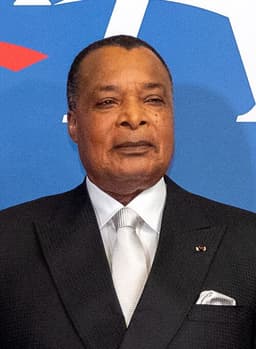
Denis Sassou-Nguesso
General · Modern
49.4Total
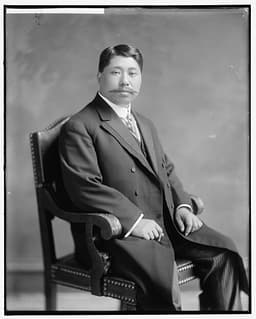
Huang Xing
General · Modern
57.5Total
Basic Information
Born
1943
1874
Died
—
1916
Era
Modern
Modern
Nationality
Congo Republic
China
Occupation
General
General
Civilization
Other
Eastern
Score Comparison
Military (10%)
10.2
46.7
Political (20%)
68.0
53.8
Influence (20%)
51.8
62.0
Legacy (20%)
46.7
56.0
Leadership (15%)
62.0
62.0
Strategy (15%)
42.3
60.0
TOTAL
49.4
57.5
Denis Sassou-Nguesso — Complete Timeline
1979 AD
Seized Power in CoupPolitical Action
Denis Sassou-Nguesso, a military officer, became President of the People's Republic of the Congo after a coup that ousted President Joachim Yhombi-Opango. He led the Congolese Party of Labour (PCT).
Coup d'étatCongoMilitary Rule
Impact: national
1990 AD
Transition to Multi-Party PoliticsReform◆ Major
Under pressure, Sassou-Nguesso's government introduced multi-party politics, ending the one-party Marxist-Leninist system. A national conference was held in 1991, leading to a transition to civilian rule.
Political ReformDemocracyCongo
Impact: national
1992 AD
Lost Presidential ElectionPolitical Action◆ Major
Sassou-Nguesso lost the 1992 presidential election to Pascal Lissouba. This was the first multi-party election in the country since independence, and Sassou-Nguesso peacefully handed over power.
ElectionDemocracyCongo
Impact: national
1997 AD
Returned to Power via Civil WarWar
Sassou-Nguesso's militia, backed by Angolan troops, captured Brazzaville, overthrowing President Pascal Lissouba. This ended a four-month civil war and returned Sassou-Nguesso to the presidency.
Civil WarCongoPower Struggle
Impact: nationaldestructive
2002 AD
Won Controversial Re-electionsPolitical Action◆ Major
Sassou-Nguesso won the 2002 presidential election with over 89% of the vote. The election was boycotted by major opposition candidates and criticized as neither free nor fair.
ElectionCongoControversy
Impact: national
2015 AD
Constitutional Referendum to Extend TermPolitical Action◆ Major
Sassou-Nguesso's government held a constitutional referendum that removed the age limit and two-term limit for the presidency. The change allowed him to run for re-election in 2016 and potentially remain in power.
Constitutional ReformCongoPower Consolidation
Impact: national
Huang Xing — Complete Timeline
1905 AD
Co-founded the TongmenghuiPolitical Action◆ Major
Huang Xing co-founded the Tongmenghui (Revolutionary Alliance) in Tokyo with Sun Yat-sen. He became its military leader, organizing armed uprisings against the Qing dynasty.
TongmenghuiRevolutionMilitary
Impact: nationalconstructive
1911 AD
Led the Wuchang UprisingWar
Huang Xing led the Wuchang Uprising, which sparked the Xinhai Revolution. He commanded revolutionary forces against Qing troops, securing initial victories that led to the dynasty's collapse.
Xinhai RevolutionUprisingMilitary
Impact: nationalconstructive
1912 AD
Served as Minister of War in the RepublicPolitical Action◆ Major
Huang Xing served as Minister of War in the provisional government of the Republic of China. He worked to organize a national army and defend the republic against counter-revolutionary forces.
GovernmentMilitaryRepublic
Impact: nationalconstructive
1913 AD
Led the Second Revolution Against Yuan ShikaiWar◆ Major
Huang Xing led the Second Revolution, an armed uprising against President Yuan Shikai's authoritarian rule. The rebellion failed due to lack of coordination and military inferiority, forcing Huang into exile.
Second RevolutionYuan ShikaiExile
Impact: nationaltragic
1916 AD
Died in Exile in ShanghaiPolitical Action
Huang Xing died in Shanghai after returning from exile in Japan and the United States. His death marked the loss of a key military leader of the Chinese revolution, though his legacy endured.
DeathExileRevolution
Impact: nationaltragic
Expert Analysis
Huang Xing vs Denis Sassou-Nguesso
# The General and the Revolutionary: Two Paths to Power in Turbulent Times
In the sweltering heat of Brazzaville, October 1997, Denis Sassou-Nguesso watched his militia sweep through the capital, backed by Angolan tanks and foreign mercenaries. Five years earlier, he had been a defeated president, humiliated at the ballot box. Now he was returning not through the will of voters, but through the barrel of a gun. Half a world away and nearly a century earlier, another military man, Huang Xing, stood amid the chaos of Wuchang in October 1911, leading student soldiers and railway workers against the crumbling Qing dynasty. Both men wielded weapons and commanded armies. Both sought to reshape their nations. But where Sassou-Nguesso’s story is one of personal power preserved at any cost, Huang Xing’s is a tragedy of revolutionary idealism crushed by the very forces he helped unleash.
Origins
Denis Sassou-Nguesso was born in 1943 in the village of Edou, deep in the northern forests of the Republic of Congo. His people, the Mbochi, were a minority ethnic group long marginalized by the southern Kongo elites. The French colonial army offered a rare ladder upward, and Sassou-Nguesso climbed it with discipline. He trained in Algeria and France, absorbing the hard lessons of military hierarchy and Cold War patronage. When Congo gained independence in 1960, it was a fragile state, rich in oil but poor in institutions, a perfect stage for strongmen.
Huang Xing was born in 1874 into a scholarly family in Hunan province, China. The Qing dynasty was rotting from within, humiliated by foreign powers and paralyzed by corruption. Unlike Sassou-Nguesso, Huang Xing was not a product of military academies but of the classical Confucian examination system. He excelled at the civil service exams, yet the more he studied, the more he saw China’s weakness as a failure of the old order. He cut off his queue—the Manchu-mandated ponytail—as a public act of defiance, then fled to Japan, where he studied military science and plotted revolution.
Rise to Power
Sassou-Nguesso’s ascent was swift and pragmatic. In 1979, at age thirty-six, he seized power in a bloodless coup that ousted the Marxist president. The Cold War was at its peak, and Congo aligned itself with the Soviet bloc. Sassou-Nguesso called himself a Marxist-Leninist, but his Marxism was always a costume, not a conviction. He nationalized industries, yet kept the oil flowing to French companies. He spoke of class struggle, yet built his power on ethnic patronage and secret police.
Huang Xing’s rise was far more turbulent. In 1905, he co-founded the Tongmenghui (Revolutionary Alliance) in Tokyo with Sun Yat-sen. While Sun was the philosopher—the man of grand visions and soaring speeches—Huang Xing was the organizer, the general who could turn ideas into insurrection. He led seven failed uprisings before 1911, each one costing lives and money. When the Wuchang Uprising finally succeeded, it was almost accidental: a bomb exploded prematurely, forcing the revolutionaries into action. Huang Xing rushed to the scene and took command, but the revolution that followed was a chaotic coalition of warlords, students, and disgruntled officers.
Leadership & Governance
As president, Sassou-Nguesso proved a master of survival. He abandoned Marxism in 1990 when the Soviet Union collapsed, introducing multi-party politics not out of conviction but calculation. When he lost the 1992 election to Pascal Lissouba, he accepted defeat—then spent five years plotting his return. The 1997 civil war was brutal: his militias, armed by Angola, burned neighborhoods and killed thousands. Once back in power, Sassou-Nguesso consolidated control through referendums that removed term limits (2015) and elections that he won with 89% of the vote. He governed not through ideology but through oil revenues, foreign alliances, and the careful distribution of patronage to northern elites.
Huang Xing’s governance was brief and tragic. As Minister of War in the provisional government of 1912, he tried to build a professional national army out of warlord militias. It was an impossible task. Yuan Shikai, the Qing general who had betrayed the dynasty, outmaneuvered the revolutionaries at every turn. When Huang Xing led the Second Revolution in 1913 against Yuan’s authoritarian rule, it failed within months. He fled to Japan, then the United States, always writing, always planning, always hoping. He returned to Shanghai in 1916, dying of illness at age forty-two, a broken man who had outlived his revolution.
Triumph & Tragedy
Sassou-Nguesso’s greatest triumph was simply enduring. He has ruled for over forty years, outlasting the Cold War, civil wars, and economic crises. His tragedy is that his legacy is one of stagnation: Congo remains poor, corrupt, and divided, its oil wealth enriching a tiny elite while most citizens live on less than two dollars a day.
Huang Xing’s triumph was the Wuchang Uprising itself—the spark that ended two thousand years of imperial rule. His tragedy was that the republic he helped create collapsed into warlordism. He once said, “Revolution is not a dinner party.” He was right, but he never imagined that the feast would be devoured by the very men he fought alongside.
Character & Destiny
Sassou-Nguesso is a survivor, not a visionary. His decisions are cold, patient, and self-interested. He has no grand ideology, only a will to power. Huang Xing was the opposite: passionate, impulsive, and utterly committed to an ideal of a democratic China. Where Sassou-Nguesso would wait years for the right moment to strike, Huang Xing threw himself into lost causes, believing that sacrifice itself would inspire others.
Their different fates reflect their different eras. Sassou-Nguesso ruled in an age of oil, foreign intervention, and weak states—a world that rewards pragmatism. Huang Xing lived in an age of empires, revolutions, and grand ideas—a world that consumes idealists.
Legacy
Today, Sassou-Nguesso is remembered as a classic African strongman, a figure of stability for some, a symbol of autocracy for others. His portrait hangs in every government office, but his country remains one of the most unequal on earth.
Huang Xing is revered in China as a founding father, though his name is far less known than Sun Yat-sen’s. He is remembered as a man of action, a general who fought for a republic that would not come for another generation. Mao Zedong later called him “a revolutionary who never wavered.”
Conclusion
In the end, both men were generals who became politicians, but they represent opposite poles of the same archetype. Sassou-Nguesso shows us how power can be held for its own sake, a cold calculus of survival. Huang Xing shows us how power can be wielded for a cause, even when that cause is lost. One built a dynasty of one; the other helped build a nation he would never see. The difference between them is the difference between a ruler and a revolutionary—and history, as always, remembers both, but judges each by very different standards.
Rankings
🥇
Huang XingLeader
Mil: 46.7Pol: 53.8Inf: 62.0
57.5
🥈
Denis Sassou-Nguesso
Mil: 10.2Pol: 68.0Inf: 51.8
49.4
+8.1 behind
How This Comparison Works
Algorithm
Each figure is scored on 6 dimensions (0—100 scale) based on structured historical data: Military (10%), Political (20%), Influence (20%), Legacy (20%), Leadership (15%), Strategy (15%). The weighted total produces the final ranking.
Data Sources
Scores are computed from structured sub-indicators in the database. Scale factors adjust for era (Ancient ×0.85, Modern ×1.0) and civilization size (Eastern ×1.05, Other ×0.80) to account for differences in population and military scale.
Maximum 3 Figures
Comparisons are limited to 2—3 figures to ensure readability and statistical meaningfulness.
Error Margins
±5 points per dimension — Sub-scores are derived from historical records with inherent uncertainty. Two figures within 5 points on a dimension should be considered roughly equivalent in that area.
Total Score Accuracy
±3 points overall — The weighted combination of 6 dimensions produces a total score with approximately ±3 points of uncertainty. Differences of less than 3 points are not statistically significant— the figures are effectively tied.
Known Limitations
- Historical records are incomplete and uneven across civilizations
- Figures from oral-tradition societies may be underrepresented
- Occupation labels can misclassify multi-role figures
- Scores measure capability and impact, not moral character
- Quantitative scoring is a comparison tool, not absolute truth
Capability Radar
Military (10%) — Battles & Warfare
Battles
5
35
Win Rate
5
30
Expansion
5
20
Political (20%) — Governance & Reform
Reform
30
60
Diplomacy
50
55
Economy
30
30
Influence (20%) — Cultural & Global Reach
Cultural
20
40
Global
20
40
Legacy (20%) — Historical Impact
Historical
30
55
Longevity
40
45
Leadership (15%) — Power & Stability
Tenure
70
40
Stability
20
25
Strategy (15%) — Tactics & Innovation
Strategy
5
45
Tactics
5
40
Reform
10
50
Similar Comparisons
Comments & Discussion
GunpowderSaint6/16/2026
Sassou-Nguesso is just another African strongman who traded Marxism for crony capitalism. Huang Xing actually fought to break chains, not forge new ones. In 1913, when Yuan Shikai betrayed the republic, Huang led the failed "Second Revolution" with just 10,000 troops. That's genuine sacrifice. Sassou's 1997 return to power was a mercenary-funded coup, not a revolution. One man died for ideas, the other for oil contracts. Period.
古籍屠夫6/16/2026
黄兴是悲剧英雄,因为他的革命理想被袁世凯这样的政治狐狸吃干抹净。武昌起义后他明明有机会掌控大局,却选择让位给黎元洪和宋教仁——一个旧官僚和一个书生。结果呢?革命果实被军阀摘走。徐锡麟说过“革命党人不要做官”,黄兴信了,但历史证明那套书生情怀在枪杆子面前就是狗屁。理想主义者的墓志铭,换来了民国三十年的乱世。
DataDrill6/16/2026
Let's compare kill counts. Sassou's Ninja militia and Angolan allies massacred thousands in Brazzaville in 1997-98, particularly in the Pool region. Huang Xing's Wuchang Uprising? Casualties were under 200 on both sides because the Qing army mostly surrendered or defected. One man was efficient at death, the other at regime change. Efficiency matters in military history. Sassou wins the body count; Huang wins the legacy. I know which I'd rather have on my resume.
琵琶扣6/16/2026
你们都在谈权力和理想,但忽略了一个细节:黄兴的右手在革命中炸断了两个手指——那是他亲手制造炸弹的代价。1908年钦州起义,他敢带着两百人和清军四千人硬刚。而萨苏-恩格索呢?他人生的拐点是1997年靠安哥拉T-55坦克碾过总统府大门。一个流血亲自干革命,另一个花钱雇雇佣兵替他流血。谁是战士谁是人渣,一目了然。
RedOctoberRefugee6/16/2026
Class analysis cuts through the bullshit. Huang Xing was a landlord's son who studied in Japan, then led a bourgeois nationalist revolt that failed because it never mobilized peasants. Sassou-Nguesso was a Cold War puppet who waved Marxist flags while selling Congo's oil to Elf Aquitaine. In 1987, Sassou even shot his own "comrade" Pierre Anga for opposing him. Same class, different continents: ambitious men using ideologies like toilet paper. Neither revolution was for the masses.