Loading...
Denis Sassou-Nguesso vs Hideki Tojo
Hideki Tojo leads by 4.5 pts · 2 figures compared
…
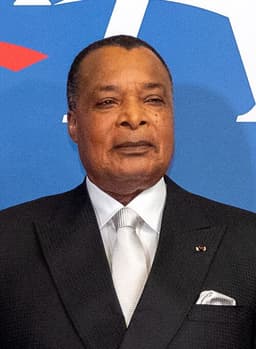
Denis Sassou-Nguesso
General · Modern
49.4Total
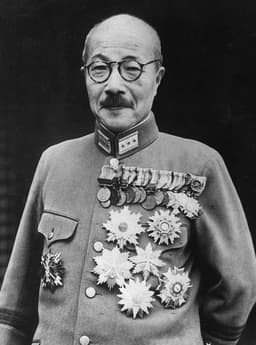
Hideki Tojo
General · Modern
53.9Total
Basic Information
Born
1943
1884
Died
—
1948
Era
Modern
Modern
Nationality
Congo Republic
Japan
Occupation
General
General
Civilization
Other
Eastern
Score Comparison
Military (10%)
10.2
70.0
Political (20%)
68.0
48.0
Influence (20%)
51.8
55.0
Legacy (20%)
46.7
50.0
Leadership (15%)
62.0
53.2
Strategy (15%)
42.3
55.0
TOTAL
49.4
53.9
Denis Sassou-Nguesso — Complete Timeline
1979 AD
Seized Power in CoupPolitical Action
Denis Sassou-Nguesso, a military officer, became President of the People's Republic of the Congo after a coup that ousted President Joachim Yhombi-Opango. He led the Congolese Party of Labour (PCT).
Coup d'étatCongoMilitary Rule
Impact: national
1990 AD
Transition to Multi-Party PoliticsReform◆ Major
Under pressure, Sassou-Nguesso's government introduced multi-party politics, ending the one-party Marxist-Leninist system. A national conference was held in 1991, leading to a transition to civilian rule.
Political ReformDemocracyCongo
Impact: national
1992 AD
Lost Presidential ElectionPolitical Action◆ Major
Sassou-Nguesso lost the 1992 presidential election to Pascal Lissouba. This was the first multi-party election in the country since independence, and Sassou-Nguesso peacefully handed over power.
ElectionDemocracyCongo
Impact: national
1997 AD
Returned to Power via Civil WarWar
Sassou-Nguesso's militia, backed by Angolan troops, captured Brazzaville, overthrowing President Pascal Lissouba. This ended a four-month civil war and returned Sassou-Nguesso to the presidency.
Civil WarCongoPower Struggle
Impact: nationaldestructive
2002 AD
Won Controversial Re-electionsPolitical Action◆ Major
Sassou-Nguesso won the 2002 presidential election with over 89% of the vote. The election was boycotted by major opposition candidates and criticized as neither free nor fair.
ElectionCongoControversy
Impact: national
2015 AD
Constitutional Referendum to Extend TermPolitical Action◆ Major
Sassou-Nguesso's government held a constitutional referendum that removed the age limit and two-term limit for the presidency. The change allowed him to run for re-election in 2016 and potentially remain in power.
Constitutional ReformCongoPower Consolidation
Impact: national
Hideki Tojo — Complete Timeline
1941 AD
Attack on Pearl HarborWar
As Prime Minister, Hideki Tojo authorized the attack on the US naval base at Pearl Harbor, Hawaii. The surprise attack brought the United States into World War II. Tojo's decision was based on the belief that war with the US was inevitable due to resource embargoes and diplomatic failures.
World War IIPearl HarborUS-Japan War
Impact: globaldestructive
Appointment as Prime MinisterPolitical Action◆ Major
Hideki Tojo was appointed Prime Minister of Japan, replacing Fumimaro Konoe. He retained his position as Army Minister and later took on other portfolios, consolidating power. His appointment marked the ascendancy of the military faction in the Japanese government and the shift towards total war.
Prime MinisterMilitary GovernmentWorld War II
Impact: national
1942 AD
Fall of SingaporeWar◆ Major
Under Tojo's leadership, Japanese forces captured Singapore from the British in a swift campaign. The fall of Singapore was one of the worst British military defeats in history. It demonstrated Japanese military prowess and led to the occupation of a key strategic location in Southeast Asia.
World War IISingaporeJapanese Victory
Impact: global
1948 AD
Execution by the International Military Tribunal for the Far EastPolitical Action◆ Major
Hideki Tojo was found guilty of war crimes by the International Military Tribunal for the Far East and sentenced to death. He was executed by hanging on December 23, 1948. His trial and execution symbolized the Allied effort to hold Japanese leaders accountable for wartime atrocities.
War CrimesExecutionTokyo Trials
Impact: globaltragic
Expert Analysis
Hideki Tojo vs Denis Sassou-Nguesso
### The General and the Survivor
History has a peculiar way of juxtaposing men who wielded power through the sword. On one hand, there is Hideki Tojo, the stern-faced architect of Japan’s Pacific War, who rode a tide of imperial ambition straight to the gallows. On the other, there is Denis Sassou-Nguesso, the quiet general from the Congo who has spent decades bending the arc of his nation’s politics to his will. One ended his story in 1948, hanged as a war criminal; the other, born in 1943, still rules in 2024. What separates a man who crashes his empire into catastrophe from one who simply refuses to let go of power? The answer lies not in their uniforms, but in the worlds they sought to command.
### Origins
Hideki Tojo was a child of the Meiji Restoration, a time when Japan was forging a modern military state from the ashes of feudalism. Born in 1884 to a samurai lineage, he was raised on discipline, duty, and the belief that Japan’s destiny lay in expansion. The army was his life—stern, hierarchical, unforgiving. Tojo climbed its ranks with a bureaucrat’s patience and a warrior’s pride, absorbing the militarist ideology that gripped Japan in the 1930s. He was not a charismatic visionary; he was a product of his era, a man who believed that the nation’s survival depended on total obedience and ruthless action.
Denis Sassou-Nguesso emerged from a different crucible. Born in 1943 in the French colony of Middle Congo, he grew up under colonial rule, witnessing the slow unraveling of European empires. He joined the French army as a young man, training in Algeria and learning the craft of counterinsurgency. When Congo gained independence in 1960, he returned home, a soldier without a war. The country was poor, fractured by ethnic rivalries, and ripe for strongmen. Sassou-Nguesso’s path was not one of ideological fervor but of pragmatic survival. He was a man of the barracks, not the battlefield—patient, calculating, and deeply attuned to the rhythms of power in a post-colonial state.
### Rise to Power
Tojo’s rise was a steady march through the corridors of military bureaucracy. By 1941, he had become Army Minister under Prime Minister Fumimaro Konoe, a position that placed him at the heart of Japan’s war council. When Konoe resigned in October 1941, unable to steer the nation away from conflict with the United States, Tojo stepped into the vacuum. He became Prime Minister while retaining his army post—a fusion of civilian and military authority that signaled Japan’s final surrender to the generals. His appointment was a turning point, driven by the belief that only a hardliner could manage the coming storm.
Sassou-Nguesso’s ascent was more violent and less linear. In 1979, he seized power in a coup, becoming president of the People’s Republic of the Congo, a one-party Marxist state. He was 36 years old, a general with a quiet demeanor and a talent for maneuvering among factions. Unlike Tojo, he did not inherit a global empire; he inherited a bankrupt, ethnically divided country. His power was never absolute—it had to be constantly negotiated, defended, and, when necessary, reclaimed.
### Leadership & Governance
Tojo governed as a military commander, not a politician. He centralized decision-making, suppressed dissent, and pushed Japan into a war he believed could be won through a single, devastating blow. The attack on Pearl Harbor in December 1941 was his gamble—a calculated risk that Japan’s initial victories would force the United States to negotiate. For a brief moment, it worked. The fall of Singapore in February 1942 was the high tide of Japanese expansion, a humiliation for the British Empire. But Tojo’s leadership was brittle. He offered no strategic flexibility, no diplomatic off-ramp. When the tide turned at Midway and Guadalcanal, he had no answer but to demand greater sacrifice from a people already starving.
Sassou-Nguesso rules differently. He is a survivor, not a conqueror. His military score is a mere 19.9—he is no general of grand campaigns. His strength lies in politics: a 61.2 score that reflects decades of deal-making, coalition-building, and ruthless adaptability. In 1990, facing global pressure and internal unrest, he abandoned Marxism and introduced multi-party politics. It was a tactical retreat. In 1992, he lost the election to Pascal Lissouba—and accepted defeat. But only for a time. In 1997, with Angolan tanks and his own militia, he returned to power through a civil war that left Brazzaville in ruins. Since then, he has won elections with 89% of the vote, changed the constitution to abolish term limits, and entrenched himself as the longest-serving leader in Congo’s history.
### Triumph & Tragedy
Tojo’s greatest triumph was the fall of Singapore—a campaign that stunned the world and seemed to validate his strategy. His greatest tragedy was the war itself. By 1944, Japan was burning, its cities firebombed, its people starving. Tojo resigned in July 1944, a broken man, and was later arrested, tried, and hanged in 1948. His legacy is one of catastrophic miscalculation.
Sassou-Nguesso’s triumphs are quieter: the survival of his regime through coups, elections, and civil wars. His tragedy is the nation he governs. Congo remains poor, corrupt, and scarred by conflict. His return to power in 1997 cost thousands of lives. The 2015 constitutional referendum, which removed term limits, was widely seen as a power grab. He has brought stability, but at the price of democracy.
### Character & Destiny
Tojo was a man of rigid certainty. He believed in hierarchy, duty, and the inevitability of war. His personality—cold, methodical, unyielding—drove Japan into a conflict it could not win. He was the product of a militarist culture that valued honor over survival. Sassou-Nguesso is the opposite: flexible, patient, and pragmatic. He has no ideological anchors. He was a Marxist in the 1980s, a democrat in the 1990s, and a strongman in the 2000s. His destiny is not to die for a cause, but to live for power.
### Legacy
Tojo’s legacy is a warning. In Japan, he is remembered as a war criminal, a symbol of the hubris that led to ruin. His execution in 1948 sealed his infamy. Sassou-Nguesso’s legacy is still being written. He is 81 years old, still in power, still maneuvering. To his supporters, he is a father of the nation; to his critics, a dictator. The International Criminal Court has investigated atrocities in Congo, but Sassou-Nguesso has never faced trial. He may die in office, or he may be forced out. Either way, his story is one of endurance.
### Conclusion
What separates the general who falls from the one who endures? Tojo believed in a cause greater than himself—imperial Japan—and it consumed him. Sassou-Nguesso believes only in power, and it has kept him alive. One was a tragic hero of a doomed empire; the other is a survivor of a broken state. In the end, history judges not by intention, but by outcome. Tojo’s war brought destruction; Sassou-Nguesso’s rule has brought stagnation. Both men remind us that the uniform does not make the leader—only the world he navigates does.
Rankings
🥇
Hideki TojoLeader
Mil: 70.0Pol: 48.0Inf: 55.0
53.9
🥈
Denis Sassou-Nguesso
Mil: 10.2Pol: 68.0Inf: 51.8
49.4
+4.5 behind
How This Comparison Works
Algorithm
Each figure is scored on 6 dimensions (0—100 scale) based on structured historical data: Military (10%), Political (20%), Influence (20%), Legacy (20%), Leadership (15%), Strategy (15%). The weighted total produces the final ranking.
Data Sources
Scores are computed from structured sub-indicators in the database. Scale factors adjust for era (Ancient ×0.85, Modern ×1.0) and civilization size (Eastern ×1.05, Other ×0.80) to account for differences in population and military scale.
Maximum 3 Figures
Comparisons are limited to 2—3 figures to ensure readability and statistical meaningfulness.
Error Margins
±5 points per dimension — Sub-scores are derived from historical records with inherent uncertainty. Two figures within 5 points on a dimension should be considered roughly equivalent in that area.
Total Score Accuracy
±3 points overall — The weighted combination of 6 dimensions produces a total score with approximately ±3 points of uncertainty. Differences of less than 3 points are not statistically significant— the figures are effectively tied.
Known Limitations
- Historical records are incomplete and uneven across civilizations
- Figures from oral-tradition societies may be underrepresented
- Occupation labels can misclassify multi-role figures
- Scores measure capability and impact, not moral character
- Quantitative scoring is a comparison tool, not absolute truth
Capability Radar
Military (10%) — Battles & Warfare
Battles
5
65
Win Rate
5
40
Expansion
5
70
Political (20%) — Governance & Reform
Reform
30
30
Diplomacy
50
35
Economy
30
25
Influence (20%) — Cultural & Global Reach
Cultural
20
30
Global
20
55
Legacy (20%) — Historical Impact
Historical
30
55
Longevity
40
40
Leadership (15%) — Power & Stability
Tenure
70
60
Stability
20
20
Strategy (15%) — Tactics & Innovation
Strategy
5
50
Tactics
5
55
Reform
10
45
Similar Comparisons
Comments & Discussion
SamuraiScourge6/16/2026
As a military historian, I’d say Tojo’s fatal flaw wasn’t aggression, but strategic blindness. He micromanaged the Imperial Army yet ignored logistics—Japan’s oil dependency was its Achilles’ heel. By contrast, Sassou-Nguesso is a master of tactical patience, trading battlefield conquest for political survival. Tojo chose Pearl Harbor as a punch; the Congolese general chose oil deals and French patronage as permanent shield. One gambled an empire; the other hedged his bets with Cold War chess mo
数据铁证派6/16/2026
数据说话:Tojo治下日本GDP在1941年仅美国1/6,却敢全面开战,简直是自杀式傲慢。反观萨苏-恩格索,刚果石油占政府收入70%,他执政44年稳如泰山,靠的是利益捆绑而非狂热。Tojo注定失败,因为他迷信武士道胜过胜率;萨苏才是务实玩家,把权力当风险管理玩——这就是军事数据与政治现实的冷酷差距。
ClassicsChisel6/16/2026
Reading Tojo’s fate through Aristotle’s lens, he’s a textbook case of hubris—the man who believed militarism could defy geography. Japan needed resources from Southeast Asia, so he gambled all on a knockout blow. Sassou-Nguesso, more like Thucydides’ survivor-statesman: he’s switched ideologies—Marxist in the 70s, capitalist in the 90s—without losing power. One died for his nation’s delusion; the other lives by updating his script. That’s the difference between tragic flaw and pragmatic adaptati
自由史观炮手6/16/2026
别美化萨苏了!他是非洲最稳的“石油独裁者”,三次修改宪法只为无限连任,刚果老百姓人均寿命还不如他掌权年头长。Tojo至少是战败后认罪伏法,萨苏却靠法国特种部队2021年镇压抗议。一个死得其所,一个赖得无耻——别忘了,1945年东京审判至少给了亚洲正义,而布拉柴维尔至今没有清算日。权力几何:军事败者死于法律,政治胜者死于贪婪。
RevisionistEcho6/16/2026
The Tojo myth needs deflating: he wasn’t some grand imperial mastermind but a reactive committee chairman who couldn’t stop the army’s rogue factions. Pearl Harbor was less masterstroke than bureaucratic inertia. Meanwhile, Sassou-Nguesso’s longevity masks a regime of oil-bribery and ethnic favoritism—the Mbochi minority dominate. Both men failed their peoples: Tojo through war fantasy, Sassou through frozen time. The common thread? Authoritarianism seduces the competent as much as the mad.