Loading...
Denis Sassou-Nguesso vs Fuad Chehab
Fuad Chehab leads by 0.5 pts · 2 figures compared
…
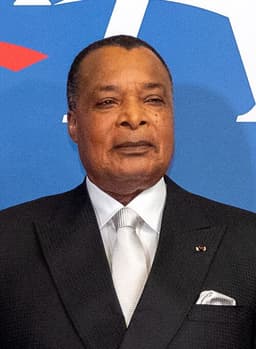
Denis Sassou-Nguesso
General · Modern
49.4Total
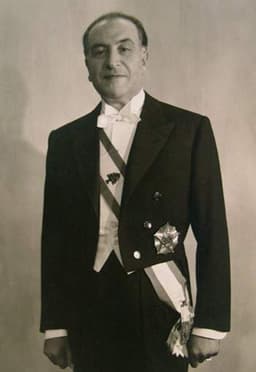
Fuad Chehab
General · Modern
49.9Total
Basic Information
Born
1943
1902
Died
—
1973
Era
Modern
Modern
Nationality
Congo Republic
Lebanon
Occupation
General
General
Civilization
Other
Middle Eastern
Score Comparison
Military (10%)
10.2
10.2
Political (20%)
68.0
70.0
Influence (20%)
51.8
54.1
Legacy (20%)
46.7
44.2
Leadership (15%)
62.0
72.0
Strategy (15%)
42.3
30.3
TOTAL
49.4
49.9
Denis Sassou-Nguesso — Complete Timeline
1979 AD
Seized Power in CoupPolitical Action
Denis Sassou-Nguesso, a military officer, became President of the People's Republic of the Congo after a coup that ousted President Joachim Yhombi-Opango. He led the Congolese Party of Labour (PCT).
Coup d'étatCongoMilitary Rule
Impact: national
1990 AD
Transition to Multi-Party PoliticsReform◆ Major
Under pressure, Sassou-Nguesso's government introduced multi-party politics, ending the one-party Marxist-Leninist system. A national conference was held in 1991, leading to a transition to civilian rule.
Political ReformDemocracyCongo
Impact: national
1992 AD
Lost Presidential ElectionPolitical Action◆ Major
Sassou-Nguesso lost the 1992 presidential election to Pascal Lissouba. This was the first multi-party election in the country since independence, and Sassou-Nguesso peacefully handed over power.
ElectionDemocracyCongo
Impact: national
1997 AD
Returned to Power via Civil WarWar
Sassou-Nguesso's militia, backed by Angolan troops, captured Brazzaville, overthrowing President Pascal Lissouba. This ended a four-month civil war and returned Sassou-Nguesso to the presidency.
Civil WarCongoPower Struggle
Impact: nationaldestructive
2002 AD
Won Controversial Re-electionsPolitical Action◆ Major
Sassou-Nguesso won the 2002 presidential election with over 89% of the vote. The election was boycotted by major opposition candidates and criticized as neither free nor fair.
ElectionCongoControversy
Impact: national
2015 AD
Constitutional Referendum to Extend TermPolitical Action◆ Major
Sassou-Nguesso's government held a constitutional referendum that removed the age limit and two-term limit for the presidency. The change allowed him to run for re-election in 2016 and potentially remain in power.
Constitutional ReformCongoPower Consolidation
Impact: national
Fuad Chehab — Complete Timeline
1958 AD
Launched Chehabist reforms and modernizationReform◆ Major
President Chehab implemented a series of reforms known as Chehabism, including administrative modernization, economic planning, and strengthening state institutions. He established the Central Bank of Lebanon and the Civil Service Board.
ReformModernizationState Building
Impact: nationalconstructive
Elected President of LebanonPolitical Action◆ Major
Fuad Chehab was elected President of Lebanon on September 23, 1958, succeeding Camille Chamoun. His election ended the 1958 crisis and was supported by both Christian and Muslim factions seeking stability.
PresidencyElectionStabilization
Impact: nationalconstructive
Created the Deuxième Bureau intelligence agencyPolitical Action
Chehab expanded the role of the Deuxi
IntelligenceSecurityAuthoritarianism
Impact: national
1960 AD
Presided over the 1960s economic boomOther
Under Chehab's presidency, Lebanon experienced a period of economic growth and stability, with Beirut becoming a major financial and tourism hub. His policies attracted foreign investment and expanded the middle class.
Economic GrowthBeirutProsperity
Impact: nationalconstructive
1964 AD
Refused to amend constitution for a second termPolitical Action
Chehab declined to seek a second term as president, respecting the constitutional limit. He retired from politics in 1964, setting a precedent for peaceful transitions of power in Lebanon.
ConstitutionTerm LimitRetirement
Impact: nationalconstructive
Expert Analysis
Fuad Chehab vs Denis Sassou-Nguesso
### The General Who Chose to Leave
In the autumn of 1964, Fuad Chehab did something almost unheard of in the volatile politics of the Middle East: he walked away from power. His term as President of Lebanon was ending, and the constitution barred a second consecutive term. He could have amended it—many urged him to—but he refused. Across the continent, in the small Republic of Congo, another general named Denis Sassou-Nguesso would make the opposite calculation, again and again, clinging to a presidency for decades. Why did one man see power as a temporary trust and the other as a permanent possession? The answer lies not just in their characters, but in the very different storms that forged them.
### Origins
Fuad Chehab was born in 1902 into a distinguished Maronite family in Lebanon, then part of the Ottoman Empire. He grew up in a society of intricate sectarian balances—Maronites, Sunnis, Shia, Druze, Greek Orthodox—where politics was a delicate dance of compromise. Chehab joined the French-officered Troupes Spéciales du Levant, learning command in a colonial context that prized order and loyalty. His military career was steady, not flashy; he became commander of the Lebanese army in 1945, a force designed to be small and neutral. Lebanon’s modern history, scarred by the 1958 crisis—a brief civil war between pro-Western and Arab nationalist factions—taught him that survival meant balancing, not dominating.
Denis Sassou-Nguesso was born in 1943 in French Equatorial Africa, into the Mbochi ethnic group of northern Congo. His upbringing was shaped by French colonialism and the brutal inequalities of a resource-rich but exploited territory. He joined the French army, serving in Algeria, and later returned to a newly independent Congo that was already a cauldron of coups and ideological warfare. The 1960s saw the rise of Marxist-Leninist fervor across Africa, and Congo-Brazzaville became a one-party state under the Congolese Party of Labour. Sassou-Nguesso rose through its ranks as a military officer and party enforcer, learning that power was seized, not granted.
### Rise to Power
Chehab’s path to the presidency was reluctant and reactive. In 1958, as Lebanon teetered on the brink of disintegration, the political establishment turned to him as a neutral figure who could calm the sectarian fires. He was elected on September 23, 1958, with a mandate to heal, not to conquer. His rise was not a coup but a rescue mission.
Sassou-Nguesso’s rise was the opposite. In 1979, he led a coup that ousted the existing Marxist regime, positioning himself as the new strongman of the People’s Republic of the Congo. He did not inherit a crisis; he created an opportunity. His path was paved with violence and the calculated elimination of rivals.
### Leadership & Governance
Chehab’s leadership style, called “Chehabism,” was a blend of reform and caution. He modernized the bureaucracy, launched economic planning, and created the Deuxième Bureau—a military intelligence agency that monitored political opponents. This was not a sign of paranoia but of a fragile state: he needed information to prevent another 1958. Under his watch, Beirut boomed as a financial hub, and the 1960s economic growth lifted many. Yet he never centralized power into a personality cult. He governed through consensus, often frustrating reformers who wanted faster change.
Sassou-Nguesso governed through control. After his 1979 coup, he imposed a one-party Marxist state, nationalizing industries and aligning with the Soviet bloc. When the Cold War ended, he pivoted: in 1990, he introduced multi-party politics under pressure, then lost the 1992 election to Pascal Lissouba. But he refused to accept defeat. In 1997, he returned to power via a civil war, backed by Angolan troops. Once back, he rigged the system: the 2002 election gave him 89% of the vote, and in 2015, a constitutional referendum removed term limits, allowing him to rule indefinitely.
### Triumph & Tragedy
Chehab’s greatest triumph was the peaceful transition of power in 1964. He left office voluntarily, a rare act in a region of lifelong rulers. His tragedy was that his reforms did not outlast him. The Deuxième Bureau became a tool of repression under later presidents, and the sectarian tensions he managed so carefully exploded into civil war in 1975.
Sassou-Nguesso’s triumph was survival itself. He outlasted the Cold War, a civil war, and multiple elections. His tragedy is the cost: a country rich in oil and timber, yet mired in poverty, corruption, and political repression. He has become the symbol of Africa’s “president for life” problem.
### Character & Destiny
Chehab was a man of restraint, shaped by a society that punished overreach. He once said, “I do not want to be a president who governs; I want to be a president who serves.” His character was cautious, almost ascetic, and his destiny was to be a caretaker in a country that needed one.
Sassou-Nguesso was a man of ambition, forged in the chaos of post-colonial Africa where regimes fell like dominoes. He believed that to leave power was to die—literally, as many ousted African leaders were killed or exiled. His character was ruthless, pragmatic, and adaptive. His destiny was to hold on, no matter the cost.
### Legacy
Chehab is remembered in Lebanon as a rare honest leader, a “father of the nation” who chose principle over power. His name still echoes in reformist circles, but his legacy is fragile, a memory of what could have been.
Sassou-Nguesso is remembered as a survivor, a man who bent the state to his will. In Congo, he is both feared and respected, a figure who brought stability through iron control. Outside, he is often condemned as a dictator.
### Conclusion
The difference between these two generals is not simply a matter of good versus evil. It is a story of how history shapes men, and how men shape history. Chehab governed a small, diverse country where survival depended on balance. Sassou-Nguesso governed a resource-rich, fractured state where survival depended on grip. One chose to leave; the other chose to stay. Their paths remind us that power is not a fixed prize but a reflection of the world that creates it—and that the hardest decision a leader can make is knowing when to let go.
Rankings
🥇
Fuad ChehabLeader
Mil: 10.2Pol: 70.0Inf: 54.1
49.9
🥈
Denis Sassou-Nguesso
Mil: 10.2Pol: 68.0Inf: 51.8
49.4
+0.5 behind
How This Comparison Works
Algorithm
Each figure is scored on 6 dimensions (0—100 scale) based on structured historical data: Military (10%), Political (20%), Influence (20%), Legacy (20%), Leadership (15%), Strategy (15%). The weighted total produces the final ranking.
Data Sources
Scores are computed from structured sub-indicators in the database. Scale factors adjust for era (Ancient ×0.85, Modern ×1.0) and civilization size (Eastern ×1.05, Other ×0.80) to account for differences in population and military scale.
Maximum 3 Figures
Comparisons are limited to 2—3 figures to ensure readability and statistical meaningfulness.
Error Margins
±5 points per dimension — Sub-scores are derived from historical records with inherent uncertainty. Two figures within 5 points on a dimension should be considered roughly equivalent in that area.
Total Score Accuracy
±3 points overall — The weighted combination of 6 dimensions produces a total score with approximately ±3 points of uncertainty. Differences of less than 3 points are not statistically significant— the figures are effectively tied.
Known Limitations
- Historical records are incomplete and uneven across civilizations
- Figures from oral-tradition societies may be underrepresented
- Occupation labels can misclassify multi-role figures
- Scores measure capability and impact, not moral character
- Quantitative scoring is a comparison tool, not absolute truth
Capability Radar
Military (10%) — Battles & Warfare
Battles
5
5
Win Rate
5
5
Expansion
5
5
Political (20%) — Governance & Reform
Reform
30
65
Diplomacy
50
60
Economy
30
50
Influence (20%) — Cultural & Global Reach
Cultural
20
30
Global
20
25
Legacy (20%) — Historical Impact
Historical
30
35
Longevity
40
30
Leadership (15%) — Power & Stability
Tenure
70
55
Stability
20
45
Strategy (15%) — Tactics & Innovation
Strategy
5
10
Tactics
5
10
Reform
10
20
Similar Comparisons
Comments & Discussion
ChehabTheConstitutionalist6/16/2026
As a classics scholar who studies political transitions, I see Chehab's 1964 decision as a modern Cincinnatus moment. He understood that Lebanon's 1926 Constitution wasn't just parchment—it was the fragile glue holding together 18 sectarian groups. Amending it for personal gain would've shattered that trust. Sassou-Nguesso, by contrast, treats Congo's constitution like Play-Doh, reshaping it in 2002 for his third term. One man respected the rules; the other rewrites them. That's the difference b
数据斗士6/16/2026
数据不会撒谎:1964年黎巴嫩GDP增长率9.2%,而刚果同期仅为2.1%。夏蒙留下一个稳定的政治遗产,萨苏却让刚果陷入资源诅咒——石油出口占GDP的60%,但人均寿命仅64岁。别跟我谈什么文化差异,数字说明了一切。一个懂经济的将军选择了退休,另一个用权力换来了贫困。
HistoryBuff_Reboot6/16/2026
Fun fact: When Chehab stepped down in 1964, Lebanon had the most free press in the Arab world—25 daily newspapers. Sassou-Nguesso's Congo? State-run radio and one opposition paper that gets raided weekly. Power isn't just about how long you stay; it's about what you build or destroy. Chehab built institutions; Sassou built a personality cult. The 1964 walkaway was a masterclass in nation-building that Brazzaville still hasn't learned.
批判修正派6/16/2026
别被西方叙事骗了。夏蒙的 "自愿下台" 不过是法国地缘政治的幌子——他清楚留任会激怒叙利亚和纳赛尔,导致黎巴嫩分崩离析。萨苏呢?他在冷战时期倒向苏联,1997年内战后又投靠法国,这叫实用主义,不是贪婪。两个将军都是在夹缝中求生存,只不过夏蒙选择退场保全家族利益,萨苏选择掌权延续部落势力。道德评判?那是殖民者的双重标准。
SassouTheSurvivor6/16/2026
You armchair critics don't understand African realpolitik. Sassou-Nguesso has navigated civil wars, French neocolonial pressure, and oil crashes since 1979. He's not a "greedy autocrat"—he's a strategic genius who knew Congo-Brazzaville would fragment without a strongman holding the sectarian seams. Chehab had a functioning state to leave; Sassou inherited chaos after the 1997 war. Sometimes democracy is a luxury when your country is bleeding. Walk away? That's a privilege, not a virtue.