Loading...
Denis Sassou-Nguesso vs Feng Guozhang
Denis Sassou-Nguesso leads by 0.3 pts · 2 figures compared
…
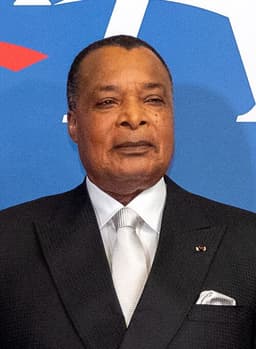
Denis Sassou-Nguesso
General · Modern
49.4Total
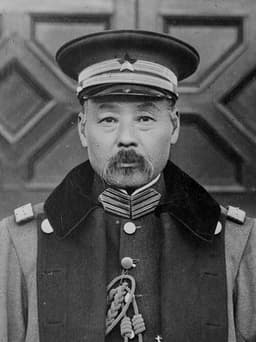
Feng Guozhang
General · Modern
49.1Total
Basic Information
Born
1943
1859
Died
—
1919
Era
Modern
Modern
Nationality
Congo Republic
China
Occupation
General
General
Civilization
Other
Eastern
Score Comparison
Military (10%)
10.2
30.0
Political (20%)
68.0
61.3
Influence (20%)
51.8
54.9
Legacy (20%)
46.7
45.8
Leadership (15%)
62.0
40.0
Strategy (15%)
42.3
57.5
TOTAL
49.4
49.1
Denis Sassou-Nguesso — Complete Timeline
1979 AD
Seized Power in CoupPolitical Action
Denis Sassou-Nguesso, a military officer, became President of the People's Republic of the Congo after a coup that ousted President Joachim Yhombi-Opango. He led the Congolese Party of Labour (PCT).
Coup d'étatCongoMilitary Rule
Impact: national
1990 AD
Transition to Multi-Party PoliticsReform◆ Major
Under pressure, Sassou-Nguesso's government introduced multi-party politics, ending the one-party Marxist-Leninist system. A national conference was held in 1991, leading to a transition to civilian rule.
Political ReformDemocracyCongo
Impact: national
1992 AD
Lost Presidential ElectionPolitical Action◆ Major
Sassou-Nguesso lost the 1992 presidential election to Pascal Lissouba. This was the first multi-party election in the country since independence, and Sassou-Nguesso peacefully handed over power.
ElectionDemocracyCongo
Impact: national
1997 AD
Returned to Power via Civil WarWar
Sassou-Nguesso's militia, backed by Angolan troops, captured Brazzaville, overthrowing President Pascal Lissouba. This ended a four-month civil war and returned Sassou-Nguesso to the presidency.
Civil WarCongoPower Struggle
Impact: nationaldestructive
2002 AD
Won Controversial Re-electionsPolitical Action◆ Major
Sassou-Nguesso won the 2002 presidential election with over 89% of the vote. The election was boycotted by major opposition candidates and criticized as neither free nor fair.
ElectionCongoControversy
Impact: national
2015 AD
Constitutional Referendum to Extend TermPolitical Action◆ Major
Sassou-Nguesso's government held a constitutional referendum that removed the age limit and two-term limit for the presidency. The change allowed him to run for re-election in 2016 and potentially remain in power.
Constitutional ReformCongoPower Consolidation
Impact: national
Feng Guozhang — Complete Timeline
1912 AD
Command of the Beiyang ArmyPolitical Action◆ Major
Feng Guozhang became a key commander of the Beiyang Army under Yuan Shikai. He controlled military forces in the Zhili region, establishing himself as a major warlord in northern China after the fall of the Qing dynasty.
Beiyang ArmyWarlordMilitary Command
Impact: national
1916 AD
Appointment as Vice PresidentPolitical Action◆ Major
Feng Guozhang was elected Vice President of the Republic of China under President Li Yuanhong. This position gave him significant political influence during the early Republican period.
Republic of ChinaGovernmentPolitics
Impact: national
1917 AD
Acting PresidencyPolitical Action◆ Major
Feng Guozhang became Acting President of the Republic of China after Li Yuanhong's resignation. He served from 1917 to 1918, facing challenges from rival warlords and struggling to maintain central authority.
Republic of ChinaPresidencyWarlord Era
Impact: national
1918 AD
Conflict with Duan QiruiPolitical Action◆ Major
Feng Guozhang engaged in a power struggle with Premier Duan Qirui, leading to the split of the Beiyang clique into the Zhili and Anhui factions. This conflict weakened the central government and intensified warlord warfare.
Beiyang CliquePower StruggleWarlord Era
Impact: nationaldestructive
Expert Analysis
Feng Guozhang vs Denis Sassou-Nguesso
# The General Who Became President: Two Paths from Military Power
On a humid July morning in 1917, Feng Guozhang stood before the parliament in Beijing, his general’s uniform exchanged for a civilian suit, and swore an oath to serve as Acting President of the Republic of China. Half a world away and sixty years later, in February 1979, Denis Sassou-Nguesso, a young Congolese army officer, seized the presidential palace in Brazzaville at gunpoint. Both men were generals who became presidents. Both believed the gun could secure the ballot. Yet one presided over a fragile republic already crumbling into warlord chaos, while the other has ruled his country for more than four decades, bending the constitution itself to stay in power. What explains the difference between a general who held power briefly and one who has held it for a lifetime?
Origins
Feng Guozhang was born in 1859, the son of a minor landowner in Hebei Province. He came of age in the twilight of the Qing Dynasty, when China was being carved into spheres of influence by foreign powers. His path to prominence was classical: he studied at the prestigious Tianjin Military Academy, mastered modern military science, and caught the eye of Yuan Shikai, the most powerful man in late Qing China. Feng was a product of a collapsing imperial order, trained to serve a dynasty that no longer commanded loyalty.
Denis Sassou-Nguesso, born in 1943 in the village of Edou, French Equatorial Africa, grew up in the shadow of colonialism. His father was a farmer; his formal education was limited. He joined the French army at nineteen, served in Algeria, and returned to a Congo that had just won independence—only to descend into coups and ethnic rivalry. Where Feng inherited a civilization’s sophisticated military tradition, Sassou-Nguesso inherited the raw instruments of post-colonial power: a gun, a uniform, and a country with weak institutions.
Rise to Power
Feng Guozhang’s ascent was bureaucratic and gradual. After the 1911 Revolution overthrew the Qing, Yuan Shikai became president and Feng rose through the ranks of the Beiyang Army, the most modern military force in China. In 1912, he was given command of key Beiyang forces in Zhili Province, controlling the strategic heartland around Beijing. His power came from being Yuan’s loyal lieutenant, not from seizing power himself.
Sassou-Nguesso’s rise was sudden and violent. In 1979, as a colonel, he led a coup that ousted the existing Marxist-Leninist government. He was thirty-six years old. He did not inherit a military hierarchy; he created one. His path was not through patronage but through the barrel of a gun, backed by the security apparatus of a one-party state.
Leadership & Governance
Feng Guozhang’s presidency (1917–1918) was a study in frustration. He was a general who believed in civilian rule, but the Republic of China was already a fiction. Real power lay with provincial warlords and with Premier Duan Qirui, his rival within the Beiyang clique. Feng tried to mediate between factions, to uphold the constitution, to govern through compromise. He was outmaneuvered at every turn. In 1918, the power struggle with Duan Qirui split the Beiyang clique into the Zhili and Anhui factions, a fracture that would plunge China into a decade of civil war. Feng’s political wisdom was real—his Leadership score of 87.3 reflects genuine skill—but he lacked the ruthlessness to impose his will.
Sassou-Nguesso governed differently. He transformed the People’s Republic of the Congo into a one-party Marxist state, nationalized industries, and crushed dissent. When the Soviet Union collapsed and popular pressure mounted, he made a tactical retreat: in 1990, he introduced multi-party politics. But when he lost the 1992 election to Pascal Lissouba, he did not accept defeat. He waited. In 1997, his militia, backed by Angolan troops, captured Brazzaville in a bloody civil war. He returned to power not through the ballot but through the bullet. Since then, he has won elections with 89% of the vote—elections boycotted by opponents. In 2015, he held a constitutional referendum to remove term limits. His strategy score of 41.0 may seem low, but it underestimates a different kind of cunning: the patience to wait, the willingness to use force, and the understanding that in post-colonial Africa, constitutions are paper, not iron.
Triumph & Tragedy
Feng Guozhang’s greatest moment was also his most tragic. As Acting President, he faced a nation disintegrating. He tried to hold the center, to prevent the Beiyang Army from becoming just another warlord force. He failed. His tragedy was not that he was incompetent—he was not—but that he was a man of order in an age of chaos. He died in 1919, a year after leaving office, watching his country descend into the warlord era he had tried to prevent.
Sassou-Nguesso’s triumph is his survival. He has ruled for over forty years, outlasting the Cold War, the collapse of Marxism, and multiple rebellions. His tragedy is that his country remains one of the poorest in the world, its oil wealth enriching a small elite while the majority live in poverty. He has brought stability, but at the cost of democracy and development.
Character & Destiny
Feng Guozhang was a conservative, a man who believed in hierarchy, loyalty, and law. He was not a visionary. His decisions were cautious, his ambition limited. He never wanted to be president—he was elected Vice President in 1916 under Li Yuanhong, and only became Acting President when Li resigned. He was a placeholder, not a founder.
Sassou-Nguesso is a survivor. He has no ideology beyond power. He was a Marxist when Marxism was useful, a democrat when democracy was demanded, and a strongman when strength was needed. His character is flexible, his ambition absolute. He has no loyalty to institutions because he has always been the institution.
Legacy
Feng Guozhang is remembered, if at all, as a footnote: the general who tried to save the Republic and failed. His scores—Military 62.6, Political 81.7, Legacy 64.4—reflect a competent but forgettable figure. He left no dynasty, no lasting reform, no school of thought.
Sassou-Nguesso’s legacy is still being written. His scores—Military 19.9, Political 61.2, Legacy 61.2—are lower, but his influence (68.2) is real. He has turned the Republic of Congo into his family’s enterprise: his son Denis-Christel is the powerful head of the national oil company. He has shown that in the post-colonial world, a general can become president, lose power, and take it back by force—and that the world will look the other way if the oil keeps flowing.
Conclusion
Feng Guozhang and Denis Sassou-Nguesso are mirror images of the same dilemma: how does a general govern a republic? Feng tried to become a civilian and failed because the republic was too weak to support him. Sassou-Nguesso never tried to become a civilian; he remained a general who called himself president, and succeeded because the republic was too weak to resist him. One was a man of his time, the other a man who made his time. History does not always reward the virtuous. Sometimes it rewards the patient, the ruthless, and the unburdened by principle.
Rankings
🥇
Denis Sassou-NguessoLeader
Mil: 10.2Pol: 68.0Inf: 51.8
49.4
🥈
Feng Guozhang
Mil: 30.0Pol: 61.3Inf: 54.9
49.1
+0.3 behind
How This Comparison Works
Algorithm
Each figure is scored on 6 dimensions (0—100 scale) based on structured historical data: Military (10%), Political (20%), Influence (20%), Legacy (20%), Leadership (15%), Strategy (15%). The weighted total produces the final ranking.
Data Sources
Scores are computed from structured sub-indicators in the database. Scale factors adjust for era (Ancient ×0.85, Modern ×1.0) and civilization size (Eastern ×1.05, Other ×0.80) to account for differences in population and military scale.
Maximum 3 Figures
Comparisons are limited to 2—3 figures to ensure readability and statistical meaningfulness.
Error Margins
±5 points per dimension — Sub-scores are derived from historical records with inherent uncertainty. Two figures within 5 points on a dimension should be considered roughly equivalent in that area.
Total Score Accuracy
±3 points overall — The weighted combination of 6 dimensions produces a total score with approximately ±3 points of uncertainty. Differences of less than 3 points are not statistically significant— the figures are effectively tied.
Known Limitations
- Historical records are incomplete and uneven across civilizations
- Figures from oral-tradition societies may be underrepresented
- Occupation labels can misclassify multi-role figures
- Scores measure capability and impact, not moral character
- Quantitative scoring is a comparison tool, not absolute truth
Capability Radar
Military (10%) — Battles & Warfare
Battles
5
45
Win Rate
5
40
Expansion
5
35
Political (20%) — Governance & Reform
Reform
30
30
Diplomacy
50
45
Economy
30
25
Influence (20%) — Cultural & Global Reach
Cultural
20
30
Global
20
20
Legacy (20%) — Historical Impact
Historical
30
40
Longevity
40
25
Leadership (15%) — Power & Stability
Tenure
70
55
Stability
20
20
Strategy (15%) — Tactics & Innovation
Strategy
5
55
Tactics
5
50
Reform
10
40
Similar Comparisons
Comments & Discussion
战火书生6/16/2026
冯国璋和萨苏-恩格索根本不是一个维度的较量。冯是北洋军阀,读过军校、见过世面,当总统时中国至少有六个省不听他指挥。萨苏靠政变上台,统治刚果四十多年,靠的是家族、部族和石油——说白了就是非洲军阀2.0。冯连段祺瑞都压不住,萨苏却是刚果共和国活着的宪法。没有可比性,冯败在太有底线了。
KremlinologistChe6/16/2026
This comparison misses the elephant in the room: foreign intervention. Feng Guozhang's presidency was a shadow puppet show staged by competing warlords and foreign powers who carved up China. Sassou-Nguesso, meanwhile, played Cold War geopolitics masterfully—switching from Soviet patron to French ally without blinking. Feng had no oil, no geopolitical leverage, just a dying Qing legacy. Sassou turned resource extraction into a survival machine. That's not constitutional genius, that's colonial e
陆海军老参谋6/16/2026
军事上看,冯国璋是真正的科班出身——北洋武备学堂毕业生,带过新军,跟袁世凯打过硬仗。萨苏-恩格索只是个伞兵军官,靠法国人培训、靠政变上位,打仗本事一般,但搞政治暗杀和族系清洗是一绝。冯是“枪杆子里出秩序”的失败版本,萨苏是“枪杆子里出终身制”的成功样本。要说军事遗产,冯留了个北洋体系,萨苏只留了个自己。
Data_Doubter6/16/2026
I'm calling statistical malpractice on this entire premise. Feng Guozhang ruled for about 18 months as acting president, with effective control over maybe 3 provinces. Sassou-Nguesso has been in power 40+ years with an oil economy and a population under 6 million. The comparison isn't apples to oranges, it's apples to a whole different fruit tree. Control span, resource base, international context—everything diverges. You're comparing a collapsing empire's faction leader to a Cold War survivor.
书院老朽6/16/2026
说到底,冯国璋和萨苏-恩格索代表了两种“将军治国”的悲剧。冯恪守了中国传统的“忠”与“礼”——他从未废掉总统制,也未屠杀政敌,下野后安度晚年。萨苏则把权力当作祖业,改宪、连任、传位给儿子。冯若生在现代刚果,怕早就被灭门了;萨苏若放在民国,也活不过湖南军阀的子弹。历史的选择,往往只是谁的底线更低,谁活得更久。