Loading...
Deng Xiaoping vs Winston Churchill
Winston Churchill leads by 5.8 pts · 2 figures compared
…
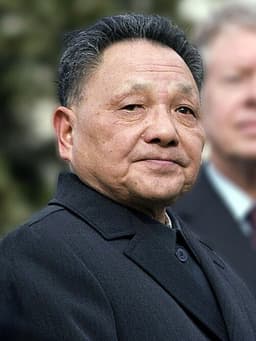
Deng Xiaoping
Politician · Modern
66.0Total
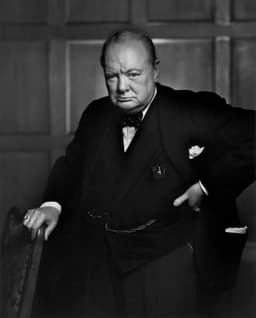
Winston Churchill
Politician · Modern
71.8Total
Basic Information
Born
1904
1874
Died
1997
1965
Era
Modern
Modern
Nationality
China
United Kingdom
Occupation
Politician
Politician
Civilization
Eastern
Western
Score Comparison
Military (10%)
30.0
55.0
Political (20%)
90.0
78.0
Influence (20%)
68.0
75.0
Legacy (20%)
65.0
68.0
Leadership (15%)
78.0
82.0
Strategy (15%)
45.0
65.0
TOTAL
66.0
71.8
Deng Xiaoping — Complete Timeline
1978 AD
Third Plenum of the 11th Central CommitteePolitical Action
Deng Xiaoping consolidated power and announced the policy of Reform and Opening-Up. This meeting marked the end of Maoist class struggle as the national priority and shifted focus to economic modernization, initiating market-oriented reforms.
Economic ReformOpening-UpChina Modernization
Impact: globalconstructive
1980 AD
Establishment of Special Economic ZonesReform◆ Major
Deng Xiaoping approved the creation of Special Economic Zones in Shenzhen, Zhuhai, Shantou, and Xiamen. These zones offered tax incentives and market freedoms to attract foreign investment and technology, serving as experimental laboratories for capitalist practices within a socialist framework.
Economic ZonesForeign InvestmentMarket Reforms
Impact: nationalconstructive
1984 AD
Sino-British Joint Declaration on Hong KongPolitical Action◆ Major
Deng Xiaoping negotiated with British Prime Minister Margaret Thatcher to agree on the return of Hong Kong to Chinese sovereignty in 1997. The declaration established the 'One Country, Two Systems' principle, allowing Hong Kong to maintain its capitalist system for 50 years.
Hong KongDiplomacyOne Country Two Systems
Impact: globalconstructive
1989 AD
Tiananmen Square Protests CrackdownPolitical Action
Deng Xiaoping authorized the military to suppress pro-democracy protests in Tiananmen Square. The crackdown resulted in hundreds of civilian deaths and injuries, leading to international condemnation and a tightening of political control while economic reforms continued.
TiananmenSuppressionHuman Rights
Impact: globaldestructive
1992 AD
Southern Tour (Nanxun)Political Action◆ Major
Deng Xiaoping traveled to southern China to reaffirm the course of economic reform after conservative backlash. His speeches in Shenzhen and other cities revitalized market-oriented policies, accelerating foreign investment and pushing China toward a socialist market economy.
Economic ReformNanxunMarket Economy
Impact: nationalconstructive
Winston Churchill — Complete Timeline
1940 AD
Appointed Prime Minister of the United KingdomPolitical Action◆ Major
On May 10, 1940, Winston Churchill became Prime Minister of the United Kingdom, replacing Neville Chamberlain. His appointment came as Nazi Germany invaded France and the Low Countries, and Churchill formed a coalition government to lead Britain through World War II.
World War IILeadershipCoalition Government
Impact: globalconstructive
Delivered the 'We Shall Fight on the Beaches' SpeechOther◆ Major
On June 4, 1940, Churchill delivered a speech to the House of Commons following the evacuation of British forces from Dunkirk. He declared that Britain would fight on the beaches, landing grounds, fields, streets, and hills, and never surrender, rallying British morale during the darkest days of World War II.
World War IIOratoryMorale
Impact: nationalconstructive
1941 AD
Signed the Atlantic CharterOther◆ Major
On August 14, 1941, Churchill and U.S. President Franklin D. Roosevelt signed the Atlantic Charter aboard HMS Prince of Wales. This joint declaration outlined post-war goals including self-determination, disarmament, and free trade, and became a foundational document for the Allied war aims and the United Nations.
World War IIAllied CooperationPost-war Planning
Impact: globalconstructive
1945 AD
Attended the Yalta ConferenceOther◆ Major
In February 1945, Churchill attended the Yalta Conference with Roosevelt and Stalin to discuss the post-war reorganization of Europe. The conference agreed on the division of Germany, the establishment of the United Nations, and the fate of Eastern Europe, though Churchill later expressed regret over concessions to Stalin.
World War IIPost-war SettlementBig Three
Impact: global
1946 AD
Delivered the 'Iron Curtain' SpeechOther◆ Major
On March 5, 1946, Churchill delivered a speech at Westminster College in Fulton, Missouri, where he stated that an 'iron curtain' had descended across Europe from Stettin to Trieste. This speech is widely regarded as marking the beginning of the Cold War, as it highlighted the division between Soviet-controlled Eastern Europe and the West.
Cold WarSoviet UnionDivision of Europe
Impact: globaldestructive
1953 AD
Awarded the Nobel Prize in LiteratureOther◆ Major
In 1953, Churchill was awarded the Nobel Prize in Literature for his historical writings, particularly 'The Second World War' and 'A History of the English-Speaking Peoples'. The Nobel committee cited his mastery of historical and biographical description as well as his brilliant oratory in defending human values.
LiteratureNobel PrizeHistorical Writing
Impact: nationalconstructive
Expert Analysis
Winston Churchill vs Deng Xiaoping
# The Architect and the Lion
On a winter morning in 1992, an 88-year-old man stepped off a train in Shenzhen, a fishing village he had transformed into a gleaming city of glass and steel. Thousands of miles away, in the cold stone corridors of Westminster, another old man—long dead by then—still cast a shadow so vast that British prime ministers measured themselves against his silhouette. One had saved his nation from destruction; the other had lifted his from poverty. Both reshaped the modern world, yet they could not have been more different in temperament, method, or fate. What drove two men of such comparable historical weight to pursue such divergent paths?
Origins
Winston Churchill was born in 1874 into the heart of the British aristocracy, the son of a prominent politician and an American heiress. His world was one of empire, privilege, and expectation—but also of emotional neglect. His father dismissed him as slow; his schoolmasters despaired of him. Yet from this crucible of rejection emerged a man who worshipped history itself, who believed he was destined for greatness because he had read about it in books.
Deng Xiaoping, born in 1904 in Sichuan province, came from a different soil entirely. The son of a moderately prosperous landowner, he grew up in a China humiliated by foreign powers, fractured by warlords, and hungry for renewal. Where Churchill’s early life was defined by the certainties of Victorian Britain, Deng’s was defined by instability. He left for France as a teenager, working in factories, learning the language of revolution, and absorbing a practical, unsentimental view of power that would serve him for seven decades.
Rise to Power
Churchill’s path was a staircase of audacity and catastrophe. He entered politics in 1900, switching parties twice, championing social reform, and then steering the Admiralty through the First World War—until the disaster of Gallipoli forced his resignation. He spent the 1930s in the political wilderness, a Cassandra warning of Nazi Germany while his colleagues dismissed him as a warmonger. Only when Britain faced its darkest hour in 1940 did the nation turn to the man who had spent his entire life preparing for this moment.
Deng’s rise was slower, more dangerous, and more patient. He joined the Communist Party in his twenties, fought in the Long March, and became a key administrator under Mao Zedong. But Mao’s purges struck him twice: he was stripped of power during the Cultural Revolution, sent to work in a tractor factory, his son crippled by Red Guards. Unlike Churchill, who wore his ambition openly, Deng learned to wait. He survived by bending, by disappearing, by outliving his enemies. When he finally emerged as paramount leader in 1978, he was 74 years old—older than Churchill when he took office, but far more ruthless in his pragmatism.
Leadership & Governance
Churchill governed through words. His speeches—“We shall fight on the beaches,” “Their finest hour”—were weapons as potent as Spitfires. He rallied a nation not by promising prosperity, but by invoking blood, toil, tears, and sweat. His military strategy was uneven: he micromanaged generals, championed disastrous campaigns in Norway and the Mediterranean, yet his instinct for the grand strategic picture—allying with the United States and the Soviet Union—proved correct. Politically, he was a paradox: a reformer in peacetime, a conservative in war, a man who admired democracy but often distrusted the people.
Deng governed through silence and systems. He rarely gave speeches; when he spoke, he was terse. “It doesn’t matter whether a cat is black or white, as long as it catches mice,” he said—a phrase that encapsulated his entire philosophy. Where Churchill built morale, Deng built institutions. The Third Plenum of the 11th Central Committee in 1978 did not electrify the masses; it quietly ended Maoist economics and declared Reform and Opening-Up. The Special Economic Zones established in 1980 were experiments, not declarations—Deng let Shenzhen prove itself before scaling its model nationwide. His strategy was not about defeating an enemy but about unleashing a people’s productive energy.
Triumph & Tragedy
Churchill’s triumph was singular and absolute: the survival of Britain in 1940-41, when all seemed lost. His tragedy was that victory came at a cost that diminished his nation. By 1945, Britain was bankrupt, its empire crumbling. The voters turned him out of office that July, a rejection that stung him deeply. He returned to power in 1951, but his second premiership was a shadow of the first—marked by economic stagnation and imperial retreat.
Deng’s triumph was the transformation of China. Between 1978 and his death in 1997, he lifted hundreds of millions from poverty, turned a peasant society into an industrial powerhouse, and negotiated the return of Hong Kong in the 1984 Sino-British Joint Declaration. But his tragedy was the Tiananmen Square crackdown in 1989. In ordering the military to suppress the pro-democracy protests, he chose stability over freedom, control over conscience. It was a decision that saved his reforms from collapse but stained his legacy forever. His Southern Tour in 1992 was his final act—a journey to reignite reform after the conservative backlash, proving that even in his eighties, he understood that a system must move or die.
Character & Destiny
Churchill was a man of immense emotion and immense ego. He wept easily, raged often, and wrote constantly. He believed history was made by great men, and he was determined to be one. This conviction gave him the courage to stand alone in 1940, but it also blinded him to the limits of British power. His destiny was to be the right man at the right moment—a lion in a season of wolves.
Deng was the opposite: a man who suppressed emotion, who believed in systems over heroes. He had seen too many charismatic leaders destroy their countries. He was short, physically unremarkable, and cultivated anonymity. Yet his character was forged in the fires of survival: he had been purged, humiliated, and broken—and he had rebuilt himself. His destiny was to be the quiet engineer of a revolution that never called itself one.
Legacy
Churchill is remembered as the savior of Western civilization, his image carved into the rock of British identity. But his legacy is contested: some see a racist imperialist, others a flawed hero. His scores—Military 55, Political 82, Leadership 85—reflect a man whose greatness was situational, whose skills were perfectly matched to war but less suited to peace.
Deng is remembered as the architect of modern China, the man who made the country rich. His scores—Political 88, Influence 78, Strategy 65—reflect a different kind of greatness: not the drama of battle, but the patience of construction. Yet his legacy is also contested: prosperity without democracy, freedom without political rights. He gave his people material abundance and took away their voice.
Conclusion
Two men, two centuries, two civilizations. Churchill fought to preserve a world that was passing; Deng built a world that was arriving. One spoke of duty, honor, and empire; the other spoke of prosperity, stability, and reform. One saved his nation from dying; the other saved his nation from starving. In the end, both understood that leadership is not about being loved—it is about being necessary. And both, in their own way, were exactly what their people needed, when they needed it most.
Rankings
🥇
Winston ChurchillLeader
Mil: 55.0Pol: 78.0Inf: 75.0
71.8
🥈
Deng Xiaoping
Mil: 30.0Pol: 90.0Inf: 68.0
66.0
+5.8 behind
How This Comparison Works
Algorithm
Each figure is scored on 6 dimensions (0—100 scale) based on structured historical data: Military (10%), Political (20%), Influence (20%), Legacy (20%), Leadership (15%), Strategy (15%). The weighted total produces the final ranking.
Data Sources
Scores are computed from structured sub-indicators in the database. Scale factors adjust for era (Ancient ×0.85, Modern ×1.0) and civilization size (Eastern ×1.05, Other ×0.80) to account for differences in population and military scale.
Maximum 3 Figures
Comparisons are limited to 2—3 figures to ensure readability and statistical meaningfulness.
Error Margins
±5 points per dimension — Sub-scores are derived from historical records with inherent uncertainty. Two figures within 5 points on a dimension should be considered roughly equivalent in that area.
Total Score Accuracy
±3 points overall — The weighted combination of 6 dimensions produces a total score with approximately ±3 points of uncertainty. Differences of less than 3 points are not statistically significant— the figures are effectively tied.
Known Limitations
- Historical records are incomplete and uneven across civilizations
- Figures from oral-tradition societies may be underrepresented
- Occupation labels can misclassify multi-role figures
- Scores measure capability and impact, not moral character
- Quantitative scoring is a comparison tool, not absolute truth
Capability Radar
Military (10%) — Battles & Warfare
Battles
36
55
Win Rate
37
60
Expansion
41
40
Political (20%) — Governance & Reform
Reform
95
70
Diplomacy
80
85
Economy
95
60
Influence (20%) — Cultural & Global Reach
Cultural
70
85
Global
90
85
Legacy (20%) — Historical Impact
Historical
90
90
Longevity
85
80
Leadership (15%) — Power & Stability
Tenure
85
75
Stability
75
70
Strategy (15%) — Tactics & Innovation
Strategy
47
85
Tactics
48
65
Reform
49
70
Similar Comparisons
Comments & Discussion
Classics Scholar6/16/2026
Churchill is the tragic hero of Thucydides—magnificent in crisis, disastrous in peace. Deng is the pragmatist Confucius never imagined, who proved that virtue without results is hollow. Churchill saved civilization from barbarism; Deng lifted a billion from subsistence. The first was a lion in winter, the second a gardener in spring. Both were tyrants of their own eras, but one’s glory is bloodstained, the other’s is bread-stained.
军事史学家6/16/2026
把丘吉尔和邓小平并列,就像把罗马军团和八路军放在同一张地图上。丘吉尔是战略大师,在至暗时刻用演讲和决心点燃了自由世界——但他也指挥了德累斯顿轰炸,牺牲了殖民帝国的稳定。邓小平则是游击战出身,深谙“存人失地,人地皆存”的道理。他没有大屠杀的污点,但留下了财富分配的火药桶。一个用暴力重建秩序,另一个用秩序埋葬暴力。谁的遗产更持久?历史自己会算账。
Data Skeptic6/16/2026
Sure, Churchill “saved Europe,” but at what cost? The British Empire was bankrupt by 1945, and his wartime spending created debts that crippled the UK for decades. Deng’s GDP growth averaged 9.5% from 1979 to 1992—that’s a measurable miracle. Churchill’s legacy is romanticized nostalgia; Deng’s is a spreadsheet full of zeros. Give me the man who fixed the economy over the one who gave a good speech any day.
锐评家6/16/2026
两个都是铁血人物,但本质天差地别。丘吉尔是旧世界的最后一位贵族英雄,打仗时用了所有殖民炮灰,战后却给帝国收尸。邓是现实主义者,不搞意识形态漂亮话,直接“不管黑猫白猫”。一个靠眼泪和血统封神,一个靠脱贫和厕所登基。但别忘了:邓让中国人吃上了肉,丘吉尔却让印度饿死了几百万人。荣誉的天平,往哪边倾斜,看你站哪块大陆。