Loading...
Deng Xiaoping vs Suleiman the Magnificent
Suleiman the Magnificent leads by 7.2 pts · 2 figures compared
…
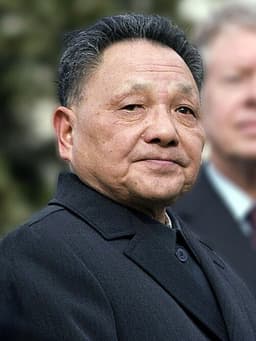
Deng Xiaoping
Politician · Modern
66.0Total
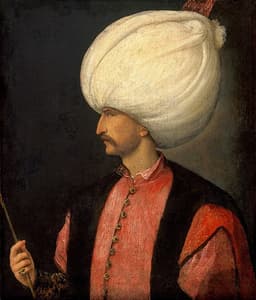
Suleiman the Magnificent
Emperor · Medieval
73.2Total
Basic Information
Born
1904
1494
Died
1997
1566
Era
Modern
Medieval
Nationality
China
Ottoman Empire
Occupation
Politician
Emperor
Civilization
Eastern
Middle Eastern
Score Comparison
Military (10%)
30.0
85.0
Political (20%)
90.0
78.0
Influence (20%)
68.0
72.0
Legacy (20%)
65.0
68.0
Leadership (15%)
78.0
72.0
Strategy (15%)
45.0
72.0
TOTAL
66.0
73.2
Deng Xiaoping — Complete Timeline
1978 AD
Third Plenum of the 11th Central CommitteePolitical Action
Deng Xiaoping consolidated power and announced the policy of Reform and Opening-Up. This meeting marked the end of Maoist class struggle as the national priority and shifted focus to economic modernization, initiating market-oriented reforms.
Economic ReformOpening-UpChina Modernization
Impact: globalconstructive
1980 AD
Establishment of Special Economic ZonesReform◆ Major
Deng Xiaoping approved the creation of Special Economic Zones in Shenzhen, Zhuhai, Shantou, and Xiamen. These zones offered tax incentives and market freedoms to attract foreign investment and technology, serving as experimental laboratories for capitalist practices within a socialist framework.
Economic ZonesForeign InvestmentMarket Reforms
Impact: nationalconstructive
1984 AD
Sino-British Joint Declaration on Hong KongPolitical Action◆ Major
Deng Xiaoping negotiated with British Prime Minister Margaret Thatcher to agree on the return of Hong Kong to Chinese sovereignty in 1997. The declaration established the 'One Country, Two Systems' principle, allowing Hong Kong to maintain its capitalist system for 50 years.
Hong KongDiplomacyOne Country Two Systems
Impact: globalconstructive
1989 AD
Tiananmen Square Protests CrackdownPolitical Action
Deng Xiaoping authorized the military to suppress pro-democracy protests in Tiananmen Square. The crackdown resulted in hundreds of civilian deaths and injuries, leading to international condemnation and a tightening of political control while economic reforms continued.
TiananmenSuppressionHuman Rights
Impact: globaldestructive
1992 AD
Southern Tour (Nanxun)Political Action◆ Major
Deng Xiaoping traveled to southern China to reaffirm the course of economic reform after conservative backlash. His speeches in Shenzhen and other cities revitalized market-oriented policies, accelerating foreign investment and pushing China toward a socialist market economy.
Economic ReformNanxunMarket Economy
Impact: nationalconstructive
Suleiman the Magnificent — Complete Timeline
1522 AD
Siege of RhodesWar◆ Major
Suleiman personally led a massive Ottoman campaign against the Knights Hospitaller on Rhodes. After a six-month siege, the knights surrendered and were allowed to leave. This victory secured Ottoman control over the eastern Mediterranean.
SiegeMediterraneanKnights Hospitaller
Impact: regional
1526 AD
Battle of MohácsWar
Suleiman's Ottoman army defeated the Hungarian forces of King Louis II at Moh
BattleHungaryOttoman expansion
Impact: regional
1529 AD
Siege of ViennaWar◆ Major
Suleiman besieged Vienna, the Habsburg capital, with a large army. The siege failed due to supply issues, disease, and strong defenses. This defeat halted Ottoman expansion into central Europe and marked the empire's furthest advance westward.
SiegeViennaDefeat
Impact: regional
1530 AD
Codification of Ottoman lawReform◆ Major
Suleiman oversaw the compilation and standardization of Ottoman legal codes, known as Kanun. These laws regulated criminal justice, land tenure, and taxation, creating a unified legal system that balanced sharia with secular law. He earned the title 'Kanuni' (the Lawgiver).
Legal reformKanunOttoman Empire
Impact: nationalconstructive
1536 AD
Execution of Ibrahim PashaPolitical Action◆ Major
Suleiman ordered the execution of his grand vizier and close friend Ibrahim Pasha, who had served for 13 years. The reasons remain debated, but likely involved Ibrahim's growing power and conflicts with Suleiman's wife, Hurrem Sultan. This event demonstrated the absolute power of the sultan.
ExecutionCourt politicsPower
Impact: nationaltragic
Expert Analysis
Suleiman the Magnificent vs Deng Xiaoping
# The Sultan and the Reformer: Two Paths to Power, Two Visions of Empire
In the autumn of 1529, Suleiman the Magnificent stood before the walls of Vienna, his army stretching across the Danube plain like a human tide. Four centuries later, in the spring of 1978, Deng Xiaoping sat in a modest Beijing meeting room, quietly steering China away from the ruins of Maoist utopianism. One commanded the largest empire of its age, the other reshaped the most populous nation on earth. Both were pragmatists, both were reformers, and both left worlds transformed. Yet their methods, their fates, and their legacies diverged as sharply as the centuries that separated them.
Origins
Suleiman was born in 1494 into the Ottoman dynasty, a prince of a house that had already conquered Constantinople and dominated the eastern Mediterranean. His father, Selim I, expanded the empire into Egypt and the Holy Cities of Islam, handing Suleiman a realm that stretched from Budapest to Mecca. Raised in the Topkapi Palace, Suleiman learned statecraft from tutors, Arabic from scholars, and war from veterans of his father's campaigns. His world was one of absolute monarchy, divine sanction, and perpetual expansion.
Deng Xiaoping was born in 1904 in Sichuan province, a China crumbling under the weight of foreign humiliation and internal decay. His father, a minor landowner, sent him to France at age sixteen as part of a work-study program. There, Deng worked in a rubber factory, learned French, and met Chinese communists who would shape his worldview. His world was one of revolution, poverty, and the desperate search for national salvation. Where Suleiman inherited an empire, Deng inherited a vision of building one anew.
Rise to Power
Suleiman ascended the throne in 1520 at age twenty-six, his father's death leaving him the undisputed ruler of the Ottoman Empire. There was no election, no party struggle, no ideological debate—only the sword of Osman and the will of God. His first major act was to lift the siege of Belgrade in 1521, a victory that opened the door to Hungary. By 1522, he personally led the campaign against the Knights Hospitaller on Rhodes, a six-month siege that tested his patience and tactical skill. The knights surrendered, and Suleiman allowed them to leave with their lives—a gesture of magnanimity that would define his early reign.
Deng's rise was a study in survival. He joined the Chinese Communist Party in 1924, participated in the Long March in 1934, and served as a political commissar during the war against Japan. But Mao Zedong's Cultural Revolution in the 1960s purged Deng twice, sending him to work in a tractor factory in Jiangxi. He did not resist; he waited. When Mao died in 1976 and the Gang of Four fell, Deng emerged as the paramount leader. His power was not inherited but earned through endurance, patience, and the quiet accumulation of allies.
Leadership & Governance
Suleiman governed through the classical Ottoman system: a sultan who ruled by decree, advised by a grand vizier, and enforced by a slave-soldier elite. His greatest reform was the codification of Ottoman law in 1530, known as the *Kanun*. These laws standardized criminal penalties, regulated taxation, and protected non-Muslim communities through the millet system. Suleiman earned the title "the Lawgiver" among his subjects, a rare honor for a monarch. Yet his governance remained autocratic: justice flowed from the sultan's will, and dissent was crushed.
Deng governed through the Chinese Communist Party's collective leadership, but his method was distinctly pragmatic. At the Third Plenum of the 11th Central Committee in December 1978, he announced Reform and Opening-Up, dismantling Mao's communes and inviting foreign investment. The Special Economic Zones established in 1980—Shenzhen, Zhuhai, Shantou, and Xiamen—became laboratories of capitalism within a communist state. Deng's philosophy was famously captured in his aphorism: "It doesn't matter if a cat is black or white, as long as it catches mice." Results mattered more than ideology.
Triumph & Tragedy
Suleiman's triumph came at the Battle of Mohács in 1526, where his artillery and Janissaries annihilated the Hungarian army of King Louis II. The king died in the rout, and Hungary fell under Ottoman influence for 150 years. But his tragedy followed soon after: the failed Siege of Vienna in 1529, where supply lines collapsed, disease ravaged his troops, and the autumn rains turned roads to mud. Vienna held, and the Ottoman advance into Europe stopped. Suleiman would never again attempt to take the city.
Deng's triumph was the transformation of China's economy. By 1992, when he made his Southern Tour to reaffirm reform after conservative backlash, Shenzhen had grown from a fishing village to a city of skyscrapers. His tragedy came in 1989, when he authorized the military to suppress pro-democracy protests in Tiananmen Square. The crackdown resulted in hundreds of deaths, tarnishing his legacy and silencing dissent. Deng chose stability over freedom, economic growth over political liberalization.
Character & Destiny
Suleiman was a man of contrasts: a poet who wrote verses under the pen name Muhibbi, a patron of the architect Sinan who built the Süleymaniye Mosque, and a ruler who executed his closest friend, Grand Vizier Ibrahim Pasha, in 1536. The reasons remain murky—perhaps Ibrahim's growing arrogance, perhaps the influence of Suleiman's wife Roxelana. This act revealed the loneliness of absolute power: even friendship could not survive the throne.
Deng was a man of iron discipline and deliberate restraint. He rarely gave speeches, preferring small meetings and quiet conversations. He smoked cigarettes constantly, played bridge, and never sought the cult of personality that surrounded Mao. His character was shaped by survival: he had seen comrades destroyed by ideology, so he trusted only what worked. "Seek truth from facts," he often said. This pragmatism made him effective, but it also made him ruthless when his vision was threatened.
Legacy
Suleiman's legacy is the Ottoman golden age: a unified legal code, a flourishing of arts and architecture, and an empire that stretched from Algeria to Iraq. Yet his failure at Vienna marked the beginning of Ottoman stagnation. The naval defeat at Lepanto in 1571, though after his death, was a consequence of his overextension. Today, Suleiman is remembered as a symbol of Ottoman greatness, but also as a ruler whose ambition exceeded his empire's capacity.
Deng's legacy is China's rise as a global power. He lifted hundreds of millions from poverty, created the world's second-largest economy, and negotiated the return of Hong Kong in 1984 through the Sino-British Joint Declaration. Yet his legacy is also the authoritarian capitalism that persists today: economic freedom without political freedom, growth without democracy. The Tiananmen crackdown remains a wound that time has not healed.
Conclusion
Suleiman and Deng never met, but they faced the same fundamental question: how to rule a vast, diverse, and restless population. Suleiman answered with law, conquest, and the divine right of the sultan. Deng answered with markets, discipline, and the pragmatic will of the party. Both succeeded beyond measure, and both left shadows that darkened their light. Perhaps the deepest difference lies not in their achievements but in their worlds: Suleiman ruled a medieval empire where change was measured in centuries; Deng ruled a modern nation where change was measured in decades. One built for eternity; the other built for survival. Both discovered that eternity is a luxury no ruler can afford.
Rankings
🥇
Suleiman the MagnificentLeader
Mil: 85.0Pol: 78.0Inf: 72.0
73.2
🥈
Deng Xiaoping
Mil: 30.0Pol: 90.0Inf: 68.0
66.0
+7.2 behind
How This Comparison Works
Algorithm
Each figure is scored on 6 dimensions (0—100 scale) based on structured historical data: Military (10%), Political (20%), Influence (20%), Legacy (20%), Leadership (15%), Strategy (15%). The weighted total produces the final ranking.
Data Sources
Scores are computed from structured sub-indicators in the database. Scale factors adjust for era (Ancient ×0.85, Modern ×1.0) and civilization size (Eastern ×1.05, Other ×0.80) to account for differences in population and military scale.
Maximum 3 Figures
Comparisons are limited to 2—3 figures to ensure readability and statistical meaningfulness.
Error Margins
±5 points per dimension — Sub-scores are derived from historical records with inherent uncertainty. Two figures within 5 points on a dimension should be considered roughly equivalent in that area.
Total Score Accuracy
±3 points overall — The weighted combination of 6 dimensions produces a total score with approximately ±3 points of uncertainty. Differences of less than 3 points are not statistically significant— the figures are effectively tied.
Known Limitations
- Historical records are incomplete and uneven across civilizations
- Figures from oral-tradition societies may be underrepresented
- Occupation labels can misclassify multi-role figures
- Scores measure capability and impact, not moral character
- Quantitative scoring is a comparison tool, not absolute truth
Capability Radar
Military (10%) — Battles & Warfare
Battles
36
95
Win Rate
37
90
Expansion
41
95
Political (20%) — Governance & Reform
Reform
95
90
Diplomacy
80
88
Economy
95
85
Influence (20%) — Cultural & Global Reach
Cultural
70
90
Global
90
88
Legacy (20%) — Historical Impact
Historical
90
92
Longevity
85
85
Leadership (15%) — Power & Stability
Tenure
85
95
Stability
75
85
Strategy (15%) — Tactics & Innovation
Strategy
47
92
Tactics
48
85
Reform
49
80
Similar Comparisons
Comments & Discussion
No comments yet. Be the first to share your thoughts!