Loading...
Abraham Lincoln vs Deng Xiaoping
Abraham Lincoln leads by 11.5 pts · 2 figures compared
…
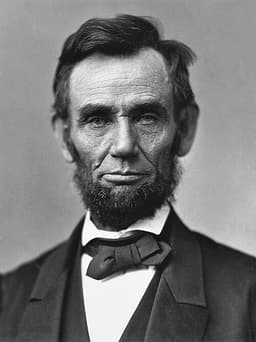
Abraham Lincoln
Politician · Modern
77.5Total
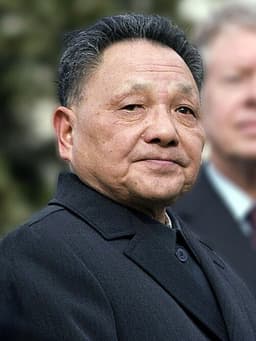
Deng Xiaoping
Politician · Modern
66.0Total
Basic Information
Born
1809
1904
Died
1865
1997
Era
Modern
Modern
Nationality
United States
China
Occupation
Politician
Politician
Civilization
Western
Eastern
Score Comparison
Military (10%)
50.0
30.0
Political (20%)
88.0
90.0
Influence (20%)
80.0
68.0
Legacy (20%)
82.0
65.0
Leadership (15%)
85.0
78.0
Strategy (15%)
60.0
45.0
TOTAL
77.5
66.0
Abraham Lincoln — Complete Timeline
1861 AD
Suspension of Habeas CorpusPolitical Action◆ Major
Lincoln suspended the writ of habeas corpus in parts of the Union, allowing the military to arrest and detain suspected Confederate sympathizers without trial. This action was controversial and challenged civil liberties during wartime.
Habeas CorpusCivil LibertiesCivil War
Impact: nationaldestructive
1862 AD
Signing of the Homestead ActPolitical Action◆ Major
Lincoln signed the Homestead Act, granting 160 acres of public land to settlers for a small fee. This encouraged westward expansion and agricultural development, but also displaced Native American tribes.
Homestead ActWestward ExpansionLand Policy
Impact: nationalconstructive
1863 AD
Emancipation ProclamationPolitical Action
Lincoln issued the Emancipation Proclamation, declaring slaves in Confederate states free. This shifted the Civil War's focus to ending slavery and allowed African Americans to join the Union Army.
EmancipationCivil WarSlavery
Impact: globalprogressive
Gettysburg AddressCultural◆ Major
Lincoln delivered the Gettysburg Address at the dedication of the Soldiers' National Cemetery. The speech redefined the Civil War as a struggle for national unity and equality, and became one of the most famous speeches in US history.
Gettysburg AddressCivil WarOratory
Impact: nationalconstructive
1865 AD
Assassination by John Wilkes BoothOther
Lincoln was shot by John Wilkes Booth at Ford's Theatre in Washington, D.C., and died the next day. His assassination occurred just days after the Civil War ended, plunging the nation into mourning and affecting Reconstruction.
AssassinationCivil WarReconstruction
Impact: nationaltragic
Deng Xiaoping — Complete Timeline
1978 AD
Third Plenum of the 11th Central CommitteePolitical Action
Deng Xiaoping consolidated power and announced the policy of Reform and Opening-Up. This meeting marked the end of Maoist class struggle as the national priority and shifted focus to economic modernization, initiating market-oriented reforms.
Economic ReformOpening-UpChina Modernization
Impact: globalconstructive
1980 AD
Establishment of Special Economic ZonesReform◆ Major
Deng Xiaoping approved the creation of Special Economic Zones in Shenzhen, Zhuhai, Shantou, and Xiamen. These zones offered tax incentives and market freedoms to attract foreign investment and technology, serving as experimental laboratories for capitalist practices within a socialist framework.
Economic ZonesForeign InvestmentMarket Reforms
Impact: nationalconstructive
1984 AD
Sino-British Joint Declaration on Hong KongPolitical Action◆ Major
Deng Xiaoping negotiated with British Prime Minister Margaret Thatcher to agree on the return of Hong Kong to Chinese sovereignty in 1997. The declaration established the 'One Country, Two Systems' principle, allowing Hong Kong to maintain its capitalist system for 50 years.
Hong KongDiplomacyOne Country Two Systems
Impact: globalconstructive
1989 AD
Tiananmen Square Protests CrackdownPolitical Action
Deng Xiaoping authorized the military to suppress pro-democracy protests in Tiananmen Square. The crackdown resulted in hundreds of civilian deaths and injuries, leading to international condemnation and a tightening of political control while economic reforms continued.
TiananmenSuppressionHuman Rights
Impact: globaldestructive
1992 AD
Southern Tour (Nanxun)Political Action◆ Major
Deng Xiaoping traveled to southern China to reaffirm the course of economic reform after conservative backlash. His speeches in Shenzhen and other cities revitalized market-oriented policies, accelerating foreign investment and pushing China toward a socialist market economy.
Economic ReformNanxunMarket Economy
Impact: nationalconstructive
Expert Analysis
Abraham Lincoln vs Deng Xiaoping
Two Architects of Modernity
On a bitter January morning in 1863, Abraham Lincoln put pen to paper and declared that slaves in rebel states "shall be then, thenceforward, and forever free." The Emancipation Proclamation was a radical gamble, a wartime measure that would redefine the American experiment. Across the Pacific and more than a century later, in the spring of 1992, an 88-year-old Deng Xiaoping boarded a special train for a journey to China’s southern coast. His "Southern Tour" was a quiet but seismic act: a frail old man reaffirming that economic reform would not be reversed. Both men stood at the crossroads of their nations’ histories. Lincoln preserved a Union; Deng transformed a civilization. Yet their paths, their methods, and their ultimate legacies reveal a profound contrast in how leaders navigate the chasm between principle and pragmatism.
Origins
Abraham Lincoln was born in 1809 in a one-room log cabin in Kentucky, the son of illiterate farmers. His America was a young, sprawling republic haunted by the sin of slavery. Lincoln’s education was scant—barely a year of formal schooling—but he devoured books by firelight. His world was one of democratic possibility and violent division, where the question of human freedom was not abstract but lived.
Deng Xiaoping entered the world in 1904 in Guang’an, Sichuan, into a moderately well-off landowning family. China was then a crumbling empire, humiliated by foreign powers and torn by warlord conflicts. Deng studied in France and the Soviet Union, absorbing revolutionary ideas. His formative years were shaped by chaos, colonization, and the desperate search for national strength. If Lincoln’s America was a house divided, Deng’s China was a house in ashes.
Rise to Power
Lincoln’s ascent was slow, deliberate, and rooted in law and oratory. He served in the Illinois legislature and a single term in Congress, then lost a Senate race to Stephen Douglas in 1858. But his debates with Douglas made him a national figure. In 1860, he won the presidency with only 40 percent of the popular vote—a fractured victory that triggered the secession of Southern states. His rise was not a coup but a culmination of democratic process, however fragile.
Deng’s path was far more treacherous. A veteran of the Long March and a key figure in Mao Zedong’s Communist Party, Deng was purged twice—once during the Cultural Revolution, when his son was crippled by Red Guards. He survived by biding his time, cultivating alliances, and never openly challenging Mao. After Mao’s death in 1976, Deng outmaneuvered the Gang of Four and consolidated power by 1978. His rise was not through popular election but through the brutal, silent chessboard of a one-party state.
Leadership & Governance
Lincoln governed during the Civil War, the bloodiest conflict in American history. He suspended habeas corpus in 1861, allowing military arrests of suspected insurgents—a controversial act that tested constitutional limits. Yet he also signed the Homestead Act in 1862, opening Western lands to settlers, and issued the Emancipation Proclamation in 1863, transforming the war into a fight for human freedom. His leadership was a balancing act: ruthless when necessary, but always anchored to the idea of a single, indivisible Union. The Gettysburg Address in November 1863, just 272 words, redefined the nation’s purpose as a government "of the people, by the people, for the people."
Deng governed a China shattered by Mao’s utopian catastrophes—the Great Leap Forward and the Cultural Revolution. He did not seek to abolish the Communist Party but to reform it from within. At the Third Plenum of the 11th Central Committee in December 1978, he announced the policy of Reform and Opening-Up. He created Special Economic Zones in 1980, where market capitalism was allowed to flourish under party supervision. He negotiated the return of Hong Kong from Britain in 1984, a diplomatic masterstroke that preserved Chinese sovereignty while reassuring global investors. Yet in 1989, when pro-democracy protests erupted in Tiananmen Square, Deng authorized military force to crush them. He chose stability over freedom, order over dissent.
Triumph & Tragedy
Lincoln’s greatest triumph was the Union’s victory in 1865 and the passage of the 13th Amendment, abolishing slavery. His tragedy came at the moment of victory: on April 14, 1865, he was assassinated by John Wilkes Booth at Ford’s Theatre. He died without seeing the full promise of Reconstruction, leaving a nation that would struggle for another century to deliver on his vision.
Deng’s triumph was China’s economic miracle. By the time of his death in 1997, China’s GDP had quadrupled, and hundreds of millions had been lifted from poverty. His tragedy was the brutal suppression of Tiananmen Square, a scar on his legacy that the Chinese government still refuses to acknowledge. Deng achieved material prosperity but at the cost of political freedom.
Character & Destiny
Lincoln was a melancholic, introspective man who carried the weight of a nation’s suffering. He was a master of language, using words to shape meaning and mobilize a people. His decisions—from the Emancipation Proclamation to the suspension of habeas corpus—were often agonized but always aimed at a moral horizon: "A house divided against itself cannot stand."
Deng was pragmatic, almost anti-ideological. His famous saying, "It doesn’t matter whether a cat is black or white, as long as it catches mice," captured his philosophy. He was not a visionary in the grand sense but a fixer, a realist who saw that survival and prosperity mattered more than abstract ideals. His destiny was to rebuild a nation, not to redeem its soul.
Legacy
Lincoln is remembered as the Great Emancipator, the savior of the Union, and a martyr for democracy. His face is carved on Mount Rushmore, his words taught in every American school. His legacy is both a standard and a challenge—a reminder that the work of equality is never finished.
Deng’s legacy is more ambiguous. He is celebrated in China as the architect of modern prosperity, the man who lifted the nation from poverty. But his name is also associated with authoritarian control. Outside China, he is viewed with a mixture of admiration for his economic reforms and condemnation for his political repression. His reforms set the stage for China’s rise as a global superpower, but at a cost that history is still counting.
Conclusion
Lincoln and Deng never met, never read each other’s words. Yet they share a strange kinship: both were leaders who faced a fractured nation and chose to rebuild it by any means necessary. Lincoln chose moral clarity and paid with his life. Deng chose practical results and lived to see his work bear fruit. One is a saint of democracy; the other, a sage of survival. Their stories remind us that greatness is never pure, and that the tools of leadership—whether the pen of emancipation or the hand of control—are always shaped by the time and place in which they are wielded. The question they leave us is not which path was right, but which we would have the courage to walk.
Rankings
🥇
Abraham LincolnLeader
Mil: 50.0Pol: 88.0Inf: 80.0
77.5
🥈
Deng Xiaoping
Mil: 30.0Pol: 90.0Inf: 68.0
66.0
+11.5 behind
How This Comparison Works
Algorithm
Each figure is scored on 6 dimensions (0—100 scale) based on structured historical data: Military (10%), Political (20%), Influence (20%), Legacy (20%), Leadership (15%), Strategy (15%). The weighted total produces the final ranking.
Data Sources
Scores are computed from structured sub-indicators in the database. Scale factors adjust for era (Ancient ×0.85, Modern ×1.0) and civilization size (Eastern ×1.05, Other ×0.80) to account for differences in population and military scale.
Maximum 3 Figures
Comparisons are limited to 2—3 figures to ensure readability and statistical meaningfulness.
Error Margins
±5 points per dimension — Sub-scores are derived from historical records with inherent uncertainty. Two figures within 5 points on a dimension should be considered roughly equivalent in that area.
Total Score Accuracy
±3 points overall — The weighted combination of 6 dimensions produces a total score with approximately ±3 points of uncertainty. Differences of less than 3 points are not statistically significant— the figures are effectively tied.
Known Limitations
- Historical records are incomplete and uneven across civilizations
- Figures from oral-tradition societies may be underrepresented
- Occupation labels can misclassify multi-role figures
- Scores measure capability and impact, not moral character
- Quantitative scoring is a comparison tool, not absolute truth
Capability Radar
Military (10%) — Battles & Warfare
Battles
15
36
Win Rate
20
37
Expansion
0
41
Political (20%) — Governance & Reform
Reform
95
95
Diplomacy
80
80
Economy
70
95
Influence (20%) — Cultural & Global Reach
Cultural
85
70
Global
85
90
Legacy (20%) — Historical Impact
Historical
95
90
Longevity
90
85
Leadership (15%) — Power & Stability
Tenure
65
85
Stability
55
75
Strategy (15%) — Tactics & Innovation
Strategy
55
47
Tactics
10
48
Reform
60
49
Similar Comparisons
Comments & Discussion
TheRailSplitter6/16/2026
Lincoln’s Emancipation Proclamation only freed slaves in rebel territory it didn’t control; it was a strategic war move, not a moral crusade. Compare that to Deng’s 1992 Southern Tour, which actually opened markets and lifted hundreds of millions from poverty. Lincoln preserved a flawed union, but Deng rebuilt an entire civilization. Give me the pragmatist who delivered results over the idealist who hedged his bets.
南巡老船长6/16/2026
林肯定义了“为解除危机而战”,邓小平定义了“为改变命运而活”。解放黑人奴隶的宣言仅针对叛乱州,实际效果有限,而南方讲话打破了改革僵局,直接推动深圳从渔村变都市。一个是政治魔术师,一个是经济工程师——我选后者,因为他让人民吃饱了饭。
古书修补匠6/16/2026
比较这两位,得看语境:林肯面对的是分裂与奴隶制,邓面对的是封闭与贫穷。林肯依靠军事行动和宪法修正案,邓依靠试点和逐步开放。没有谁更高明,只有谁更适配时代。但注意,邓的“摸着石头过河”是实践智慧,林肯的“民有、民治、民享”是理念光辉——前者修路,后者造灯,各有其用。
Chronicler74166/16/2026
People romanticize Lincoln as the Great Emancipator, but he was a ruthless pragmatist who suspended habeas corpus and jailed dissidents. Deng was equally practical—he opened China to capitalism but kept the Party’s grip tight. Both were tactical geniuses navigating chaos, not saints. Lincoln saved a nation through blood; Deng rebuilt one through sweat. I respect both, but Lincoln’s body count wins the dark irony contest.