Loading...
Charles de Gaulle vs Deng Xiaoping
Charles de Gaulle leads by 2.2 pts · 2 figures compared
…
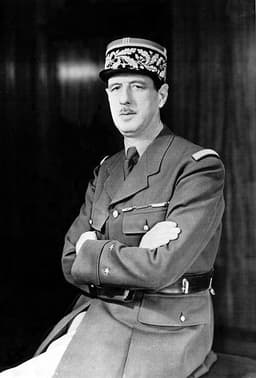
Charles de Gaulle
Politician · Modern
68.2Total
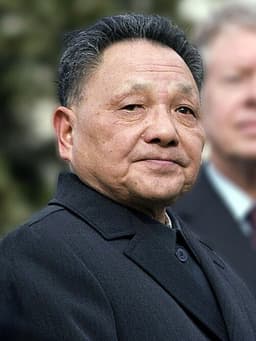
Deng Xiaoping
Politician · Modern
66.0Total
Basic Information
Born
1890
1904
Died
1970
1997
Era
Modern
Modern
Nationality
France
China
Occupation
Politician
Politician
Civilization
Western
Eastern
Score Comparison
Military (10%)
55.0
30.0
Political (20%)
75.0
90.0
Influence (20%)
65.0
68.0
Legacy (20%)
68.0
65.0
Leadership (15%)
78.0
78.0
Strategy (15%)
65.0
45.0
TOTAL
68.2
66.0
Charles de Gaulle — Complete Timeline
1940 AD
Appeal of 18 June 1940Political Action
From London, de Gaulle broadcast a radio appeal urging French resistance against Nazi occupation. He called on French soldiers and citizens to continue the fight, founding the Free French Forces and becoming the symbol of French defiance.
World War IIResistanceLeadership
Impact: nationalconstructive
1958 AD
Founding of the Fifth RepublicPolitical Action
De Gaulle returned to power during the Algerian crisis and oversaw the drafting of a new constitution. The Fifth Republic established a strong executive presidency, replacing the unstable parliamentary system of the Fourth Republic.
ConstitutionGovernment ReformPolitical System
Impact: nationalconstructive
1962 AD
End of the Algerian WarPolitical Action◆ Major
De Gaulle negotiated the
DecolonizationPeace TreatyAlgeria
Impact: regionalconstructive
1968 AD
May 1968 CrisisPolitical Action◆ Major
Mass student protests and general strikes paralyzed France, challenging de Gaulle's government. De Gaulle briefly fled to Germany, then returned to dissolve the National Assembly and call elections, which his party won, but his authority was weakened.
ProtestPolitical CrisisSocial Unrest
Impact: nationaldestructive
1969 AD
Resignation as PresidentPolitical Action
De Gaulle resigned after losing a referendum on regional reform and Senate restructuring. The defeat marked the end of his political career, as he withdrew from public life and died the following year.
ResignationPolitical DefeatReferendum
Impact: nationaltragic
Deng Xiaoping — Complete Timeline
1978 AD
Third Plenum of the 11th Central CommitteePolitical Action
Deng Xiaoping consolidated power and announced the policy of Reform and Opening-Up. This meeting marked the end of Maoist class struggle as the national priority and shifted focus to economic modernization, initiating market-oriented reforms.
Economic ReformOpening-UpChina Modernization
Impact: globalconstructive
1980 AD
Establishment of Special Economic ZonesReform◆ Major
Deng Xiaoping approved the creation of Special Economic Zones in Shenzhen, Zhuhai, Shantou, and Xiamen. These zones offered tax incentives and market freedoms to attract foreign investment and technology, serving as experimental laboratories for capitalist practices within a socialist framework.
Economic ZonesForeign InvestmentMarket Reforms
Impact: nationalconstructive
1984 AD
Sino-British Joint Declaration on Hong KongPolitical Action◆ Major
Deng Xiaoping negotiated with British Prime Minister Margaret Thatcher to agree on the return of Hong Kong to Chinese sovereignty in 1997. The declaration established the 'One Country, Two Systems' principle, allowing Hong Kong to maintain its capitalist system for 50 years.
Hong KongDiplomacyOne Country Two Systems
Impact: globalconstructive
1989 AD
Tiananmen Square Protests CrackdownPolitical Action
Deng Xiaoping authorized the military to suppress pro-democracy protests in Tiananmen Square. The crackdown resulted in hundreds of civilian deaths and injuries, leading to international condemnation and a tightening of political control while economic reforms continued.
TiananmenSuppressionHuman Rights
Impact: globaldestructive
1992 AD
Southern Tour (Nanxun)Political Action◆ Major
Deng Xiaoping traveled to southern China to reaffirm the course of economic reform after conservative backlash. His speeches in Shenzhen and other cities revitalized market-oriented policies, accelerating foreign investment and pushing China toward a socialist market economy.
Economic ReformNanxunMarket Economy
Impact: nationalconstructive
Expert Analysis
Charles de Gaulle vs Deng Xiaoping
# The General and the Pragmatist
On a June evening in 1940, a tall, aloof French general stood before a BBC microphone in London and declared that France had lost a battle, but not the war. Thirty-eight years later, in a Beijing conference hall, a short, chain-smoking Chinese veteran told his party that it did not matter whether a cat was black or white, so long as it caught mice. Charles de Gaulle and Deng Xiaoping never met, yet their lives traced parallel arcs through the twentieth century’s most violent upheavals. Both men rescued their nations from ruin, but they did so by opposite instincts—one through grandeur, the other through guile.
Origins
De Gaulle was born into a pious, patriotic Catholic family in Lille in 1890. His father taught him that France was a vessel of civilization, destined for greatness. From childhood, de Gaulle carried himself with a formality that bordered on the theatrical—tall, long-nosed, convinced that history had chosen him. He was wounded three times in World War I, captured at Verdun, and emerged with a burning contempt for France’s political decay.
Deng Xiaoping, born fourteen years later in rural Sichuan, came from a landowner family that had fallen on hard times. While de Gaulle studied at Saint-Cyr, Deng sailed for France in 1920 as a teenage work-study student, spending years in factories and soup kitchens. He learned not from books but from hunger, exploitation, and the bitter camaraderie of Chinese exiles. Where de Gaulle absorbed the mystique of French military glory, Deng absorbed the mechanics of survival.
Rise to Power
De Gaulle’s rise was a series of gambles. A junior tank commander in 1940, he fled to London while France capitulated. His Appeal of June 18 was an act of sheer defiance—a man with no army, no territory, no legitimacy claiming to speak for France. Through sheer will, he transformed himself from a renegade brigadier into the symbol of French resistance. After the war, he resigned in 1946 rather than govern under a weak parliamentary system, then waited twelve years in the wilderness.
Deng’s path was more tortuous. A veteran of the Long March and a key organizer of Mao’s Communist Party, he was purged twice—first during the Cultural Revolution, then again in 1976. He survived by bending, apologizing, and waiting. When Mao died and the Gang of Four fell, Deng emerged not with a dramatic broadcast but with a quiet bureaucratic coup at the Third Plenum of the 11th Central Committee in December 1978. He did not claim to save China; he claimed to fix the economy.
Leadership & Governance
De Gaulle governed through grandeur. The Fifth Republic, which he founded in 1958, concentrated power in the presidency—a throne for the man he called “a certain idea of France.” He withdrew from NATO, vetoed British entry into the European Common Market, and toured the countryside shaking hands with farmers. His military strategy was political: he used the threat of force to end the Algerian War in 1962, then faced down his own generals in a failed coup. His score of 55 in strategy reflects his weakness in conventional military planning, but his 82 in politics reveals his true weapon: legitimacy.
Deng governed through pragmatism. He dismantled Mao’s communes, opened Special Economic Zones in 1980, and welcomed foreign capital. His doctrine was “crossing the river by feeling the stones”—no ideology, only results. He negotiated the return of Hong Kong with Margaret Thatcher in 1984, a masterstroke of patient diplomacy. His military score of 45 is low, but his 88 in politics underscores his genius: he knew when to push reform and when to crack down, as he did brutally in 1989.
Triumph & Tragedy
De Gaulle’s greatest moment was his return in 1958, when he saved France from civil war over Algeria. His tragedy was the May 1968 crisis, when students and workers paralyzed France, and he briefly fled to Germany—a humiliating revelation that the man who embodied France had lost touch with its youth. He resigned in 1969 after losing a trivial referendum, ending not with a bang but a ballot.
Deng’s triumph was the Southern Tour of 1992, when he traveled through Shenzhen and Guangzhou, reigniting reform after conservative backlash. His tragedy was Tiananmen Square in 1989, where he authorized military force against pro-democracy protesters. That decision secured his power but stained his legacy, and the world’s memory of him remains split between the liberator of China’s economy and the suppressor of its democracy.
Character & Destiny
De Gaulle was a man of granite. He once wrote, “Great men are those who have known how to make their dreams come true.” He believed in destiny, in the sacred mission of France, and in his own role as its vessel. This made him inflexible: he could not adapt to 1968 because he could not admit that France had changed.
Deng was a man of rubber. He said, “I don’t care if a cat is black or white, as long as it catches mice.” He had no grand vision of China’s eternal soul—only a practical desire to lift its people from poverty. This made him resilient: he survived purges, reversed policies, and outlasted enemies. But it also made him ruthless: he saw protesters as obstacles, not symbols.
Legacy
De Gaulle left France the Fifth Republic, a nuclear arsenal, and a habit of independence. Today, he is remembered as the father of modern France, but his name carries a whiff of nostalgia. The France he imagined—grand, solitary, resistant to Anglo-Saxon influence—has faded.
Deng left China the greatest economic transformation in human history. Hundreds of millions were lifted from poverty. His name is carved into the Shenzhen skyline, but his shadow falls darkly across Tiananmen. The China he built is rich, powerful, and authoritarian—exactly what he intended.
Conclusion
Two men, two nations, two catastrophes. De Gaulle saved France from humiliation but could not save it from irrelevance. Deng lifted China from poverty but could not lift it from repression. Both were products of their times—the general forged by war, the pragmatist forged by chaos. In the end, they remind us that leaders are not judged by their intentions but by their outcomes, and that the same history that crowns them one day judges them the next.
Rankings
🥇
Charles de GaulleLeader
Mil: 55.0Pol: 75.0Inf: 65.0
68.2
🥈
Deng Xiaoping
Mil: 30.0Pol: 90.0Inf: 68.0
66.0
+2.2 behind
How This Comparison Works
Algorithm
Each figure is scored on 6 dimensions (0—100 scale) based on structured historical data: Military (10%), Political (20%), Influence (20%), Legacy (20%), Leadership (15%), Strategy (15%). The weighted total produces the final ranking.
Data Sources
Scores are computed from structured sub-indicators in the database. Scale factors adjust for era (Ancient ×0.85, Modern ×1.0) and civilization size (Eastern ×1.05, Other ×0.80) to account for differences in population and military scale.
Maximum 3 Figures
Comparisons are limited to 2—3 figures to ensure readability and statistical meaningfulness.
Error Margins
±5 points per dimension — Sub-scores are derived from historical records with inherent uncertainty. Two figures within 5 points on a dimension should be considered roughly equivalent in that area.
Total Score Accuracy
±3 points overall — The weighted combination of 6 dimensions produces a total score with approximately ±3 points of uncertainty. Differences of less than 3 points are not statistically significant— the figures are effectively tied.
Known Limitations
- Historical records are incomplete and uneven across civilizations
- Figures from oral-tradition societies may be underrepresented
- Occupation labels can misclassify multi-role figures
- Scores measure capability and impact, not moral character
- Quantitative scoring is a comparison tool, not absolute truth
Capability Radar
Military (10%) — Battles & Warfare
Battles
60
36
Win Rate
55
37
Expansion
20
41
Political (20%) — Governance & Reform
Reform
95
95
Diplomacy
90
80
Economy
70
95
Influence (20%) — Cultural & Global Reach
Cultural
70
70
Global
80
90
Legacy (20%) — Historical Impact
Historical
85
90
Longevity
75
85
Leadership (15%) — Power & Stability
Tenure
85
85
Stability
75
75
Strategy (15%) — Tactics & Innovation
Strategy
85
47
Tactics
70
48
Reform
80
49
Similar Comparisons
Comments & Discussion
Le Grand Fromage6/16/2026
De Gaulle’s “grandeur” was a beautiful delusion—France was a second-rate power by 1940, and he knew it. His real genius was propaganda: he turned a humiliated nation into a myth. Deng, by contrast, faced no such fantasy—China was dirt-poor, and he admitted it. De Gaulle saved France’s pride; Deng saved China’s stomach. I’d take a full belly over a stiff upper lip any day.
历史刻度尺6/16/2026
说戴高乐救法国、邓小平救中国,这是历史课本捏的童话。戴高乐1944年回巴黎全靠英美撑腰,他那个“自由法国”根本是个流亡剧团。邓小平更狠,他搞改革之前先搞“真理标准讨论”,把毛的遗产拆了重新焊。两人都是幸存者,不是什么救世主。
Tank Commander's Ghost6/16/2026
Military perspective: de Gaulle was a prophet without honor in his own army—his armored warfare theories were ignored before 1940, then he was proven brutally right at Montcornet. Deng was a political commissar who never commanded a decisive battle, yet he dismantled the People’s Liberation Army’s ideology faster than any foreign enemy could. One fought with tanks, the other with telegrams. Both understood that generals who love war die in it.
旧书虫6/16/2026
比较这两人就像比较拿破仑和孔子——时代差了几十年,任务完全不同。戴高乐的宏大叙事放进中国语境就是“四个现代化”的奢侈版。邓小平最狠的一招不是开放,是他敢承认“贫穷不是社会主义”,等于直接把前三十年的圣经撕了半本。戴高乐敢对法国说“我们伟大”,邓小平敢对中国说“我们穷”。后者需要更大的勇气。