Loading...
Deng Xiaoping vs Mao Zedong
Mao Zedong leads by 13.4 pts · 2 figures compared
…
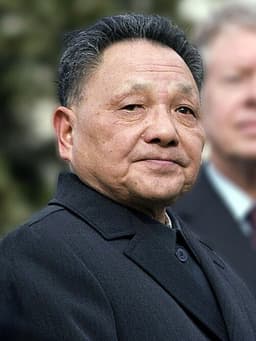
Deng Xiaoping
Politician · Modern
66.0Total
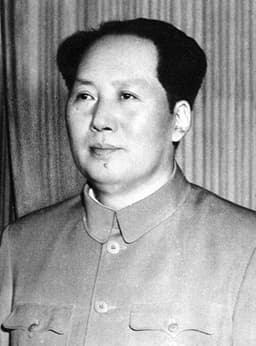
Mao Zedong
Politician · Modern
79.4Total
Basic Information
Born
1904
1893
Died
1997
1976
Era
Modern
Modern
Nationality
China
China
Occupation
Politician
Politician
Civilization
Eastern
Eastern
Score Comparison
Military (10%)
30.0
75.0
Political (20%)
90.0
88.0
Influence (20%)
68.0
85.0
Legacy (20%)
65.0
70.0
Leadership (15%)
78.0
85.0
Strategy (15%)
45.0
72.0
TOTAL
66.0
79.4
Deng Xiaoping — Complete Timeline
1978 AD
Third Plenum of the 11th Central CommitteePolitical Action
Deng Xiaoping consolidated power and announced the policy of Reform and Opening-Up. This meeting marked the end of Maoist class struggle as the national priority and shifted focus to economic modernization, initiating market-oriented reforms.
Economic ReformOpening-UpChina Modernization
Impact: globalconstructive
1980 AD
Establishment of Special Economic ZonesReform◆ Major
Deng Xiaoping approved the creation of Special Economic Zones in Shenzhen, Zhuhai, Shantou, and Xiamen. These zones offered tax incentives and market freedoms to attract foreign investment and technology, serving as experimental laboratories for capitalist practices within a socialist framework.
Economic ZonesForeign InvestmentMarket Reforms
Impact: nationalconstructive
1984 AD
Sino-British Joint Declaration on Hong KongPolitical Action◆ Major
Deng Xiaoping negotiated with British Prime Minister Margaret Thatcher to agree on the return of Hong Kong to Chinese sovereignty in 1997. The declaration established the 'One Country, Two Systems' principle, allowing Hong Kong to maintain its capitalist system for 50 years.
Hong KongDiplomacyOne Country Two Systems
Impact: globalconstructive
1989 AD
Tiananmen Square Protests CrackdownPolitical Action
Deng Xiaoping authorized the military to suppress pro-democracy protests in Tiananmen Square. The crackdown resulted in hundreds of civilian deaths and injuries, leading to international condemnation and a tightening of political control while economic reforms continued.
TiananmenSuppressionHuman Rights
Impact: globaldestructive
1992 AD
Southern Tour (Nanxun)Political Action◆ Major
Deng Xiaoping traveled to southern China to reaffirm the course of economic reform after conservative backlash. His speeches in Shenzhen and other cities revitalized market-oriented policies, accelerating foreign investment and pushing China toward a socialist market economy.
Economic ReformNanxunMarket Economy
Impact: nationalconstructive
Mao Zedong — Complete Timeline
1934 AD
Long MarchWar
Mao Zedong led the Chinese Red Army on a strategic retreat from Nationalist forces, covering approximately 6,000 miles over 370 days. The march solidified Mao's leadership within the Chinese Communist Party and became a foundational myth of the Communist revolution.
Chinese Civil WarCommunist RevolutionRetreat
Impact: national
1949 AD
Proclamation of the People's Republic of ChinaPolitical Action
Mao Zedong declared the founding of the People's Republic of China from Tiananmen Gate in Beijing. This ended the Chinese Civil War and established Communist rule over mainland China, with Mao as Chairman of the Central People's Government.
Founding of PRCCommunist VictoryRevolution
Impact: global
1958 AD
Great Leap ForwardReform◆ Major
Mao launched a campaign to rapidly industrialize China and collectivize agriculture. The policy led to widespread mismanagement, resulting in a famine that caused an estimated 15-45 million deaths between 1959 and 1961.
FamineIndustrializationCollectivization
Impact: nationaldestructive
1960 AD
Sino-Soviet SplitPolitical Action◆ Major
Mao's ideological differences with Soviet leader Nikita Khrushchev led to a breakdown in relations between China and the Soviet Union. The split ended the Sino-Soviet alliance and reshaped global Cold War dynamics, with China pursuing an independent path.
Cold WarIdeological ConflictAlliance Breakdown
Impact: global
1966 AD
Cultural RevolutionPolitical Action
Mao initiated a sociopolitical movement to purge capitalist and traditional elements from Chinese society. The Red Guard youth groups attacked intellectuals and officials, leading to widespread violence, destruction of cultural artifacts, and an estimated 1-2 million deaths.
Political PurgeSocial UpheavalRed Guard
Impact: nationaldestructive
1971 AD
Ping-Pong DiplomacyCultural◆ Major
Mao approved an invitation for the U.S. table tennis team to visit China, initiating a thaw in Sino-American relations. This cultural exchange paved the way for President Nixon's visit to China in 1972 and the eventual normalization of diplomatic ties.
DiplomacyU.S.-China RelationsCultural Exchange
Impact: globalconstructive
Expert Analysis
Mao Zedong vs Deng Xiaoping
# The Architect and the Emperor
In the winter of 1992, an 88-year-old man stepped off a train in Shenzhen, a city that had been a fishing village just over a decade earlier. Deng Xiaoping, frail but determined, walked through streets lined with gleaming new buildings, past factories humming with production, and among workers whose lives had been transformed beyond recognition. He was on a mission to save his reforms from conservative critics who wanted to turn back the clock. Thirty years earlier, another old man had stood atop Tiananmen Gate, watching waves of Red Guards surge through Beijing, their fervor unleashed by his words. Mao Zedong, then in his seventies, was launching the Cultural Revolution—a movement that would tear China apart. These two men, both giants of modern China, approached power with radically different visions. One sought to purify revolution; the other sought to escape it. Their legacies, tangled together, define China to this day.
Origins
Mao Zedong was born in 1893 in Shaoshan, a village in Hunan province, the son of a prosperous peasant farmer. He grew up in the twilight of the Qing Dynasty, when China was being carved up by foreign powers. His world was one of imperial collapse, warlord violence, and the humiliations of unequal treaties. Mao absorbed the anger of a generation that believed China had lost its way. He read the classics, but also the works of Marx and Lenin, and he came to believe that only a total revolution—violent, sweeping, and relentless—could restore China’s greatness.
Deng Xiaoping, born in 1904 in Guang'an, Sichuan, came from a more educated family. His father was a local official who sent him to study in France at age 16. In Paris, Deng worked in factories, learned about Western industry, and joined the Chinese Communist movement. He never romanticized revolution as Mao did. For Deng, revolution was a means to an end—modernization. He saw firsthand what industrial economies could achieve, and that experience planted a seed that would grow for decades.
Rise to Power
Mao’s path to leadership was forged in war. During the Long March of 1934, he emerged as the strategic genius of the Chinese Communist Party, outmaneuvering both Nationalist forces and internal rivals. By 1949, when he proclaimed the People’s Republic of China from Tiananmen Gate, Mao was the undisputed leader of a nation born from blood and fire. His military score of 65 reflects his battlefield acumen, but his true genius lay in political warfare—using ideology to mobilize millions.
Deng’s rise was more circuitous. He was a capable military commissar during the civil war—his strategy score of 65 matches Mao’s—but he never sought Mao’s cult of personality. Instead, Deng survived Mao’s purges, was twice purged himself, and waited. After Mao’s death in 1976, Deng outmaneuvered the Gang of Four and consolidated power at the Third Plenum of the 11th Central Committee in December 1978. That meeting was a turning point: Deng announced Reform and Opening-Up, effectively ending the Maoist era. He did not need to command armies; he needed to command a bureaucracy.
Leadership & Governance
Mao ruled through charisma and terror. His political score of 82 is high, but it masks a catastrophic governance record. The Great Leap Forward, launched in 1958, aimed to industrialize China overnight by collectivizing agriculture and building backyard steel furnaces. The result was the deadliest famine in human history, with estimates of 15 to 45 million deaths. Mao’s response was not to admit failure but to double down, purging officials who reported the truth. The Cultural Revolution, beginning in 1966, was his ultimate act of revolutionary governance: he unleashed the Red Guards to destroy the "Four Olds"—old customs, old culture, old habits, and old ideas—and to purge his enemies. China’s education system collapsed, its economy stagnated, and millions died or were imprisoned.
Deng governed with pragmatic ruthlessness. His political score of 88 reflects a different kind of leadership: one that understood that stability was the foundation of progress. In 1980, he established Special Economic Zones in Shenzhen, Zhuhai, Shantou, and Xiamen—experiments in capitalism within a socialist state. These zones offered tax incentives, foreign investment, and market freedoms. The results were explosive: Shenzhen grew from a town of 30,000 to a metropolis of millions. Deng also negotiated the return of Hong Kong from Britain, signing the Sino-British Joint Declaration in 1984, securing a "one country, two systems" framework that preserved the territory’s capitalist economy.
But Deng’s pragmatism had limits. In 1989, when pro-democracy protests erupted in Tiananmen Square, he authorized military crackdown. The violence shocked the world and permanently stained his legacy. Deng believed that political stability was non-negotiable for economic growth, and he was willing to sacrifice lives to maintain it.
Triumph & Tragedy
Mao’s greatest triumph was the Long March, a 6,000-mile strategic retreat that turned defeat into legend. It cemented his leadership and became the founding myth of the Communist Party. His greatest tragedy was the Cultural Revolution, which he himself described as a "mess" near the end of his life. He died in 1976, leaving behind a nation impoverished, isolated, and traumatized.
Deng’s greatest triumph was the Southern Tour of 1992, when he traveled to Shenzhen and other special zones to reassert the primacy of reform. His speeches, broadcast nationwide, broke the conservative backlash and accelerated China’s transformation. His greatest tragedy was Tiananmen, a moment that revealed the authoritarian core beneath the reformist surface. He died in 1997, just months before Hong Kong’s return, having set China on a path to become the world’s second-largest economy.
Character & Destiny
Mao was a poet and a philosopher, a man who believed history was a drama he could direct. He wrote, "Political power grows out of the barrel of a gun," and he lived by that creed. His personality was grandiose, paranoid, and visionary. He saw enemies everywhere—capitalists, revisionists, even nature itself—and he believed that struggle was eternal. This worldview drove China into catastrophe.
Deng was an engineer by temperament. He famously said, "It doesn’t matter whether a cat is black or white, as long as it catches mice." He was pragmatic, patient, and ruthless when necessary. He did not seek to remake human nature; he sought to harness human ambition. His personality—reserved, calculating, and resilient—allowed him to navigate the treacherous politics of Mao’s China and then to reshape it.
Legacy
Mao’s legacy is deeply ambivalent. His total score of 76.4 is slightly higher than Deng’s 74.2, reflecting his immense influence and leadership. He is still revered as the founder of modern China, but his policies caused immense suffering. His portrait still hangs over Tiananmen Gate, but his economic policies are universally rejected. The Communist Party uses Mao to legitimize its rule while quietly abandoning his ideas.
Deng’s legacy is more straightforward: he transformed China from a poor, isolated nation into an economic superpower. His reforms lifted hundreds of millions out of poverty. But his authoritarian model—economic liberalization without political freedom—has created its own contradictions. China today is wealthier, more powerful, and more confident, but also more controlled.
Conclusion
Standing in Shenzhen in 1992, Deng Xiaoping looked at a city that embodied his vision: a place where people could get rich, where factories hummed, where the future was bright. He had rejected Mao’s dream of perpetual revolution and chosen instead the slow, grinding work of economic development. The two men, for all their differences, shared one thing: they both sought to restore China’s place in the world. Mao tried to do it through will and struggle; Deng through wealth and stability. History will judge which path was wiser, but it cannot deny that both men shaped the destiny of a billion people. The question they leave behind is not whether China can become great, but at what cost greatness comes.
Rankings
🥇
Mao ZedongLeader
Mil: 75.0Pol: 88.0Inf: 85.0
79.4
🥈
Deng Xiaoping
Mil: 30.0Pol: 90.0Inf: 68.0
66.0
+13.4 behind
How This Comparison Works
Algorithm
Each figure is scored on 6 dimensions (0—100 scale) based on structured historical data: Military (10%), Political (20%), Influence (20%), Legacy (20%), Leadership (15%), Strategy (15%). The weighted total produces the final ranking.
Data Sources
Scores are computed from structured sub-indicators in the database. Scale factors adjust for era (Ancient ×0.85, Modern ×1.0) and civilization size (Eastern ×1.05, Other ×0.80) to account for differences in population and military scale.
Maximum 3 Figures
Comparisons are limited to 2—3 figures to ensure readability and statistical meaningfulness.
Error Margins
±5 points per dimension — Sub-scores are derived from historical records with inherent uncertainty. Two figures within 5 points on a dimension should be considered roughly equivalent in that area.
Total Score Accuracy
±3 points overall — The weighted combination of 6 dimensions produces a total score with approximately ±3 points of uncertainty. Differences of less than 3 points are not statistically significant— the figures are effectively tied.
Known Limitations
- Historical records are incomplete and uneven across civilizations
- Figures from oral-tradition societies may be underrepresented
- Occupation labels can misclassify multi-role figures
- Scores measure capability and impact, not moral character
- Quantitative scoring is a comparison tool, not absolute truth
Capability Radar
Military (10%) — Battles & Warfare
Battles
36
85
Win Rate
37
80
Expansion
41
85
Political (20%) — Governance & Reform
Reform
95
95
Diplomacy
80
80
Economy
95
70
Influence (20%) — Cultural & Global Reach
Cultural
70
90
Global
90
90
Legacy (20%) — Historical Impact
Historical
90
95
Longevity
85
85
Leadership (15%) — Power & Stability
Tenure
85
95
Stability
75
60
Strategy (15%) — Tactics & Innovation
Strategy
47
85
Tactics
48
75
Reform
49
90
Similar Comparisons
Comments & Discussion
Skeptical Sinophile6/16/2026
The comparison reeks of teleological bias—presenting Deng as inevitable triumph. As a data analyst, I point out that Mao's industrialization, however brutal, laid the literal concrete for Deng's factories. The Soviet-aided 156 projects of the First Five-Year Plan built the steel mills and power grids that Deng merely switched back on after the Cultural Revolution. Deng's 1978 reforms didn't create China's industrial base; they uncapped a bottle Mao had sealed. Without Mao's heavy industry, Deng'
Classics Scholar with Teeth6/16/2026
Pericles built Athens; Caesar transformed Rome. Mao was our Qin Shi Huang—unified the script, broke the old elite, but burned libraries. Deng was our Han Wendi—reduced taxes, opened trade, but abandoned the vision of equality. The real sin is not which was right, but that we've canonized both. Mao's cult crushed individual thought; Deng's pragmatism crushed collective memory. Today's China braids their legacies into a rope that strangles honest history. Neither emperor deserves a clean epigraph.
Chronicler46406/16/2026
Mao was the poet of chaos; Deng was the engineer of order. As a military historian, I see Mao's genius in guerrilla adaptation—the Long March forged a mobile army from rags. But his later fixation on perpetual revolution starved logistics and broke the PLA's chain of command. Deng rebuilt that chain, prioritizing modernization over ideology. Without Deng's 1985裁军 (troop reduction of 1 million), China's military would still be a bloated peasant militia, not the precision force it became.
红卫兵档案局6/16/2026
数据会骗人,但血迹不会。毛时代人均寿命从35岁提到68岁,识字率从20%冲到85%——这是硬核成绩。但邓的改革呢?GDP飞了,可基尼系数从0.16飙到0.47。别跟我吹"先富带后富",农民进城打工的孩子,到今天户口还在老家拴着。毛要所有人蹲在同一个战壕里,邓把人推上了战场却没收好急救包。两个极端,一个悲剧。
自由派迷宫6/16/2026
两个人都是巨人,但方向完全相反。毛想用革命改造人性,结果造了个"红"但饿死的国度。邓承认人性自私,用价格双轨制把人放出来挣钱——然后贫富差距炸了。最讽刺的是:毛喊"继续革命"时农民在吃树皮,邓喊"摸着石头过河"时工人突然被扔进下岗潮。他们都没撒谎,但都骗了人。一个用理想骗,一个用现实骗。中国在两者之间来回弹,像条残废的橡皮筋。
SilkRoadScholar6/15/2026
你们忽略了毛泽东对第三世界的外交贡献,这为邓小平后来的开放创造了国际缓冲带。评分不应只看国内经济数据。
DeepReformer6/15/2026
我完全赞同这个对比框架。邓小平的“摸着石头过河”解决了毛泽东时代过度集中的问题,两者互补而非对立。