Loading...
Deng Xiaoping vs Otto von Bismarck
Deng Xiaoping leads by 0.2 pts · 2 figures compared
…
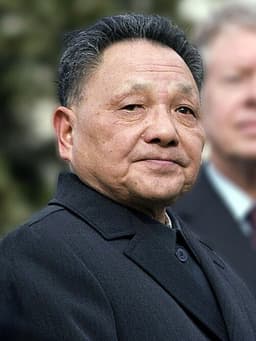
Deng Xiaoping
Politician · Modern
66.0Total
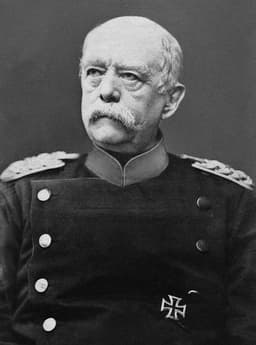
Otto von Bismarck
Politician · Modern
65.8Total
Basic Information
Born
1904
1815
Died
1997
1898
Era
Modern
Modern
Nationality
China
Germany
Occupation
Politician
Politician
Civilization
Eastern
Western
Score Comparison
Military (10%)
30.0
55.0
Political (20%)
90.0
85.0
Influence (20%)
68.0
82.0
Legacy (20%)
65.0
40.0
Leadership (15%)
78.0
80.0
Strategy (15%)
45.0
50.0
TOTAL
66.0
65.8
Deng Xiaoping — Complete Timeline
1978 AD
Third Plenum of the 11th Central CommitteePolitical Action
Deng Xiaoping consolidated power and announced the policy of Reform and Opening-Up. This meeting marked the end of Maoist class struggle as the national priority and shifted focus to economic modernization, initiating market-oriented reforms.
Economic ReformOpening-UpChina Modernization
Impact: globalconstructive
1980 AD
Establishment of Special Economic ZonesReform◆ Major
Deng Xiaoping approved the creation of Special Economic Zones in Shenzhen, Zhuhai, Shantou, and Xiamen. These zones offered tax incentives and market freedoms to attract foreign investment and technology, serving as experimental laboratories for capitalist practices within a socialist framework.
Economic ZonesForeign InvestmentMarket Reforms
Impact: nationalconstructive
1984 AD
Sino-British Joint Declaration on Hong KongPolitical Action◆ Major
Deng Xiaoping negotiated with British Prime Minister Margaret Thatcher to agree on the return of Hong Kong to Chinese sovereignty in 1997. The declaration established the 'One Country, Two Systems' principle, allowing Hong Kong to maintain its capitalist system for 50 years.
Hong KongDiplomacyOne Country Two Systems
Impact: globalconstructive
1989 AD
Tiananmen Square Protests CrackdownPolitical Action
Deng Xiaoping authorized the military to suppress pro-democracy protests in Tiananmen Square. The crackdown resulted in hundreds of civilian deaths and injuries, leading to international condemnation and a tightening of political control while economic reforms continued.
TiananmenSuppressionHuman Rights
Impact: globaldestructive
1992 AD
Southern Tour (Nanxun)Political Action◆ Major
Deng Xiaoping traveled to southern China to reaffirm the course of economic reform after conservative backlash. His speeches in Shenzhen and other cities revitalized market-oriented policies, accelerating foreign investment and pushing China toward a socialist market economy.
Economic ReformNanxunMarket Economy
Impact: nationalconstructive
Otto von Bismarck — Complete Timeline
1870 AD
Franco-Prussian WarWar
Bismarck provoked France into declaring war by editing the Ems Dispatch to appear insulting. The resulting conflict saw Prussia and its allies decisively defeat France, leading to the fall of Napoleon III, the capture of Paris, and the annexation of Alsace-Lorraine.
WarProvocationAnnexation
Impact: globaldestructive
1871 AD
Unification of Germany ProclaimedPolitical Action
Following the Franco-Prussian War, Bismarck orchestrated the proclamation of the German Empire in the Hall of Mirrors at Versailles. King Wilhelm I of Prussia was declared German Emperor, uniting the German states under Prussian leadership and establishing the Second Reich.
UnificationGerman EmpireNationalism
Impact: globalconstructive
1878 AD
Enactment of the Anti-Socialist LawsPolitical Action◆ Major
After two assassination attempts on Kaiser Wilhelm I, Bismarck pushed through laws banning socialist organizations, publications, and meetings. The laws remained in force until 1890, suppressing the Social Democratic Party while Bismarck simultaneously introduced welfare reforms to undercut its appeal.
RepressionSocialismWelfare State
Impact: nationaldestructive
Congress of BerlinPolitical Action◆ Major
Bismarck hosted the Congress of Berlin to revise the Treaty of San Stefano and resolve the Eastern Crisis. He acted as 'honest broker,' reducing Russian gains, granting independence to Romania, Serbia, and Montenegro, and placing Bosnia-Herzegovina under Austro-Hungarian administration.
DiplomacyBalkansBalance of Power
Impact: global
1883 AD
Establishment of the Welfare StateReform◆ Major
Bismarck introduced the Health Insurance Bill (1883), Accident Insurance Bill (1884), and Old Age and Disability Insurance Bill (1889). These laws created the first modern welfare state, providing workers with social security and aiming to reduce support for socialist movements.
Social ReformWelfareInsurance
Impact: globalprogressive
1890 AD
Dismissal as ChancellorPolitical Action◆ Major
Emperor Wilhelm II forced Bismarck to resign due to policy disagreements, particularly over anti-socialist laws and foreign policy. Bismarck's departure marked the end of an era, leading to a more aggressive German foreign policy and the eventual unraveling of his alliance system.
ResignationWilhelm IIPolicy Shift
Impact: global
Expert Analysis
Otto von Bismarck vs Deng Xiaoping
# The Iron Chancellor and the Architect of Modern China
In a gilded hall in Versailles, on a cold January day in 1871, Otto von Bismarck stood in the Hall of Mirrors as German princes proclaimed a new empire. Across the world and a century later, an aging Deng Xiaoping stepped off a train in Shenzhen, a sleepy fishing village that would soon explode into a metropolis of glass and steel. Both men remade their nations from the ground up. Both wielded power with a ruthlessness that bordered on the absolute. Yet one forged a unified Germany through "blood and iron," while the other lifted hundreds of millions from poverty through markets and openness. What drove these two titans to such different outcomes?
Origins
Otto von Bismarck was born in 1815 into the Prussian Junker aristocracy, a class defined by land, military service, and a deep suspicion of liberalism. His father was a country squire; his mother came from a wealthy bourgeois family that valued education. Bismarck was a restless, brilliant student who drank, dueled, and gambled his way through university before settling into a life of provincial boredom as a civil servant. The revolutions of 1848, which swept across Europe and briefly threatened Prussian monarchy, left an indelible mark on him: he would spend his career ensuring that such chaos never again endangered the state.
Deng Xiaoping was born in 1904 in Sichuan province, the son of a minor landowner. He left for France at age sixteen on a work-study program, where he encountered not only Western technology but also radical politics. He joined the Chinese Communist Party in Paris and later studied in Moscow. When he returned to China, the country was fractured by warlords, foreign domination, and civil war. Unlike Bismarck, who inherited a stable Prussian state, Deng inherited a China shattered by a century of humiliation and two decades of Maoist upheaval.
Rise to Power
Bismarck's ascent was improbable. He was appointed Minister President of Prussia in 1862 as a last resort—a conservative firebrand meant to break a parliamentary deadlock over military funding. He famously told the Prussian parliament that "the great questions of the day will not be decided by speeches and majority resolutions—that was the great mistake of 1848 and 1849—but by blood and iron." He then proceeded to govern without a legal budget, defying the constitution. His brilliance lay in turning defiance into triumph: he fought three short, decisive wars against Denmark, Austria, and France, each carefully engineered to isolate the enemy and consolidate Prussian dominance. The Franco-Prussian War of 1870 was a masterpiece of provocation—Bismarck edited the Ems Dispatch to make it appear that the Prussian king had insulted the French ambassador, goading Napoleon III into declaring war.
Deng's rise was far more treacherous. He was a veteran of the Long March and a key administrator during the early years of communist rule, but he fell from favor during the Cultural Revolution, denounced, stripped of his posts, and sent to work in a tractor factory. His survival was itself an act of political genius. He was rehabilitated in 1973, only to be purged again in 1976. After Mao's death, Deng outmaneuvered the radical Gang of Four and emerged as the paramount leader. At the Third Plenum of the 11th Central Committee in 1978, he announced a new policy: Reform and Opening-Up. The era of class struggle was over. The era of economic development had begun.
Leadership & Governance
Bismarck governed through manipulation and fear. He was a master of *Realpolitik*, the politics of practical power. He created a federal constitution that gave Prussia overwhelming dominance, manipulated elections through the "Kulturkampf" against Catholics, and crushed socialist opposition with the Anti-Socialist Laws of 1878. Yet he was also a pioneer of the welfare state: the Health Insurance Bill of 1883, the Accident Insurance Bill of 1884, and the Old Age and Disability Insurance of 1889 were designed to win the loyalty of workers away from socialism. Bismarck was not a democrat—he called democracy "a government of the worst"—but he understood that stability required concessions.
Deng governed through pragmatism and patience. He famously said, "It doesn't matter whether a cat is black or white, as long as it catches mice." He dismantled Mao's communes, introduced the household responsibility system in agriculture, and created Special Economic Zones in 1980 in Shenzhen, Zhuhai, Shantou, and Xiamen—laboratories for capitalism within a communist framework. He opened China to foreign investment, sent students abroad, and quietly abandoned central planning. Unlike Bismarck, who built a state that crushed dissent, Deng built an economy that absorbed it. When protests erupted in Tiananmen Square in 1989, Deng authorized a brutal crackdown. But in 1992, after conservative backlash threatened his reforms, he took his famous Southern Tour, traveling to the special zones to declare that reform must continue. He was, in his own way, as ruthless as Bismarck—but his ruthlessness served a different vision.
Triumph & Tragedy
Bismarck's greatest triumph was the unification of Germany in 1871, a feat that reshaped Europe. His greatest tragedy came from his own success: the German Empire he created was too powerful for its neighbors and too unstable to sustain his balancing act. He was dismissed in 1890 by the young Kaiser Wilhelm II, who wanted to rule in his own right. Bismarck left office bitter, warning that his successors would stumble. Within twenty years, Europe was at war.
Deng's triumph was the transformation of China from a starving, isolated nation into an economic superpower. Between 1978 and his death in 1997, per capita income quadrupled. The tragedy is that this prosperity came without political freedom. Deng's China remained a one-party state where dissent was crushed. The Tiananmen crackdown remains a scar on his legacy, a reminder that economic liberalization did not mean political liberalization.
Character & Destiny
Bismarck was a man of immense ego and volcanic temper, prone to psychosomatic illnesses when frustrated. He was a brilliant strategist but a terrible subordinate—he needed to be the master. His personality drove him to dominate every situation, which ultimately made him indispensable until he became intolerable. Deng was the opposite: small in stature, soft-spoken, and patient. He let others take credit, worked through consensus, and waited for his moment. He once said, "We should not be in a hurry. We should take our time." Their characters shaped their fates: Bismarck's arrogance brought him down; Deng's cunning kept him in power until the end.
Legacy
Bismarck is remembered as the Iron Chancellor, the unifier of Germany, and the father of the welfare state. But his legacy is ambiguous: he created a state that was strong but brittle, and his militarism helped pave the way for two world wars. Deng is remembered as the architect of modern China, the man who lifted more people out of poverty than any leader in history. His legacy is also ambiguous: China is rich but unfree, and the Communist Party remains in power by delivering prosperity while suppressing dissent.
Conclusion
Bismarck and Deng were both realists who understood that power is the currency of politics. Both were willing to use violence to maintain order, and both were willing to innovate to preserve stability. But they faced different worlds: Bismarck operated in a Europe of competing empires, where war was a tool of statecraft; Deng operated in a Cold War world where economic competition mattered more than territorial conquest. Bismarck built a nation through war; Deng rebuilt a nation through trade. One created a welfare state to pacify workers; the other created a market economy to enrich them. In the end, both succeeded beyond measure—and both left their nations with burdens they could not foresee. The Iron Chancellor and the pragmatic revolutionary: two men who remade the world, each in his own image.
Rankings
🥇
Deng XiaopingLeader
Mil: 30.0Pol: 90.0Inf: 68.0
66.0
🥈
Otto von Bismarck
Mil: 55.0Pol: 85.0Inf: 82.0
65.8
+0.2 behind
How This Comparison Works
Algorithm
Each figure is scored on 6 dimensions (0—100 scale) based on structured historical data: Military (10%), Political (20%), Influence (20%), Legacy (20%), Leadership (15%), Strategy (15%). The weighted total produces the final ranking.
Data Sources
Scores are computed from structured sub-indicators in the database. Scale factors adjust for era (Ancient ×0.85, Modern ×1.0) and civilization size (Eastern ×1.05, Other ×0.80) to account for differences in population and military scale.
Maximum 3 Figures
Comparisons are limited to 2—3 figures to ensure readability and statistical meaningfulness.
Error Margins
±5 points per dimension — Sub-scores are derived from historical records with inherent uncertainty. Two figures within 5 points on a dimension should be considered roughly equivalent in that area.
Total Score Accuracy
±3 points overall — The weighted combination of 6 dimensions produces a total score with approximately ±3 points of uncertainty. Differences of less than 3 points are not statistically significant— the figures are effectively tied.
Known Limitations
- Historical records are incomplete and uneven across civilizations
- Figures from oral-tradition societies may be underrepresented
- Occupation labels can misclassify multi-role figures
- Scores measure capability and impact, not moral character
- Quantitative scoring is a comparison tool, not absolute truth
Capability Radar
Military (10%) — Battles & Warfare
Battles
36
60
Win Rate
37
70
Expansion
41
80
Political (20%) — Governance & Reform
Reform
95
90
Diplomacy
80
95
Economy
95
80
Influence (20%) — Cultural & Global Reach
Cultural
70
65
Global
90
75
Legacy (20%) — Historical Impact
Historical
90
85
Longevity
85
70
Leadership (15%) — Power & Stability
Tenure
85
85
Stability
75
70
Strategy (15%) — Tactics & Innovation
Strategy
47
85
Tactics
48
55
Reform
49
75
Similar Comparisons
Comments & Discussion
No comments yet. Be the first to share your thoughts!