Loading...
Deng Xiaoping vs Elizabeth I
Deng Xiaoping leads by 0.3 pts · 2 figures compared
…
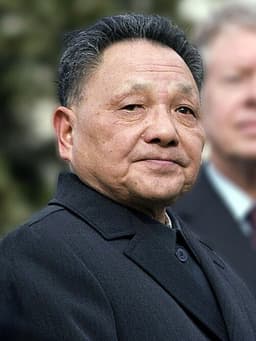
Deng Xiaoping
Politician · Modern
66.0Total
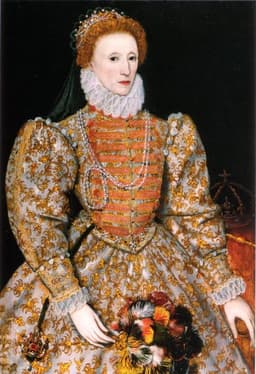
Elizabeth I
Politician · Modern
65.7Total
Basic Information
Born
1904
1533
Died
1997
1603
Era
Modern
Modern
Nationality
China
England
Occupation
Politician
Politician
Civilization
Eastern
Western
Score Comparison
Military (10%)
30.0
45.0
Political (20%)
90.0
78.0
Influence (20%)
68.0
65.0
Legacy (20%)
65.0
68.0
Leadership (15%)
78.0
75.0
Strategy (15%)
45.0
50.0
TOTAL
66.0
65.7
Deng Xiaoping — Complete Timeline
1978 AD
Third Plenum of the 11th Central CommitteePolitical Action
Deng Xiaoping consolidated power and announced the policy of Reform and Opening-Up. This meeting marked the end of Maoist class struggle as the national priority and shifted focus to economic modernization, initiating market-oriented reforms.
Economic ReformOpening-UpChina Modernization
Impact: globalconstructive
1980 AD
Establishment of Special Economic ZonesReform◆ Major
Deng Xiaoping approved the creation of Special Economic Zones in Shenzhen, Zhuhai, Shantou, and Xiamen. These zones offered tax incentives and market freedoms to attract foreign investment and technology, serving as experimental laboratories for capitalist practices within a socialist framework.
Economic ZonesForeign InvestmentMarket Reforms
Impact: nationalconstructive
1984 AD
Sino-British Joint Declaration on Hong KongPolitical Action◆ Major
Deng Xiaoping negotiated with British Prime Minister Margaret Thatcher to agree on the return of Hong Kong to Chinese sovereignty in 1997. The declaration established the 'One Country, Two Systems' principle, allowing Hong Kong to maintain its capitalist system for 50 years.
Hong KongDiplomacyOne Country Two Systems
Impact: globalconstructive
1989 AD
Tiananmen Square Protests CrackdownPolitical Action
Deng Xiaoping authorized the military to suppress pro-democracy protests in Tiananmen Square. The crackdown resulted in hundreds of civilian deaths and injuries, leading to international condemnation and a tightening of political control while economic reforms continued.
TiananmenSuppressionHuman Rights
Impact: globaldestructive
1992 AD
Southern Tour (Nanxun)Political Action◆ Major
Deng Xiaoping traveled to southern China to reaffirm the course of economic reform after conservative backlash. His speeches in Shenzhen and other cities revitalized market-oriented policies, accelerating foreign investment and pushing China toward a socialist market economy.
Economic ReformNanxunMarket Economy
Impact: nationalconstructive
Elizabeth I — Complete Timeline
1559 AD
Act of Supremacy 1559Political Action◆ Major
Elizabeth I re-established the Church of England's independence from Rome, declaring herself Supreme Governor. This act, part of the Elizabethan Religious Settlement, restored Protestantism while maintaining some Catholic traditions, creating a via media that aimed to unify the nation.
Religious SettlementProtestantismChurch of England
Impact: nationalconstructive
1587 AD
Execution of Mary, Queen of ScotsPolitical Action◆ Major
After years of imprisonment, Elizabeth I signed the death warrant for Mary, Queen of Scots, who had been implicated in the Babington Plot to assassinate Elizabeth and claim the English throne. Mary's execution removed a major Catholic rival and solidified Elizabeth's position.
ExecutionCatholic RivalPlot
Impact: nationaltragic
1588 AD
Defeat of the Spanish ArmadaWar
The English navy under Lord Howard and Sir Francis Drake defeated the Spanish Armada, a massive invasion fleet sent by Philip II. Storms and English fireships scattered the Spanish fleet, preventing the invasion and establishing England as a major naval power.
Naval BattleSpainProtestantism
Impact: globalconstructive
1600 AD
Chartering of the East India CompanyPolitical Action◆ Major
Elizabeth I granted a royal charter to the East India Company, giving it a monopoly on English trade with Asia. This company would become a powerful instrument of British imperialism, eventually controlling large parts of India and shaping global trade.
TradeColonialismCharter
Impact: globalconstructive
1601 AD
Golden SpeechPolitical Action
In her final address to Parliament, Elizabeth I delivered the 'Golden Speech,' expressing her love for her subjects and her dedication to the realm. She addressed grievances over monopolies, promising reform, and cemented her image as a beloved monarch devoted to her people.
SpeechParliamentMonarchy
Impact: nationalconstructive
Expert Analysis
Elizabeth I vs Deng Xiaoping
# The Throne and the Compass
On a spring morning in 1601, an aging queen stood before her Parliament in London, her voice trembling with emotion as she declared, "Though God hath raised me high, yet this I count the glory of my crown: that I have reigned with your loves." Half a world away and nearly four centuries later, a diminutive Chinese leader in his late eighties boarded a train to the south, determined to reignite a nation's faith in a future his own party had begun to doubt. Elizabeth I and Deng Xiaoping—two rulers who never met, whose worlds could not have been more different—yet both reshaped the destinies of their peoples. One inherited a fractured island kingdom and forged a golden age; the other inherited a scarred giant and set it on a path to global dominance. What drove them, and why did their paths diverge so sharply?
Origins
Elizabeth Tudor was born in 1533, the daughter of Anne Boleyn, a queen executed when Elizabeth was not yet three. She grew up in the shadow of the axe, declared illegitimate by her own father, then imprisoned in the Tower of London by her half-sister Mary. Her education was rigorous—she mastered Latin, Greek, French, and Italian—but her real schooling came from survival. Every smile was a mask; every ally might become an executioner. The Reformation had torn Christendom apart, and England was a battleground between Catholic and Protestant factions. Elizabeth learned early that to rule was to navigate a world where faith and politics were one.
Deng Xiaoping was born in 1904 in Sichuan, China, the son of a minor landowner. He left for France at sixteen as part of a work-study program, where he worked in a rubber factory and a railway workshop, and where he discovered Marxism. Unlike Elizabeth, Deng was not born into power; he fought for it. He joined the Communist revolution, marched on the Long March, and survived Mao Zedong’s purges—twice being stripped of his positions. Where Elizabeth’s world was one of dynastic intrigue, Deng’s was one of ideological warfare and peasant armies. His era was defined not by religious schism but by the brutal collision of communism, imperialism, and nationalism.
Rise to Power
Elizabeth’s ascent was a matter of blood and timing. She became queen in 1558 at age twenty-five, after Mary’s death left England without a clear Catholic heir. Her path was not one of conquest but of inheritance—and of constant threat. The first years of her reign were consumed with stabilizing a kingdom torn by religious war. She chose a middle path: the 1559 Act of Supremacy re-established the Church of England’s independence from Rome, but she styled herself Supreme Governor rather than Supreme Head, a subtle concession to those who believed no woman could lead the Church. She balanced Catholic and Protestant nobles, played foreign suitors against each other, and built a cult of virginity that transformed her weakness—her sex—into a political weapon.
Deng’s rise was slower, more dangerous, and more contingent on events beyond his control. He was a veteran of the Long March, a key economic planner in the 1950s, but purged during the Cultural Revolution. He returned to power in the late 1970s only after Mao’s death and the fall of the Gang of Four. The turning point came at the Third Plenum of the 11th Central Committee in 1978, where Deng consolidated power and announced the policy of Reform and Opening-Up. Unlike Elizabeth, who inherited a throne, Deng had to seize a party—and then reshape it from within.
Leadership & Governance
Elizabeth ruled as a Renaissance monarch, but her genius was political rather than military. She appointed capable advisors—William Cecil, Francis Walsingham—and trusted them, but never fully. She managed Parliament with a mix of flattery and firmness, granting subsidies while refusing to cede her prerogatives. Her greatest military triumph, the defeat of the Spanish Armada in 1588, was less a personal victory than a testament to her naval commanders and a stroke of weather. She was not a warrior queen; she was a stage manager who ensured the drama unfolded in her favor.
Deng governed as a pragmatist who understood that ideology alone could not feed a billion people. He dismantled the commune system, allowed peasants to farm for profit, and opened China to foreign investment. The Special Economic Zones established in 1980—Shenzhen, Zhuhai, Shantou, Xiamen—were laboratories of capitalism within a communist state. Where Elizabeth built a church, Deng built a market. His political wisdom lay in his willingness to experiment: "It doesn't matter whether a cat is black or white, as long as it catches mice." But his rule also had a hard edge. In 1989, when pro-democracy protests filled Tiananmen Square, he authorized military suppression—a decision that preserved the party’s monopoly on power at a terrible human cost.
Triumph & Tragedy
Elizabeth’s greatest moment came in 1588, when the Spanish Armada was scattered by English fireships and Atlantic gales. It was a national deliverance that cemented her legend. Her greatest failure was perhaps the execution of Mary, Queen of Scots in 1587—a necessary act of state that haunted her for years. Mary was her cousin and a fellow queen; signing the death warrant was an admission that politics could not be reconciled with mercy.
Deng’s triumph was the economic transformation of China. In 1992, during his Southern Tour, he traveled to Shenzhen and other reform zones, declaring that development was the only hard truth. His speeches revived the reform drive after conservative backlash, and China began its meteoric rise. But his tragedy was the Tiananmen crackdown—a moment that revealed the limits of his pragmatism. He opened China’s economy but closed its politics, a contradiction that remains unresolved.
Character & Destiny
Elizabeth was cautious, calculating, and deeply aware of her own mortality. She never married, never named an heir, and used indecision as a strategy. Her motto, *Video et taceo*—"I see and keep silent"—captured her essence. She saw the world as a stage, and she played her part with exquisite control.
Deng was blunt, pragmatic, and relentless. He had seen too much suffering to believe in utopias. His famous saying—"Seek truth from facts"—was a rebuke to Maoist idealism. He believed that economic growth would solve political problems, and for decades, he was largely right. But he also believed that stability was worth any price.
Legacy
Elizabeth left a myth—the Virgin Queen, Gloriana, the symbol of an England that became a global power. Her reign saw the flourishing of Shakespeare, the founding of the East India Company in 1600, and the consolidation of Protestant identity. She is remembered as a golden-age ruler, even if the gold was often tarnished by poverty, rebellion, and war.
Deng left a reality—a China that lifted hundreds of millions out of poverty, that became the world’s factory, that reclaimed Hong Kong under the "one country, two systems" formula negotiated with Margaret Thatcher in 1984. His legacy is visible in every skyscraper in Shenzhen, every container ship leaving Shanghai. But it is also visible in the surveillance state and the party’s iron grip. He is remembered as the architect of modern China, a figure both revered and contested.
Conclusion
Elizabeth and Deng ruled from different worlds—one a queen by blood, the other a revolutionary by circumstance. Yet both understood that power is not about commanding armies but about shaping the currents of history. Elizabeth navigated a narrow channel between Catholic Europe and Protestant England, and she held her course. Deng turned a ship of state that had been sailing in circles and pointed it toward the open sea. Their differences are the differences of their ages: one defined by faith and dynasty, the other by ideology and development. But their similarities run deeper: both were survivors, both were pragmatists, and both understood that to lead is to choose—and to live with the consequences.
Rankings
🥇
Deng XiaopingLeader
Mil: 30.0Pol: 90.0Inf: 68.0
66.0
🥈
Elizabeth I
Mil: 45.0Pol: 78.0Inf: 65.0
65.7
+0.3 behind
How This Comparison Works
Algorithm
Each figure is scored on 6 dimensions (0—100 scale) based on structured historical data: Military (10%), Political (20%), Influence (20%), Legacy (20%), Leadership (15%), Strategy (15%). The weighted total produces the final ranking.
Data Sources
Scores are computed from structured sub-indicators in the database. Scale factors adjust for era (Ancient ×0.85, Modern ×1.0) and civilization size (Eastern ×1.05, Other ×0.80) to account for differences in population and military scale.
Maximum 3 Figures
Comparisons are limited to 2—3 figures to ensure readability and statistical meaningfulness.
Error Margins
±5 points per dimension — Sub-scores are derived from historical records with inherent uncertainty. Two figures within 5 points on a dimension should be considered roughly equivalent in that area.
Total Score Accuracy
±3 points overall — The weighted combination of 6 dimensions produces a total score with approximately ±3 points of uncertainty. Differences of less than 3 points are not statistically significant— the figures are effectively tied.
Known Limitations
- Historical records are incomplete and uneven across civilizations
- Figures from oral-tradition societies may be underrepresented
- Occupation labels can misclassify multi-role figures
- Scores measure capability and impact, not moral character
- Quantitative scoring is a comparison tool, not absolute truth
Capability Radar
Military (10%) — Battles & Warfare
Battles
36
45
Win Rate
37
70
Expansion
41
55
Political (20%) — Governance & Reform
Reform
95
80
Diplomacy
80
85
Economy
95
80
Influence (20%) — Cultural & Global Reach
Cultural
70
85
Global
90
80
Legacy (20%) — Historical Impact
Historical
90
85
Longevity
85
85
Leadership (15%) — Power & Stability
Tenure
85
90
Stability
75
75
Strategy (15%) — Tactics & Innovation
Strategy
47
75
Tactics
48
60
Reform
49
65
Similar Comparisons
Comments & Discussion
TudorTempest6/16/2026
Elizabeth played defence in a corset; Deng played offence in a Mao suit. She inherited a fractured isle, balanced Catholics and Puritans, and bought time for English nationalism to cohere. He inherited a wrecked economy, ditched class struggle for market pragmatism, and launched four modernisations. One preserved a fragile crown; the other detonated a social revolution. History buffs call her Gloriana, but Deng overhauled 1.2 billion lives in a decade. That’s not comparison—that’s a dimension sh
铁腕船长6/16/2026
说伊丽莎白一世是“治国榜样”?她不过是个运气爆棚的贵族小姐。在位四十五年,英格兰人口才五百万,靠海盗劫掠西班牙宝船填国库,宗教分裂全靠砍人头维持。邓公呢?文革废墟上重建国家,十亿人饿肚子的难题他硬是撬开了市场经济的缝。一个靠裙带和处决维持统一,一个用实干和改革养活全球五分之一人口——这俩能并列?别开历史玩笑。
ProphetOfLoss6/16/2026
The real data kill the romance. Elizabeth’s GDP per capita grew maybe 0.3% annually across her reign—England stayed a second-rate power until 1707. Deng’s China averaged 9.5% growth from 1980 to 2000, lifting 600 million out of absolute poverty. One queen managed an island of 4 million; one leader steered a continental civilisation of a billion. Metrics don’t lie: Deng’s structural reforms—Special Economic Zones, household responsibility system—broke the Malthusian trap. Elizabeth was a brillian
古典刀笔吏6/16/2026
拿都铎女王和改革家比,好比拿烛台照电灯。伊丽莎白一世统治时的权力巅峰“至尊法案”不过是宗教擦边球,她靠处女神话撑场面,政治实际靠塞西尔和沃尔辛厄姆两大家族把持。邓公呢?八九十年代中国“摸着石头过河”,他没搞个人崇拜,推包产到户、设经济特区,硬生生把一个计划经济体拽进全球市场。女王留给英国的是一套脆弱的王权外壳,邓公留给中国的是四十年发展引擎。谁重谁轻,一目了然。
SkepticalSpectacles6/16/2026
Deng was the operator, Elizabeth the symbol. She never commanded an army or drafted a policy—her genius was theatrical: the Golden Speech, Tilbury address, armada portraits. Deng actually ran state Council meetings, backed rural reforms against his own party, and visited factories. One was a pre-modern icon; the other a modern technocrat. I’d rather study Elizabeth’s PR—masterclass in branding from a woman under constant legitimacy threat—but