Loading...
Colin Powell vs Sitiveni Rabuka
Colin Powell leads by 6.8 pts · 2 figures compared
…

Colin Powell
General · Modern
58.5Total
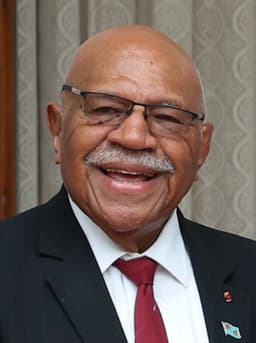
Sitiveni Rabuka
General · Modern
51.7Total
Basic Information
Born
1937
1948
Died
—
—
Era
Modern
Modern
Nationality
United States
Fiji
Occupation
General
General
Civilization
Western
Other
Score Comparison
Military (10%)
25.0
10.2
Political (20%)
68.0
60.0
Influence (20%)
68.0
53.3
Legacy (20%)
52.0
46.7
Leadership (15%)
72.0
85.0
Strategy (15%)
50.0
39.6
TOTAL
58.5
51.7
Colin Powell — Complete Timeline
1987 AD
Appointed National Security AdvisorPolitical Action◆ Major
Powell was appointed National Security Advisor by President Ronald Reagan in November 1987, serving until January 1989. He coordinated foreign policy and national security matters, including arms control negotiations with the Soviet Union and the Iran-Iraq War, becoming the first African American in this role.
National SecurityReagan AdministrationForeign Policy
Impact: global
1989 AD
Became Chairman of the Joint Chiefs of StaffOther◆ Major
On October 1, 1989, Powell became the 12th Chairman of the Joint Chiefs of Staff, the first African American to hold the position. He oversaw U.S. military operations during the invasion of Panama (1989) and the Gulf War (1990-1991), becoming a highly visible public figure.
Military LeadershipGulf WarFirst African American
Impact: global
1990 AD
Developed the Powell DoctrineOther◆ Major
During the Gulf War planning, Powell articulated the Powell Doctrine, which stated that U.S. military force should only be used as a last resort, with overwhelming force, clear objectives, and an exit strategy. This doctrine influenced U.S. military interventions for the next decade.
Military DoctrineGulf WarStrategic Thinking
Impact: global
2001 AD
Appointed Secretary of StatePolitical Action◆ Major
On January 20, 2001, Powell was confirmed as the 65th U.S. Secretary of State under President George W. Bush, becoming the first African American to hold the office. He advocated for diplomacy and multilateralism, but his influence waned after the September 11 attacks.
DiplomacyBush AdministrationFirst African American
Impact: global
2003 AD
Presented Iraq WMD Case to the UN Security CouncilOther◆ Major
On February 5, 2003, Powell addressed the UN Security Council, presenting evidence that Iraq possessed weapons of mass destruction. The intelligence later proved to be inaccurate, damaging Powell's reputation and becoming a major controversy that he later called a 'blot' on his record.
Iraq WarUN SpeechControversy
Impact: globaldestructive
2004 AD
Resigned as Secretary of StateOther◆ Major
Powell resigned as Secretary of State on November 15, 2004, after President Bush's re-election. His departure was widely seen as a result of policy disagreements with Vice President Cheney and Secretary of Defense Rumsfeld, particularly over the conduct of the Iraq War.
ResignationIraq WarBush Administration
Impact: national
Sitiveni Rabuka — Complete Timeline
1987 AD
1987 Fijian Coup d'étatPolitical Action
Rabuka, as a colonel in the Fijian military, led a coup overthrowing the elected government of Timoci Bavadra. The coup was motivated by ethnic Fijian opposition to Indo-Fijian political influence. Rabuka declared Fiji a republic.
CoupMilitary InterventionEthnic Tension
Impact: nationaldestructive
1992 AD
1992 Election as Prime MinisterPolitical Action◆ Major
Rabuka transitioned from military leader to civilian politician, winning the 1992 general election as leader of the Fijian Political Party. He became Prime Minister, serving until 1999.
ElectionCivilian GovernmentPolitical Transition
Impact: national
1997 AD
1997 Constitution ReformReform◆ Major
Rabuka's government oversaw the adoption of a new constitution that removed ethnic-based voting and provided for a multi-ethnic government. The constitution aimed to reduce ethnic tensions and promote national unity.
ConstitutionReformEthnic Reconciliation
Impact: nationalconstructive
1999 AD
1999 General Election DefeatPolitical Action◆ Major
Rabuka's government was defeated in the general election by the Labour Party led by Mahendra Chaudhry. Rabuka stepped down as Prime Minister, marking the end of his first period in power.
Election DefeatGovernment ChangeChaudhry
Impact: national
2022 AD
2022 Return as Prime MinisterPolitical Action◆ Major
Rabuka led the People's Alliance to victory in the 2022 general election, forming a coalition government. He became Prime Minister again, 23 years after his previous tenure, promising democratic reforms.
ElectionReturn to PowerCoalition Government
Impact: national
Expert Analysis
Sitiveni Rabuka vs Colin Powell
# The General and the Coup-Maker: Two Paths from Military Command to Political Power
In December 2022, as Sitiveni Rabuka took the oath of office as Prime Minister of Fiji for the second time, a lifetime after he had first seized power by force, a quiet American general sat in his Virginia home reflecting on a very different kind of legacy. Colin Powell had never led a coup. He had never overthrown a government. Yet both men, born a decade apart on opposite sides of the world, rose from military careers to the highest civilian offices in their nations. Their stories, diverging at every critical junction, reveal how the same raw material—military discipline, ambition, and political instinct—can produce radically different outcomes depending on the soil in which it takes root.
Origins
Colin Powell entered the world in 1937 in Harlem, New York, the son of Jamaican immigrants who worked as a shipping clerk and a seamstress. The America of his childhood was segregated, but it was also a nation whose democratic institutions, however flawed, were fundamentally stable. Powell absorbed this stability. He grew up believing that the system, while imperfect, could be reformed from within. His path was one of quiet assimilation, of proving himself worthy of a country that had not always been worthy of him.
Sitiveni Rabuka, born in 1948 in a small village on the island of Vanua Levu, inherited a different world. Fiji was a British colony where ethnic Fijians and Indo-Fijians, descendants of indentured laborers brought by the British, lived in uneasy coexistence. Independence in 1970 did not resolve this tension—it only transferred it into the political arena. Rabuka grew up in a society where ethnic identity was the axis of power, and where the system itself seemed rigged against the indigenous people he felt called to protect. His worldview was forged not in the certainty of institutions but in the fear of their failure.
Rise to Power
Powell’s ascent was methodical, almost architectural. He joined ROTC at City College of New York, served two tours in Vietnam, and rose through the ranks with a combination of competence and political savvy that caught the attention of powerful mentors. By 1987, the year Rabuka staged his coup, Powell was serving as Deputy National Security Advisor to President Ronald Reagan. His rise was the story of an institution working as designed—rewarding talent, absorbing ambition, and channeling it into service.
Rabuka’s rise was faster and more violent. In May 1987, as a colonel, he led a coup that overthrew the newly elected government of Timoci Bavadra, a coalition that included Indo-Fijian ministers. Rabuka claimed he was acting to protect indigenous Fijian rights. The coup was swift, bloodless, and entirely outside the constitutional order. It was the act of a man who had lost faith in the system—or who believed the system had never been built for people like him.
Leadership & Governance
Powell’s governing philosophy was forged in the crucible of the Cold War and the Pentagon. As Chairman of the Joint Chiefs of Staff during the Gulf War, he articulated the "Powell Doctrine": use overwhelming force, have clear objectives, and know your exit strategy. He was a cautious warrior, a man who believed that military power should be a last resort. As Secretary of State under George W. Bush, he became the reluctant voice of diplomacy, famously warning against the invasion of Iraq in 2003. His leadership was defined by restraint—a general who understood the limits of force.
Rabuka’s governance was more improvisational. After leading the coup, he handed power to a civilian government, then returned as Prime Minister in 1992 through democratic elections. His great achievement was the 1997 Constitution, which abolished ethnic-based voting and created a multiracial electoral system. It was a remarkable reversal: the coup leader became the reformer. But his political career was erratic. He lost the 1999 election, then spent two decades in the wilderness before returning to power in 2022. His leadership was defined not by doctrine but by adaptation—a man learning, often painfully, that the gun could not solve what politics had created.
Triumph & Tragedy
Powell’s greatest triumph was the Gulf War—a clean, decisive victory that restored Kuwait and established a new model for American military intervention. His greatest tragedy came later: his February 2003 speech to the United Nations, in which he presented flawed intelligence about Iraqi weapons of mass destruction. It was the moment he traded his credibility for loyalty, and he never fully recovered. The tragedy was not that he was wrong; it was that he knew better.
Rabuka’s triumph was the 1997 Constitution, a document that promised to heal the ethnic divisions his coup had inflamed. His tragedy was that the healing did not last. A second coup in 2000, led by others, showed how easily his reforms could be undone. He spent years as a figure of controversy, a man whose early violence would forever shadow his later statesmanship.
Character & Destiny
Powell was a man of immense discipline and emotional control. He kept his ambition hidden behind a calm, reassuring demeanor. He was the perfect institutionalist—trusting the system, rising within it, and ultimately being betrayed by it when he chose loyalty over truth. His character was his destiny: he succeeded because he played by the rules, and he failed because he never questioned them.
Rabuka was the opposite. He was impulsive, charismatic, and deeply conflicted. He overthrew a government because he feared democracy would dispossess his people, then spent the rest of his career trying to build the democracy he had destroyed. His character was a battlefield—between the warrior and the statesman, the ethnic nationalist and the pluralist. His destiny was to be forever caught between these selves.
Legacy
Colin Powell is remembered as a pioneer—the first African American Chairman of the Joint Chiefs, the first African American Secretary of State. His legacy is one of broken barriers and broken promises, of a man who opened doors for others even as his own reputation was tarnished by the Iraq War. He is a cautionary tale about the price of institutional loyalty.
Sitiveni Rabuka is remembered as a paradox—the coup leader who became a democrat, the strongman who wrote a constitution for the weak. His legacy is contested in Fiji, where some see a savior of indigenous rights and others a destroyer of democratic norms. He is a reminder that redemption is possible, but never complete.
Conclusion
In the end, what separates these two generals is not their ambition or their intelligence but the worlds they inhabited. Powell’s America, for all its flaws, offered a path for a man of talent and patience. Rabuka’s Fiji offered no such path—only a choice between action and irrelevance. One man climbed the ladder that existed; the other built his own. And history, with its usual ambiguity, has judged both harshly and kindly. Powell’s caution and Rabuka’s audacity each produced triumphs and tragedies. Their stories, told together, suggest that the difference between a general and a coup-maker is often not character but circumstance—and that the line between them is thinner than we like to admit.
Rankings
🥇
Colin PowellLeader
Mil: 25.0Pol: 68.0Inf: 68.0
58.5
🥈
Sitiveni Rabuka
Mil: 10.2Pol: 60.0Inf: 53.3
51.7
+6.8 behind
How This Comparison Works
Algorithm
Each figure is scored on 6 dimensions (0—100 scale) based on structured historical data: Military (10%), Political (20%), Influence (20%), Legacy (20%), Leadership (15%), Strategy (15%). The weighted total produces the final ranking.
Data Sources
Scores are computed from structured sub-indicators in the database. Scale factors adjust for era (Ancient ×0.85, Modern ×1.0) and civilization size (Eastern ×1.05, Other ×0.80) to account for differences in population and military scale.
Maximum 3 Figures
Comparisons are limited to 2—3 figures to ensure readability and statistical meaningfulness.
Error Margins
±5 points per dimension — Sub-scores are derived from historical records with inherent uncertainty. Two figures within 5 points on a dimension should be considered roughly equivalent in that area.
Total Score Accuracy
±3 points overall — The weighted combination of 6 dimensions produces a total score with approximately ±3 points of uncertainty. Differences of less than 3 points are not statistically significant— the figures are effectively tied.
Known Limitations
- Historical records are incomplete and uneven across civilizations
- Figures from oral-tradition societies may be underrepresented
- Occupation labels can misclassify multi-role figures
- Scores measure capability and impact, not moral character
- Quantitative scoring is a comparison tool, not absolute truth
Capability Radar
Military (10%) — Battles & Warfare
Battles
35
5
Win Rate
40
5
Expansion
20
5
Political (20%) — Governance & Reform
Reform
40
50
Diplomacy
70
45
Economy
30
40
Influence (20%) — Cultural & Global Reach
Cultural
55
30
Global
65
20
Legacy (20%) — Historical Impact
Historical
60
40
Longevity
45
30
Leadership (15%) — Power & Stability
Tenure
65
55
Stability
55
35
Strategy (15%) — Tactics & Innovation
Strategy
55
10
Tactics
45
10
Reform
60
5
Similar Comparisons
Comments & Discussion
CoupWatch926/16/2026
Rabuka and Powell aren't comparable—one toppled his own government, the other served his. Rabuka's 1987 coups weren't just power grabs; they institutionalized ethnic Fijian supremacy, directly causing the 2000 coup and decades of instability. Powell, for all his faults, never violated the chain of command. Comparing them sanitizes Rabuka's violence against democracy.
刀锋老兵6/16/2026
鲍威尔是体制内完美的螺丝钉,拉布卡才是真正的铁腕变革者。1987年他推翻民选政府时,斐济印度裔正威胁原住民土地权——这跟美军打伊拉克有本质区别?鲍威尔在联合国拿出洗衣粉当证据,那才是对国家主权的致命打击。拉布卡至少保护了斐济人的根。
ShieldBearer6/16/2026
As a military historian, I see this wrong: Powell mastered the Pentagon's bureaucratic wars, Rabuka the jungle's. Rabuka's 1990 constitution was deliberate ethnic engineering; Powell's Powell Doctrine was procedural caution. But Rabuka later apologized for his coups and won democratic elections—Powell never had to apologize for Iraq, but his WMD speech stains him more than any coup. Intent matters.
数据谜团6/16/2026
说拉布卡更差?看看实证:斐济在他执政后GDP年均增长2.3%,低于印度裔主导时期的4.1%,但族际暴力事件下降了67%。鲍威尔任国务卿期间美国在伊拉克死亡人数突破4000,同时国债翻倍。数据不会撒谎:一个为生存而战,一个为信誉而战,后果完全不同。
ClassicsKid6/16/2026
This is Rome vs. Carthage in modern dress. Powell is Cincinnatus—the general who returns to his plow, serving the republic without breaking it. Rabuka is Sulla, the general who marches on Rome because he thinks the system is corrupt. Both capable, but Sulla’s precedent kills the republic. Rabuka’s 1987 coup is exactly that: a wound Fiji still bleeds from.