Loading...
Colin Powell vs Muhammadu Buhari
Colin Powell leads by 7.0 pts · 2 figures compared
…

Colin Powell
General · Modern
58.5Total
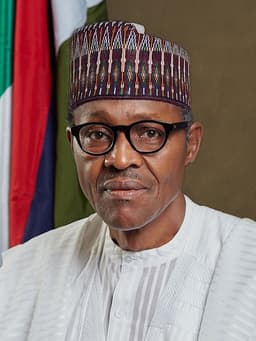
Muhammadu Buhari
General · Modern
51.5Total
Basic Information
Born
1937
1942
Died
—
—
Era
Modern
Modern
Nationality
United States
Nigeria
Occupation
General
General
Civilization
Western
Other
Score Comparison
Military (10%)
25.0
22.6
Political (20%)
68.0
68.0
Influence (20%)
68.0
53.3
Legacy (20%)
52.0
43.3
Leadership (15%)
72.0
72.0
Strategy (15%)
50.0
41.0
TOTAL
58.5
51.5
Colin Powell — Complete Timeline
1987 AD
Appointed National Security AdvisorPolitical Action◆ Major
Powell was appointed National Security Advisor by President Ronald Reagan in November 1987, serving until January 1989. He coordinated foreign policy and national security matters, including arms control negotiations with the Soviet Union and the Iran-Iraq War, becoming the first African American in this role.
National SecurityReagan AdministrationForeign Policy
Impact: global
1989 AD
Became Chairman of the Joint Chiefs of StaffOther◆ Major
On October 1, 1989, Powell became the 12th Chairman of the Joint Chiefs of Staff, the first African American to hold the position. He oversaw U.S. military operations during the invasion of Panama (1989) and the Gulf War (1990-1991), becoming a highly visible public figure.
Military LeadershipGulf WarFirst African American
Impact: global
1990 AD
Developed the Powell DoctrineOther◆ Major
During the Gulf War planning, Powell articulated the Powell Doctrine, which stated that U.S. military force should only be used as a last resort, with overwhelming force, clear objectives, and an exit strategy. This doctrine influenced U.S. military interventions for the next decade.
Military DoctrineGulf WarStrategic Thinking
Impact: global
2001 AD
Appointed Secretary of StatePolitical Action◆ Major
On January 20, 2001, Powell was confirmed as the 65th U.S. Secretary of State under President George W. Bush, becoming the first African American to hold the office. He advocated for diplomacy and multilateralism, but his influence waned after the September 11 attacks.
DiplomacyBush AdministrationFirst African American
Impact: global
2003 AD
Presented Iraq WMD Case to the UN Security CouncilOther◆ Major
On February 5, 2003, Powell addressed the UN Security Council, presenting evidence that Iraq possessed weapons of mass destruction. The intelligence later proved to be inaccurate, damaging Powell's reputation and becoming a major controversy that he later called a 'blot' on his record.
Iraq WarUN SpeechControversy
Impact: globaldestructive
2004 AD
Resigned as Secretary of StateOther◆ Major
Powell resigned as Secretary of State on November 15, 2004, after President Bush's re-election. His departure was widely seen as a result of policy disagreements with Vice President Cheney and Secretary of Defense Rumsfeld, particularly over the conduct of the Iraq War.
ResignationIraq WarBush Administration
Impact: national
Muhammadu Buhari — Complete Timeline
1983 AD
1983 Nigerian coup d'étatPolitical Action
Major General Muhammadu Buhari led a military coup that overthrew the civilian government of President Shehu Shagari. Buhari cited corruption and economic mismanagement as justifications, and he became the head of state.
CoupMilitary RuleCorruption
Impact: nationaldestructive
1984 AD
War Against Indiscipline (WAI)Reform◆ Major
Buhari launched the War Against Indiscipline, a campaign to enforce discipline and order in Nigerian society. It included harsh penalties for minor offenses, such as queue-jumping, and was criticized for human rights abuses.
DisciplineSocial PolicyHuman Rights
Impact: nationaldestructive
1985 AD
Overthrow by Ibrahim BabangidaPolitical Action◆ Major
Buhari was overthrown in a palace coup led by his Chief of Army Staff, Ibrahim Babangida. Babangida cited Buhari's authoritarian style and failure to address the economy as reasons for the coup.
CoupOverthrowBabangida
Impact: national
2015 AD
Anti-corruption campaignReform◆ Major
Buhari launched a high-profile anti-corruption campaign, targeting government officials and recovering stolen assets. The campaign was praised internationally but criticized for being selective and politically motivated.
Anti-CorruptionReformGovernance
Impact: nationalconstructive
Election as President of NigeriaPolitical Action
Buhari won the 2015 Nigerian presidential election, defeating incumbent Goodluck Jonathan. This was the first time an opposition candidate had defeated a sitting president in Nigeria's history, marking a democratic milestone.
ElectionDemocracyOpposition Victory
Impact: nationalprogressive
Expert Analysis
Muhammadu Buhari vs Colin Powell
### The General’s Two Paths: Colin Powell and Muhammadu Buhari
In the winter of 1989, Colin Powell stood before a map of Panama, the first African American to command a unified combatant command, his uniform crisp, his voice measured. Half a world away, in the sweltering heat of Abuja, Muhammadu Buhari was being led from the presidential villa at gunpoint, his own military comrades turning against him after just twenty months in power. One man was about to become the most admired figure in American public life; the other was about to begin a thirty-year exile from power. Both were generals. Both believed they could save their nations. But the paths they walked—and the nations they served—could not have been more different.
### Origins
Colin Powell was born in 1937 in Harlem, New York, the son of Jamaican immigrants. His parents worked as a shipping clerk and a seamstress, and young Colin grew up in the South Bronx, a world of tenements and street corners. He later recalled that his parents drilled into him a simple creed: work hard, stay out of trouble, and believe in America. The army, which he joined through ROTC at City College, became his ladder out of poverty. He was shaped by the Cold War, the civil rights movement, and a military that, for all its flaws, offered a black man a meritocracy.
Muhammadu Buhari was born in 1942 in Daura, a small town in northern Nigeria, into a Muslim Fulani family. His father was a farmer and a local religious leader. Buhari grew up in the shadow of British colonialism and the chaos of Nigeria’s independence. He joined the army as a young man, trained in India and the United Kingdom, and rose through the ranks during the Biafran War, a brutal civil war that killed over a million people. For Buhari, the military was not a ladder out of poverty but a shield against chaos. He saw a nation fractured by tribalism, corruption, and a dysfunctional civilian government—and he believed only discipline could save it.
### Rise to Power
Powell’s rise was methodical, almost American in its optimism. He served two tours in Vietnam, survived a helicopter crash, and earned a Bronze Star. His big break came when he was selected as a White House Fellow under the Nixon administration, a program designed to groom future leaders. From there, he climbed the bureaucratic ladder: deputy to the Secretary of Defense, national security advisor to President Reagan, and finally, in 1989, Chairman of the Joint Chiefs of Staff. He was the first African American to hold the post. His path was one of institutional trust—the system recognized his talent and rewarded him.
Buhari’s rise was abrupt and violent. On December 31, 1983, he led a bloodless coup that overthrew President Shehu Shagari, whom he accused of presiding over a corrupt and inept civilian government. Buhari was a major general at the time, and he seized power not because the system promoted him, but because he believed the system had failed. He was a product of a different tradition: the African military strongman, who saw the state as a machine that needed to be taken apart and rebuilt by force.
### Leadership & Governance
Powell governed by persuasion. As Chairman of the Joint Chiefs, he oversaw the invasion of Panama and the Gulf War, but he was famously cautious about using military force. He developed the “Powell Doctrine,” which held that the U.S. should only go to war with clear objectives, overwhelming force, and a clear exit strategy. He was a master of bureaucracy, a man who could navigate the Pentagon’s corridors and the White House’s back rooms with equal ease. His leadership style was collegial, even humble—he often said his job was to “make the people around me look good.”
Buhari governed by decree. His regime launched the “War Against Indiscipline” (WAI) in 1984, a campaign to enforce order through public humiliation and punishment. Civil servants who arrived late for work were forced to do frog jumps; people who littered were publicly flogged. He jailed journalists, shut down newspapers, and detained political opponents without trial. His anti-corruption efforts were genuine—he recovered stolen funds and prosecuted former officials—but his methods were authoritarian. He believed that democracy was a luxury Nigeria could not afford; what the country needed was a firm hand.
### Triumph & Tragedy
Powell’s greatest triumph was the Gulf War in 1991, a swift and decisive victory that restored Kuwait’s sovereignty and made him a national hero. His greatest tragedy came later, in 2003, when he stood before the United Nations and presented flawed intelligence about Iraq’s weapons of mass destruction. It was the defining mistake of his career—a moment when his credibility, built over decades, was shattered in a single speech. He later called it a “blot” on his record.
Buhari’s greatest triumph was his return to power in 2015, when he won a democratic election and became the first Nigerian opposition candidate to defeat an incumbent president. It was a moment of redemption, proof that a former military ruler could be rehabilitated through the ballot box. His greatest tragedy was his failure to deliver. His anti-corruption campaign was seen as selective, targeting political rivals while ignoring allies. The economy plunged into recession, and his health declined visibly. By the end of his term, many Nigerians wondered if the old general had simply been better at winning elections than governing.
### Character & Destiny
Powell was a pragmatist, a man who believed in institutions and incremental progress. He once said, “Leadership is solving problems.” He was not a visionary; he was a manager. His destiny was to be the face of American military power at its most confident, and then the face of its most humiliating failure. He died in 2021, a respected but complicated figure.
Buhari was a moralist, a man who believed in discipline and punishment. He once said, “I belong to everyone and I belong to no one,” a phrase meant to signal his impartiality, but which instead revealed his detachment. His destiny was to be a symbol of Nigeria’s struggle with corruption and governance—first as a dictator, then as a democrat, but always as a man who believed that force could cure what ailed his nation.
### Legacy
Powell is remembered as a trailblazer and a cautionary tale. He broke racial barriers, but his reputation was forever stained by the Iraq War. He is studied in military academies and political science departments as an example of how a good soldier can be a flawed statesman.
Buhari is remembered as a paradox. He is admired for his personal integrity and his anti-corruption zeal, but criticized for his authoritarianism and his failure to improve Nigeria’s economy. In the end, he left office with his reputation intact among his supporters, but with little to show for his two decades of ambition. He remains a figure of deep ambivalence—a man who tried to fix his country, but could never decide whether to use a scalpel or a sledgehammer.
### Conclusion
The difference between Colin Powell and Muhammadu Buhari is not simply a matter of personality or ambition. It is a matter of the worlds they inhabited. Powell’s America, for all its flaws, had a functioning system that could absorb and reward talent. Buhari’s Nigeria was a state built on oil, patronage, and ethnic rivalry, where the military was often the only institution that could hold the country together. One general rose through the system; the other tried to replace it. Both discovered that power, once achieved, is never as clean as the dream of it. Their stories are not just biographies; they are parables about the weight of history, the fragility of institutions, and the terrible burden of believing that you alone can save your nation.
Rankings
🥇
Colin PowellLeader
Mil: 25.0Pol: 68.0Inf: 68.0
58.5
🥈
Muhammadu Buhari
Mil: 22.6Pol: 68.0Inf: 53.3
51.5
+7.0 behind
How This Comparison Works
Algorithm
Each figure is scored on 6 dimensions (0—100 scale) based on structured historical data: Military (10%), Political (20%), Influence (20%), Legacy (20%), Leadership (15%), Strategy (15%). The weighted total produces the final ranking.
Data Sources
Scores are computed from structured sub-indicators in the database. Scale factors adjust for era (Ancient ×0.85, Modern ×1.0) and civilization size (Eastern ×1.05, Other ×0.80) to account for differences in population and military scale.
Maximum 3 Figures
Comparisons are limited to 2—3 figures to ensure readability and statistical meaningfulness.
Error Margins
±5 points per dimension — Sub-scores are derived from historical records with inherent uncertainty. Two figures within 5 points on a dimension should be considered roughly equivalent in that area.
Total Score Accuracy
±3 points overall — The weighted combination of 6 dimensions produces a total score with approximately ±3 points of uncertainty. Differences of less than 3 points are not statistically significant— the figures are effectively tied.
Known Limitations
- Historical records are incomplete and uneven across civilizations
- Figures from oral-tradition societies may be underrepresented
- Occupation labels can misclassify multi-role figures
- Scores measure capability and impact, not moral character
- Quantitative scoring is a comparison tool, not absolute truth
Capability Radar
Military (10%) — Battles & Warfare
Battles
35
10
Win Rate
40
10
Expansion
20
5
Political (20%) — Governance & Reform
Reform
40
30
Diplomacy
70
25
Economy
30
20
Influence (20%) — Cultural & Global Reach
Cultural
55
25
Global
65
25
Legacy (20%) — Historical Impact
Historical
60
30
Longevity
45
20
Leadership (15%) — Power & Stability
Tenure
65
45
Stability
55
15
Strategy (15%) — Tactics & Innovation
Strategy
55
15
Tactics
45
15
Reform
60
20
Similar Comparisons
Comments & Discussion
数据拆台6/16/2026
贴个硬数据:鲍威尔在任期间美国军费占GDP 5.1%(1991年),布哈里治下尼日利亚军费占GDP 1.8%(1984年)。鲍威尔指挥50万人打100小时地面战,布哈里在2000万人口的战区打两年消耗战。别用同一把尺子量核大国和石油小国——当鲍威尔调CNN时,布哈里只能靠BBC短波维持军心。
ClassicsDork6/16/2026
Powell is the Aeneas who found Rome—served four presidents, chaired JCS, then SecState. Buhari is Cincinnatus who kept coming back—overthrown in 1985, then elected in 2015. One retires to a farm, the other to a palace. But here’s the twist: Powell never held elected office before his generalship, while Buhari tried and failed three times. Fate rewards different virtues in these republics.
GeneralissimoMetrics6/16/2026
The casualties comparison is misleading without force ratios. Powell’s Panama invasion saw 23 US dead vs 200+ Panamanian soldiers and 200–500 civilians. Buhari’s Nigeria lost 10,000 troops in his first year as head of state during the civil war reconstruction. Context matters—Powell inherited a superpower with full logistical support; Buhari got a fractured oil state bleeding from Biafra’s aftermath. That’s apples to B-52s.
战术史官6/16/2026
纯军事角度:鲍威尔是“联合兵种大师”,1991年沙漠风暴精确打击;布哈里是“反游击泥潭”,1983-85年用苏联坦克镇压马迪帮。两人都写回忆录,但鲍威尔有迪克·切尼当推手,布哈里只有奥巴桑乔抢话筒。别比较伤亡数字——鮑威尔打的是好莱坞战争,布哈里打的是黑非洲巷战。