Loading...
Colin Powell vs Yitzhak Rabin
Yitzhak Rabin leads by 7.9 pts · 2 figures compared
…

Colin Powell
General · Modern
58.5Total
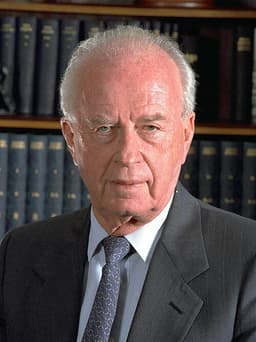
Yitzhak Rabin
General · Modern
66.4Total
Basic Information
Born
1937
1922
Died
—
—
Era
Modern
Modern
Nationality
United States
Israel
Occupation
General
General
Civilization
Western
Middle Eastern
Score Comparison
Military (10%)
25.0
61.7
Political (20%)
68.0
82.0
Influence (20%)
68.0
68.0
Legacy (20%)
52.0
55.0
Leadership (15%)
72.0
78.0
Strategy (15%)
50.0
55.0
TOTAL
58.5
66.4
Colin Powell — Complete Timeline
1987 AD
Appointed National Security AdvisorPolitical Action◆ Major
Powell was appointed National Security Advisor by President Ronald Reagan in November 1987, serving until January 1989. He coordinated foreign policy and national security matters, including arms control negotiations with the Soviet Union and the Iran-Iraq War, becoming the first African American in this role.
National SecurityReagan AdministrationForeign Policy
Impact: global
1989 AD
Became Chairman of the Joint Chiefs of StaffOther◆ Major
On October 1, 1989, Powell became the 12th Chairman of the Joint Chiefs of Staff, the first African American to hold the position. He oversaw U.S. military operations during the invasion of Panama (1989) and the Gulf War (1990-1991), becoming a highly visible public figure.
Military LeadershipGulf WarFirst African American
Impact: global
1990 AD
Developed the Powell DoctrineOther◆ Major
During the Gulf War planning, Powell articulated the Powell Doctrine, which stated that U.S. military force should only be used as a last resort, with overwhelming force, clear objectives, and an exit strategy. This doctrine influenced U.S. military interventions for the next decade.
Military DoctrineGulf WarStrategic Thinking
Impact: global
2001 AD
Appointed Secretary of StatePolitical Action◆ Major
On January 20, 2001, Powell was confirmed as the 65th U.S. Secretary of State under President George W. Bush, becoming the first African American to hold the office. He advocated for diplomacy and multilateralism, but his influence waned after the September 11 attacks.
DiplomacyBush AdministrationFirst African American
Impact: global
2003 AD
Presented Iraq WMD Case to the UN Security CouncilOther◆ Major
On February 5, 2003, Powell addressed the UN Security Council, presenting evidence that Iraq possessed weapons of mass destruction. The intelligence later proved to be inaccurate, damaging Powell's reputation and becoming a major controversy that he later called a 'blot' on his record.
Iraq WarUN SpeechControversy
Impact: globaldestructive
2004 AD
Resigned as Secretary of StateOther◆ Major
Powell resigned as Secretary of State on November 15, 2004, after President Bush's re-election. His departure was widely seen as a result of policy disagreements with Vice President Cheney and Secretary of Defense Rumsfeld, particularly over the conduct of the Iraq War.
ResignationIraq WarBush Administration
Impact: national
Yitzhak Rabin — Complete Timeline
1967 AD
Chief of Staff during the Six-Day WarWar
As Chief of Staff of the Israel Defense Forces, Rabin commanded the Israeli military during the Six-Day War against Egypt, Jordan, and Syria. Israel captured the Sinai Peninsula, Gaza Strip, West Bank, East Jerusalem, and Golan Heights, reshaping the region.
Six-Day WarTerritorial ExpansionMilitary Victory
Impact: global
1993 AD
Signing of the Oslo AccordsPolitical Action
As prime minister, Rabin signed the Oslo Accords with PLO Chairman Yasser Arafat on the White House lawn. The agreement established the Palestinian Authority and set a framework for Palestinian self-governance in the West Bank and Gaza Strip.
Peace ProcessPalestiniansOslo
Impact: globalconstructive
1995 AD
Assassination at Peace RallyPolitical Action
Rabin was assassinated by Israeli extremist Yigal Amir after a peace rally in Tel Aviv. The assassination shocked Israel and the world, derailing the Oslo peace process and leading to a period of political instability.
AssassinationPeace ProcessPolitical Violence
Impact: globaltragic
Expert Analysis
Yitzhak Rabin vs Colin Powell
# The General Who Dared to Leap
On the evening of November 4, 1995, Yitzhak Rabin folded a song sheet and placed it in his breast pocket. He had just sung “Shir LaShalom”—“Song for Peace”—before a crowd of 100,000 in Tel Aviv. Moments later, three bullets tore through that paper. Across the Atlantic, Colin Powell sat in his Virginia home, watching the news unfold. He had considered running for president just months earlier. Two generals, two paths: one ended in a blood-soaked square, the other in a quiet retirement. What made one man a martyr for peace and the other a cautious icon of service?
Origins
Rabin was born in Jerusalem in 1922 to socialist Zionist parents who had fled pogroms in Russia. His childhood was forged in the crucible of a land under British mandate, where survival meant vigilance. He joined the Palmach, the elite strike force of the Jewish underground, at eighteen. His world was one of constant threat—Arab riots, Nazi armies at El Alamein, and later, the existential terror of a newborn state surrounded by enemies. Rabin learned early that force was the only language his neighbors understood.
Powell, by contrast, was born in 1937 in Harlem, New York, to Jamaican immigrants. His father worked as a shipping clerk, his mother as a seamstress. The Great Depression was a recent memory, but America was a rising superpower. Powell grew up in a world of opportunity, not siege. He joined the ROTC at City College not out of ideological fervor but because it was “something to do.” His era was one of Cold War containment, not existential annihilation. The difference in their origins—a nation fighting for its life versus a nation secure in its power—would define everything.
Rise to Power
Rabin’s ascent was meteoric and bloody. As Chief of Staff during the Six-Day War in 1967, he commanded an army that preemptively struck Egypt, Jordan, and Syria, capturing the Sinai, Gaza, the West Bank, and the Golan Heights in six days. The victory was staggering, but it planted seeds of occupation that would haunt him. Rabin was a soldier’s soldier—gruff, chain-smoking, prone to nervous breakdowns under pressure. Yet he also possessed a rare quality: the ability to see the enemy as human.
Powell’s rise was steadier, shaped by bureaucracy as much as battle. He served two tours in Vietnam, where he witnessed the chaos of a war without clear purpose. Later, as National Security Advisor and Chairman of the Joint Chiefs under George H.W. Bush, he orchestrated the Gulf War in 1991—a swift, televised triumph that expelled Iraqi forces from Kuwait. Powell became the most admired man in America, his approval ratings higher than the president’s. But his war was a limited one, fought with overwhelming force and a clear exit strategy. He never faced the impossible choice Rabin did: whether to trade land for peace with an enemy who had once sworn to destroy you.
Leadership & Governance
Rabin’s leadership was paradoxical. As prime minister, he authorized the expansion of settlements in the occupied territories even as he secretly negotiated with the Palestine Liberation Organization. He trusted no one, least of all his own security apparatus. Yet on September 13, 1993, he stood on the White House lawn and shook hands with Yasser Arafat, the man he had called a terrorist. The Oslo Accords were born—a framework for Palestinian self-rule that promised to end the conflict. Rabin’s military mind understood that victory had to be translated into political reality. “You don’t make peace with friends,” he said. “You make it with very unsavory enemies.”
Powell’s leadership was more institutional. He believed in the “Powell Doctrine”: use overwhelming force, define clear objectives, and have an exit strategy. As Secretary of State under George W. Bush, he tried to apply this logic to diplomacy. In February 2003, he stood before the United Nations and presented evidence of Iraqi weapons of mass destruction—evidence that later proved false. It was his greatest failure, a moment when caution gave way to loyalty. Powell trusted the system; Rabin trusted only himself.
Triumph & Tragedy
Rabin’s triumph was the Oslo Accords, a moment that seemed to bend history toward peace. His tragedy was that peace required him to betray his own tribe. Israeli right-wingers called him a traitor; settlers hung posters of him in SS uniform. On that November night in 1995, Yigal Amir, a Jewish law student, fired three shots. Rabin died on the operating table, the song sheet in his pocket stained with blood. His assassination shattered the peace process and plunged the region into decades of violence.
Powell’s triumph was the Gulf War, a conflict that restored American credibility after Vietnam. His tragedy was the Iraq War, a conflict that destroyed his reputation. He later called his UN speech a “blot” on his record. But unlike Rabin, Powell lived to see his mistakes—and to apologize. He died in 2021, mourned as a statesman who served his country even when it failed him.
Character & Destiny
Rabin was a man of deep contradictions: a warrior who came to loathe war, a pragmatist who took the greatest risk. His character was forged by the Israeli experience—the sense that history was a knife’s edge, that one wrong move meant annihilation. He moved toward peace not out of idealism but out of exhaustion. “Enough blood,” he said. His destiny was to be killed by his own people, a martyr for a cause he never fully believed in until the end.
Powell was a man of discipline and restraint. He rose through a system that rewarded loyalty, and loyalty became his weakness. He believed that America’s institutions would correct themselves, that the arc of history bent toward justice. His destiny was to be a symbol of what America could be—a Black man from Harlem who led armies and advised presidents—but also a warning of what happens when good men trust bad intelligence.
Legacy
Rabin’s legacy is frozen in amber. He is remembered as the general who dared to make peace, the leader who was murdered for it. His name is a rallying cry for Israelis who still believe in a two-state solution. But the peace he signed never came. The West Bank remains occupied; Gaza is a war zone. Rabin’s ghost haunts every failed negotiation.
Powell’s legacy is more ambiguous. He is celebrated as a trailblazer—the first Black Chairman of the Joint Chiefs, the first Black Secretary of State. Yet the Iraq War tarnished his reputation. Historians debate whether he was a tragic figure or a complicit one. He remains a symbol of American military professionalism, but also of the limits of that professionalism when politics intervenes.
Conclusion
Two generals, two nations, two fates. Rabin died because he chose peace over security; Powell lived because he chose security over peace. Both understood that war is a failure of politics, but only one was willing to risk everything to prove it. Rabin’s blood-soaked song sheet and Powell’s hollowed-out UN speech are artifacts of a single truth: that the hardest thing for a soldier to do is lay down his arms. And the hardest thing for a nation to do is forgive its enemies.
Rankings
🥇
Yitzhak RabinLeader
Mil: 61.7Pol: 82.0Inf: 68.0
66.4
🥈
Colin Powell
Mil: 25.0Pol: 68.0Inf: 68.0
58.5
+7.9 behind
How This Comparison Works
Algorithm
Each figure is scored on 6 dimensions (0—100 scale) based on structured historical data: Military (10%), Political (20%), Influence (20%), Legacy (20%), Leadership (15%), Strategy (15%). The weighted total produces the final ranking.
Data Sources
Scores are computed from structured sub-indicators in the database. Scale factors adjust for era (Ancient ×0.85, Modern ×1.0) and civilization size (Eastern ×1.05, Other ×0.80) to account for differences in population and military scale.
Maximum 3 Figures
Comparisons are limited to 2—3 figures to ensure readability and statistical meaningfulness.
Error Margins
±5 points per dimension — Sub-scores are derived from historical records with inherent uncertainty. Two figures within 5 points on a dimension should be considered roughly equivalent in that area.
Total Score Accuracy
±3 points overall — The weighted combination of 6 dimensions produces a total score with approximately ±3 points of uncertainty. Differences of less than 3 points are not statistically significant— the figures are effectively tied.
Known Limitations
- Historical records are incomplete and uneven across civilizations
- Figures from oral-tradition societies may be underrepresented
- Occupation labels can misclassify multi-role figures
- Scores measure capability and impact, not moral character
- Quantitative scoring is a comparison tool, not absolute truth
Capability Radar
Military (10%) — Battles & Warfare
Battles
35
65
Win Rate
40
70
Expansion
20
50
Political (20%) — Governance & Reform
Reform
40
65
Diplomacy
70
85
Economy
30
60
Influence (20%) — Cultural & Global Reach
Cultural
55
55
Global
65
70
Legacy (20%) — Historical Impact
Historical
60
75
Longevity
45
60
Leadership (15%) — Power & Stability
Tenure
65
70
Stability
55
40
Strategy (15%) — Tactics & Innovation
Strategy
55
75
Tactics
45
60
Reform
60
55
Similar Comparisons
Comments & Discussion
No comments yet. Be the first to share your thoughts!