Loading...
Colin Powell vs Ramon Castilla
Ramon Castilla leads by 1.2 pts · 2 figures compared
…

Colin Powell
General · Modern
58.5Total
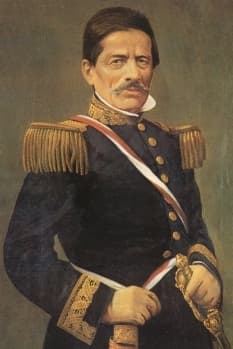
Ramon Castilla
General · Modern
59.7Total
Basic Information
Born
1937
1797
Died
—
1867
Era
Modern
Modern
Nationality
United States
Peru
Occupation
General
General
Civilization
Western
Western
Score Comparison
Military (10%)
25.0
40.0
Political (20%)
68.0
72.0
Influence (20%)
68.0
56.7
Legacy (20%)
52.0
52.0
Leadership (15%)
72.0
78.0
Strategy (15%)
50.0
60.0
TOTAL
58.5
59.7
Colin Powell — Complete Timeline
1987 AD
Appointed National Security AdvisorPolitical Action◆ Major
Powell was appointed National Security Advisor by President Ronald Reagan in November 1987, serving until January 1989. He coordinated foreign policy and national security matters, including arms control negotiations with the Soviet Union and the Iran-Iraq War, becoming the first African American in this role.
National SecurityReagan AdministrationForeign Policy
Impact: global
1989 AD
Became Chairman of the Joint Chiefs of StaffOther◆ Major
On October 1, 1989, Powell became the 12th Chairman of the Joint Chiefs of Staff, the first African American to hold the position. He oversaw U.S. military operations during the invasion of Panama (1989) and the Gulf War (1990-1991), becoming a highly visible public figure.
Military LeadershipGulf WarFirst African American
Impact: global
1990 AD
Developed the Powell DoctrineOther◆ Major
During the Gulf War planning, Powell articulated the Powell Doctrine, which stated that U.S. military force should only be used as a last resort, with overwhelming force, clear objectives, and an exit strategy. This doctrine influenced U.S. military interventions for the next decade.
Military DoctrineGulf WarStrategic Thinking
Impact: global
2001 AD
Appointed Secretary of StatePolitical Action◆ Major
On January 20, 2001, Powell was confirmed as the 65th U.S. Secretary of State under President George W. Bush, becoming the first African American to hold the office. He advocated for diplomacy and multilateralism, but his influence waned after the September 11 attacks.
DiplomacyBush AdministrationFirst African American
Impact: global
2003 AD
Presented Iraq WMD Case to the UN Security CouncilOther◆ Major
On February 5, 2003, Powell addressed the UN Security Council, presenting evidence that Iraq possessed weapons of mass destruction. The intelligence later proved to be inaccurate, damaging Powell's reputation and becoming a major controversy that he later called a 'blot' on his record.
Iraq WarUN SpeechControversy
Impact: globaldestructive
2004 AD
Resigned as Secretary of StateOther◆ Major
Powell resigned as Secretary of State on November 15, 2004, after President Bush's re-election. His departure was widely seen as a result of policy disagreements with Vice President Cheney and Secretary of Defense Rumsfeld, particularly over the conduct of the Iraq War.
ResignationIraq WarBush Administration
Impact: national
Ramon Castilla — Complete Timeline
1824 AD
Battle of AyacuchoWar
Castilla fought as a junior officer in the decisive Battle of Ayacucho, which ended Spanish rule in Peru. This victory secured Peruvian independence and marked the end of the Spanish Empire in South America, shaping Castilla's nationalist views.
Peruvian War of IndependenceBattleLiberation
Impact: regional
1845 AD
First Presidency of PeruPolitical Action◆ Major
Castilla was elected President of Peru in 1845, serving until 1851. His first term focused on economic development, including the guano boom, and infrastructure projects such as railroads and ports, modernizing the Peruvian state.
PresidencyEconomic DevelopmentGuano
Impact: nationalconstructive
1854 AD
Abolition of Slavery in PeruReform◆ Major
During his second presidency, Castilla issued a decree abolishing slavery in Peru on December 3, 1854. This reform freed approximately 25,000 slaves and was part of a broader liberal agenda, though it faced opposition from slave-owning elites.
AbolitionSlaveryHuman Rights
Impact: nationalprogressive
Abolition of Indigenous TributeReform◆ Major
Castilla also abolished the indigenous tribute tax in 1854, which had been a burden on native communities since colonial times. This measure aimed to integrate indigenous peoples into the Peruvian state as equal citizens, though its implementation was uneven.
Indigenous RightsTax ReformCitizenship
Impact: nationalprogressive
1855 AD
Second Presidency and Guano BoomPolitical Action◆ Major
Castilla served a second term from 1855 to 1862, during the peak of the guano export boom. He used guano revenues to fund public works, pay off foreign debt, and modernize the military, but also faced criticism for corruption and over-reliance on a single resource.
PresidencyGuanoModernization
Impact: nationalconstructive
1860 AD
Constitutional Reform of 1860Reform◆ Major
Castilla oversaw the adoption of a new constitution in 1860, which established a centralized republic with a strong executive. The constitution remained in effect until 1920 and shaped Peru's political structure, though it limited regional autonomy.
ConstitutionPolitical ReformCentralization
Impact: nationalconstructive
Expert Analysis
Ramon Castilla vs Colin Powell
# The General and the Statesman: Ramon Castilla and Colin Powell
On a December morning in 1854, a Peruvian general signed a decree that would free thousands of enslaved people with a single stroke of his pen. Ramon Castilla, then in his second presidency, had just made himself a revolutionary in the eyes of history. A century and a half later, another general stood before the United Nations Security Council, holding up a vial of powder that he claimed proved Iraq possessed weapons of mass destruction. Colin Powell, the most admired military man in America, would soon see his reputation tarnished by that single, fateful presentation. Two generals, two continents, two different kinds of power—and two profoundly different destinies.
Origins
Ramon Castilla was born in 1797 in Tarapacá, then part of the Spanish Viceroyalty of Peru, into a family of modest means. His father was a Spanish colonial administrator, his mother a descendant of indigenous nobility. This mixed heritage would later inform his policies toward Peru's native communities. The world of his youth was one of colonial hierarchy, where birth determined opportunity and where the Spanish crown ruled with iron certainty. When Castilla was a teenager, the wars of independence erupted across South America, and he chose to fight for the royalist side—a decision that would seem strange given his later reforms, but one that reflected the complex loyalties of the era.
Colin Powell was born in 1937 in Harlem, New York, to Jamaican immigrant parents. His father worked as a shipping clerk, his mother as a seamstress. The Great Depression had left its mark on their lives, but the Powells believed in the American dream. Young Colin grew up in the South Bronx, a neighborhood that would later become synonymous with urban decay, but in the 1940s it was a working-class community of strivers. He attended City College of New York, where he discovered the Reserve Officers' Training Corps—a decision made partly because he had no better plan, partly because the uniform gave him a sense of purpose. The world of his youth was one of racial segregation and limited expectations, but also of rising opportunity through the military, one of the few institutions where a Black man could earn respect.
Rise to Power
Castilla's path began on the battlefield. At the Battle of Ayacucho in 1824, he fought as a junior officer in the decisive engagement that ended Spanish rule in South America. He had by then switched to the patriot side, a pragmatic choice that many Peruvian officers made as independence became inevitable. The battle was a slaughter—the Spanish lost over 2,000 men in a few hours—and Castilla emerged from it with a reputation for bravery. But he understood that in the chaos of the new republic, military glory alone was not enough. He needed political allies.
Powell's rise was slower, more methodical. He served two tours in Vietnam, first as an advisor to South Vietnamese forces, then as a battalion executive officer. Unlike Castilla, he did not fight in a single decisive battle. Instead, he accumulated experience in the bureaucracy of war—logistics, planning, personnel. He earned a master's degree in business administration from George Washington University, a credential that seemed odd for a soldier but that proved essential for his later rise through the Pentagon's corridors. By the 1980s, he had become the military assistant to the Secretary of Defense, a position that placed him at the center of power without commanding troops.
Leadership & Governance
Castilla's first presidency, beginning in 1845, was a masterclass in using natural resources for national development. Peru was sitting on mountains of guano—bird droppings that had accumulated over millennia and that Europeans desperately needed as fertilizer. Castilla nationalized the guano trade, using the revenues to pay off Peru's foreign debt, build railroads, and modernize the army. But his most remarkable achievement came in 1854, when he abolished slavery and the indigenous tribute tax in a single year. These were not merely reforms; they were acts of political courage. The slave-owning elite and the landowners who profited from indigenous labor were his natural supporters. He chose to alienate them.
Powell's leadership was of a different kind. As Chairman of the Joint Chiefs of Staff from 1989 to 1993, he oversaw the American military's transition from the Cold War to a new era of regional conflicts. He was the architect of the Powell Doctrine, which held that the United States should only commit military force with clear objectives, overwhelming force, and an exit strategy. This doctrine shaped the Gulf War of 1991, a conflict that seemed to vindicate his approach. But his later role as Secretary of State under George W. Bush would test that doctrine in ways he could not have anticipated.
Triumph & Tragedy
Castilla's triumph was the Constitution of 1860, which established a centralized republic with a strong executive branch. It was the culmination of his vision for Peru—a modern nation free from the colonial legacies of slavery and racial hierarchy. But his tragedy was that the guano boom could not last. By the time of his death in 1867, the deposits were already being depleted, and Peru was sliding toward the fiscal crisis that would culminate in the disastrous War of the Pacific.
Powell's triumph was his very existence in the upper echelons of American power. He was the first African American National Security Advisor, the first African American Chairman of the Joint Chiefs, the first African American Secretary of State. His career was a living refutation of the racism that had shaped American history. But his tragedy came in February 2003, when he stood before the United Nations and made the case for war with Iraq. The intelligence was wrong, and Powell knew it was shaky. He presented it anyway, out of loyalty to his president. That speech would become the defining image of his career, overshadowing decades of service.
Character & Destiny
Castilla was a pragmatist who believed in progress. He was not an intellectual or a philosopher; he was a soldier who saw that Peru could not become a modern nation while half its people were enslaved and the other half were taxed into poverty. His character was shaped by the battlefield—decisive, willing to take risks, comfortable with the exercise of power.
Powell was a bureaucrat who believed in institutions. He was cautious, deliberate, and deeply concerned with how history would judge him. His character was shaped by the Pentagon—patient, diplomatic, always conscious of the chain of command. This caution served him well through most of his career, but it failed him when he needed to say no to a president.
Legacy
Castilla is remembered in Peru as the "Liberator of the Slaves" and the "Father of the Republic." His face appears on the 5 sol coin. Every Peruvian schoolchild learns about his reforms. But his legacy is complicated: the guano wealth he used so wisely was also the source of corruption and dependency that plagued Peru for generations.
Powell's legacy is more contested. For many Americans, he remains a symbol of what the military could offer to those who served it faithfully. For others, he is a cautionary tale about the dangers of institutional loyalty. His memoir, "My American Journey," sold millions of copies, but the title now carries a bitter irony—a journey that ended not in triumph but in apology.
Conclusion
What drives the difference between these two generals? Castilla governed a young nation where the rules were still being written, where a single man could reshape society with decrees. Powell governed an established superpower where the rules were already written, where even the most powerful general was still a servant of the system. Castilla could afford to be radical; Powell could not afford to be anything but cautious. One changed his country; the other tried to change the world and found that the world would not be changed. Both were men of their times, but their times were as different as the battles they fought.
Rankings
🥇
Ramon CastillaLeader
Mil: 40.0Pol: 72.0Inf: 56.7
59.7
🥈
Colin Powell
Mil: 25.0Pol: 68.0Inf: 68.0
58.5
+1.2 behind
How This Comparison Works
Algorithm
Each figure is scored on 6 dimensions (0—100 scale) based on structured historical data: Military (10%), Political (20%), Influence (20%), Legacy (20%), Leadership (15%), Strategy (15%). The weighted total produces the final ranking.
Data Sources
Scores are computed from structured sub-indicators in the database. Scale factors adjust for era (Ancient ×0.85, Modern ×1.0) and civilization size (Eastern ×1.05, Other ×0.80) to account for differences in population and military scale.
Maximum 3 Figures
Comparisons are limited to 2—3 figures to ensure readability and statistical meaningfulness.
Error Margins
±5 points per dimension — Sub-scores are derived from historical records with inherent uncertainty. Two figures within 5 points on a dimension should be considered roughly equivalent in that area.
Total Score Accuracy
±3 points overall — The weighted combination of 6 dimensions produces a total score with approximately ±3 points of uncertainty. Differences of less than 3 points are not statistically significant— the figures are effectively tied.
Known Limitations
- Historical records are incomplete and uneven across civilizations
- Figures from oral-tradition societies may be underrepresented
- Occupation labels can misclassify multi-role figures
- Scores measure capability and impact, not moral character
- Quantitative scoring is a comparison tool, not absolute truth
Capability Radar
Military (10%) — Battles & Warfare
Battles
35
45
Win Rate
40
50
Expansion
20
30
Political (20%) — Governance & Reform
Reform
40
85
Diplomacy
70
70
Economy
30
75
Influence (20%) — Cultural & Global Reach
Cultural
55
55
Global
65
50
Legacy (20%) — Historical Impact
Historical
60
65
Longevity
45
60
Leadership (15%) — Power & Stability
Tenure
65
65
Stability
55
60
Strategy (15%) — Tactics & Innovation
Strategy
55
45
Tactics
45
40
Reform
60
55
Similar Comparisons
Comments & Discussion
古典学人Classicist6/16/2026
卡斯蒂亚象征着美洲解放的古典理想——废除奴隶制、推动土著权利,如同西塞罗倡导的公民美德。鲍威尔却像古罗马演说家被暴君利用,为可疑战争辩护。卡斯蒂亚用封笔解放人类,鲍威尔用粉末欺骗世界。谁更像真正的政治思想家?不言而喻。
The General and the Statesman 6/16/2026
拉蒙·卡斯蒂亚才是真正解放者,签个法令释放奴隶,比鲍威尔拎着洗衣粉在联合国表演实在多了。鲍威尔还吹自己没参战没受伤,卡斯蒂亚可是真刀真枪打出来的。数据不会骗人,卡斯蒂亚终结了秘鲁奴隶制,鲍威尔却加剧了伊拉克灾难。历史长河里,我站卡斯蒂亚。)
历史修正派Revisionist6/16/2026
别把卡斯蒂亚神化了!他废除奴隶制是为了拉拢黑人士兵打仗,并非纯粹道德。鲍威尔至少是美国第一位黑人国务卿,打破了种族壁垒。历史是复杂的,卡斯蒂亚用血换秘鲁独立,鲍威尔用权谋在美国制度内博弈。两者都是时代的产物,但我更倾向于承认权力游戏的冷酷现实而非英雄叙事。
Historian4826/16/2026
Castilla abolished slavery with a stroke of the pen in 1854, freeing 25,000 souls. Powell's 2003 UN speech about "yellowcake uranium" was a masterpiece of misinformation that led to 200,000 Iraqi deaths. Check the math: one man's decree saved lives, the other's "intelligence" cost them. I'll take the 19th-century reformer over the 21st-century spin doctor any day.
Chronicler85736/16/2026
Castilla was a combat commander who led troops in the Battle of Yungay and personally drafted abolition decrees. Powell was a staff officer who climbed ranks via Pentagon politics and presented that infamous vial of anthrax-like powder. One fought for nation's soul while liberating slaves; the other sold a war based on dubious intel from Curveball. Respect the warrior, not the politician in uniform.