Loading...
Colin Powell vs Plutarco Elias Calles
Colin Powell leads by 0.0 pts · 2 figures compared
…

Colin Powell
General · Modern
58.5Total
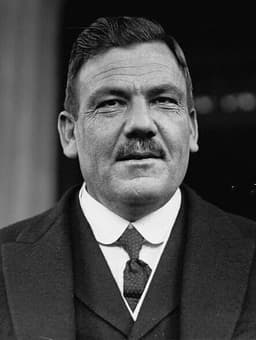
Plutarco Elias Calles
General · Modern
58.5Total
Basic Information
Born
1937
1877
Died
—
1945
Era
Modern
Modern
Nationality
United States
Mexico
Occupation
General
General
Civilization
Western
Western
Score Comparison
Military (10%)
25.0
40.0
Political (20%)
68.0
70.3
Influence (20%)
68.0
68.0
Legacy (20%)
52.0
40.0
Leadership (15%)
72.0
78.0
Strategy (15%)
50.0
52.5
TOTAL
58.5
58.5
Colin Powell — Complete Timeline
1987 AD
Appointed National Security AdvisorPolitical Action◆ Major
Powell was appointed National Security Advisor by President Ronald Reagan in November 1987, serving until January 1989. He coordinated foreign policy and national security matters, including arms control negotiations with the Soviet Union and the Iran-Iraq War, becoming the first African American in this role.
National SecurityReagan AdministrationForeign Policy
Impact: global
1989 AD
Became Chairman of the Joint Chiefs of StaffOther◆ Major
On October 1, 1989, Powell became the 12th Chairman of the Joint Chiefs of Staff, the first African American to hold the position. He oversaw U.S. military operations during the invasion of Panama (1989) and the Gulf War (1990-1991), becoming a highly visible public figure.
Military LeadershipGulf WarFirst African American
Impact: global
1990 AD
Developed the Powell DoctrineOther◆ Major
During the Gulf War planning, Powell articulated the Powell Doctrine, which stated that U.S. military force should only be used as a last resort, with overwhelming force, clear objectives, and an exit strategy. This doctrine influenced U.S. military interventions for the next decade.
Military DoctrineGulf WarStrategic Thinking
Impact: global
2001 AD
Appointed Secretary of StatePolitical Action◆ Major
On January 20, 2001, Powell was confirmed as the 65th U.S. Secretary of State under President George W. Bush, becoming the first African American to hold the office. He advocated for diplomacy and multilateralism, but his influence waned after the September 11 attacks.
DiplomacyBush AdministrationFirst African American
Impact: global
2003 AD
Presented Iraq WMD Case to the UN Security CouncilOther◆ Major
On February 5, 2003, Powell addressed the UN Security Council, presenting evidence that Iraq possessed weapons of mass destruction. The intelligence later proved to be inaccurate, damaging Powell's reputation and becoming a major controversy that he later called a 'blot' on his record.
Iraq WarUN SpeechControversy
Impact: globaldestructive
2004 AD
Resigned as Secretary of StateOther◆ Major
Powell resigned as Secretary of State on November 15, 2004, after President Bush's re-election. His departure was widely seen as a result of policy disagreements with Vice President Cheney and Secretary of Defense Rumsfeld, particularly over the conduct of the Iraq War.
ResignationIraq WarBush Administration
Impact: national
Plutarco Elias Calles — Complete Timeline
1915 AD
Governorship of SonoraPolitical Action
Calles served as Governor of Sonora from 1915 to 1919, implementing radical reforms including land redistribution, anti-clerical laws, and labor rights. His governorship established him as a key figure in the Sonoran dynasty and a proponent of revolutionary change.
GovernorshipSonoraReforms
Impact: regionalconstructive
1924 AD
Presidency of MexicoPolitical Action◆ Major
Calles was elected President of Mexico in 1924, serving until 1928. His administration continued revolutionary reforms, including land reform, labor rights, and secularization, but also faced opposition from the Catholic Church and conservative groups.
PresidencyMexican RevolutionReforms
Impact: nationalconstructive
1926 AD
Cristero WarWar◆ Major
Calles enforced anti-clerical laws, including the Calles Law, which restricted the Catholic Church's role in society. This sparked the Cristero War (1926-1929), a violent rebellion by Catholic peasants against the state, resulting in tens of thousands of deaths.
Cristero WarAnti-clericalismReligious Conflict
Impact: nationaldestructive
1928 AD
MaximatoPolitical Action◆ Major
After his presidency, Calles remained the de facto ruler of Mexico during the Maximato (1928-1934), controlling puppet presidents. He continued to influence policy, but his power waned as President L
MaximatoPolitical ControlCárdenas
Impact: national
1929 AD
Founding of the National Revolutionary Party (PNR)Political Action
Calles founded the National Revolutionary Party (PNR) in 1929, which later became the Institutional Revolutionary Party (PRI). This party dominated Mexican politics for over 70 years, institutionalizing the revolution's legacy and centralizing power.
Political PartyPRIInstitutionalization
Impact: nationalconstructive
Expert Analysis
Plutarco Elias Calles vs Colin Powell
# The General and the Politician: Two Paths to Power in the Americas
On a sweltering July morning in 1926, Plutarco Elías Calles stood in the National Palace in Mexico City and signed into law a piece of legislation that would ignite a civil war. The Calles Law, as it came to be known, restricted the Catholic Church’s role in Mexican society with a severity that shocked even hardened revolutionaries. Across the border and half a century later, another general, Colin Powell, sat in the Pentagon briefing room in 1991, explaining to a skeptical press corps why the United States should not march on Baghdad after liberating Kuwait. Both men wore uniforms. Both wielded immense power. But their paths, their philosophies, and their legacies could not have been more different. The question is why.
Origins
Calles was born in 1877 in the border state of Sonora, a harsh land of desert and revolution. His father died when he was young, and he grew up in poverty, working as a bartender and schoolteacher. The Mexico of his youth was a dictatorship under Porfirio Díaz, where the Catholic Church held vast lands and the poor had no voice. Calles absorbed the anti-clericalism of the liberal reformer Benito Juárez and the violence of the Mexican Revolution, which erupted in 1910. He learned early that power came from the barrel of a gun and the loyalty of men who would kill for a cause.
Colin Powell, born in 1937 in Harlem, New York, to Jamaican immigrant parents, grew up in a different America entirely. His father was a shipping clerk, his mother a seamstress. The world of the 1940s and 1950s was one of racial segregation and limited opportunity. But Powell’s generation also witnessed the slow march of the civil rights movement. His path was not revolution but institution—the U.S. Army, which offered a meritocratic ladder for a black man in a country that still denied him the right to vote in parts of the South.
Rise to Power
Calles rose through the chaos of the Mexican Revolution. He served under Álvaro Obregón, the brilliant general who defeated the legendary Pancho Villa. By 1915, Calles was governor of Sonora, and he governed with the ruthlessness of a man who believed that reform required force. He redistributed land, closed churches, and crushed opposition. In 1924, he was elected president of Mexico. But his real power came after his term ended. From 1928 to 1934, during the period known as the Maximato, Calles ruled as the *jefe máximo*—the maximum chief—controlling puppet presidents from behind the scenes. He founded the National Revolutionary Party (PNR) in 1929, a political machine that would dominate Mexico for seven decades.
Powell’s rise was slower, more deliberate. He served two tours in Vietnam, where he learned that war was a brutal, ambiguous business. He rose through the ranks of the Pentagon bureaucracy, mastering the art of Washington politics. In 1989, he became Chairman of the Joint Chiefs of Staff, the first African American to hold the post. His moment came during the Gulf War of 1990-1991, when he orchestrated the military campaign that expelled Saddam Hussein from Kuwait. But Powell was a reluctant warrior. He believed in overwhelming force, clear objectives, and an exit strategy—a doctrine that would later be named after him.
Leadership & Governance
Calles governed as a revolutionary modernizer. He believed that Mexico’s backwardness was rooted in the power of the Catholic Church, which he saw as a feudal institution that kept the people ignorant and poor. The Cristero War of 1926-1929 was a direct result of his policies. Tens of thousands died in the fighting, and the Church was driven underground. Calles also built roads, schools, and hospitals. He created the foundation for Mexico’s modern state, but he did so with an iron fist. His political genius lay in the PRI, a party that co-opted every faction—workers, peasants, businessmen, the military—into a single, authoritarian system.
Powell governed differently. He was a soldier-diplomat, not a dictator. His leadership style was consensus-driven, cautious, and deeply aware of the limits of American power. As Secretary of State under President George W. Bush from 2001 to 2005, he argued for diplomacy over war. But he also made the most controversial decision of his career: in February 2003, he presented evidence to the United Nations Security Council that Iraq possessed weapons of mass destruction. The evidence was flawed, the war a disaster. Powell later called it a “blot” on his record.
Triumph & Tragedy
Calles’s greatest triumph was the creation of the PRI, a political machine that brought stability to a country torn apart by decades of revolution. His tragedy was the Cristero War, a bloody conflict that pitted the state against its own people. In his later years, he was exiled by his own protégé, Lázaro Cárdenas, who outmaneuvered him and implemented even more radical reforms.
Powell’s triumph was the Gulf War, a swift, decisive victory that restored American confidence after Vietnam. His tragedy was the Iraq War, where his credibility was shattered by faulty intelligence. He resigned as Secretary of State in 2005, a diminished figure.
Character & Destiny
Calles was a man of iron will and ideological certainty. He believed that history was on his side, and he was willing to shed blood to prove it. His destiny was to create a system that outlasted him, but at a terrible cost.
Powell was a pragmatist, a man who believed in institutions and the rule of law. He rose to the pinnacle of American power by being careful, competent, and loyal. But his loyalty to the system—and his reluctance to challenge the Bush administration’s rush to war—became his undoing.
Legacy
Calles is remembered as the architect of modern Mexico. The PRI ruled until 2000, and his anti-clerical policies shaped the secular state that exists today. But he is also a figure of controversy, a revolutionary who became an autocrat.
Powell is remembered as a trailblazer and a cautionary tale. He broke racial barriers and embodied the ideal of the citizen-soldier. But his legacy is forever tied to the Iraq War, a conflict that he helped justify and that he later regretted.
Conclusion
Two generals, two Americas. Calles built a state from the ashes of revolution, using violence and political cunning to forge a new nation. Powell served a state that was already established, navigating its institutions with skill and caution. One created a machine that crushed dissent; the other became a cog in a machine that made terrible mistakes. Both men were products of their times—and both remind us that power, whether wielded by a revolutionary or a bureaucrat, is always a double-edged sword.
Rankings
🥇
Colin PowellLeader
Mil: 25.0Pol: 68.0Inf: 68.0
58.5
🥈
Plutarco Elias Calles
Mil: 40.0Pol: 70.3Inf: 68.0
58.5
How This Comparison Works
Algorithm
Each figure is scored on 6 dimensions (0—100 scale) based on structured historical data: Military (10%), Political (20%), Influence (20%), Legacy (20%), Leadership (15%), Strategy (15%). The weighted total produces the final ranking.
Data Sources
Scores are computed from structured sub-indicators in the database. Scale factors adjust for era (Ancient ×0.85, Modern ×1.0) and civilization size (Eastern ×1.05, Other ×0.80) to account for differences in population and military scale.
Maximum 3 Figures
Comparisons are limited to 2—3 figures to ensure readability and statistical meaningfulness.
Error Margins
±5 points per dimension — Sub-scores are derived from historical records with inherent uncertainty. Two figures within 5 points on a dimension should be considered roughly equivalent in that area.
Total Score Accuracy
±3 points overall — The weighted combination of 6 dimensions produces a total score with approximately ±3 points of uncertainty. Differences of less than 3 points are not statistically significant— the figures are effectively tied.
Known Limitations
- Historical records are incomplete and uneven across civilizations
- Figures from oral-tradition societies may be underrepresented
- Occupation labels can misclassify multi-role figures
- Scores measure capability and impact, not moral character
- Quantitative scoring is a comparison tool, not absolute truth
Capability Radar
Military (10%) — Battles & Warfare
Battles
35
45
Win Rate
40
50
Expansion
20
30
Political (20%) — Governance & Reform
Reform
40
85
Diplomacy
70
65
Economy
30
60
Influence (20%) — Cultural & Global Reach
Cultural
55
70
Global
65
60
Legacy (20%) — Historical Impact
Historical
60
75
Longevity
45
70
Leadership (15%) — Power & Stability
Tenure
65
70
Stability
55
55
Strategy (15%) — Tactics & Innovation
Strategy
55
55
Tactics
45
40
Reform
60
60
Similar Comparisons
Comments & Discussion
General Jefe6/16/2026
Calles was a revolutionary pragmatist who built Mexico's modern state infrastructure, while Powell was an institutionalist who never questioned the system he served. Calles created the National Revolutionary Party (which evolved into today's PRI) after the Cristero War, understanding that stability required co-opting enemies. Powell's Powell Doctrine—overwhelming force with clear exit strategy—was brilliant tactically but strategically timid. Calles actually fought for power; Powell just managed
历史反光镜6/16/2026
把卡列斯和鲍威尔放在一起比较,本身就暴露了北美中心主义的傲慢。卡列斯是革命后的墨西哥国父级人物,他建立政党制度、推行土地改革、教育现代化,虽然手段强硬但目标明确。鲍威尔呢?不过是美帝国军事机器的完美零件,他在越战后的所谓"重建"不过是美式扩张的遮羞布。卡列斯是在创造国家,鲍威尔只是维护霸权。两位将军的根本差异不在个人素质,而在于他们代表的制度本质。
Battlefield Scholar6/16/2026
Let's talk about their actual military competence. Calles commanded irregulars in Sonora during the Revolution—guerrilla warfare, supply line raids, night attacks. He knew war at the tactical, dirt-and-blood level. Powell served in Vietnam as a staff officer, then climbed the Pentagon ladder. His greatest "combat" claim is supervising the 1983 Grenada invasion against 1,500 Cuban construction workers. The Powell Doctrine works great when you have 500,000 troops against a broken Iraq, but Calles
老书虫6/16/2026
从政治哲学角度,卡列斯更像马基雅维利笔下的君主 - 为了秩序可以无情,为了建立现代国家可以牺牲天主教会的特权。他1917年参与制定宪法时,就已经在思考如何遏制教会这个平行权力。鲍威尔则是亨廷顿"文明冲突论"的忠实执行者,他的"决定性力量"理论本质上是技术官僚对战争的理性化管理。一个在创造历史,一个在执行政策,层次完全不同。卡列斯留下了制度遗产,鲍威尔只剩一堆PPT。