Loading...
Colin Powell vs John Lambert
Colin Powell leads by 1.8 pts · 2 figures compared
…

Colin Powell
General · Modern
58.5Total
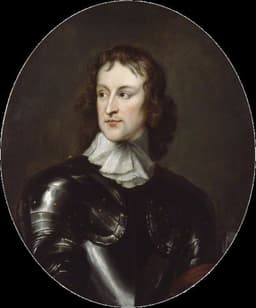
John Lambert
General · Modern
56.7Total
Basic Information
Born
1937
1619
Died
—
1684
Era
Modern
Modern
Nationality
United States
England
Occupation
General
General
Civilization
Western
Western
Score Comparison
Military (10%)
25.0
70.0
Political (20%)
68.0
45.0
Influence (20%)
68.0
59.0
Legacy (20%)
52.0
50.0
Leadership (15%)
72.0
68.0
Strategy (15%)
50.0
55.0
TOTAL
58.5
56.7
Colin Powell — Complete Timeline
1987 AD
Appointed National Security AdvisorPolitical Action◆ Major
Powell was appointed National Security Advisor by President Ronald Reagan in November 1987, serving until January 1989. He coordinated foreign policy and national security matters, including arms control negotiations with the Soviet Union and the Iran-Iraq War, becoming the first African American in this role.
National SecurityReagan AdministrationForeign Policy
Impact: global
1989 AD
Became Chairman of the Joint Chiefs of StaffOther◆ Major
On October 1, 1989, Powell became the 12th Chairman of the Joint Chiefs of Staff, the first African American to hold the position. He oversaw U.S. military operations during the invasion of Panama (1989) and the Gulf War (1990-1991), becoming a highly visible public figure.
Military LeadershipGulf WarFirst African American
Impact: global
1990 AD
Developed the Powell DoctrineOther◆ Major
During the Gulf War planning, Powell articulated the Powell Doctrine, which stated that U.S. military force should only be used as a last resort, with overwhelming force, clear objectives, and an exit strategy. This doctrine influenced U.S. military interventions for the next decade.
Military DoctrineGulf WarStrategic Thinking
Impact: global
2001 AD
Appointed Secretary of StatePolitical Action◆ Major
On January 20, 2001, Powell was confirmed as the 65th U.S. Secretary of State under President George W. Bush, becoming the first African American to hold the office. He advocated for diplomacy and multilateralism, but his influence waned after the September 11 attacks.
DiplomacyBush AdministrationFirst African American
Impact: global
2003 AD
Presented Iraq WMD Case to the UN Security CouncilOther◆ Major
On February 5, 2003, Powell addressed the UN Security Council, presenting evidence that Iraq possessed weapons of mass destruction. The intelligence later proved to be inaccurate, damaging Powell's reputation and becoming a major controversy that he later called a 'blot' on his record.
Iraq WarUN SpeechControversy
Impact: globaldestructive
2004 AD
Resigned as Secretary of StateOther◆ Major
Powell resigned as Secretary of State on November 15, 2004, after President Bush's re-election. His departure was widely seen as a result of policy disagreements with Vice President Cheney and Secretary of Defense Rumsfeld, particularly over the conduct of the Iraq War.
ResignationIraq WarBush Administration
Impact: national
John Lambert — Complete Timeline
1648 AD
Battle of PrestonWar◆ Major
John Lambert commanded parliamentary forces at the Battle of Preston, defeating a Scottish royalist army. The victory helped secure the parliamentary cause in the Second English Civil War.
BattleEnglish Civil WarParliament
Impact: national
1653 AD
Drafted the Instrument of GovernmentPolitical Action◆ Major
John Lambert was the principal author of the Instrument of Government, the written constitution that established the Protectorate under Oliver Cromwell. The document created a Lord Protector and a Council of State, but was never fully implemented.
ConstitutionProtectorateCromwell
Impact: nationalconstructive
1662 AD
Exiled to GuernseyPolitical Action◆ Major
After the Restoration, John Lambert was tried for treason and exiled to the island of Guernsey. He spent the remainder of his life in captivity, never regaining political influence.
ExileRestorationPunishment
Impact: nationaltragic
Expert Analysis
John Lambert vs Colin Powell
# The General as Statesman: John Lambert and Colin Powell
On a spring morning in 1653, John Lambert stood before the assembled members of the Barebones Parliament in London, a document in his hand that would reshape the English constitution. Four centuries later, in the winter of 1991, Colin Powell stood before the world’s cameras in Washington, D.C., explaining why America had just liberated Kuwait. Both men were generals who transcended the battlefield. Both sought to build order from chaos. Yet one ended his days in exile on a windswept island, while the other became a global symbol of possibility. What drove these two lives to such different ends?
Origins
John Lambert was born in 1619 into the Yorkshire gentry, a world of manor houses and local loyalties. England was then convulsing with religious and constitutional conflict—the king versus Parliament, Anglican versus Puritan. Lambert grew up absorbing the legal traditions of the common law and the fiery sermons of Puritan preachers. His world was one of absolutes: the rights of Parliament, the authority of Scripture, the duty of the godly magistrate.
Colin Powell was born in 1937 in Harlem, New York, to Jamaican immigrant parents. His world was the Great Depression and the promise of the American Dream. His father worked as a shipping clerk; his mother was a seamstress. Powell attended City College of New York, where he discovered the Reserve Officers’ Training Corps—a path that would lift him from the tenements of the Bronx to the highest councils of power. His era was one of gradual racial integration and Cold War tension, where service to the nation offered both duty and advancement.
The difference in their origins was not merely one of time and place. Lambert was born into a society where the very structure of government was up for grabs. Powell was born into a society whose institutions, however flawed, were stable. One man’s challenge was to build a new order; the other’s was to rise within an existing one.
Rise to Power
Lambert’s rise came through war. At the Battle of Preston in 1648, he commanded parliamentary forces against a Scottish royalist army and won a decisive victory. He was not merely a fighter; he was a thinker. Oliver Cromwell recognized in Lambert a rare combination of military skill and political vision. By 1653, Lambert had become Cromwell’s right hand, the architect of the Protectorate.
Powell’s rise came through institutional excellence. He served two tours in Vietnam, earning a Purple Heart and a Bronze Star. But his true career was in the Pentagon’s corridors, where his calm intelligence and ability to navigate bureaucracy caught the attention of powerful patrons. By 1989, he became Chairman of the Joint Chiefs of Staff—the first African American to hold that post. Where Lambert seized power through battlefield victory, Powell accumulated influence through competence and trust.
Leadership & Governance
Lambert’s greatest achievement was the Instrument of Government of 1653, the first written constitution in English history. It established a Lord Protector, a council, and a Parliament with carefully balanced powers. Lambert believed that military victory required political structure—that the sword must yield to the law. Yet he was also a creature of his time: a Puritan who saw no contradiction between liberty for the godly and repression for Catholics and Anglicans. His leadership was visionary but brittle, built on the shifting sands of Cromwell’s favor.
Powell’s leadership was defined by the Powell Doctrine: when America fights, it must do so with overwhelming force, clear objectives, and an exit strategy. He applied this in the 1991 Gulf War, orchestrating a campaign that liberated Kuwait with minimal American casualties. As Secretary of State from 2001 to 2005, he tried to apply the same logic to diplomacy, famously warning President George W. Bush about the consequences of invading Iraq. His governance style was cautious, institutional, and deeply aware of the limits of power.
Triumph & Tragedy
Lambert’s triumph was the Battle of Preston, where he crushed the Scottish royalists and secured the Commonwealth. His tragedy came in 1660, when the monarchy was restored. Charles II had Lambert tried for treason and exiled to Guernsey, where he spent the last twenty-two years of his life in captivity. The man who had written England’s constitution died forgotten, his papers lost, his name erased from official histories.
Powell’s triumph was the Gulf War, a victory so clean it seemed to validate the American way of war. His tragedy was his 2003 speech to the United Nations Security Council, where he presented intelligence about Iraqi weapons of mass destruction—intelligence that later proved false. That speech haunted his legacy, a stain on a career built on integrity. He died in 2021, mourned but also judged.
Character & Destiny
Lambert was a man of conviction and ambition. He believed he could forge a new England, a commonwealth of virtue and law. But his conviction hardened into rigidity. When Cromwell died, Lambert lacked the flexibility to compromise, and the old order he had helped destroy returned to swallow him. His character was that of the righteous architect who cannot imagine that his building might collapse.
Powell was a man of discipline and caution. He rose by never overreaching, by understanding the institutions he served. But his caution, too, had a cost. When he spoke at the United Nations, he trusted the intelligence community he had spent a lifetime serving. That trust became his undoing. His character was that of the loyal soldier who believes the system will not betray him.
Legacy
Lambert’s legacy is invisible but foundational. The idea of a written constitution, of limited government, of a separation of powers—these were his ideas, planted in English soil and later transplanted to America. The U.S. Constitution owes a quiet debt to the Instrument of Government. Yet few remember the name John Lambert.
Powell’s legacy is visible in every African American who reaches the highest ranks of American power. He proved that color need not limit ambition. His doctrine still shapes American military strategy. But his legacy is also a warning: that even the most careful life can be undone by a single act of misplaced faith.
Conclusion
Standing at the end of their lives, Lambert on his barren island and Powell in his Washington home, both men might have asked the same question: Did I build something that would last? Lambert built a constitution that was torn up within a decade. Powell built a reputation that was scarred in a single afternoon. Yet both, in different ways, succeeded. Lambert’s ideas outlived his document. Powell’s example outlived his mistake. The difference between them is not one of worth, but of circumstance. Lambert lived in a time when political order was a blank slate; Powell lived in a time when it was a well-worn path. One wrote the rules; the other followed them. Both were generals who served their nations. Both were men who discovered that the greatest battles are not fought with armies, but with the fragile architecture of human trust.
Rankings
🥇
Colin PowellLeader
Mil: 25.0Pol: 68.0Inf: 68.0
58.5
🥈
John Lambert
Mil: 70.0Pol: 45.0Inf: 59.0
56.7
+1.8 behind
How This Comparison Works
Algorithm
Each figure is scored on 6 dimensions (0—100 scale) based on structured historical data: Military (10%), Political (20%), Influence (20%), Legacy (20%), Leadership (15%), Strategy (15%). The weighted total produces the final ranking.
Data Sources
Scores are computed from structured sub-indicators in the database. Scale factors adjust for era (Ancient ×0.85, Modern ×1.0) and civilization size (Eastern ×1.05, Other ×0.80) to account for differences in population and military scale.
Maximum 3 Figures
Comparisons are limited to 2—3 figures to ensure readability and statistical meaningfulness.
Error Margins
±5 points per dimension — Sub-scores are derived from historical records with inherent uncertainty. Two figures within 5 points on a dimension should be considered roughly equivalent in that area.
Total Score Accuracy
±3 points overall — The weighted combination of 6 dimensions produces a total score with approximately ±3 points of uncertainty. Differences of less than 3 points are not statistically significant— the figures are effectively tied.
Known Limitations
- Historical records are incomplete and uneven across civilizations
- Figures from oral-tradition societies may be underrepresented
- Occupation labels can misclassify multi-role figures
- Scores measure capability and impact, not moral character
- Quantitative scoring is a comparison tool, not absolute truth
Capability Radar
Military (10%) — Battles & Warfare
Battles
35
65
Win Rate
40
60
Expansion
20
40
Political (20%) — Governance & Reform
Reform
40
55
Diplomacy
70
50
Economy
30
45
Influence (20%) — Cultural & Global Reach
Cultural
55
35
Global
65
30
Legacy (20%) — Historical Impact
Historical
60
50
Longevity
45
40
Leadership (15%) — Power & Stability
Tenure
65
60
Stability
55
40
Strategy (15%) — Tactics & Innovation
Strategy
55
65
Tactics
45
70
Reform
60
55
Similar Comparisons
Comments & Discussion
MajorGeneralMeme6/16/2026
Lambert wrote the Instrument of Government, the first and only written constitution of England—essentially a military dictatorship with a parliament as window dressing. Powell, in contrast, inherited a constitutional tradition built on civilian control. Lambert’s failure wasn’t lack of vision; it was that he thought a general could draft a constitution and make it stick. Powell knew better: he testified before Congress, he didn’t order it.
战术数据控6/16/2026
从数据角度看,Powell指导下的沙漠风暴行动以极低伤亡(148美军阵亡)实现了战略目标,而Lambert的军事成就——比如在Dunbar战役中的表现——虽然关键,但缺乏系统性的后勤与情报支持。Powell的"压倒性力量"战略(Powell Doctrine)有现代数据模型支撑,Lambert的胜利更多靠地形和运气。一个将军靠计算,另一个靠直觉,这就是现代与古典的区别。
ClassicsScholar6/16/2026
Lambert’s military career was modeled on the classical ideal of the citizen-general—Cincinnatus returning to his plow after saving the republic. He even tried to retire to his estate after Cromwell’s death. But the Commonwealth was no Roman Republic, and Lambert’s exile on St. Nicholas Island was a far cry from a triumph. Powell, by contrast, understood that modern generalship means navigating bureaucracy and media, not classical virtues of self-denial. Two models of leadership, one tragic, one
民国迷6/16/2026
Lambert是中国古代"白面书生"式将领的反面——他是北方乡绅出身,靠军事政变上位,最后反被 Cromwell 流放。Powell 是现代版"韩信",从哈莱姆贫民窟爬出来,靠军功和外交手腕成了国务卿。但两人都证明了一点:将军若想当政治家,必须先搞懂权力来源是文官还是枪杆子。Lambert选择了枪,输了;Powell选择了国会,赢了。这个教训放之四海皆准。
RevisionistCritic6/16/2026
The comparison is flattering to Lambert, who was a failed coup plotter. His "Instrument of Government" was a constitutional fig leaf for military rule, and he ended up in exile precisely because he couldn’t accept parliamentary supremacy. Powell, for all his flaws (the WMD testimony, for instance), never attempted a coup. He was the very model of a modern republican general: subordinate to civilian authority even when he disagreed. That’s not just different personalities—it’s four centuries of c