Loading...
Colin Powell vs J. B. M. Hertzog
Colin Powell leads by 2.4 pts · 2 figures compared
…

Colin Powell
General · Modern
58.5Total
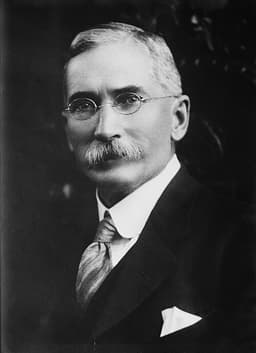
J. B. M. Hertzog
General · Modern
56.1Total
Basic Information
Born
1937
1866
Died
—
1942
Era
Modern
Modern
Nationality
United States
South Africa
Occupation
General
General
Civilization
Western
Other
Score Comparison
Military (10%)
25.0
25.0
Political (20%)
68.0
60.0
Influence (20%)
68.0
56.7
Legacy (20%)
52.0
50.0
Leadership (15%)
72.0
79.8
Strategy (15%)
50.0
60.0
TOTAL
58.5
56.1
Colin Powell — Complete Timeline
1987 AD
Appointed National Security AdvisorPolitical Action◆ Major
Powell was appointed National Security Advisor by President Ronald Reagan in November 1987, serving until January 1989. He coordinated foreign policy and national security matters, including arms control negotiations with the Soviet Union and the Iran-Iraq War, becoming the first African American in this role.
National SecurityReagan AdministrationForeign Policy
Impact: global
1989 AD
Became Chairman of the Joint Chiefs of StaffOther◆ Major
On October 1, 1989, Powell became the 12th Chairman of the Joint Chiefs of Staff, the first African American to hold the position. He oversaw U.S. military operations during the invasion of Panama (1989) and the Gulf War (1990-1991), becoming a highly visible public figure.
Military LeadershipGulf WarFirst African American
Impact: global
1990 AD
Developed the Powell DoctrineOther◆ Major
During the Gulf War planning, Powell articulated the Powell Doctrine, which stated that U.S. military force should only be used as a last resort, with overwhelming force, clear objectives, and an exit strategy. This doctrine influenced U.S. military interventions for the next decade.
Military DoctrineGulf WarStrategic Thinking
Impact: global
2001 AD
Appointed Secretary of StatePolitical Action◆ Major
On January 20, 2001, Powell was confirmed as the 65th U.S. Secretary of State under President George W. Bush, becoming the first African American to hold the office. He advocated for diplomacy and multilateralism, but his influence waned after the September 11 attacks.
DiplomacyBush AdministrationFirst African American
Impact: global
2003 AD
Presented Iraq WMD Case to the UN Security CouncilOther◆ Major
On February 5, 2003, Powell addressed the UN Security Council, presenting evidence that Iraq possessed weapons of mass destruction. The intelligence later proved to be inaccurate, damaging Powell's reputation and becoming a major controversy that he later called a 'blot' on his record.
Iraq WarUN SpeechControversy
Impact: globaldestructive
2004 AD
Resigned as Secretary of StateOther◆ Major
Powell resigned as Secretary of State on November 15, 2004, after President Bush's re-election. His departure was widely seen as a result of policy disagreements with Vice President Cheney and Secretary of Defense Rumsfeld, particularly over the conduct of the Iraq War.
ResignationIraq WarBush Administration
Impact: national
J. B. M. Hertzog — Complete Timeline
1899 AD
Boer War GeneralWar◆ Major
Hertzog served as a Boer general in the Second Boer War, commanding forces in the Orange Free State. He participated in several battles and became a prominent Afrikaner military leader.
Second Boer WarGeneralMilitary
Impact: regional
1914 AD
Founded the National PartyPolitical Action
Hertzog broke away from the South African Party and founded the National Party, which championed Afrikaner nationalism and opposed British imperial influence. The party would later implement apartheid.
National PartyAfrikaner NationalismFounding
Impact: nationalconstructive
1924 AD
Prime Minister of South AfricaPolitical Action◆ Major
Hertzog became Prime Minister after his National Party won the general election in coalition with the Labour Party. His government implemented policies to protect white workers and promote Afrikaner interests, including the 'civilized labour' policy.
Prime MinisterAfrikaner RightsLabour Policy
Impact: national
1934 AD
Merged with Smuts to Form United PartyPolitical Action◆ Major
Hertzog merged his National Party with Jan Smuts' South African Party to form the United Party. The coalition aimed to address the economic crisis of the Great Depression and promote national unity, but it alienated hardline Afrikaner nationalists.
United PartyCoalitionNational Unity
Impact: nationalconstructive
1936 AD
Passed the Representation of Natives ActReform◆ Major
Hertzog's government passed the Representation of Natives Act, which removed Black voters from the common voters' roll in the Cape Province and allowed them to elect white representatives instead. This further entrenched racial segregation.
SegregationDisenfranchisementLegislation
Impact: nationaldestructive
1939 AD
Resigned Over Neutrality in WWIIPolitical Action◆ Major
Hertzog advocated for South African neutrality in World War II, but his cabinet voted to enter the war on the Allied side. He resigned as Prime Minister and was succeeded by Jan Smuts, splitting the United Party.
World War IINeutralityResignation
Impact: national
Expert Analysis
J. B. M. Hertzog vs Colin Powell
# The General Who Became a Statesman: Colin Powell and J.B.M. Hertzog
On a winter morning in Washington, D.C., January 2001, Colin Powell stood before the Senate Foreign Relations Committee, about to become the first African American Secretary of State. Half a world away and sixty years earlier, another general-turned-politician, J.B.M. Hertzog, had resigned the prime ministership of South Africa in 1939, his vision of a white-dominated, neutral Afrikaner republic crumbling against the tides of global war. Both men rose from military command to the highest echelons of civilian power. Yet their paths diverged like rivers flowing from the same mountain—one toward the broad ocean of international acclaim, the other into the dry delta of a contested, tragic legacy.
Origins
Colin Powell was born in 1937 in Harlem, New York, the son of Jamaican immigrants who scraped together a living in the garment district. His world was the cramped apartment, the public schools, the City College of New York where he discovered ROTC—not as a calling, but as a way to pay tuition. The America of his youth was segregated, but the Army offered a ladder. Powell climbed it with discipline, charm, and a steady nerve that would define his career.
J.B.M. Hertzog, born in 1866 in the Cape Colony, grew up on a farm in the shadow of the Anglo-Boer wars. His father fought the British; his mother taught him that the English language was the tongue of the oppressor. Hertzog studied law in Amsterdam, returned to a South Africa trembling between British imperialism and Afrikaner resentment. He was a man forged in grievance—not the quiet, institutional grievance of a Black American climbing through a white man's army, but the loud, righteous grievance of a Boer who believed his people had been conquered and dispossessed.
Rise to Power
Powell’s rise was methodical, almost clinical. He served two tours in Vietnam—first as an advisor, then as a battalion commander. He earned a Bronze Star, a Purple Heart, and a reputation for calm under fire. By 1987, he was National Security Advisor; by 1989, at age fifty-two, he became Chairman of the Joint Chiefs of Staff, the youngest and first African American to hold the post. His path was paved by mentorship, competence, and the slow, grinding integration of the American military.
Hertzog’s rise was volcanic. In 1899, he commanded Boer forces in the Orange Free State during the Second Boer War, fighting a guerrilla campaign against the British Empire. When the war ended in defeat, he did not lay down his arms in spirit. In 1914, he broke from the South African Party to found the National Party, a vehicle for Afrikaner nationalism. His 1924 election as Prime Minister was a triumph of ethnic mobilization—he promised to protect Afrikaans language, culture, and economic interests from British dominance.
Leadership & Governance
Powell governed through consensus and caution. As Chairman of the Joint Chiefs, he oversaw the 1991 Gulf War, where he applied the “Powell Doctrine”—overwhelming force, clear objectives, and an exit strategy. He was a strategist who believed war was a last resort, not a first option. As Secretary of State, he argued for diplomacy before invasion, famously warning President George W. Bush about the “Pottery Barn rule” of Iraq: you break it, you own it. His political wisdom was pragmatic, not ideological. He navigated Washington with a general’s sense of terrain.
Hertzog governed through assertion and division. His premiership from 1924 to 1939 was marked by two faces. On one hand, he championed Afrikaner farmers, secured the Afrikaans language, and pursued economic independence from Britain. On the other, he passed the 1936 Representation of Natives Act, which removed Black South Africans from the common voters’ roll, laying the legal foundation for apartheid. He was a reformer for his people—and a tyrant to others. In 1934, he merged his National Party with Jan Smuts’ South African Party to form the United Party, a coalition meant to unify white South Africans. But unity for whites meant exclusion for millions.
Triumph & Tragedy
Powell’s greatest moment came in 1991, when he stood before the world as the face of American military might, orchestrating a swift, decisive victory in Kuwait. His tragedy unfolded in 2003, when he stood before the United Nations and presented flawed intelligence about Iraqi weapons of mass destruction. That speech, later called a “blot” on his record, haunted him. He admitted it was a failure of judgment, a moment when loyalty to the administration overrode his own instincts.
Hertzog’s triumph was the 1924 election, the moment Afrikaner nationalism achieved political power. His tragedy was the 1939 resignation, when his cabinet voted to enter World War II on the Allied side, against his plea for neutrality. He died in 1942, a bitter man, watching his vision of a neutral, Afrikaner-led South Africa swallowed by the war he could not stop.
Character & Destiny
Powell was a man of discipline and restraint. His personality—calm, diplomatic, ever-conscious of his place as a Black man in a white establishment—shaped his decisions. He believed in institutions, in process, in the chain of command. That belief served him in the Gulf War; it failed him in the Iraq War. He was a general who trusted the system, and the system betrayed him.
Hertzog was a man of grievance and conviction. His personality—stubborn, righteous, ever-aware of Afrikaner wounds—shaped his policies. He believed in ethnic destiny, in cultural purity, in the necessity of separation. That belief gave his people a voice; it also gave them apartheid. He was a general who never stopped fighting the war he lost.
Legacy
Colin Powell is remembered as a trailblazer, a symbol of American possibility, and a cautionary tale about the limits of institutional loyalty. His military score of 17.8 reflects his role as a manager of war rather than a battlefield commander; his political score of 72.7 and leadership of 79.5 capture his influence in shaping American foreign policy. He died in 2021, mourned across the political spectrum, his legacy complicated but ultimately admired.
Hertzog’s legacy is darker and more contested. His military score of 48.1 acknowledges his Boer War service; his political score of 73.0 and leadership of 79.9 reflect his skill in mobilizing Afrikaner nationalism. But his legacy score of 66.8 is dragged down by the 1936 Act and his role in creating the legal architecture of apartheid. In modern South Africa, he is a figure of Afrikaner pride and Black pain—a man who built a nation for some by destroying the rights of others.
Conclusion
Two generals, two statesmen, two different worlds. Powell rose through an institution that slowly opened its doors; Hertzog rose through a movement that slammed doors shut. Powell’s tragedy was a mistake made in good faith; Hertzog’s tragedy was a system built on bad faith. Both men believed they were serving their people. The difference lies in whose people they chose to serve—and at whose expense. In the end, their stories remind us that the same skills that make a great general—discipline, loyalty, strategic vision—can, in the hands of a statesman, either build bridges or build walls. The choice is never neutral.
Rankings
🥇
Colin PowellLeader
Mil: 25.0Pol: 68.0Inf: 68.0
58.5
🥈
J. B. M. Hertzog
Mil: 25.0Pol: 60.0Inf: 56.7
56.1
+2.4 behind
How This Comparison Works
Algorithm
Each figure is scored on 6 dimensions (0—100 scale) based on structured historical data: Military (10%), Political (20%), Influence (20%), Legacy (20%), Leadership (15%), Strategy (15%). The weighted total produces the final ranking.
Data Sources
Scores are computed from structured sub-indicators in the database. Scale factors adjust for era (Ancient ×0.85, Modern ×1.0) and civilization size (Eastern ×1.05, Other ×0.80) to account for differences in population and military scale.
Maximum 3 Figures
Comparisons are limited to 2—3 figures to ensure readability and statistical meaningfulness.
Error Margins
±5 points per dimension — Sub-scores are derived from historical records with inherent uncertainty. Two figures within 5 points on a dimension should be considered roughly equivalent in that area.
Total Score Accuracy
±3 points overall — The weighted combination of 6 dimensions produces a total score with approximately ±3 points of uncertainty. Differences of less than 3 points are not statistically significant— the figures are effectively tied.
Known Limitations
- Historical records are incomplete and uneven across civilizations
- Figures from oral-tradition societies may be underrepresented
- Occupation labels can misclassify multi-role figures
- Scores measure capability and impact, not moral character
- Quantitative scoring is a comparison tool, not absolute truth
Capability Radar
Military (10%) — Battles & Warfare
Battles
35
45
Win Rate
40
40
Expansion
20
20
Political (20%) — Governance & Reform
Reform
40
60
Diplomacy
70
55
Economy
30
50
Influence (20%) — Cultural & Global Reach
Cultural
55
50
Global
65
45
Legacy (20%) — Historical Impact
Historical
60
55
Longevity
45
40
Leadership (15%) — Power & Stability
Tenure
65
65
Stability
55
45
Strategy (15%) — Tactics & Innovation
Strategy
55
50
Tactics
45
45
Reform
60
30
Similar Comparisons
Comments & Discussion
General's Shadow6/16/2026
Powell’s critics claim his careful military ascent mirrors Hertzog’s rigid nationalism, but that’s lazy. Hertzog’s politics were built on ethnic grievance—he pushed the 1936 Land Act to entrench white supremacy. Powell, by contrast, used his uniform to integrate the Army staff and later defended affirmative action as Secretary of State. One tightened segregation; the other cracked it open from within the establishment. They’re opposites in method, not parallel icons.
数据猎手6/16/2026
别被“将军从政”的表象骗了。赫佐格在1939年辞职是因为议会投票反对他保持中立——他宁愿分裂国家也不愿对抗希特勒。鲍威尔呢?2003年他在联合国兜售伊拉克战争情报,事后承认那是个“污点”。一个为纳粹站台,一个为谎言背书。两人在道德罗盘上都偏得离谱,只不过一个更赤裸,一个更体面。
Classics Debater6/16/2026
Hertzog’s training as a lawyer in Amsterdam—studying under transnational jurists like J.C. van Oven—shaped his rigid constitutionalism. He saw the Union of South Africa as a contract between Boer and Brit, and neutrality as its logical outcome. Powell’s ROTC path at CCNY gave him a pragmatic, managerial mindset: duty, order, incremental progress. One was a jurisprudence absolutist; the other, a bureaucrat of war. Same rank, completely different intellectual toolkits.
掰历史的老张6/16/2026
赫佐格在1914年领导南非反对党时,曾公开支持德国入侵比利时——理由是“英国干涉欧洲事务不道德”。半个世纪后,鲍威尔在越战服役却拒绝批评美国政策,直到退休才承认那是“没有战略的战争”。一个殖民时代的老派民族主义者,一个冷战体制的忠诚执行者。如果要选,我宁要一个顽固但诚实的敌人,也不要一个温驯但盲从的仆人。
Revisionist Lens6/16/2026
Here’s what romanticists miss: Hertzog didn’t just resign in 1939—he tried to rig a hung parliament into a pro-neutrality coalition, then whined when the governor-general invoked imperial prerogative. Powell didn’t just retire from the Army—he wrote war memoirs that sanitized Vietnam and hyped Desert Storm as a “uniquely American” success. Both men were institutionalists who bent history to fit their narratives. Call it statecraft or spin; I call it careerism with a flag pin.