Loading...
Colin Powell vs Fuad Chehab
Colin Powell leads by 8.6 pts · 2 figures compared
…

Colin Powell
General · Modern
58.5Total
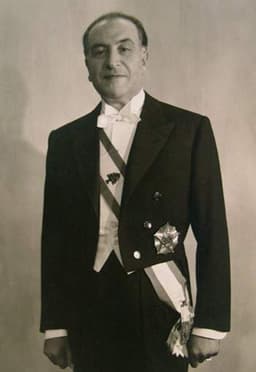
Fuad Chehab
General · Modern
49.9Total
Basic Information
Born
1937
1902
Died
—
1973
Era
Modern
Modern
Nationality
United States
Lebanon
Occupation
General
General
Civilization
Western
Middle Eastern
Score Comparison
Military (10%)
25.0
10.2
Political (20%)
68.0
70.0
Influence (20%)
68.0
54.1
Legacy (20%)
52.0
44.2
Leadership (15%)
72.0
72.0
Strategy (15%)
50.0
30.3
TOTAL
58.5
49.9
Colin Powell — Complete Timeline
1987 AD
Appointed National Security AdvisorPolitical Action◆ Major
Powell was appointed National Security Advisor by President Ronald Reagan in November 1987, serving until January 1989. He coordinated foreign policy and national security matters, including arms control negotiations with the Soviet Union and the Iran-Iraq War, becoming the first African American in this role.
National SecurityReagan AdministrationForeign Policy
Impact: global
1989 AD
Became Chairman of the Joint Chiefs of StaffOther◆ Major
On October 1, 1989, Powell became the 12th Chairman of the Joint Chiefs of Staff, the first African American to hold the position. He oversaw U.S. military operations during the invasion of Panama (1989) and the Gulf War (1990-1991), becoming a highly visible public figure.
Military LeadershipGulf WarFirst African American
Impact: global
1990 AD
Developed the Powell DoctrineOther◆ Major
During the Gulf War planning, Powell articulated the Powell Doctrine, which stated that U.S. military force should only be used as a last resort, with overwhelming force, clear objectives, and an exit strategy. This doctrine influenced U.S. military interventions for the next decade.
Military DoctrineGulf WarStrategic Thinking
Impact: global
2001 AD
Appointed Secretary of StatePolitical Action◆ Major
On January 20, 2001, Powell was confirmed as the 65th U.S. Secretary of State under President George W. Bush, becoming the first African American to hold the office. He advocated for diplomacy and multilateralism, but his influence waned after the September 11 attacks.
DiplomacyBush AdministrationFirst African American
Impact: global
2003 AD
Presented Iraq WMD Case to the UN Security CouncilOther◆ Major
On February 5, 2003, Powell addressed the UN Security Council, presenting evidence that Iraq possessed weapons of mass destruction. The intelligence later proved to be inaccurate, damaging Powell's reputation and becoming a major controversy that he later called a 'blot' on his record.
Iraq WarUN SpeechControversy
Impact: globaldestructive
2004 AD
Resigned as Secretary of StateOther◆ Major
Powell resigned as Secretary of State on November 15, 2004, after President Bush's re-election. His departure was widely seen as a result of policy disagreements with Vice President Cheney and Secretary of Defense Rumsfeld, particularly over the conduct of the Iraq War.
ResignationIraq WarBush Administration
Impact: national
Fuad Chehab — Complete Timeline
1958 AD
Launched Chehabist reforms and modernizationReform◆ Major
President Chehab implemented a series of reforms known as Chehabism, including administrative modernization, economic planning, and strengthening state institutions. He established the Central Bank of Lebanon and the Civil Service Board.
ReformModernizationState Building
Impact: nationalconstructive
Elected President of LebanonPolitical Action◆ Major
Fuad Chehab was elected President of Lebanon on September 23, 1958, succeeding Camille Chamoun. His election ended the 1958 crisis and was supported by both Christian and Muslim factions seeking stability.
PresidencyElectionStabilization
Impact: nationalconstructive
Created the Deuxième Bureau intelligence agencyPolitical Action
Chehab expanded the role of the Deuxi
IntelligenceSecurityAuthoritarianism
Impact: national
1960 AD
Presided over the 1960s economic boomOther
Under Chehab's presidency, Lebanon experienced a period of economic growth and stability, with Beirut becoming a major financial and tourism hub. His policies attracted foreign investment and expanded the middle class.
Economic GrowthBeirutProsperity
Impact: nationalconstructive
1964 AD
Refused to amend constitution for a second termPolitical Action
Chehab declined to seek a second term as president, respecting the constitutional limit. He retired from politics in 1964, setting a precedent for peaceful transitions of power in Lebanon.
ConstitutionTerm LimitRetirement
Impact: nationalconstructive
Expert Analysis
Fuad Chehab vs Colin Powell
# The Soldier and the Statesman
On a September morning in 1958, as Fuad Chehab took the oath of office in Beirut, he inherited a country bleeding from sectarian violence. Across the Atlantic, a twenty-one-year-old Colin Powell was just beginning his military service, unaware that he would one day become the most powerful African American in U.S. history. Both men were generals. Both stepped into politics at moments of national crisis. But their paths diverged like two rivers flowing from the same mountain—one carving through the bedrock of a superpower, the other through the fractured limestone of a fragile democracy.
Origins
Colin Powell was born in 1937 in Harlem to Jamaican immigrants, the son of a shipping clerk and a seamstress. His world was one of modest expectations and quiet ambition. He grew up in the South Bronx, attended City College, and joined the ROTC not out of burning patriotism but because it offered structure and a small stipend. Powell’s America was ascending—victorious in World War II, confident in its institutions, and slowly, painfully, beginning to confront its racial divisions.
Fuad Chehab was born in 1902 into a different kind of aristocracy. His family was Maronite Christian, part of Lebanon’s traditional political elite, but he grew up under the shadow of the Ottoman Empire’s collapse. Lebanon was not yet a nation—it was an idea waiting to be born. Chehab joined the French-mandated military, learned the art of navigating between empires, and developed a deep distrust of sectarian politics. His era was one of colonial withdrawal, Cold War pressure, and the constant threat of civil war. Where Powell’s America offered a ladder, Chehab’s Lebanon offered a tightrope.
Rise to Power
Powell rose through the military bureaucracy with the methodical patience of a man who understood that in America, competence could eventually overcome prejudice. He served two tours in Vietnam, survived a helicopter crash that killed his commanding officer, and earned a reputation for calm under fire. His key turning point came not on a battlefield but in a Pentagon office, where he caught the eye of Caspar Weinberger and Frank Carlucci. By the 1980s, Powell was a political general—someone who could translate military needs into bureaucratic language. In 1989, President George H.W. Bush appointed him Chairman of the Joint Chiefs of Staff, the first African American to hold the post. Powell was fifty-two.
Chehab’s rise was more tortured. He became commander of the Lebanese army in 1945, inheriting a force that was less a national army than a collection of sectarian militias wearing the same uniform. In 1952, when President Bechara El Khoury was forced to resign amid corruption scandals, Chehab refused to let the army seize power—earning him a reputation as the man who could have been a dictator but chose not to be. Six years later, when Lebanon’s 1958 crisis erupted into street fighting between pro-Western Christians and Arab nationalist Muslims, Chehab was the only figure both sides could tolerate. He was elected president on September 23, 1958, not as a victor but as a mediator.
Leadership & Governance
As Chairman of the Joint Chiefs, Powell was the architect of the “Powell Doctrine”—the idea that the United States should only use military force when it had clear objectives, overwhelming strength, and an exit strategy. He oversaw the 1991 Gulf War, a campaign that seemed to validate his approach: decisive, limited, and televised. As Secretary of State under George W. Bush, however, he became the tragic face of the Iraq War. His 2003 speech to the United Nations, presenting what turned out to be flawed intelligence about weapons of mass destruction, became the defining stain on an otherwise careful career. Powell’s tragedy was that his political wisdom—his instinct for caution—was overruled by a president who had never worn a uniform.
Chehab governed differently. He did not believe in decisive victories. He believed in balance. His “Chehabism” was a philosophy of administrative reform, economic modernization, and, above all, the suppression of sectarian conflict through state intelligence. He created the Deuxième Bureau, a military intelligence agency that monitored politicians from all factions, ensuring that no single group could dominate. He launched infrastructure projects, expanded education, and presided over Lebanon’s economic boom in the early 1960s. But his methods were paternalistic and authoritarian in their own quiet way. He did not trust democracy to solve Lebanon’s problems; he trusted the state to manage them.
Triumph & Tragedy
Powell’s greatest moment came in 1991, standing before the world as the face of American military power used with restraint. His worst came twelve years later, when he stood before the same world and spoke words he would later call a “blot” on his record. The tragedy was not that he was deceived—it was that he knew better. He had read the intelligence reports. He had expressed doubts in private. But he went to the podium anyway, a soldier following orders.
Chehab’s triumph was the survival of Lebanon. He left office in 1964, having refused to amend the constitution for a second term—a decision that cost him nothing but principle. His tragedy was that his reforms did not outlast him. The Deuxième Bureau became a tool of repression. The sectarian system he tried to manage from above eventually tore the country apart in 1975. Chehab died in 1973, two years before the civil war he had spent his career trying to prevent.
Character & Destiny
Powell was a conciliator. He believed in institutions, in process, in the idea that the system would work if good people worked within it. He was not a revolutionary; he was a reformer who succeeded by making the powerful comfortable with his presence. His character was shaped by the military’s promise of meritocracy—a promise that, for him, was largely kept.
Chehab was a guardian. He believed that Lebanon was too fragile for democracy, too divided for freedom. His character was shaped by the memory of 1958, when he saw his countrymen killing each other in the streets. He chose stability over liberty, control over chaos. Where Powell trusted the system, Chehab trusted only himself.
Legacy
Powell is remembered as a paradox: a man of integrity who made one unforgivable compromise, a symbol of racial progress who was ultimately a servant of empire. His legacy score of 75.0 reflects a figure who was admired but not loved, respected but not followed.
Chehab is remembered as Lebanon’s “great reformer” by those who mourn what the country could have been, and as a “father of the intelligence state” by those who blame him for the surveillance apparatus that later regimes weaponized. His legacy score of 57.9 is lower, but that is the price of governing a country that never quite became a nation.
Conclusion
In the end, these two generals faced the same question: What does a soldier do when the country he serves is flawed? Powell chose to serve anyway, believing that loyalty could redeem the system from within. Chehab chose to manage the flaws, believing that survival was enough. One became the most powerful African American in history. The other became the last honest president of a country that would soon cease to exist. Both were men of their time, and both discovered that time has little patience for good intentions.
Rankings
🥇
Colin PowellLeader
Mil: 25.0Pol: 68.0Inf: 68.0
58.5
🥈
Fuad Chehab
Mil: 10.2Pol: 70.0Inf: 54.1
49.9
+8.6 behind
How This Comparison Works
Algorithm
Each figure is scored on 6 dimensions (0—100 scale) based on structured historical data: Military (10%), Political (20%), Influence (20%), Legacy (20%), Leadership (15%), Strategy (15%). The weighted total produces the final ranking.
Data Sources
Scores are computed from structured sub-indicators in the database. Scale factors adjust for era (Ancient ×0.85, Modern ×1.0) and civilization size (Eastern ×1.05, Other ×0.80) to account for differences in population and military scale.
Maximum 3 Figures
Comparisons are limited to 2—3 figures to ensure readability and statistical meaningfulness.
Error Margins
±5 points per dimension — Sub-scores are derived from historical records with inherent uncertainty. Two figures within 5 points on a dimension should be considered roughly equivalent in that area.
Total Score Accuracy
±3 points overall — The weighted combination of 6 dimensions produces a total score with approximately ±3 points of uncertainty. Differences of less than 3 points are not statistically significant— the figures are effectively tied.
Known Limitations
- Historical records are incomplete and uneven across civilizations
- Figures from oral-tradition societies may be underrepresented
- Occupation labels can misclassify multi-role figures
- Scores measure capability and impact, not moral character
- Quantitative scoring is a comparison tool, not absolute truth
Capability Radar
Military (10%) — Battles & Warfare
Battles
35
5
Win Rate
40
5
Expansion
20
5
Political (20%) — Governance & Reform
Reform
40
65
Diplomacy
70
60
Economy
30
50
Influence (20%) — Cultural & Global Reach
Cultural
55
30
Global
65
25
Legacy (20%) — Historical Impact
Historical
60
35
Longevity
45
30
Leadership (15%) — Power & Stability
Tenure
65
55
Stability
55
45
Strategy (15%) — Tactics & Innovation
Strategy
55
10
Tactics
45
10
Reform
60
20
Similar Comparisons
Comments & Discussion
MilesFromRostov6/16/2026
Data skeptic here. Comparing these two is like apples and oranges. Powell commanded 780,000 troops during Desert Storm; Chehab's army was maybe 15,000. One had nuclear weapons, the other had rifles left by the French. Their "crises" aren't comparable either—Lebanon's was a civil war with 3,000 dead, while Powell oversaw a superpower at war. The historical record is clear: scale matters.
青史留名6/16/2026
作为经典学人,我觉得两人都陷入了中西文明的问题。切哈布试图用西方军事制度解决中东教派矛盾,结果失败;鲍威尔则把美国式官僚主义带入外交,导致伊拉克战争情报错误。两人本质上都是"嫁接者",但根不同——一个种在黎巴嫩多教派土壤里,一个长在美国霸权树上,都没能真正适应。
历史旁观者6/16/2026
从一个历史迷角度看,切哈布更让我佩服。鲍威尔虽然是黑人成长史,但他1950年代参加越南战争,手上沾满无辜者血;切哈布在1958年黎巴嫩危机中坚持不镇压示威者,反而推动温和改革。鲍威尔最后为小布什"献祭",切哈布却为黎巴嫩牺牲了个人前途。历史会记住谁?显然不是那位五角大楼常客。
RevisionistScribe6/16/2026
Revisionist take: we overpraise Powell because he fit the "respectable Black success story" narrative. He was a loyalist who enabled the Iraq War disaster and whitewashed the Gulf War's civilian toll—estimated 20,000 Iraqi child deaths from sanctions he supported. Chehab at least tried democratic reconciliation. Powell used his uniform to legitimize empire. Different faults, but one gets nostalgia goggles, the other obscurity.
Historian4526/16/2026
As a military historian, I'd argue Chehab was the better strategist. Powell followed the Powell Doctrine—overwhelming force for clear objectives—but Chehab outmaneuvered armed militias without destroying his country. He kept the Lebanese Army neutral in 1958 when a marines landing would've escalated. Powell had the luxury of America's full might; Chehab had a barely functional state. That's real leadership.