Loading...
Colin Powell vs Feng Guozhang
Colin Powell leads by 9.4 pts · 2 figures compared
…

Colin Powell
General · Modern
58.5Total
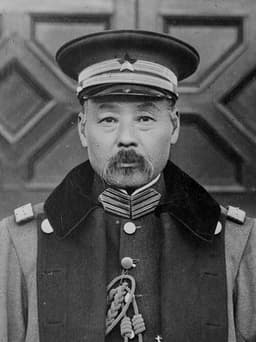
Feng Guozhang
General · Modern
49.1Total
Basic Information
Born
1937
1859
Died
—
1919
Era
Modern
Modern
Nationality
United States
China
Occupation
General
General
Civilization
Western
Eastern
Score Comparison
Military (10%)
25.0
30.0
Political (20%)
68.0
61.3
Influence (20%)
68.0
54.9
Legacy (20%)
52.0
45.8
Leadership (15%)
72.0
40.0
Strategy (15%)
50.0
57.5
TOTAL
58.5
49.1
Colin Powell — Complete Timeline
1987 AD
Appointed National Security AdvisorPolitical Action◆ Major
Powell was appointed National Security Advisor by President Ronald Reagan in November 1987, serving until January 1989. He coordinated foreign policy and national security matters, including arms control negotiations with the Soviet Union and the Iran-Iraq War, becoming the first African American in this role.
National SecurityReagan AdministrationForeign Policy
Impact: global
1989 AD
Became Chairman of the Joint Chiefs of StaffOther◆ Major
On October 1, 1989, Powell became the 12th Chairman of the Joint Chiefs of Staff, the first African American to hold the position. He oversaw U.S. military operations during the invasion of Panama (1989) and the Gulf War (1990-1991), becoming a highly visible public figure.
Military LeadershipGulf WarFirst African American
Impact: global
1990 AD
Developed the Powell DoctrineOther◆ Major
During the Gulf War planning, Powell articulated the Powell Doctrine, which stated that U.S. military force should only be used as a last resort, with overwhelming force, clear objectives, and an exit strategy. This doctrine influenced U.S. military interventions for the next decade.
Military DoctrineGulf WarStrategic Thinking
Impact: global
2001 AD
Appointed Secretary of StatePolitical Action◆ Major
On January 20, 2001, Powell was confirmed as the 65th U.S. Secretary of State under President George W. Bush, becoming the first African American to hold the office. He advocated for diplomacy and multilateralism, but his influence waned after the September 11 attacks.
DiplomacyBush AdministrationFirst African American
Impact: global
2003 AD
Presented Iraq WMD Case to the UN Security CouncilOther◆ Major
On February 5, 2003, Powell addressed the UN Security Council, presenting evidence that Iraq possessed weapons of mass destruction. The intelligence later proved to be inaccurate, damaging Powell's reputation and becoming a major controversy that he later called a 'blot' on his record.
Iraq WarUN SpeechControversy
Impact: globaldestructive
2004 AD
Resigned as Secretary of StateOther◆ Major
Powell resigned as Secretary of State on November 15, 2004, after President Bush's re-election. His departure was widely seen as a result of policy disagreements with Vice President Cheney and Secretary of Defense Rumsfeld, particularly over the conduct of the Iraq War.
ResignationIraq WarBush Administration
Impact: national
Feng Guozhang — Complete Timeline
1912 AD
Command of the Beiyang ArmyPolitical Action◆ Major
Feng Guozhang became a key commander of the Beiyang Army under Yuan Shikai. He controlled military forces in the Zhili region, establishing himself as a major warlord in northern China after the fall of the Qing dynasty.
Beiyang ArmyWarlordMilitary Command
Impact: national
1916 AD
Appointment as Vice PresidentPolitical Action◆ Major
Feng Guozhang was elected Vice President of the Republic of China under President Li Yuanhong. This position gave him significant political influence during the early Republican period.
Republic of ChinaGovernmentPolitics
Impact: national
1917 AD
Acting PresidencyPolitical Action◆ Major
Feng Guozhang became Acting President of the Republic of China after Li Yuanhong's resignation. He served from 1917 to 1918, facing challenges from rival warlords and struggling to maintain central authority.
Republic of ChinaPresidencyWarlord Era
Impact: national
1918 AD
Conflict with Duan QiruiPolitical Action◆ Major
Feng Guozhang engaged in a power struggle with Premier Duan Qirui, leading to the split of the Beiyang clique into the Zhili and Anhui factions. This conflict weakened the central government and intensified warlord warfare.
Beiyang CliquePower StruggleWarlord Era
Impact: nationaldestructive
Expert Analysis
Feng Guozhang vs Colin Powell
# The General as President: Two Paths from the Battlefield to Power
On a winter day in 1917, Feng Guozhang entered the presidential palace in Beijing, a man who had spent his entire adult life in the shadow of his master, Yuan Shikai. Across the ocean and seven decades later, another general stood before the United Nations Security Council in February 2003, making the case for war with Iraq. Both men rose through military ranks to reach the pinnacle of political power. One would see his nation fracture into warlord chaos. The other would retire with his reputation intact, though forever stained by a single decision. What separates a transitional figure from a transformative one? The answer lies not in their uniforms, but in the systems they served.
Origins
Feng Guozhang was born in 1859, the year of the Second Opium War, into a China convulsing from foreign humiliation and internal rebellion. He entered the Beiyang Military Academy, the crucible of China's modern army, where he studied under German instructors and learned the arts of war from Western manuals. His generation faced a stark choice: embrace reform or watch their civilization collapse. Colin Powell, born in 1937 in Harlem to Jamaican immigrants, grew up in a nation that, despite its racial segregation, offered a path of upward mobility through the military. His father was a shipping clerk, his mother a seamstress. Where Feng saw a civilization in crisis, Powell saw a nation slowly, painfully, fulfilling its founding promises.
Rise to Power
Feng's rise was inseparable from the patronage of Yuan Shikai, the man who would briefly declare himself emperor. In 1912, when Yuan took control of the new Republic, Feng received command of the Beiyang Army in the Zhili region. He was a loyal lieutenant, not an independent actor. His promotion to Vice President in 1916 came not from popular acclaim but from backroom deals among warlords and politicians. Powell's ascent, by contrast, occurred within the institutional framework of the United States Army. He served two tours in Vietnam, commanded a brigade in Korea, and by 1989 became Chairman of the Joint Chiefs of Staff, the first African American to hold that office. His rise was a story of meritocracy functioning, however imperfectly, within a stable constitutional order.
Leadership & Governance
When Feng became Acting President in 1917, after Li Yuanhong's resignation, he inherited a republic in name only. Real power lay with regional military commanders. His strategy was survival through balancing factions, playing the Zhili clique against the Anhui clique led by Premier Duan Qirui. But by 1918, this balancing act collapsed into open conflict, and the Beiyang Army split into warring factions. Feng's political wisdom was tactical, not strategic—he could maneuver within a system but could not build one.
Powell's leadership was defined by institutional loyalty. As National Security Advisor under Ronald Reagan and Chairman of the Joint Chiefs under George H.W. Bush, he orchestrated the 1991 Gulf War, a campaign of overwhelming force and limited objectives. His "Powell Doctrine" demanded clear political goals, decisive force, and an exit strategy. When he became Secretary of State in 2001, he was the most popular public figure in America. But his governance style—consensus-building within a bureaucracy—failed him when faced with the ideological certainty of the Bush administration's neoconservatives.
Triumph & Tragedy
Feng's greatest moment was his presidency itself—a former general sitting in the seat of Chinese emperors. His tragedy was that he could not hold it together. By 1918, his power had evaporated, and he died the following year, a broken man watching his nation descend into warlordism. Powell's triumph was the Gulf War, a demonstration of American military supremacy that restored confidence after Vietnam. His tragedy came in February 2003, when he stood before the United Nations and presented intelligence about Iraqi weapons of mass destruction that later proved false. "My career," he later said, "will be judged by that one speech."
Character & Destiny
Feng Guozhang was cautious, calculating, and ultimately conservative. He lacked the ruthlessness to seize absolute power like Yuan Shikai, yet lacked the vision to build a new order. He was a transitional figure trapped between empire and republic, loyalty and ambition. Powell was disciplined, honorable, and institutionally minded. He believed in the system, and the system let him down. His character—the soldier who trusts his chain of command—led him to present intelligence he should have questioned. Both men were shaped by their eras, but Powell's era gave him a framework of law and constitution that Feng never had.
Legacy
Feng Guozhang is remembered, if at all, as one of the many warlords who carved up China after the fall of the Qing dynasty. His total score of 74.2 reflects a competent but ultimately failed politician. Powell's legacy is more complex: a 75.0 in legacy, a 78.0 in influence. He broke racial barriers, inspired millions, and served his country with distinction. Yet the shadow of that 2003 speech will never lift. Both men demonstrate a cruel truth about history: it judges not by intentions but by outcomes, and the systems we serve often determine what we can achieve.
Conclusion
Walking through the halls of power, both Feng Guozhang and Colin Powell must have felt the weight of history on their shoulders. One tried to hold a republic together with his bare hands and failed. The other tried to serve an empire of law and found that law can be bent to falsehood. Their stories remind us that military glory does not guarantee political wisdom, and that the greatest test of a leader is not how they rise, but how they navigate the moment when the system they trusted reveals its flaws. In the end, both were prisoners of their times—but one lived in a time of chaos, the other in a time of choice. That difference made all the difference.
Rankings
🥇
Colin PowellLeader
Mil: 25.0Pol: 68.0Inf: 68.0
58.5
🥈
Feng Guozhang
Mil: 30.0Pol: 61.3Inf: 54.9
49.1
+9.4 behind
How This Comparison Works
Algorithm
Each figure is scored on 6 dimensions (0—100 scale) based on structured historical data: Military (10%), Political (20%), Influence (20%), Legacy (20%), Leadership (15%), Strategy (15%). The weighted total produces the final ranking.
Data Sources
Scores are computed from structured sub-indicators in the database. Scale factors adjust for era (Ancient ×0.85, Modern ×1.0) and civilization size (Eastern ×1.05, Other ×0.80) to account for differences in population and military scale.
Maximum 3 Figures
Comparisons are limited to 2—3 figures to ensure readability and statistical meaningfulness.
Error Margins
±5 points per dimension — Sub-scores are derived from historical records with inherent uncertainty. Two figures within 5 points on a dimension should be considered roughly equivalent in that area.
Total Score Accuracy
±3 points overall — The weighted combination of 6 dimensions produces a total score with approximately ±3 points of uncertainty. Differences of less than 3 points are not statistically significant— the figures are effectively tied.
Known Limitations
- Historical records are incomplete and uneven across civilizations
- Figures from oral-tradition societies may be underrepresented
- Occupation labels can misclassify multi-role figures
- Scores measure capability and impact, not moral character
- Quantitative scoring is a comparison tool, not absolute truth
Capability Radar
Military (10%) — Battles & Warfare
Battles
35
45
Win Rate
40
40
Expansion
20
35
Political (20%) — Governance & Reform
Reform
40
30
Diplomacy
70
45
Economy
30
25
Influence (20%) — Cultural & Global Reach
Cultural
55
30
Global
65
20
Legacy (20%) — Historical Impact
Historical
60
40
Longevity
45
25
Leadership (15%) — Power & Stability
Tenure
65
55
Stability
55
20
Strategy (15%) — Tactics & Innovation
Strategy
55
55
Tactics
45
50
Reform
60
40
Similar Comparisons
Comments & Discussion
FIREBRAND_FIELD_MARSHAL6/16/2026
Feng was a Beiyang warlord playing at republican politics, while Powell was a genuine statesman-soldier. Feng’s presidency ended with his province rebelling and the Anhui clique scattering—he was never more than one warlord among many. Powell, even after the Iraq WMD debacle, secured two terms as Secretary of State. The difference is systemic: Feng served a decaying empire with no civil-military tradition; Powell served a constitution that commands the loyalty of its generals.
掌上春秋6/16/2026
冯国璋不过是北洋军阀的一个过渡品,他进总统府时连自己军队都控制不稳。1918年他被迫下野,比起科林·鲍威尔2005年主动辞职的体面,差距太大了。鲍威尔在联合国的演讲虽然后来被证明是错误,但那是情报系统的集体失误;冯国璋的统治却是个人投机、地方割据的失败。一个为国家服务,一个为自己服务。
DATA_SKEPTIC6/16/2026
You can’t compare a Beiyang general who never commanded more than 50,000 men to a Chairman of the Joint Chiefs who oversaw the largest military on earth. Feng’s “power” came from Yuan Shikai’s patronage, not personal merit—he lost every major campaign after 1916. Powell’s authority came from institutional trust, proven in Panama and Gulf War planning. One statist, one paper tiger.
冷眼史评6/16/2026
把冯国璋和鲍威尔并列,本身就是对历史的简化。冯是封建军阀体系的产物,靠的是同乡会、私人效忠和地缘利益;鲍威尔是现代参谋体制培养的精英,他的晋升依靠制度考核和战功。1918年冯被段祺瑞逼退时,连个像样的政变都组织不起来。而鲍威尔1995年拒绝参选总统,因为他深知自己更适合做顾问而非决策者。高下立判。