Loading...
Chen Qun vs Cleisthenes of Athens
Cleisthenes of Athens leads by 12.6 pts · 2 figures compared
…
Chen Qun
Politician · Ancient
55.9Total
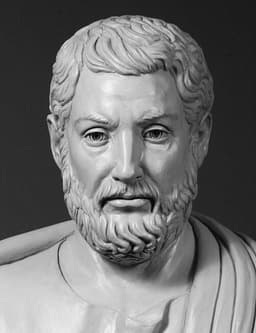
Cleisthenes of Athens
Politician · Ancient
68.5Total
Basic Information
Born
160
-570
Died
237
-508
Era
Ancient
Ancient
Nationality
China
Athens
Occupation
Politician
Politician
Civilization
Eastern
Western
Score Comparison
Military (10%)
10.0
50.0
Political (20%)
72.0
62.7
Influence (20%)
40.0
80.0
Legacy (20%)
75.0
82.0
Leadership (15%)
72.0
62.0
Strategy (15%)
45.5
42.7
TOTAL
55.9
68.5
Chen Qun — Complete Timeline
220 AD
Proposed the Nine-rank SystemReform◆ Major
Chen Qun proposed the Nine-rank system for civil service appointments to Cao Pi, the first emperor of Wei. This system ranked candidates based on family background and personal merit, replacing the earlier recommendation system and becoming the standard for official selection in China for centuries.
Civil Service ReformWei DynastyBureaucracy
Impact: nationalconstructive
Advised Cao Pi on Legal CodeReform
Chen Qun assisted Cao Pi in drafting the new legal code for the Wei dynasty. He advocated for clearer laws and more consistent punishments, contributing to the legal framework that helped stabilize Wei's early rule.
Legal ReformWei DynastyLaw
Impact: nationalconstructive
226 AD
Served as Minister over the MassesPolitical Action
Chen Qun was appointed Minister over the Masses (Sikong) under Emperor Cao Rui of Wei. In this high-ranking position, he oversaw civil administration and continued to refine the implementation of the Nine-rank system, solidifying its role in Wei governance.
AppointmentWei DynastyGovernment
Impact: nationalconstructive
Cleisthenes of Athens — Complete Timeline
508 BC
Reform of the Athenian Tribes (Cleisthenes' Reforms)Reform
Cleisthenes reorganized the Athenian citizen body into ten new tribes based on demes (local districts), replacing the old four Ionian tribes. This broke the power of aristocratic clans and created a new political structure that formed the basis of Athenian democracy.
DemocracyPolitical ReformAthens
Impact: globalprogressive
Introduction of OstracismReform◆ Major
Cleisthenes introduced the practice of ostracism, allowing citizens to vote annually to exile a prominent figure for ten years. This mechanism was designed to prevent tyranny and remove threats to democracy. The first ostracism occurred in 487 BC.
DemocracyPolitical ReformExile
Impact: globalprogressive
Creation of the Council of 500 (Boule)Reform◆ Major
Cleisthenes established the Boule, a council of 500 citizens (50 from each tribe) chosen by lot. This body prepared legislation for the Assembly and oversaw daily administration. It replaced the aristocratic Areopagus as the main governing body, expanding citizen participation.
DemocracyPolitical ReformGovernment
Impact: globalprogressive
Exile of Isagoras and Spartan InterventionPolitical Action◆ Major
Cleisthenes' rival Isagoras called on Spartan king Cleomenes I to intervene in Athens. The Spartans expelled Cleisthenes and attempted to dissolve the Boule, but the Athenian people revolted, besieging the Acropolis and forcing the Spartans to withdraw. Cleisthenes was recalled.
Spartan InterventionDemocracyAthens
Impact: nationalconstructive
Expert Analysis
Chen Qun vs Cleisthenes of Athens
# The Architects of Order: How Two Ancient Politicians Shaped the Future of Governance
In the year 220 AD, as the Han dynasty crumbled into dust and the Three Kingdoms vied for supremacy, a middle-aged bureaucrat named Chen Qun presented a radical proposal to his new emperor, Cao Pi. Across the world and seven centuries earlier, in 508 BC, a nobleman named Cleisthenes stood in the Athenian agora, watching his rival Isagoras flee with Spartan soldiers, knowing that his own exile had just ended and that Athens would never be the same. Neither man wielded a sword in battle. Neither commanded armies. Yet their ideas—the Nine-Rank System and Athenian democracy—would outlast every kingdom and empire that rose around them. Why did these two men, both reformers in ages of upheaval, choose such different paths to reshape their worlds?
Origins
Chen Qun was born in 160 AD into a world of decay. The Han dynasty, once the greatest empire in East Asia, was rotting from within—eunuchs controlled the court, corrupt officials bled the provinces, and peasant rebellions like the Yellow Turbans had exposed the dynasty’s mortal wounds. Chen Qun’s family were scholar-officials, men who had served the Han for generations. He grew up immersed in Confucian classics, learning that order came from hierarchy, that the wise ruler governed through virtuous ministers, and that chaos was the natural consequence of broken systems. His father, Chen Ji, was a noted Confucian scholar who had refused to serve the warlord Dong Zhuo, teaching his son that integrity mattered more than power. By the time Chen Qun entered politics, the Han was already a ghost—warlords like Cao Cao held real power, and the question was not whether the dynasty would fall, but what would replace it.
Cleisthenes was born around 570 BC into a very different kind of crisis. Athens was a small city-state struggling to find its identity. It had recently thrown off its kings, but the aristocratic families—the Eupatridae—still controlled everything. Cleisthenes belonged to the Alcmaeonidae, one of those noble clans, but his family carried a curse: they had been exiled for murdering followers of the failed Cylonian coup. This stain made them outsiders within the elite, and Cleisthenes grew up knowing that power in Athens was not about birth alone—it was about alliances, persuasion, and the volatile will of the people. He had seen tyranny firsthand: the Peisistratid family had seized power and ruled for decades, only to be overthrown by Sparta. The lesson was clear: in a small, fractious city, the only way to secure lasting influence was to give power away.
Rise to Power
Chen Qun’s rise was slow, patient, and bureaucratic. He first served under Cao Cao, the warlord who had unified northern China and controlled the Han emperor as a puppet. Cao Cao valued talent above pedigree—he famously issued decrees seeking men of ability, regardless of their background. But Chen Qun saw the flaw in this: without a system, talent was chosen by whim. He watched Cao Cao’s generals and advisors jockey for favor, saw how the old Han networks of recommendation favored the powerful. When Cao Cao died in 220 AD and his son Cao Pi forced the Han emperor to abdicate, founding the Wei dynasty, Chen Qun seized the moment. He proposed the Nine-Rank System, a method where local officials would rate candidates for office into nine grades based on their merit and reputation. Cao Pi, needing to consolidate power and reward loyalists while still appearing just, accepted it immediately. Chen Qun was not a warrior or a king—he was the man who gave the new dynasty its skeleton.
Cleisthenes’ path to power was far more dramatic. In 510 BC, the Spartan king Cleomenes I helped overthrow the Athenian tyrant Hippias, and Athens was suddenly free. But freedom meant chaos: aristocratic factions fought for control. Cleisthenes, as head of the Alcmaeonidae, initially lost to his rival Isagoras, who was backed by Sparta. In 508 BC, Isagoras had Cleisthenes exiled and then tried to dissolve the Athenian council, the Boule. The people of Athens rose in revolt—they surrounded Isagoras and the Spartans in the Acropolis for three days, forcing them to surrender. Cleisthenes was recalled from exile, not as a conqueror but as a man the people now trusted. He understood that his return was not about personal power; it was about what the people had just done. They had saved themselves. He simply had to give them the tools to keep doing it.
Leadership & Governance
Chen Qun governed through systems. As Minister over the Masses under Emperor Cao Rui from 226 AD, he oversaw the legal code, advocating for clearer laws and more consistent punishments. The Nine-Rank System was his masterpiece: it created a hierarchy of nine grades for officials, from the highest "superior grade" to the lowest, and it required local governors to submit annual evaluations. In theory, this meant that a talented farmer’s son could rise to high office. In practice, the system slowly ossified—by the later Jin dynasty, the grades became hereditary, and the "merit" measured was often just family reputation. But Chen Qun never intended a utopia. He wanted order, predictability, and a way to bind the local elites to the central government. He succeeded. The Nine-Rank System lasted for nearly 400 years, until the Sui dynasty replaced it with the imperial examination system.
Cleisthenes governed through participation. In 508 BC, he reorganized the entire Athenian citizen body into ten new tribes, each composed of demes—local districts that mixed people from the coast, the city, and the countryside. This broke the old aristocratic clans’ power, because no tribe was dominated by one region or family. He created the Council of 500, chosen by lot from all citizens, which prepared laws for the Assembly—every male citizen could attend and vote. He also introduced ostracism: once a year, citizens could write a name on a pottery shard, and if enough votes were cast, that person was exiled for ten years. This was not justice; it was a safety valve. If a leader became too powerful, the people could remove him without violence. Cleisthenes did not trust the elite, and he did not trust the mob. He trusted institutions that balanced both.
Triumph & Tragedy
Chen Qun’s greatest triumph was the Nine-Rank System itself. It stabilized the Wei bureaucracy, gave the dynasty a loyal administrative class, and became the model for Chinese civil service for centuries. His tragedy was that he could not foresee how the system would corrupt. Merit became a mask for nepotism; the nine grades hardened into a caste system. By the time the Jin dynasty fell in the 5th century, the system had produced an arrogant, disconnected aristocracy that could not defend the realm. Chen Qun built a machine that worked too well—it outlasted his intentions.
Cleisthenes’ triumph was the birth of democracy. The reforms of 508 BC gave Athens the institutions that would produce the Golden Age: the victories at Marathon and Salamis, the plays of Sophocles, the philosophy of Socrates. His tragedy was that democracy could be manipulated. Ostracism was used to exile Themistocles, the hero of Salamis; the Assembly voted to execute the generals after the Battle of Arginusae; and the people later embraced demagogues like Cleon. Cleisthenes gave power to the people, but he could not guarantee they would use it wisely.
Character & Destiny
Chen Qun was a Confucian realist. He believed that human nature was imperfect, that hierarchy was necessary, and that the best government was one that minimized chaos. His personality was cautious, methodical, and loyal—he served three Wei emperors without ever seeking supreme power. His destiny was to be the quiet architect, the man who wrote the rules that others followed. He died in 237 AD, respected but not celebrated, his name known only to historians.
Cleisthenes was a political gambler. He risked exile, allied with the common people against his own class, and invented institutions that had never existed before. His personality was bold, innovative, and pragmatic—he did not write philosophical treatises about democracy; he built it. His destiny was to be the "Father of Athenian Democracy," a title he never claimed for himself. He died around 508 BC, soon after his reforms, his work complete.
Legacy
Chen Qun’s Nine-Rank System shaped China for four centuries, and its influence echoed in the examination system that followed. It taught Chinese civilization that governance required a professional class, chosen by some standard of merit, and that the state could not rely on birth alone. Today, he is remembered by scholars of Chinese history, but his name is not famous.
Cleisthenes’ legacy is global. Every time a citizen votes, every time a legislature meets, every time a leader is sent into political exile, the ghost of Cleisthenes is present. His reforms were the foundation of Western democracy, and his name is taught in schools around the world.
Conclusion
Chen Qun and Cleisthenes faced the same fundamental problem: how to govern a society in crisis. One chose hierarchy, the other chose participation. One built a system to control talent, the other built a system to unleash it. Both succeeded, and both failed—because every system, no matter how brilliant, will be corrupted by the people who run it. The difference between them is not that one was right and the other wrong. It is that Chen Qun believed order came from above, while Cleisthenes believed it came from below. Both were products of their worlds—the vast, centralized empire of China and the small, fractious city-state of Athens. And both remind us that the deepest question of politics is not how to build a perfect system, but how to build one that imperfect people can still trust.
Rankings
🥇
Cleisthenes of AthensLeader
Mil: 50.0Pol: 62.7Inf: 80.0
68.5
🥈
Chen Qun
Mil: 10.0Pol: 72.0Inf: 40.0
55.9
+12.6 behind
How This Comparison Works
Algorithm
Each figure is scored on 6 dimensions (0—100 scale) based on structured historical data: Military (10%), Political (20%), Influence (20%), Legacy (20%), Leadership (15%), Strategy (15%). The weighted total produces the final ranking.
Data Sources
Scores are computed from structured sub-indicators in the database. Scale factors adjust for era (Ancient ×0.85, Modern ×1.0) and civilization size (Eastern ×1.05, Other ×0.80) to account for differences in population and military scale.
Maximum 3 Figures
Comparisons are limited to 2—3 figures to ensure readability and statistical meaningfulness.
Error Margins
±5 points per dimension — Sub-scores are derived from historical records with inherent uncertainty. Two figures within 5 points on a dimension should be considered roughly equivalent in that area.
Total Score Accuracy
±3 points overall — The weighted combination of 6 dimensions produces a total score with approximately ±3 points of uncertainty. Differences of less than 3 points are not statistically significant— the figures are effectively tied.
Known Limitations
- Historical records are incomplete and uneven across civilizations
- Figures from oral-tradition societies may be underrepresented
- Occupation labels can misclassify multi-role figures
- Scores measure capability and impact, not moral character
- Quantitative scoring is a comparison tool, not absolute truth
Capability Radar
Military (10%) — Battles & Warfare
Battles
19
22
Win Rate
22
27
Expansion
25
28
Political (20%) — Governance & Reform
Reform
85
95
Diplomacy
50
70
Economy
60
40
Influence (20%) — Cultural & Global Reach
Cultural
70
85
Global
65
80
Legacy (20%) — Historical Impact
Historical
80
90
Longevity
85
95
Leadership (15%) — Power & Stability
Tenure
40
30
Stability
65
60
Strategy (15%) — Tactics & Innovation
Strategy
31
35
Tactics
32
34
Reform
36
40
Similar Comparisons
Comments & Discussion
九品中正6/16/2026
要我说陈群比克里斯提尼务实多了。雅典那种抽签选官,简直是外行指导内行。陈群至少知道跑官买官的问题,搞出九品中正制,让本地豪强推荐人才。虽然后来被士族垄断了,但在乱世里,能解决当时的问题就够了。理想主义好,没实力活不下去啊。
QuotaConundrum6/16/2026
You can't compare a quota system to democracy. Cleisthenes actually empowered common citizens through demes and ostracism, while Chen Qun's "Nine-Rank" system just codified aristocratic nepotism. By 300 AD, the Sima clan had turned it into a birthright scheme, producing useless generals like Sima Yan. Democracy has flaws, but at least Athens fought Persia. What did the Nine-Rank system fight? Internal squabbling.