Loading...
Cleisthenes of Athens vs Themistocles
Cleisthenes of Athens leads by 0.1 pts · 2 figures compared
…
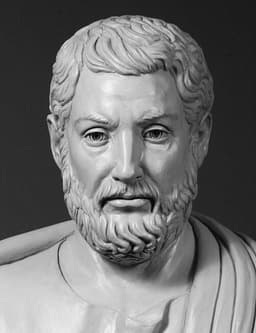
Cleisthenes of Athens
Politician · Ancient
68.5Total
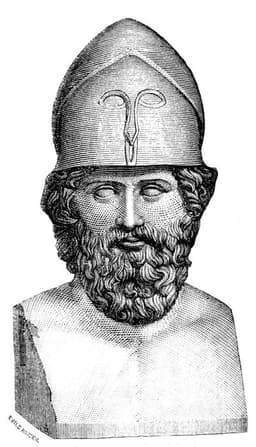
Themistocles
Politician · Ancient
68.4Total
Basic Information
Born
-570
-524
Died
-508
-459
Era
Ancient
Ancient
Nationality
Athens
Greece
Occupation
Politician
Politician
Civilization
Western
Western
Score Comparison
Military (10%)
50.0
80.0
Political (20%)
62.7
72.0
Influence (20%)
80.0
40.0
Legacy (20%)
82.0
80.0
Leadership (15%)
62.0
79.8
Strategy (15%)
42.7
76.0
TOTAL
68.5
68.4
Cleisthenes of Athens — Complete Timeline
508 BC
Reform of the Athenian Tribes (Cleisthenes' Reforms)Reform
Cleisthenes reorganized the Athenian citizen body into ten new tribes based on demes (local districts), replacing the old four Ionian tribes. This broke the power of aristocratic clans and created a new political structure that formed the basis of Athenian democracy.
DemocracyPolitical ReformAthens
Impact: globalprogressive
Introduction of OstracismReform◆ Major
Cleisthenes introduced the practice of ostracism, allowing citizens to vote annually to exile a prominent figure for ten years. This mechanism was designed to prevent tyranny and remove threats to democracy. The first ostracism occurred in 487 BC.
DemocracyPolitical ReformExile
Impact: globalprogressive
Creation of the Council of 500 (Boule)Reform◆ Major
Cleisthenes established the Boule, a council of 500 citizens (50 from each tribe) chosen by lot. This body prepared legislation for the Assembly and oversaw daily administration. It replaced the aristocratic Areopagus as the main governing body, expanding citizen participation.
DemocracyPolitical ReformGovernment
Impact: globalprogressive
Exile of Isagoras and Spartan InterventionPolitical Action◆ Major
Cleisthenes' rival Isagoras called on Spartan king Cleomenes I to intervene in Athens. The Spartans expelled Cleisthenes and attempted to dissolve the Boule, but the Athenian people revolted, besieging the Acropolis and forcing the Spartans to withdraw. Cleisthenes was recalled.
Spartan InterventionDemocracyAthens
Impact: nationalconstructive
Themistocles — Complete Timeline
483 BC
Construction of the Athenian FleetReform◆ Major
Themistocles persuaded the Athenian assembly to use silver from the Laurion mines to build a fleet of 200 triremes. This naval expansion transformed Athens into a major maritime power and was crucial for the victory at Salamis.
AthensNaval PowerReform
Impact: nationalconstructive
480 BC
Battle of SalamisWar
Themistocles commanded the Greek navy against the Persian fleet at Salamis. He lured the Persians into the narrow straits, where the Greek ships destroyed the larger Persian fleet. This victory ended the Persian threat to Greece and preserved Greek independence.
Greco-Persian WarsNaval BattleAthens
Impact: regionalconstructive
472 BC
Ostracism from AthensPolitical Action◆ Major
Themistocles was ostracized by the Athenian assembly, likely due to political rivalries and accusations of arrogance. He went into exile, first to Argos, then to Persia, where he was received by King Artaxerxes I.
AthensExileOstracism
Impact: nationaltragic
465 BC
Service under the Persian KingPolitical Action
After his ostracism, Themistocles fled to Persia and offered his services to King Artaxerxes I. He was granted governorship of Magnesia and other cities in Asia Minor, where he lived until his death. This act was seen as treason by many Athenians.
PersiaExileTreason
Impact: regional
Expert Analysis
Themistocles vs Cleisthenes of Athens
# The Architect and the Admiral
On a summer morning in 480 BC, the narrow straits of Salamis churned with the oars of nearly a thousand ships. Themistocles, a man with a crooked smile and a mind like a trap, stood on the deck of his trireme and watched the Persian fleet—overwhelming in number, magnificent in its arrogance—pour into the channel he had chosen. He had gambled everything on this moment: his reputation, his city, the future of Greece. Across the water, the Persian king Xerxes sat on a golden throne, certain of victory. Themistocles knew something the king did not: the sea was not a battlefield. It was a cage.
Less than three decades earlier, another Athenian had reshaped the city from within. Cleisthenes never commanded an army or stared down an empire. He worked in the quieter realm of law and citizenship, redrawing the map of Athenian society so that power no longer belonged to the few. Where Themistocles saw the enemy on the horizon, Cleisthenes saw the enemy within—the old aristocracy, the ancient bloodlines, the habits of submission. Both men sought to save Athens. One did it with ships. The other did it with votes.
Origins
Themistocles was born around 524 BC into a family of modest status. His mother was not Athenian, which in the rigid world of Greek city-states marked him as something less than pure. From childhood, he learned that merit must fight harder than birth. He was clever, restless, and hungry—traits that would serve him well in the rough-and-tumble of Athenian politics. The city of his youth was still emerging from the shadow of tyranny, and the Persian Empire loomed like a storm on the eastern horizon.
Cleisthenes, by contrast, was born around 570 BC into the very aristocracy Themistocles would later challenge. He was an Alcmaeonid, one of the great families of Athens, a lineage that carried both privilege and suspicion. His grandfather had been involved in a notorious religious scandal, and the family had known exile. Cleisthenes grew up understanding that power in Athens was a fragile thing—won through alliances, lost through vendettas, always subject to the whims of the people. Where Themistocles learned to outmaneuver, Cleisthenes learned to reorganize.
Rise to Power
Themistocles entered politics in an Athens still finding its democratic footing. He was not a natural orator in the style of his rival Aristides, but he understood the assembly’s mood better than any man alive. His great opportunity came in 483 BC, when a rich vein of silver was discovered at the Laurion mines. The assembly expected to distribute the windfall among citizens. Themistocles proposed something else: build a fleet of 200 triremes. He argued that Athens’ future lay not in its farmland but in the sea—and that the Persians were coming. The assembly agreed. That decision would save Greece.
Cleisthenes’ rise came earlier and through different means. In 508 BC, Athens was locked in a power struggle between aristocratic factions. Cleisthenes found himself outmaneuvered by his rival Isagoras, who called on the Spartan king Cleomenes I to intervene. The Spartans expelled Cleisthenes, but in doing so, they overplayed their hand. The Athenian people rose in revolt, drove out the Spartans, and summoned Cleisthenes back. He returned not as a tyrant but as a reformer, and he used his mandate to dismantle the very system that had produced him.
Leadership & Governance
Themistocles governed through persuasion and fear. He understood that democracy required not just laws but leadership—someone to point at the horizon and say, “We go there.” His naval program was a masterpiece of political engineering: he convinced a divided city to invest in a future it could barely imagine. At Salamis in 480 BC, he lured the Persian fleet into the narrow strait where numbers meant nothing and Greek skill meant everything. The victory was total. Athens emerged as the dominant naval power of the Greek world.
Cleisthenes governed through structure. He reorganized the Athenian citizen body into ten new tribes, each composed of demes—local districts—so that old clan loyalties were broken apart and replaced by civic identity. He created the Council of 500, chosen by lot, to prepare legislation for the assembly. And he introduced ostracism: a peaceful mechanism for exiling a dangerous politician without bloodshed. His reforms did not create democracy overnight—that would take generations—but they built the foundation on which everything else rested.
Triumph & Tragedy
Themistocles’ triumph was Salamis. His tragedy came later. In 472 BC, the same democratic assembly he had saved voted to ostracize him. The charge was not treason but arrogance—he had become too powerful, too proud, too much the man who saved Athens. He went into exile, first to Argos, then to Persia itself. In a final, bitter irony, he offered his services to King Artaxerxes I, the son of the man he had defeated, and was granted governorship of Magnesia. He died there in 459 BC, a Greek ruling for Persians, a hero remembered as a traitor.
Cleisthenes’ triumph was the reform itself. His tragedy was that he vanished from history almost immediately after. The exact date of his death is unknown—508 BC is given, but it may be a marker for his reforms rather than his passing. He did not die in exile or battle; he simply faded, leaving behind a system that would outlast him. Unlike Themistocles, who burned bright and was consumed, Cleisthenes built something that did not need him.
Character & Destiny
Themistocles was driven by ambition and insecurity. He needed to be seen, to be needed, to be remembered. His strategy at Salamis was a work of genius, but it was also a work of desperation—he had staked everything on a single roll of the dice. When Athens no longer needed him, he had nothing left. His character was his destiny: he could win a war but not a peace, save a city but not himself.
Cleisthenes was driven by a different logic. He saw that the old system of family-based politics was unsustainable—that Athens would tear itself apart unless power was diffused and institutionalized. He was not a charismatic leader in the mold of Themistocles; he was an architect. His reforms were designed to outlast any individual, including himself. And they did.
Legacy
Themistocles is remembered as the man who saved Greece. His score of 79.3 in Leadership reflects the decisive, commanding figure he was at Salamis. But his Legacy score of 79.0 is complicated by his flight to Persia. He is a hero with a shadow, a savior who ended his days serving the enemy.
Cleisthenes, with a Legacy score of 89.9, is remembered as the Father of Athenian Democracy. His name is less known than Themistocles’, but his work is more enduring. Every time a citizen votes, every time a legislature debates, every time a society chooses the ballot over the bullet, Cleisthenes’ ghost is present. He did not win a battle. He built a system.
Conclusion
Standing on the deck of his trireme at Salamis, Themistocles could not have known that the democratic assembly he fought to preserve would one day vote to exile him. And Cleisthenes, redrawing the map of Athenian tribes in 508 BC, could not have imagined that his reforms would echo across two and a half millennia. One man saved a city from an empire. The other gave that city the tools to govern itself. In the end, both were Athenians—and Athens, for all its flaws, knew that the greatest victories are not won on battlefields but in the minds of those who dare to imagine a different world.
Rankings
🥇
Cleisthenes of AthensLeader
Mil: 50.0Pol: 62.7Inf: 80.0
68.5
🥈
Themistocles
Mil: 80.0Pol: 72.0Inf: 40.0
68.4
+0.1 behind
How This Comparison Works
Algorithm
Each figure is scored on 6 dimensions (0—100 scale) based on structured historical data: Military (10%), Political (20%), Influence (20%), Legacy (20%), Leadership (15%), Strategy (15%). The weighted total produces the final ranking.
Data Sources
Scores are computed from structured sub-indicators in the database. Scale factors adjust for era (Ancient ×0.85, Modern ×1.0) and civilization size (Eastern ×1.05, Other ×0.80) to account for differences in population and military scale.
Maximum 3 Figures
Comparisons are limited to 2—3 figures to ensure readability and statistical meaningfulness.
Error Margins
±5 points per dimension — Sub-scores are derived from historical records with inherent uncertainty. Two figures within 5 points on a dimension should be considered roughly equivalent in that area.
Total Score Accuracy
±3 points overall — The weighted combination of 6 dimensions produces a total score with approximately ±3 points of uncertainty. Differences of less than 3 points are not statistically significant— the figures are effectively tied.
Known Limitations
- Historical records are incomplete and uneven across civilizations
- Figures from oral-tradition societies may be underrepresented
- Occupation labels can misclassify multi-role figures
- Scores measure capability and impact, not moral character
- Quantitative scoring is a comparison tool, not absolute truth
Capability Radar
Military (10%) — Battles & Warfare
Battles
22
75
Win Rate
27
85
Expansion
28
60
Political (20%) — Governance & Reform
Reform
95
75
Diplomacy
70
85
Economy
40
65
Influence (20%) — Cultural & Global Reach
Cultural
85
70
Global
80
75
Legacy (20%) — Historical Impact
Historical
90
85
Longevity
95
80
Leadership (15%) — Power & Stability
Tenure
30
70
Stability
60
60
Strategy (15%) — Tactics & Innovation
Strategy
35
90
Tactics
34
95
Reform
40
80
Similar Comparisons
Comments & Discussion
Silver-Tongued Tyrant6/16/2026
Cleisthenes is overrated. Sure, he invented ostracism, but that's just institutionalized mob rule—banning someone for being too popular. Themistocles actually saved Athens from annihilation at Salamis. Cleisthenes gave us democracy, but Themistocles gave us existence. A voting system means nothing when Persians are burning your city to ash.
木鱼记事6/16/2026
拿地米斯托克利跟克里斯提尼比,完全是不同类型的历史功绩。一个靠战术规划,一个靠制度设计。克里斯提尼的部落制是真有水平——把地区利益打乱重组,断了豪门尾大不掉的路子。后来雅典能出那么多海军,本质上还是这套基础打得好。我们总爱选英雄,但城市不靠一个人活。
Stat-Padder the Skeptic6/16/2026
Everyone gushes about Salamis, but let's talk numbers. Themistocles persuaded Athens to build 200 triremes from silver mines. Cleisthenes reformed the Boule to 500 members from ten tribes. Which actually changed daily life? The triremes fought one battle; the Boule governed for centuries. Themistocles got a flashy victory; Cleisthenes built the machine that kept winning.
街头辩手6/16/2026
讲真,克里斯提尼的改革比地米斯托克利的军事秀更难复制。你教一个人造舰队、打海战,二十年就够了。但你要教一大帮公民怎么治理自己,这是几代人的事。地米斯托克利确实牛,但他是站在巨人肩膀上——而这个巨人姓克里斯提尼。民主制度的工程比沉船更耐久,也更难毁掉。