Loading...
Cleisthenes of Athens vs Midhat Pasha
Cleisthenes of Athens leads by 4.2 pts · 2 figures compared
…
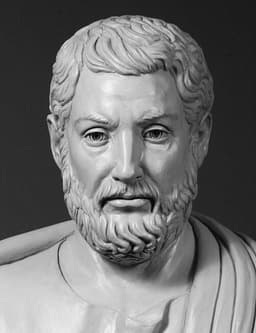
Cleisthenes of Athens
Politician · Ancient
68.5Total
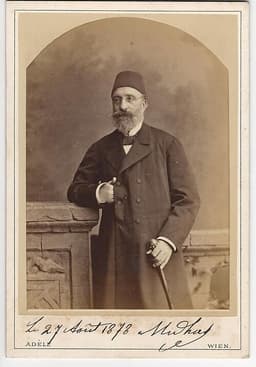
Midhat Pasha
Politician · Modern
64.3Total
Basic Information
Born
-570
1822
Died
-508
1884
Era
Ancient
Modern
Nationality
Athens
Ottoman Empire
Occupation
Politician
Politician
Civilization
Western
Middle Eastern
Score Comparison
Military (10%)
50.0
10.0
Political (20%)
62.7
78.0
Influence (20%)
80.0
82.0
Legacy (20%)
82.0
72.0
Leadership (15%)
62.0
62.0
Strategy (15%)
42.7
38.3
TOTAL
68.5
64.3
Cleisthenes of Athens — Complete Timeline
508 BC
Reform of the Athenian Tribes (Cleisthenes' Reforms)Reform
Cleisthenes reorganized the Athenian citizen body into ten new tribes based on demes (local districts), replacing the old four Ionian tribes. This broke the power of aristocratic clans and created a new political structure that formed the basis of Athenian democracy.
DemocracyPolitical ReformAthens
Impact: globalprogressive
Introduction of OstracismReform◆ Major
Cleisthenes introduced the practice of ostracism, allowing citizens to vote annually to exile a prominent figure for ten years. This mechanism was designed to prevent tyranny and remove threats to democracy. The first ostracism occurred in 487 BC.
DemocracyPolitical ReformExile
Impact: globalprogressive
Creation of the Council of 500 (Boule)Reform◆ Major
Cleisthenes established the Boule, a council of 500 citizens (50 from each tribe) chosen by lot. This body prepared legislation for the Assembly and oversaw daily administration. It replaced the aristocratic Areopagus as the main governing body, expanding citizen participation.
DemocracyPolitical ReformGovernment
Impact: globalprogressive
Exile of Isagoras and Spartan InterventionPolitical Action◆ Major
Cleisthenes' rival Isagoras called on Spartan king Cleomenes I to intervene in Athens. The Spartans expelled Cleisthenes and attempted to dissolve the Boule, but the Athenian people revolted, besieging the Acropolis and forcing the Spartans to withdraw. Cleisthenes was recalled.
Spartan InterventionDemocracyAthens
Impact: nationalconstructive
Midhat Pasha — Complete Timeline
1864 AD
Governorship of the Danube VilayetReform◆ Major
As governor of the Danube Vilayet from 1864 to 1868, Midhat Pasha implemented extensive reforms. He built roads, bridges, and schools, established a provincial bank, and promoted agricultural development. His administration became a model for Tanzimat provincial governance.
GovernorshipReformInfrastructure
Impact: regionalconstructive
1872 AD
Appointment as Grand VizierPolitical Action◆ Major
Midhat Pasha was appointed Grand Vizier for the first time in 1872. He had previously served as governor of the Danube Vilayet and was known for his reformist ideas. His tenure was short-lived due to opposition from conservative factions and the sultan.
AppointmentReformOttoman Politics
Impact: nationalconstructive
1876 AD
Proclamation of the Ottoman Constitution of 1876Reform
Midhat Pasha was the chief architect of the first Ottoman Constitution, proclaimed on December 23, 1876. The constitution established a bicameral parliament, guaranteed civil liberties, and limited the sultan's powers. It was a landmark in Ottoman modernization, though it was suspended in 1878.
ConstitutionReformParliament
Impact: nationalprogressive
1881 AD
Exile and TrialPolitical Action◆ Major
Midhat Pasha was arrested in 1881 on charges of involvement in the murder of Sultan Abd
ExileTrialExecution
Impact: nationaltragic
Expert Analysis
Midhat Pasha vs Cleisthenes of Athens
# The Architects of Order: Midhat Pasha and Cleisthenes
In the winter of 1876, as snow fell on the domes of Istanbul, a stout Ottoman statesman stood before Sultan Abdülhamid II and presented a document that would, for a fleeting moment, transform the ancient empire. Three thousand miles away and twenty-three centuries earlier, another man had stood before the citizens of Athens, redrawing the very map of political belonging. Both men sought to save their worlds through reform. One succeeded in founding a democracy that would echo across millennia. The other died in exile, his constitution a ghost that haunted a dying empire. Why did one vision endure while the other crumbled?
Origins
Cleisthenes was born into the heart of Athenian aristocracy around 570 BC, a member of the powerful Alcmaeonid family. His world was one of rival clans—the Pedieis, the Parali, the Diakrioi—each controlling land, loyalty, and violence. Athens was a city choking on its own factions, where noble families feuded while the poor grew restless. Cleisthenes knew this world intimately: his own family had been cursed and exiled for a massacre of conspirators. He understood that the old order could not stand.
Midhat Pasha entered the world in 1822, the son of a Muslim judge in Istanbul. The Ottoman Empire he inherited was already called "the sick man of Europe." Egypt had broken away, Greek independence had been won, and European powers pressed from all sides. Unlike Cleisthenes, who was born into the pinnacle of his society, Midhat rose through merit—a bureaucrat who had seen the empire's rot firsthand as a provincial administrator. He knew that reform was not a choice but a necessity.
Rise to Power
Cleisthenes seized his moment in the chaos following the tyranny of Hippias. When the Spartan king Cleomenes I helped install the pro-oligarchic Isagoras as archon in 508 BC, Cleisthenes responded not with military force but with a revolutionary appeal to the common people. He promised them a voice—real, institutional power. The people rose, besieging Isagoras and the Spartans on the Acropolis for two days. Cleisthenes returned from exile not as a tyrant but as a reformer with a popular mandate.
Midhat Pasha's rise was more measured, more bureaucratic. His governorship of the Danube Vilayet from 1864 to 1868 made him famous: he built roads, bridges, and schools, proving that reform could work. Appointed Grand Vizier in 1872, he found himself constrained by the sultan's suspicion and the palace's inertia. His power came not from a popular uprising but from the crumbling institutions of a state desperate for salvation.
Leadership & Governance
Cleisthenes did not merely tweak the system—he shattered it and rebuilt from scratch. He reorganized the Athenian population into ten new tribes, each composed of demes (local districts) scattered across the city and countryside. This single act broke the power of the old aristocratic clans, mixing rich and poor, urban and rural, into new political units. He created the Council of 500, chosen by lot, to prepare legislation for the Assembly. He introduced ostracism—a safety valve that let citizens exile a dangerously popular figure for ten years. It was a system designed for participation, accountability, and stability.
Midhat Pasha's greatest achievement, the Ottoman Constitution of 1876, was a similar act of political architecture. It established a bicameral parliament, guaranteed basic rights, and declared the empire a constitutional monarchy. But where Cleisthenes built from the ground up—from villages to tribes to council—Midhat imposed from the top down. The sultan retained vast powers, including the right to exile anyone deemed a threat. The constitution was less a social revolution than a desperate bargain between reformers and autocracy.
Triumph & Tragedy
Cleisthenes' triumph was immediate and lasting. His reforms took root within a generation. The democracy he founded would survive Persian invasion, internal strife, and the Peloponnesian War. When the Athenians defeated the Persians at Marathon in 490 BC, they fought as citizens of a new kind of state—one where the poorest rower had as much say as the richest aristocrat. Cleisthenes died in obscurity around 508 BC, but his system outlived him by two centuries.
Midhat Pasha's triumph was tragically brief. The constitution was proclaimed on December 23, 1876, with great ceremony. But Sultan Abdülhamid II, who had reluctantly accepted it, soon found his power constrained. In 1877, he used the war with Russia as a pretext to prorogue parliament. The constitution was never fully repealed—it was simply ignored. In 1881, Midhat was arrested, tried for the murder of Sultan Abdülaziz, and sentenced to death. His sentence was commuted to exile, but in 1884, assassins strangled him in his prison in Taif, Arabia. He died, as one historian wrote, "for the crime of trying to save his country."
Character & Destiny
Cleisthenes was a pragmatist with a revolutionary's vision. He understood that power flows not from laws alone but from the loyalties of ordinary people. By giving the demos—the common citizens—a stake in the system, he made them its defenders. His reforms were not perfect; women, slaves, and foreigners were excluded. But within those limits, he created a dynamic, self-correcting political order.
Midhat Pasha was a reformer trapped between two worlds. He believed in progress, in law, in the possibility of a modern Ottoman state. But he lacked the power to enforce his vision. The empire's elites feared change; the sultan feared losing control; the European powers feared a strong Ottoman state. Midhat's tragedy was that he tried to build a constitutional order without the social forces—a middle class, a literate public, a political culture—to sustain it.
Legacy
Cleisthenes is remembered as the "Father of Athenian Democracy," a title that has echoed through Western political thought for 2,500 years. His reforms inspired the founders of modern democracies, from the American revolutionaries to the architects of European parliamentary systems. The very words "democracy," "ostracism," and "boule" carry his fingerprints.
Midhat Pasha's legacy is more ambiguous. In modern Turkey, he is celebrated as a hero of constitutionalism, a martyr for reform. His constitution was the first in the Islamic world, a precedent that would inspire later movements. But the empire he tried to save collapsed thirty years after his death. His reforms came too late, were too shallow, and faced too many enemies.
Conclusion
The difference between these two reformers is not one of intelligence or courage. Both were brilliant, both were brave. The difference lies in timing and soil. Cleisthenes planted his seeds in fertile ground: a small city-state with a literate citizenry, a tradition of public debate, and a crisis that demanded change. Midhat Pasha planted his in arid earth: a vast, multi-ethnic empire, an illiterate peasantry, and a sultan who saw reform as betrayal.
In the end, Cleisthenes gave birth to a democracy that would change the world. Midhat Pasha gave birth to a constitution that died with him. Yet both understood a truth that every reformer must face: that the hardest thing in politics is not to write a law, but to make it live.
Rankings
🥇
Cleisthenes of AthensLeader
Mil: 50.0Pol: 62.7Inf: 80.0
68.5
🥈
Midhat Pasha
Mil: 10.0Pol: 78.0Inf: 82.0
64.3
+4.2 behind
How This Comparison Works
Algorithm
Each figure is scored on 6 dimensions (0—100 scale) based on structured historical data: Military (10%), Political (20%), Influence (20%), Legacy (20%), Leadership (15%), Strategy (15%). The weighted total produces the final ranking.
Data Sources
Scores are computed from structured sub-indicators in the database. Scale factors adjust for era (Ancient ×0.85, Modern ×1.0) and civilization size (Eastern ×1.05, Other ×0.80) to account for differences in population and military scale.
Maximum 3 Figures
Comparisons are limited to 2—3 figures to ensure readability and statistical meaningfulness.
Error Margins
±5 points per dimension — Sub-scores are derived from historical records with inherent uncertainty. Two figures within 5 points on a dimension should be considered roughly equivalent in that area.
Total Score Accuracy
±3 points overall — The weighted combination of 6 dimensions produces a total score with approximately ±3 points of uncertainty. Differences of less than 3 points are not statistically significant— the figures are effectively tied.
Known Limitations
- Historical records are incomplete and uneven across civilizations
- Figures from oral-tradition societies may be underrepresented
- Occupation labels can misclassify multi-role figures
- Scores measure capability and impact, not moral character
- Quantitative scoring is a comparison tool, not absolute truth
Capability Radar
Military (10%) — Battles & Warfare
Battles
22
0
Win Rate
27
0
Expansion
28
0
Political (20%) — Governance & Reform
Reform
95
85
Diplomacy
70
70
Economy
40
60
Influence (20%) — Cultural & Global Reach
Cultural
85
55
Global
80
55
Legacy (20%) — Historical Impact
Historical
90
70
Longevity
95
60
Leadership (15%) — Power & Stability
Tenure
30
65
Stability
60
40
Strategy (15%) — Tactics & Innovation
Strategy
35
0
Tactics
34
0
Reform
40
10
Similar Comparisons
Comments & Discussion
SultanSlayer6/16/2026
Cleisthenes actually understood that democracy needs teeth—he gave Athens the *ostrakismos* (ostracism) to exile would-be tyrants without killing them. Midhat just handed Abdülhamid a constitution with no enforcement mechanism. Big mistake. A document without swords is just fancy paper. Midhat’s Ottomanism was a polite fiction; Cleisthenes’ demes rewired Athenian identity at the ground level. That’s why his system lasted centuries and Midhat’s got ripped up in two years.
法律数据师6/16/2026
拿古希腊城邦跟19世纪多民族帝国比?Cleisthenes的改革对象是4万雅典公民,Midhat面对的是4000万奥斯曼臣民。人口基数差1000倍,民族宗教语言全部交织。清点投石计数放逐跟管理穆斯林、基督徒、犹太人混居的帝国能是一回事?数据规模不同,方案根本没法移植。Midhat的1876宪法说实话已经是最佳妥协方案了,只是帝国烂得太快。
历史酒馆老板6/16/2026
Midhat Pasha最后被放逐到Taif,被人用枕头闷死,Cleisthenes至少善终了。这就是改革者的两种结局:一个死在沙漠里,一个死在自己床上。你说哪个更成功?我这种整天看历史兴衰的人告诉你,活下来的改革不代表好,死的也不代表错。Midhat敢在哈里发面前写宪法,那份胆量就值三杯拉基。Cleisthenes改革再漂亮,雅典不也被斯巴达打趴下了?
PopulistPolisher6/16/2026
The real difference is that Cleisthenes gave Athenians *tribes* based on where they lived, not who their daddy was. That’s genius: you destroy clan loyalty and create civic identity in one move. Midhat kept the millet system—religious communities with their own laws. No wonder Ottomanism failed. You can’t build a nation when your citizens still see themselves as Orthodox Greeks or Armenian Catholics first. Cleisthenes knew you have to break the old loyalties to build new ones. Midhat was too afr
Historian1406/16/2026
Let’s be honest: Cleisthenes’ “democracy” still excluded women, slaves, and metics—that’s about 85% of Athens. Midhat at least tried to enfranchise *everyone*: Muslims, Christians, Jews, all got representation in the first Ottoman parliament of 1877. Show me one ancient Greek reformer who gave non-citizens a voice. Cleisthenes was a clever aristocrat who sliced the pie into manageable pieces for his own class. Midhat was a genuine pluralist whose vision failed because the empire was already coll