Loading...
Cleisthenes vs Midhat Pasha
Cleisthenes leads by 14.0 pts · 2 figures compared
…
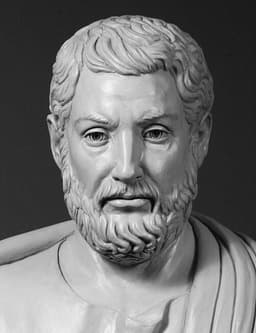
Cleisthenes
Politician · Ancient
78.3Total
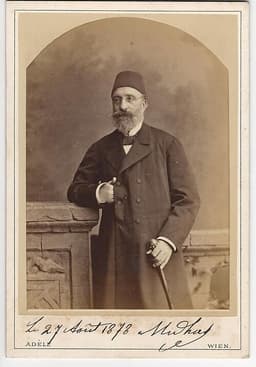
Midhat Pasha
Politician · Modern
64.3Total
Basic Information
Born
-570
1822
Died
-508
1884
Era
Ancient
Modern
Nationality
Greece
Ottoman Empire
Occupation
Politician
Politician
Civilization
Western
Middle Eastern
Score Comparison
Military (10%)
49.4
10.0
Political (20%)
62.7
78.0
Influence (20%)
92.0
82.0
Legacy (20%)
92.0
72.0
Leadership (15%)
72.0
62.0
Strategy (15%)
71.3
38.3
TOTAL
78.3
64.3
Cleisthenes — Complete Timeline
510 BC
Expulsion of the PeisistratidsPolitical Action◆ Major
Cleisthenes, with the support of the Alcmaeonid family and Spartan assistance, led the overthrow of the tyrant Hippias, son of Peisistratus. This ended the Peisistratid tyranny in Athens and opened the way for democratic reforms.
Tyranny OverthrownAthensSparta
Impact: nationalconstructive
508 BC
Reforms of CleisthenesReform
Cleisthenes reorganized the Athenian citizen body into ten new tribes based on demes, replacing the old four Ionian tribes. He established the Council of 500 (Boule) and introduced ostracism, creating a system of isonomia (equal rights) that is considered the foundation of Athenian democracy.
Athenian DemocracyConstitutional ReformAncient Greece
Impact: globalprogressive
507 BC
Introduction of OstracismReform◆ Major
Cleisthenes instituted ostracism, a procedure allowing Athenian citizens to vote annually to exile a prominent citizen deemed a threat to democracy for ten years. This mechanism aimed to prevent the rise of a new tyrant and stabilize the democratic system.
Athenian DemocracyPolitical MechanismExile
Impact: national
Midhat Pasha — Complete Timeline
1864 AD
Governorship of the Danube VilayetReform◆ Major
As governor of the Danube Vilayet from 1864 to 1868, Midhat Pasha implemented extensive reforms. He built roads, bridges, and schools, established a provincial bank, and promoted agricultural development. His administration became a model for Tanzimat provincial governance.
GovernorshipReformInfrastructure
Impact: regionalconstructive
1872 AD
Appointment as Grand VizierPolitical Action◆ Major
Midhat Pasha was appointed Grand Vizier for the first time in 1872. He had previously served as governor of the Danube Vilayet and was known for his reformist ideas. His tenure was short-lived due to opposition from conservative factions and the sultan.
AppointmentReformOttoman Politics
Impact: nationalconstructive
1876 AD
Proclamation of the Ottoman Constitution of 1876Reform
Midhat Pasha was the chief architect of the first Ottoman Constitution, proclaimed on December 23, 1876. The constitution established a bicameral parliament, guaranteed civil liberties, and limited the sultan's powers. It was a landmark in Ottoman modernization, though it was suspended in 1878.
ConstitutionReformParliament
Impact: nationalprogressive
1881 AD
Exile and TrialPolitical Action◆ Major
Midhat Pasha was arrested in 1881 on charges of involvement in the murder of Sultan Abd
ExileTrialExecution
Impact: nationaltragic
Expert Analysis
Cleisthenes vs Midhat Pasha
# The Architect and the Martyr: Cleisthenes and Midhat Pasha
On a winter morning in December 1876, a cannon salute boomed across Istanbul, announcing the promulgation of the Ottoman Empire’s first constitution. In the grand hall of the Dolmabahçe Palace, Midhat Pasha stood before the sultan, his heart pounding with the hope that this document would save a dying empire. Twenty-three centuries earlier, on the dusty slopes of the Athenian Acropolis, another reformer had stood before his fellow citizens, proposing a radical reorganization of their city-state that would give birth to democracy itself. Both men sought to reshape their worlds through law and institutions. One succeeded beyond measure; the other was strangled in exile. What separates the architect of a lasting legacy from a martyr whose work crumbled in his lifetime?
Origins
Cleisthenes was born around 570 BCE into the aristocratic Alcmaeonid family of Athens—a clan cursed by the gods, or so their enemies claimed, for a massacre of suppliants generations earlier. He grew up in a world of petty tyrants and fractious noble clans, where politics meant blood feuds and the common people had little say. His family had been exiled more than once, and Cleisthenes knew intimately the precariousness of power. The Greek world was a laboratory of political experimentation, with city-states trying monarchy, oligarchy, and tyranny in rapid succession. This volatile environment taught him that stability required more than force—it demanded a structure that could absorb conflict without collapsing.
Midhat Pasha was born in 1822 in Istanbul, the very heart of an empire that had ruled three continents for centuries. His father was a religious judge, and young Ahmed Şefik—later known as Midhat—grew up watching the Ottoman Empire decay. By the time of his birth, the empire was already the "Sick Man of Europe," losing provinces to nationalist revolts and Russian armies. The old order of absolute sultanic rule was failing, yet the alternatives—European-style constitutionalism and nationalism—threatened to tear the multi-ethnic empire apart. Midhat absorbed the reforms of the Tanzimat period, a generation of Ottoman statesmen who believed modernization could save the empire through law, education, and infrastructure.
Rise to Power
Cleisthenes entered the political stage as an aristocrat competing for influence in a city dominated by the tyrant Hippias. When the Alcmaeonids failed to overthrow Hippias by force, Cleisthenes bribed the Oracle at Delphi to tell every Spartan delegation that they must free Athens from tyranny. This manipulation of religion for political ends—shrewd, cynical, and effective—secured Spartan military assistance. In 510 BCE, the tyrant was expelled. But Athens did not immediately embrace democracy. Another aristocrat, Isagoras, seized power and expelled Cleisthenes. The people of Athens, however, rose in revolt, recalling Cleisthenes and forcing Isagoras to flee. It was a pivotal moment: the demos—the common citizens—had discovered their own power.
Midhat Pasha rose through the Ottoman bureaucracy, not through aristocratic birth but through competence. As governor of the Danube Vilayet from 1864 to 1868, he transformed a backward province into a model of reform, building roads, bridges, schools, and banks. He created a provincial council with Muslim and Christian members, proving that diverse communities could govern together. His success made him a national figure, but also a threat to conservative courtiers. In 1872, he became Grand Vizier for the first time, only to be dismissed after three months when his reformist zeal alarmed the sultan. He returned to power in 1876 during a crisis—rebellion in the Balkans, financial collapse, and the threat of European intervention. The empire needed a savior, and Midhat believed he had the answer.
Leadership & Governance
Cleisthenes' reforms of 508 BCE were nothing short of revolutionary. He abolished the old tribal divisions based on kinship and created ten new tribes based on demes—local neighborhoods. Every citizen was now defined by where he lived, not which noble family he belonged to. He created a Council of Five Hundred, chosen by lot, to prepare legislation for the Assembly of all citizens. And in 507 BCE, he introduced ostracism: a yearly vote allowing citizens to exile any man they deemed too powerful. This was not punishment for crime, but a safety valve against tyranny. The system was designed to balance the power of the rich and poor, the many and the few. It was messy, chaotic, and profoundly democratic.
Midhat Pasha's masterpiece was the Ottoman Constitution of 1876. It created a bicameral parliament, guaranteed basic rights, and promised equality for all subjects regardless of religion. The sultan would retain executive power, but his authority would be bounded by law. Midhat believed this would satisfy European demands for reform, unite the empire's diverse peoples, and modernize the state without destroying its Islamic character. He was a pragmatist, not a revolutionary. Where Cleisthenes broke with the past entirely, Midhat tried to graft constitutionalism onto an absolutist tree. The constitution was proclaimed on December 23, 1876, with Midhat as Grand Vizier. It was the high point of his career—and the beginning of his end.
Triumph & Tragedy
Cleisthenes' triumph was the survival and flourishing of Athenian democracy. Within a generation, Athens would defeat the Persian Empire at Marathon and Salamis, enter its Golden Age under Pericles, and produce the tragedies of Sophocles and the philosophy of Socrates. The system Cleisthenes created lasted nearly two centuries, with modifications, and became the template for democratic governance in the modern world. His tragedy was personal: after his reforms, he disappears from the historical record. We do not know how he died, whether he was honored or forgotten. The father of democracy left no biography, only a system.
Midhat Pasha's tragedy was brutal and public. The new sultan, Abdülhamid II, had never believed in constitutionalism. In February 1877, he exiled Midhat from Istanbul. When the Russo-Turkish War of 1877-78 ended in disaster, the sultan prorogued parliament and suspended the constitution. Midhat was arrested in 1881, charged with the murder of Sultan Abdülaziz—a crime almost certainly fabricated. After a show trial, he was sentenced to death, then commuted to exile in Taif, Arabia. In 1884, his jailers strangled him in his cell. The constitution he wrote remained a dead letter until the Young Turk Revolution of 1908.
Character & Destiny
Cleisthenes was a cold institutionalist. He did not seek to be loved or to lead; he sought to build a machine that would make leadership by any single man impossible. His personality is invisible in the historical record because he designed his reforms to outlast any individual, including himself. He understood that power must be distributed, not conquered.
Midhat Pasha was a passionate reformer who believed in the power of law to transform society. But he was also an optimist in a cynical age, trusting that a sultan would honor a constitution he had been forced to accept. His greatest weakness was his faith that the Ottoman system could reform itself from within. Cleisthenes worked with the demos; Midhat worked for the sultan. One trusted the people; the other trusted the state.
Legacy
Cleisthenes' legacy is incalculable. Every democracy that elects representatives, draws districts, or votes to remove a leader owes something to his reforms. The very word "democracy" comes from the Athens he helped create. His score of 87.6 in legacy reflects this: he is remembered not as a ruler, but as a founder.
Midhat Pasha's legacy is more ambiguous. His constitution was suppressed, and the empire he tried to save collapsed in 1922. Yet he is revered in modern Turkey and the Middle East as a martyr for constitutionalism. His scores of 73.9 in legacy and 81.0 in leadership reflect a man who failed in his own time but inspired future generations. Where Cleisthenes built a foundation, Midhat planted a seed that would germinate only after his death.
Conclusion
The difference between these two reformers is not one of intelligence or courage—both were brilliant and brave. It lies in the nature of the societies they tried to change. Cleisthenes worked in a small city-state where citizens could gather in one place, debate, and act. Midhat faced an immense, multi-ethnic empire where the sultan held absolute power and the people were subjects, not citizens. Cleisthenes could build with the people; Midhat had to build against the palace. One succeeded because he gave power away; the other failed because he tried to share power with a master who refused to share. In the end, the fate of reformers depends not only on their vision, but on whether the ground beneath them is ready to receive the seed.
Rankings
🥇
CleisthenesLeader
Mil: 49.4Pol: 62.7Inf: 92.0
78.3
🥈
Midhat Pasha
Mil: 10.0Pol: 78.0Inf: 82.0
64.3
+14.0 behind
How This Comparison Works
Algorithm
Each figure is scored on 6 dimensions (0—100 scale) based on structured historical data: Military (10%), Political (20%), Influence (20%), Legacy (20%), Leadership (15%), Strategy (15%). The weighted total produces the final ranking.
Data Sources
Scores are computed from structured sub-indicators in the database. Scale factors adjust for era (Ancient ×0.85, Modern ×1.0) and civilization size (Eastern ×1.05, Other ×0.80) to account for differences in population and military scale.
Maximum 3 Figures
Comparisons are limited to 2—3 figures to ensure readability and statistical meaningfulness.
Error Margins
±5 points per dimension — Sub-scores are derived from historical records with inherent uncertainty. Two figures within 5 points on a dimension should be considered roughly equivalent in that area.
Total Score Accuracy
±3 points overall — The weighted combination of 6 dimensions produces a total score with approximately ±3 points of uncertainty. Differences of less than 3 points are not statistically significant— the figures are effectively tied.
Known Limitations
- Historical records are incomplete and uneven across civilizations
- Figures from oral-tradition societies may be underrepresented
- Occupation labels can misclassify multi-role figures
- Scores measure capability and impact, not moral character
- Quantitative scoring is a comparison tool, not absolute truth
Capability Radar
Military (10%) — Battles & Warfare
Battles
58
0
Win Rate
62
0
Expansion
59
0
Political (20%) — Governance & Reform
Reform
95
85
Diplomacy
70
70
Economy
40
60
Influence (20%) — Cultural & Global Reach
Cultural
85
55
Global
85
55
Legacy (20%) — Historical Impact
Historical
90
70
Longevity
95
60
Leadership (15%) — Power & Stability
Tenure
30
65
Stability
60
40
Strategy (15%) — Tactics & Innovation
Strategy
62
0
Tactics
67
0
Reform
72
10
Similar Comparisons
Comments & Discussion
SPARTAN_FANBOI6/16/2026
Midhat Pasha had the stomach for reform that Cleisthenes could only dream of—imagine drafting a constitution for a multi-ethnic empire covering three continents, with 50 million subjects, against a sultan’s will. Cleisthenes tinkered with a city-state of maybe 30,000 citizens. Midhat fought the entire Ottoman establishment, wrote the 1876 Constitution, and got exiled for his trouble. That took real balls. Cleisthenes? He just outmaneuvered a few rich families. Give me the man who faced the Subli
数据侦探李明6/16/2026
别被Midhat Pasha的悲情故事骗了。他那部1876年宪法存续不到两年就被苏丹阿卜杜勒·哈米德二世废黜,而克利斯提尼的民主改革持续了近200年直到雅典被马其顿征服。数据上,克利斯提尼的部落改革覆盖了139个村社,重新划分了十个行政部落,打破了贵族世家对权力的垄断——这才是真正的制度创新,不是写几行漂亮话的短命宪法。
TERRACE_MASTER6/16/2026
Look, Cleisthenes didn't just write laws—he redrew the entire map of Athens. Those ten new tribes weren't just administrative units; they undermined the old aristocratic clans by mixing up populations from coastal, urban, and inland areas. It was social engineering on a scale that Midhat couldn't touch. Cleisthenes made sure that your neighbor in a political district could be a fisherman, a farmer, or a noble, forcing cooperation across class lines. That's genius. Midhat wrote a constitution—imp
古典学扫地僧6/16/2026
我认为真正的分水岭在于制度韧性。克利斯提尼的陶片放逐法(ostracism)每两年举行一次,允许公民投票驱逐威胁民主的政治人物——这个机制运行了大约70年才衰落。而Midhat Pasha的宪法连第一次议会都没能保护:1878年议会就被解散。政治制度若是无自卫能力,就是纸老虎。克利斯提尼知道要给民主装上牙齿,Midhat只想着讨好权力。高下立判。