Loading...
Chen Qun vs Chiang Kai-shek
Chiang Kai-shek leads by 4.7 pts · 2 figures compared
…
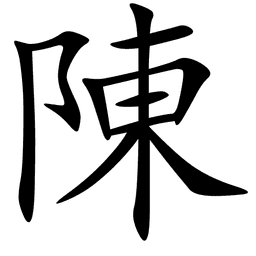
Chen Qun
Politician · Ancient
55.9Total
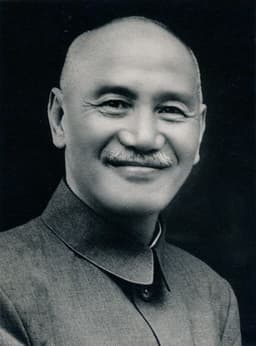
Chiang Kai-shek
Politician · Modern
60.6Total
Basic Information
Born
160
1887
Died
237
1975
Era
Ancient
Modern
Nationality
China
China
Occupation
Politician
Politician
Civilization
Eastern
Eastern
Score Comparison
Military (10%)
10.0
70.0
Political (20%)
72.0
62.7
Influence (20%)
40.0
65.0
Legacy (20%)
75.0
52.0
Leadership (15%)
72.0
66.0
Strategy (15%)
45.5
50.0
TOTAL
55.9
60.6
Chen Qun — Complete Timeline
220 AD
Proposed the Nine-rank SystemReform◆ Major
Chen Qun proposed the Nine-rank system for civil service appointments to Cao Pi, the first emperor of Wei. This system ranked candidates based on family background and personal merit, replacing the earlier recommendation system and becoming the standard for official selection in China for centuries.
Civil Service ReformWei DynastyBureaucracy
Impact: nationalconstructive
Advised Cao Pi on Legal CodeReform
Chen Qun assisted Cao Pi in drafting the new legal code for the Wei dynasty. He advocated for clearer laws and more consistent punishments, contributing to the legal framework that helped stabilize Wei's early rule.
Legal ReformWei DynastyLaw
Impact: nationalconstructive
226 AD
Served as Minister over the MassesPolitical Action
Chen Qun was appointed Minister over the Masses (Sikong) under Emperor Cao Rui of Wei. In this high-ranking position, he oversaw civil administration and continued to refine the implementation of the Nine-rank system, solidifying its role in Wei governance.
AppointmentWei DynastyGovernment
Impact: nationalconstructive
Chiang Kai-shek — Complete Timeline
1926 AD
Northern ExpeditionWar◆ Major
Chiang Kai-shek led the National Revolutionary Army in the Northern Expedition to defeat warlords and unify China. The campaign succeeded in capturing Beijing and establishing Kuomintang control over most of the country.
UnificationMilitary campaign
Impact: national
1927 AD
Shanghai Massacre of 1927Political Action◆ Major
Chiang Kai-shek ordered the purge of communists and leftists in Shanghai, resulting in thousands of deaths. This event broke the First United Front between the Kuomintang and the Communist Party, leading to civil war.
PurgeCivil war
Impact: nationaldestructive
1937 AD
Leadership during the Second Sino-Japanese WarWar
Chiang Kai-shek, as leader of the Kuomintang, commanded Chinese forces during the Second Sino-Japanese War. He directed the defense of Shanghai and the relocation of the capital to Chongqing, maintaining resistance against Japan.
World War IIChinese resistance
Impact: global
1945 AD
Signing of the Sino-Soviet Treaty of 1945Political Action◆ Major
Chiang Kai-shek signed the Sino-Soviet Treaty of Friendship and Alliance, which recognized Soviet interests in Manchuria in exchange for Soviet support against Japan. The treaty later facilitated Communist gains in the civil war.
DiplomacySoviet Union
Impact: global
1949 AD
Retreat to TaiwanPolitical Action
After losing the Chinese Civil War to the Communists, Chiang Kai-shek retreated to Taiwan with the remnants of the Kuomintang government and military. He established the Republic of China on Taiwan, claiming legitimacy over all of China.
TaiwanExileCold War
Impact: globaltragic
Expert Analysis
Chen Qun vs Chiang Kai-shek
### The Architect and the General: Two Visions of Order in Chaotic China
On a spring day in 1927, Chiang Kai-shek stood at a crossroads of blood and ambition. The streets of Shanghai ran red with the purge of his Communist allies, a decision that would haunt him for decades. Nearly seventeen centuries earlier, in the court of the fledgling Wei dynasty, Chen Qun presented a scroll to Emperor Cao Pi. It contained no orders for massacre, but a system—a bureaucratic ladder of nine ranks meant to select officials by merit, not birth. Both men sought to impose order on a fractured China. One turned to the sword; the other, to the scroll. Their divergent paths reveal how personality and circumstance can shape a nation’s fate as profoundly as any battle.
### Origins
Chiang Kai-shek was born in 1887, a child of the twilight of the Qing Empire. Raised in a modest merchant family in Zhejiang, he absorbed Confucian discipline but also the raw ambition of a generation watching their world crumble before Western guns and Japanese reforms. He trained in Japanese military academies, learning the art of modern warfare and the ruthlessness of power politics. His era was one of warlords, foreign concessions, and ideological war—a time when survival demanded iron will.
Chen Qun, born in 160, grew up in the late Eastern Han dynasty, a period of equal chaos. The Han court had collapsed into a patchwork of warlords, famine, and rebellion. His family, however, were scholar-officials, steeped in the classical texts. Chen Qun’s father had served the Han, and young Chen inherited a respect for law, procedure, and the civil service that had once held the empire together. Where Chiang learned to command armies, Chen learned to draft edicts.
### Rise to Power
Chiang’s ascent was explosive. In 1926, he launched the Northern Expedition, leading the National Revolutionary Army against a patchwork of warlords. It was a campaign of speed and brutality—a modern army smashing through old feudal strongholds. By 1927, he had reached Shanghai, the commercial heart of China. There, he made his infamous choice: to turn on his Communist allies in the Shanghai Massacre of April 1927. It was a political masterstroke that secured his dominance over the Kuomintang, but it also sowed the seeds of a civil war that would ultimately destroy him.
Chen Qun’s rise was quieter, but no less decisive. He served as a magistrate and advisor under the warlord Cao Cao, who valued his legal mind. When Cao Cao’s son, Cao Pi, forced the abdication of the last Han emperor in 220, Chen Qun was ready. That same year, he proposed the Nine-rank System—a radical reform that replaced hereditary privilege with a graded hierarchy of talent. Local officials would recommend candidates, who were then ranked from one to nine. It was not perfect, but it was a framework for meritocracy in an age of chaos.
### Leadership & Governance
Chiang Kai-shek led through personal command and military force. During the Second Sino-Japanese War (1937–1945), he directed Chinese resistance against Japan, a titanic struggle that cost millions of lives. He was a strategic gambler, often overestimating his own troops and underestimating his enemies. His political wisdom was brittle: he held the Kuomintang together through patronage and fear, but his regime was riddled with corruption. He attempted land reforms and economic modernization, but the war and his own authoritarian instincts undermined them.
Chen Qun governed through systems. As Minister over the Masses under Emperor Cao Rui, he helped draft a new legal code, advocating for clarity and consistency. His Nine-rank System became the backbone of Chinese civil service for centuries, surviving the fall of Wei and influencing later dynasties. He was not a general—his military score of 30.2 reflects that—but his political score of 69.8 and legacy of 89.6 show a man who built institutions, not armies.
### Triumph & Tragedy
Chiang’s greatest moment was the Sino-Soviet Treaty of 1945, which secured Soviet recognition of his government and temporary control of Manchuria. It was a diplomatic triumph that seemed to guarantee his postwar position. Yet it was also a tragedy: the treaty granted the Soviets concessions that would later allow the Chinese Communists to seize the region. By 1949, Chiang had lost the civil war, retreating to Taiwan with the remnants of his army. He died in 1975, a ruler of an island fortress, dreaming of a mainland he would never see again.
Chen Qun’s triumph was the Nine-rank System itself. It was adopted by the Wei dynasty and later refined by the Jin and beyond, becoming a model for selecting officials based on ability. His tragedy was that the system, over time, hardened into a hereditary caste—the great families of the Six Dynasties used it to entrench their own power. Yet the idea of meritocratic selection endured, echoing in the imperial examinations of later centuries.
### Character & Destiny
Chiang was a man of iron and fire—proud, suspicious, and stubborn. He believed in his own destiny as the unifier of China, but his personality drove him to purge allies and distrust subordinates. He could not share power, and that isolation cost him the trust of the intellectuals, the peasants, and even his own generals. His destiny was to be the man who almost unified China, but lost it to the Communists.
Chen Qun was a man of ink and order—patient, systematic, and pragmatic. He understood that power was not just in armies but in the ranks of officials who collected taxes, judged disputes, and kept the records. His destiny was to be remembered not for a battle, but for a bureaucratic form. It is a quieter glory, but a more lasting one.
### Legacy
Chiang Kai-shek is remembered today as a controversial figure: a fierce nationalist who fought Japan, but also a dictator who massacred his own people. On Taiwan, he is honored as the father of the island’s modern state; on the mainland, he is condemned as a reactionary. His scores—military 68.4, political 65.8—reflect a leader of middling effectiveness, but his influence score of 69.5 shows his enduring symbolic weight.
Chen Qun’s legacy is more abstract but more profound. The Nine-rank System shaped Chinese governance for four centuries, and its spirit influenced the civil service exams that lasted until 1905. His political score of 69.8 and legacy of 89.6 place him among the great institutional architects of Chinese history. He is not a household name, but his system touched the lives of millions.
### Conclusion
Two men, separated by seventeen centuries, each tried to build order from chaos. Chiang Kai-shek reached for the sword; Chen Qun reached for the scroll. The general won battles but lost a country; the bureaucrat proposed a system that outlasted dynasties. Their stories remind us that in the long arc of history, the quiet architects of institutions often shape the world more than the loud commanders of armies. The blood of Shanghai washed away in a few years; the ranks of the Nine-rank System echoed for centuries.
Rankings
🥇
Chiang Kai-shekLeader
Mil: 70.0Pol: 62.7Inf: 65.0
60.6
🥈
Chen Qun
Mil: 10.0Pol: 72.0Inf: 40.0
55.9
+4.7 behind
How This Comparison Works
Algorithm
Each figure is scored on 6 dimensions (0—100 scale) based on structured historical data: Military (10%), Political (20%), Influence (20%), Legacy (20%), Leadership (15%), Strategy (15%). The weighted total produces the final ranking.
Data Sources
Scores are computed from structured sub-indicators in the database. Scale factors adjust for era (Ancient ×0.85, Modern ×1.0) and civilization size (Eastern ×1.05, Other ×0.80) to account for differences in population and military scale.
Maximum 3 Figures
Comparisons are limited to 2—3 figures to ensure readability and statistical meaningfulness.
Error Margins
±5 points per dimension — Sub-scores are derived from historical records with inherent uncertainty. Two figures within 5 points on a dimension should be considered roughly equivalent in that area.
Total Score Accuracy
±3 points overall — The weighted combination of 6 dimensions produces a total score with approximately ±3 points of uncertainty. Differences of less than 3 points are not statistically significant— the figures are effectively tied.
Known Limitations
- Historical records are incomplete and uneven across civilizations
- Figures from oral-tradition societies may be underrepresented
- Occupation labels can misclassify multi-role figures
- Scores measure capability and impact, not moral character
- Quantitative scoring is a comparison tool, not absolute truth
Capability Radar
Military (10%) — Battles & Warfare
Battles
19
75
Win Rate
22
35
Expansion
25
65
Political (20%) — Governance & Reform
Reform
85
55
Diplomacy
50
60
Economy
60
40
Influence (20%) — Cultural & Global Reach
Cultural
70
60
Global
65
65
Legacy (20%) — Historical Impact
Historical
80
70
Longevity
85
55
Leadership (15%) — Power & Stability
Tenure
40
85
Stability
65
30
Strategy (15%) — Tactics & Innovation
Strategy
31
60
Tactics
32
55
Reform
36
50
Similar Comparisons
Comments & Discussion
数据刺客6/16/2026
看这个对比,我笑了。蒋介石在1927年屠杀5000人,结果呢?共产党跑了,内战打了二十年,他最后逃到台湾。陈群的九品中正制呢?数据告诉我们,它运行了三百多年,从曹魏到隋朝。300年 vs 20年,一个制度比一个将军活得久。别跟我谈什么意志和血性,我要看数字和结果。制度赢了,铁血输了。
江湖老炮6/16/2026
你们两个都太书生气了。蒋介石和陈群谁更厉害?都不是真英雄。陈群靠写论文当官,九品中正制让他当宰相,可后来曹操家族玩烂了,成世族垄断。蒋介石呢?黄埔系起家,1927年铲除共产党,但手下全是军阀心机,他根本没统一中国。就一句话:一个是纸上谈兵的文官,一个是打不赢仗的将军。半斤八两,别吹了。
Historian6446/16/2026
As a classics scholar, I see Chen Qun as the true architect of Chinese stability. His nine-rank system wasn't perfect—it eventually favored aristocrats—but it was a rational answer to chaos. Contrast with Chiang, who studied Japanese militarism and brought back its worst: authoritarianism and paranoia. Chen Qun wrote scrolls that lasted centuries; Chiang Kai-shek wrote death warrants that lasted a weekend. One built a ladder, the other a guillotine. Give me the bureaucrat over the bully.
Historian9956/16/2026
Chiang Kai-shek and Chen Qun are both trying to order chaos, but one does it with a gun and the other with a ink brush. Chiang's 1927 purge was a desperate power grab that killed 5,000 Communists in Shanghai, and it worked short-term, but it made him a pariah forever. Chen Qun's nine-rank system was slower—it took decades to stabilize Wei's bureaucracy. I'd rather have a system than a massacre. Merit over murder, every time. Chen Qun wins.
Chronicler18466/16/2026
Revisionist take: Chen Qun's nine-rank system wasn't about merit—it was about solidifying the Cao family's control over Wei. He wrote it with the emperor's seal in mind, not talent. Chiang Kai-shek's purge was equally cynical: he wiped out his allies to keep his own warlord balance. Both were power grabs dressed in "order" drag. Chen Qun gave us a caste system that crippled Chinese bureaucracy for centuries; Chiang gave us a dictatorship that couldn't win a civil war. Zero heroes here, just two