Loading...
Chiang Kai-shek vs Yuan Shikai
Chiang Kai-shek leads by 0.6 pts · 2 figures compared
…
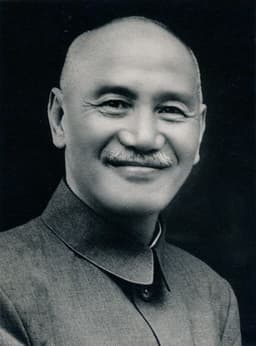
Chiang Kai-shek
Politician · Modern
60.6Total
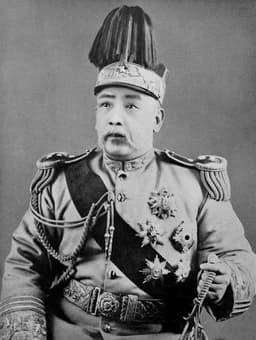
Yuan Shikai
Politician · Modern
60.0Total
Basic Information
Born
1887
1859
Died
1975
1916
Era
Modern
Modern
Nationality
China
China
Occupation
Politician
Politician
Civilization
Eastern
Eastern
Score Comparison
Military (10%)
70.0
45.0
Political (20%)
62.7
72.0
Influence (20%)
65.0
57.2
Legacy (20%)
52.0
54.0
Leadership (15%)
66.0
72.0
Strategy (15%)
50.0
61.2
TOTAL
60.6
60.0
Chiang Kai-shek — Complete Timeline
1926 AD
Northern ExpeditionWar◆ Major
Chiang Kai-shek led the National Revolutionary Army in the Northern Expedition to defeat warlords and unify China. The campaign succeeded in capturing Beijing and establishing Kuomintang control over most of the country.
UnificationMilitary campaign
Impact: national
1927 AD
Shanghai Massacre of 1927Political Action◆ Major
Chiang Kai-shek ordered the purge of communists and leftists in Shanghai, resulting in thousands of deaths. This event broke the First United Front between the Kuomintang and the Communist Party, leading to civil war.
PurgeCivil war
Impact: nationaldestructive
1937 AD
Leadership during the Second Sino-Japanese WarWar
Chiang Kai-shek, as leader of the Kuomintang, commanded Chinese forces during the Second Sino-Japanese War. He directed the defense of Shanghai and the relocation of the capital to Chongqing, maintaining resistance against Japan.
World War IIChinese resistance
Impact: global
1945 AD
Signing of the Sino-Soviet Treaty of 1945Political Action◆ Major
Chiang Kai-shek signed the Sino-Soviet Treaty of Friendship and Alliance, which recognized Soviet interests in Manchuria in exchange for Soviet support against Japan. The treaty later facilitated Communist gains in the civil war.
DiplomacySoviet Union
Impact: global
1949 AD
Retreat to TaiwanPolitical Action
After losing the Chinese Civil War to the Communists, Chiang Kai-shek retreated to Taiwan with the remnants of the Kuomintang government and military. He established the Republic of China on Taiwan, claiming legitimacy over all of China.
TaiwanExileCold War
Impact: globaltragic
Yuan Shikai — Complete Timeline
1901 AD
Command of the Beiyang ArmyReform◆ Major
Yuan Shikai took command of the Beiyang Army, the most modern military force in late Qing China. He expanded and trained the army, which became the basis for his political power and later dominated Chinese politics.
Military reformBeiyang Army
Impact: national
1912 AD
Appointed First President of the Republic of ChinaPolitical Action
Yuan Shikai became the first president of the Republic of China after negotiating the abdication of the Qing emperor. He used his control of the Beiyang Army to pressure the revolutionary government into accepting his leadership.
PresidencyRepublic of China
Impact: national
1915 AD
Declaration of the Empire of ChinaPolitical Action◆ Major
Yuan Shikai declared himself emperor of the Empire of China, attempting to restore the monarchy. This move sparked widespread opposition from provincial leaders and foreign powers, leading to the collapse of his regime.
Monarchy restorationPolitical crisis
Impact: nationaldestructive
Signing of the Twenty-One DemandsPolitical Action◆ Major
Yuan Shikai accepted most of Japan's Twenty-One Demands, which expanded Japanese influence in China. The agreement granted Japan economic rights in Manchuria and Shandong, and was seen as a national humiliation.
DiplomacyJapanese imperialism
Impact: globaltragic
1916 AD
Death and Collapse of the Beiyang GovernmentPolitical Action◆ Major
Yuan Shikai died of uremia, leaving no clear successor. His death led to the fragmentation of the Beiyang Army into warlord factions, plunging China into a period of civil war and political instability.
Warlord eraPolitical fragmentation
Impact: nationaltragic
Expert Analysis
Yuan Shikai vs Chiang Kai-shek
# The Two Faces of Modern China: Yuan Shikai and Chiang Kai-shek
In the winter of 1915, a portly man in dragon robes ascended a makeshift throne in Beijing’s Forbidden City, declaring himself emperor of a new dynasty. Thirty-four years later, another man stood on a windswept airfield in Chengdu, boarding a plane for an island he had never called home. Both men had held China’s fate in their hands. Both had failed. But their failures were of fundamentally different kinds—one a tragedy of ambition, the other a tragedy of circumstance. Why did Yuan Shikai’s empire crumble in eighty-three days, while Chiang Kai-shek’s government lasted decades before its final retreat? The answer lies not in their similarities, but in the chasm between them.
Origins
Yuan Shikai was born in 1859 into a world that was already cracking. The Qing Dynasty, ancient and brittle, faced foreign cannons and internal rebellions. Yuan grew up in Henan province, the son of a minor official, and failed the civil service exams—a humiliation that might have doomed a lesser man. Instead, he bought a minor military post, and from there, he climbed. His China was one of opium wars and unequal treaties, a place where survival meant adaptation.
Chiang Kai-shek, born in 1887 in Zhejiang province, entered a different China. The Qing was gasping its last breaths; revolution was in the air. His father died when he was young, and his mother raised him with stern discipline. Where Yuan had learned to navigate a decaying bureaucracy, Chiang studied at military academies in Baoding and Tokyo, absorbing the samurai ethos of discipline and the revolutionary fervor of Sun Yat-sen’s exiled followers. Yuan was a product of the old order’s twilight; Chiang was a child of the storm that would destroy it.
Rise to Power
Yuan Shikai’s ascent was a masterclass in opportunism. In 1901, he took command of the Beiyang Army, China’s most modern military force, and made it his personal instrument. He expanded its ranks, trained its soldiers in Western methods, and bound its officers to him with loyalty and patronage. When the Qing Dynasty collapsed in 1911, Yuan held the only real army in China. He did not fight for the republic; he negotiated it. In February 1912, he forced the abdication of the six-year-old emperor and became the first president of the Republic of China. It was a bloodless coup dressed as a compromise.
Chiang Kai-shek’s path was different. He rose not through a single institution but through a revolutionary party. After Sun Yat-sen’s death in 1925, Chiang seized control of the Kuomintang (KMT) and its military academy at Whampoa. In 1926, he launched the Northern Expedition, a whirlwind campaign that smashed the warlords and nominally unified China. But his power was always contested. He was a party leader, not a dynasty builder; his authority depended on balancing factions, generals, and foreign patrons. Yuan commanded through loyalty; Chiang commanded through manipulation.
Leadership & Governance
Yuan Shikai ruled as a modernizer with an autocrat’s soul. He centralized the government, reformed the bureaucracy, and built railways. But his vision was narrow: he wanted a strong China under his personal control. In 1915, accepting most of Japan’s Twenty-One Demands, he traded sovereignty for recognition—a deal that granted Japan economic rights in Manchuria and Shandong. It was a pragmatic betrayal that stained his reputation. Then came the fatal miscalculation: in December 1915, he declared himself emperor of the Empire of China. The provinces erupted in revolt. His own Beiyang generals abandoned him. Within months, he rescinded the declaration, and in June 1916, he died of uremia, his empire a phantom.
Chiang Kai-shek’s leadership was more complex. He was a military strategist of genuine talent—his score of 72.0 in strategy reflects real achievements. During the Second Sino-Japanese War (1937–1945), he directed Chinese forces against a far superior Japanese army, holding the line through sheer attrition and American aid. But his political wisdom was flawed. In 1927, he ordered the Shanghai Massacre, purging thousands of communists and leftists. The brutality secured his power but created an enemy that would never forgive. He signed the Sino-Soviet Treaty of 1945, ceding Soviet interests in Manchuria—a deal as pragmatic as Yuan’s Twenty-One Demands, and as costly.
Triumph & Tragedy
Yuan’s greatest moment was his rise: the man who ended 2,000 years of imperial rule with a signature. His tragedy was his fall: a leader who could not see that the age of emperors was over. He died surrounded by papers and plans, his body failing as his dream dissolved.
Chiang’s triumph was survival. He led China through eight years of war, kept the KMT government intact, and stood as the face of Chinese resistance. His tragedy was the Chinese Civil War. By 1949, his armies were shattered by Mao’s communists, his government corrupt and exhausted. He retreated to Taiwan, a remnant of a lost cause. He lived another twenty-six years, ruling an island that called itself China, but his mainland was gone.
Character & Destiny
Yuan Shikai was a man of immense will and narrow vision. He believed in power as a personal possession, not an institution. His political score of 74.2 reflects skill, but his legacy score of 65.9 reveals the cost: he built nothing that outlasted him. His death left the Beiyang Army fragmented into warlord cliques, plunging China into a decade of chaos.
Chiang Kai-shek was a man of discipline and paranoia. His leadership score of 80.3 echoes Yuan’s 81.3, but his political score of 65.8 is lower. He was a better soldier than a statesman. He could command an army but not a nation. His character—rigid, suspicious, unwilling to share power—alienated allies and bred corruption. Where Yuan’s ambition destroyed his legacy, Chiang’s inflexibility preserved it only in exile.
Legacy
Yuan Shikai is remembered as a traitor and a fool—the man who sold China to Japan and tried to resurrect the monarchy. It is an unfair verdict, but not an untrue one. He was a transitional figure who failed to transition.
Chiang Kai-shek is remembered differently. In Taiwan, he is a founding father, the defender of Free China. On the mainland, he is a footnote, a loser in history’s great struggle. His scores—influence 69.5, legacy 67.5—reflect this ambiguity. He was not a visionary, but he was not a caricature. He held China together when it could have shattered, and he lost it when he could not let go.
Conclusion
Two men, two failures, two Chinas. Yuan Shikai died in Beijing, his dream of empire dead with him. Chiang Kai-shek died in Taipei, his dream of return buried in a mountain shrine. Both believed they were China’s saviors. Both were wrong. But their errors teach us something: that power without legitimacy is a house of cards, and that the worst fate for a leader is not defeat, but to be forgotten as irrelevant. Yuan is remembered as a cautionary tale; Chiang, as a might-have-been. In the end, history judges not by intention, but by what remains.
Rankings
🥇
Chiang Kai-shekLeader
Mil: 70.0Pol: 62.7Inf: 65.0
60.6
🥈
Yuan Shikai
Mil: 45.0Pol: 72.0Inf: 57.2
60.0
+0.6 behind
How This Comparison Works
Algorithm
Each figure is scored on 6 dimensions (0—100 scale) based on structured historical data: Military (10%), Political (20%), Influence (20%), Legacy (20%), Leadership (15%), Strategy (15%). The weighted total produces the final ranking.
Data Sources
Scores are computed from structured sub-indicators in the database. Scale factors adjust for era (Ancient ×0.85, Modern ×1.0) and civilization size (Eastern ×1.05, Other ×0.80) to account for differences in population and military scale.
Maximum 3 Figures
Comparisons are limited to 2—3 figures to ensure readability and statistical meaningfulness.
Error Margins
±5 points per dimension — Sub-scores are derived from historical records with inherent uncertainty. Two figures within 5 points on a dimension should be considered roughly equivalent in that area.
Total Score Accuracy
±3 points overall — The weighted combination of 6 dimensions produces a total score with approximately ±3 points of uncertainty. Differences of less than 3 points are not statistically significant— the figures are effectively tied.
Known Limitations
- Historical records are incomplete and uneven across civilizations
- Figures from oral-tradition societies may be underrepresented
- Occupation labels can misclassify multi-role figures
- Scores measure capability and impact, not moral character
- Quantitative scoring is a comparison tool, not absolute truth
Capability Radar
Military (10%) — Battles & Warfare
Battles
75
45
Win Rate
35
55
Expansion
65
50
Political (20%) — Governance & Reform
Reform
55
55
Diplomacy
60
70
Economy
40
50
Influence (20%) — Cultural & Global Reach
Cultural
60
40
Global
65
35
Legacy (20%) — Historical Impact
Historical
70
65
Longevity
55
40
Leadership (15%) — Power & Stability
Tenure
85
60
Stability
30
30
Strategy (15%) — Tactics & Innovation
Strategy
60
65
Tactics
55
60
Reform
50
80
Similar Comparisons
Comments & Discussion
No comments yet. Be the first to share your thoughts!