Loading...
Chiang Kai-shek vs Otto von Bismarck
Otto von Bismarck leads by 5.2 pts · 2 figures compared
…
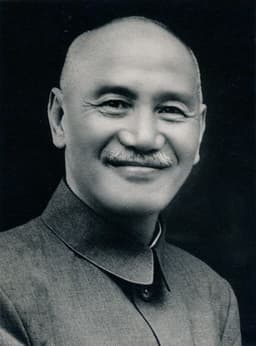
Chiang Kai-shek
Politician · Modern
60.6Total
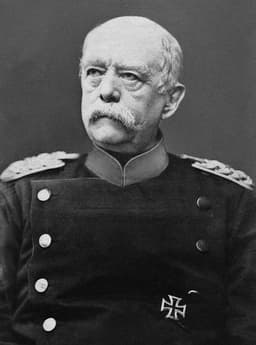
Otto von Bismarck
Politician · Modern
65.8Total
Basic Information
Born
1887
1815
Died
1975
1898
Era
Modern
Modern
Nationality
China
Germany
Occupation
Politician
Politician
Civilization
Eastern
Western
Score Comparison
Military (10%)
70.0
55.0
Political (20%)
62.7
85.0
Influence (20%)
65.0
82.0
Legacy (20%)
52.0
40.0
Leadership (15%)
66.0
80.0
Strategy (15%)
50.0
50.0
TOTAL
60.6
65.8
Chiang Kai-shek — Complete Timeline
1926 AD
Northern ExpeditionWar◆ Major
Chiang Kai-shek led the National Revolutionary Army in the Northern Expedition to defeat warlords and unify China. The campaign succeeded in capturing Beijing and establishing Kuomintang control over most of the country.
UnificationMilitary campaign
Impact: national
1927 AD
Shanghai Massacre of 1927Political Action◆ Major
Chiang Kai-shek ordered the purge of communists and leftists in Shanghai, resulting in thousands of deaths. This event broke the First United Front between the Kuomintang and the Communist Party, leading to civil war.
PurgeCivil war
Impact: nationaldestructive
1937 AD
Leadership during the Second Sino-Japanese WarWar
Chiang Kai-shek, as leader of the Kuomintang, commanded Chinese forces during the Second Sino-Japanese War. He directed the defense of Shanghai and the relocation of the capital to Chongqing, maintaining resistance against Japan.
World War IIChinese resistance
Impact: global
1945 AD
Signing of the Sino-Soviet Treaty of 1945Political Action◆ Major
Chiang Kai-shek signed the Sino-Soviet Treaty of Friendship and Alliance, which recognized Soviet interests in Manchuria in exchange for Soviet support against Japan. The treaty later facilitated Communist gains in the civil war.
DiplomacySoviet Union
Impact: global
1949 AD
Retreat to TaiwanPolitical Action
After losing the Chinese Civil War to the Communists, Chiang Kai-shek retreated to Taiwan with the remnants of the Kuomintang government and military. He established the Republic of China on Taiwan, claiming legitimacy over all of China.
TaiwanExileCold War
Impact: globaltragic
Otto von Bismarck — Complete Timeline
1870 AD
Franco-Prussian WarWar
Bismarck provoked France into declaring war by editing the Ems Dispatch to appear insulting. The resulting conflict saw Prussia and its allies decisively defeat France, leading to the fall of Napoleon III, the capture of Paris, and the annexation of Alsace-Lorraine.
WarProvocationAnnexation
Impact: globaldestructive
1871 AD
Unification of Germany ProclaimedPolitical Action
Following the Franco-Prussian War, Bismarck orchestrated the proclamation of the German Empire in the Hall of Mirrors at Versailles. King Wilhelm I of Prussia was declared German Emperor, uniting the German states under Prussian leadership and establishing the Second Reich.
UnificationGerman EmpireNationalism
Impact: globalconstructive
1878 AD
Enactment of the Anti-Socialist LawsPolitical Action◆ Major
After two assassination attempts on Kaiser Wilhelm I, Bismarck pushed through laws banning socialist organizations, publications, and meetings. The laws remained in force until 1890, suppressing the Social Democratic Party while Bismarck simultaneously introduced welfare reforms to undercut its appeal.
RepressionSocialismWelfare State
Impact: nationaldestructive
Congress of BerlinPolitical Action◆ Major
Bismarck hosted the Congress of Berlin to revise the Treaty of San Stefano and resolve the Eastern Crisis. He acted as 'honest broker,' reducing Russian gains, granting independence to Romania, Serbia, and Montenegro, and placing Bosnia-Herzegovina under Austro-Hungarian administration.
DiplomacyBalkansBalance of Power
Impact: global
1883 AD
Establishment of the Welfare StateReform◆ Major
Bismarck introduced the Health Insurance Bill (1883), Accident Insurance Bill (1884), and Old Age and Disability Insurance Bill (1889). These laws created the first modern welfare state, providing workers with social security and aiming to reduce support for socialist movements.
Social ReformWelfareInsurance
Impact: globalprogressive
1890 AD
Dismissal as ChancellorPolitical Action◆ Major
Emperor Wilhelm II forced Bismarck to resign due to policy disagreements, particularly over anti-socialist laws and foreign policy. Bismarck's departure marked the end of an era, leading to a more aggressive German foreign policy and the eventual unraveling of his alliance system.
ResignationWilhelm IIPolicy Shift
Impact: global
Expert Analysis
Otto von Bismarck vs Chiang Kai-shek
# The Iron Chancellor and the Generalissimo: Two Paths to Power, Two Destinies
On a January morning in 1871, Otto von Bismarck stood in the Hall of Mirrors at Versailles, watching as German princes proclaimed the new German Empire. The air was thick with triumph and the scent of French defeat. Half a world away and seventy-eight years later, another man would stand on a beach in Taiwan, watching the last boats from the mainland disappear over the horizon. Chiang Kai-shek had lost China. Two men who sought to forge nations from chaos—one succeeded beyond his wildest dreams, the other saw his life’s work crumble into exile. What made the difference?
Origins
Bismarck was born in 1815 into the Prussian Junker class, a landed aristocracy that valued duty, order, and military service. His father was a country squire; his mother came from a bourgeois family of scholars and officials. The young Bismarck was a wild student—dueling, drinking, and racking up debts—but he possessed a razor-sharp mind and an instinct for power that would later earn him the nickname “the Iron Chancellor.” He entered politics reluctantly, as a deputy in the Prussian parliament, but once there, he discovered his element: the ruthless game of statecraft.
Chiang Kai-shek, born in 1887 in Zhejiang province, came from a merchant family that had seen better days. His father died when he was young, and Chiang grew up in an atmosphere of decline and insecurity. He was sent to military academies—first in China, then in Japan—where he absorbed the harsh discipline of the samurai and the revolutionary fervor of Sun Yat-sen’s followers. Unlike Bismarck, who inherited a stable state, Chiang inherited a fractured civilization: the Qing dynasty had fallen, warlords carved up the country, and foreign powers held treaty ports along the coast.
Rise to Power
Bismarck’s ascent was methodical, almost patient. He served as ambassador to Russia and France, learning the subtleties of European diplomacy. In 1862, King Wilhelm I of Prussia appointed him Minister President to resolve a constitutional crisis over military funding. Bismarck famously told the parliament, “The great questions of the day will not be decided by speeches and majority decisions—but by blood and iron.” He proceeded to outmaneuver his opponents, dissolve parliament, and govern without a budget. His path was one of manipulation, not revolution.
Chiang’s rise was forged in violence. In 1926, he led the Northern Expedition—a military campaign to crush the warlords who had torn China apart. He was not a brilliant tactician, but he was a determined organizer. The expedition succeeded, and by 1928, Chiang controlled most of China. But his power rested on a fragile coalition of generals, secret societies, and foreign backers. Where Bismarck built a state on Prussian bureaucracy and military discipline, Chiang built a regime on personal loyalty and patronage.
Leadership & Governance
Bismarck governed through a combination of fear and foresight. He engineered the Franco-Prussian War in 1870 by editing the Ems Dispatch to provoke France into declaring war—a masterstroke of diplomatic deception. After victory, he unified Germany and became its first Chancellor. But his genius lay not in conquest alone. In 1883, he introduced the world’s first welfare state—health insurance, accident insurance, and old-age pensions—not out of compassion, but to undercut the appeal of socialism. He also enacted the Anti-Socialist Laws in 1878, banning socialist organizations while stealing their policies. This was Bismarck’s method: crush your enemies, then co-opt their ideas.
Chiang faced a far more complex task. He led China during the Second Sino-Japanese War (1937–1945), directing a vast and poorly equipped army against a ruthless invader. He chose to preserve his forces for a final showdown with the Communists, a decision that cost him popular support. His regime was plagued by corruption, inflation, and inefficiency. In 1945, he signed the Sino-Soviet Treaty, recognizing Soviet interests in Manchuria—a desperate gamble that failed. Where Bismarck built a state that outlasted him, Chiang built a regime that rotted from within.
Triumph & Tragedy
Bismarck’s greatest triumph was the unification of Germany in 1871, a feat that reshaped Europe. His greatest tragedy was his dismissal in 1890 by the young Emperor Wilhelm II, who could not tolerate a chancellor who overshadowed him. Bismarck left office bitter, but his creation—a unified, industrialized Germany—endured.
Chiang’s greatest triumph was leading China through eight years of war against Japan, a struggle that earned him a place among the Allied leaders. His greatest tragedy was the loss of the Chinese Civil War in 1949, when Mao Zedong’s Communists drove him to Taiwan. He spent his remaining years on a small island, ruling a rump state that the world refused to recognize as China.
Character & Destiny
Bismarck was a pragmatist, not an ideologue. He once said, “Politics is the art of the possible.” He knew when to fight and when to compromise, when to crush and when to conciliate. His personality—cold, calculating, and supremely confident—shaped every decision. He believed in power, not principles, and that belief allowed him to create a nation.
Chiang was a nationalist and a Confucian, bound by a sense of duty but also by a rigid worldview. He saw the Communists as traitors, the Japanese as barbarians, and the Americans as necessary but unreliable allies. His personality—proud, suspicious, and stubborn—led him to make fatal errors. He refused to reform his regime, believing that loyalty mattered more than competence. That belief cost him China.
Legacy
Bismarck is remembered as the architect of modern Germany, a statesman of almost mythical cunning. His welfare state became a model for the modern social contract. Yet his legacy is ambiguous: the militarism and authoritarianism he embedded in German politics helped pave the way for two world wars.
Chiang is remembered as a tragic figure—the man who lost China. In Taiwan, he is honored as the father of the island’s development. In mainland China, he is dismissed as a corrupt dictator. His legacy is a cautionary tale: power without reform is a house built on sand.
Conclusion
Bismarck and Chiang both sought to build nations in an age of empires. Bismarck succeeded because he understood that power must be institutionalized, not personalized. He created a state that could function without him. Chiang failed because he built a regime that depended entirely on him. When the Generalissimo faltered, his regime collapsed. The difference between triumph and tragedy was not luck—it was the ability to see that the greatest leaders are those who make themselves unnecessary.
Rankings
🥇
Otto von BismarckLeader
Mil: 55.0Pol: 85.0Inf: 82.0
65.8
🥈
Chiang Kai-shek
Mil: 70.0Pol: 62.7Inf: 65.0
60.6
+5.2 behind
How This Comparison Works
Algorithm
Each figure is scored on 6 dimensions (0—100 scale) based on structured historical data: Military (10%), Political (20%), Influence (20%), Legacy (20%), Leadership (15%), Strategy (15%). The weighted total produces the final ranking.
Data Sources
Scores are computed from structured sub-indicators in the database. Scale factors adjust for era (Ancient ×0.85, Modern ×1.0) and civilization size (Eastern ×1.05, Other ×0.80) to account for differences in population and military scale.
Maximum 3 Figures
Comparisons are limited to 2—3 figures to ensure readability and statistical meaningfulness.
Error Margins
±5 points per dimension — Sub-scores are derived from historical records with inherent uncertainty. Two figures within 5 points on a dimension should be considered roughly equivalent in that area.
Total Score Accuracy
±3 points overall — The weighted combination of 6 dimensions produces a total score with approximately ±3 points of uncertainty. Differences of less than 3 points are not statistically significant— the figures are effectively tied.
Known Limitations
- Historical records are incomplete and uneven across civilizations
- Figures from oral-tradition societies may be underrepresented
- Occupation labels can misclassify multi-role figures
- Scores measure capability and impact, not moral character
- Quantitative scoring is a comparison tool, not absolute truth
Capability Radar
Military (10%) — Battles & Warfare
Battles
75
60
Win Rate
35
70
Expansion
65
80
Political (20%) — Governance & Reform
Reform
55
90
Diplomacy
60
95
Economy
40
80
Influence (20%) — Cultural & Global Reach
Cultural
60
65
Global
65
75
Legacy (20%) — Historical Impact
Historical
70
85
Longevity
55
70
Leadership (15%) — Power & Stability
Tenure
85
85
Stability
30
70
Strategy (15%) — Tactics & Innovation
Strategy
60
85
Tactics
55
55
Reform
50
75
Similar Comparisons
Comments & Discussion
RealpolitikMaster6/16/2026
Bismarck mastered the art of limited war—three quick, decisive campaigns against Denmark, Austria, and France that unified Germany under Prussian leadership. Chiang, by contrast, got bogged down in existential, total wars against Japan and Mao's communists simultaneously. The Prussian genius knew when to strike and, crucially, when to stop. The Generalissimo fought everywhere at once and won nowhere permanently. Timing isn't everything in statecraft—it's the only thing.
数据侦探6/16/2026
数据不会说谎:1871年德意志帝国建立后,德国钢铁产量在20年内翻了五番,而1949年蒋介石败退台湾时,他控制的中国领土GDP已跌至历史冰点。比军事策略更致命的是经济管理能力。俾斯麦用铁路网和关税同盟织就统一的经济网,蒋先生却让法币贬值到煮饭不如烧钱热。历史总把输家归咎于天时,却常常忘记了地利的经营。
ClassicsNerd6/16/2026
Both men claimed to forge nations from chaos, but their models differed fundamentally. Bismarck's 1871 constitution was a deliberately crafted system of Prussian hegemony, with a carefully balanced Bundesrat and Reichstag designed to preserve Junker power indefinitely. Chiang's template? A vague mishmash of Sun Yat-sen's Three Principles of the People, Confucian paternalism, and military dictatorship. One built a state that functioned for five decades; the other built a personality cult that col
历史私语者6/16/2026
让我们谈一个常被忽略的细节:俾斯麦在1866年普奥战争后坚决反对吞并萨克森,因为"我们需要一个感激的盟友而非怨恨的臣民"。反观蒋介石在1928年北伐后的裁军会议上,直接削夺了冯玉祥、阎锡山等军阀的地盘,逼得他们倒戈。俾斯麦懂得赢家也要留面子,蒋先生却把每个潜在盟友都逼成了敌人。外交手腕的差距,早在胜负分出前就已注定。
RevisionistStrikes6/16/2026
Spare me the "Iron Chancellor" mythologizing. Bismarck's German Empire was a powder keg of unresolved tensions: Prussian authoritarianism, Catholic-Protestant Kulturkampf, suppression of Social Democrats, and Alsace-Lorraine resentment that directly paved the road to 1914. Meanwhile, Chiang's catastrophic failures—the 1938 Yellow River flood that drowned thousands of Chinese villages to slow the Japanese, the Shanghai stock market collapse of 1947—are conveniently chalked up to "circumstances."