Loading...
Chiang Kai-shek vs Cleisthenes
Cleisthenes leads by 17.7 pts · 2 figures compared
…
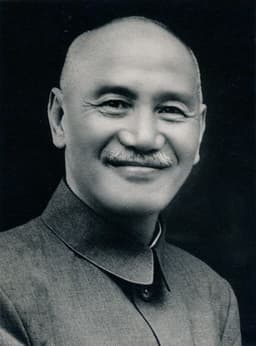
Chiang Kai-shek
Politician · Modern
60.6Total
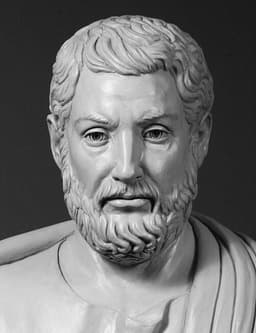
Cleisthenes
Politician · Ancient
78.3Total
Basic Information
Born
1887
-570
Died
1975
-508
Era
Modern
Ancient
Nationality
China
Greece
Occupation
Politician
Politician
Civilization
Eastern
Western
Score Comparison
Military (10%)
70.0
49.4
Political (20%)
62.7
62.7
Influence (20%)
65.0
92.0
Legacy (20%)
52.0
92.0
Leadership (15%)
66.0
72.0
Strategy (15%)
50.0
71.3
TOTAL
60.6
78.3
Chiang Kai-shek — Complete Timeline
1926 AD
Northern ExpeditionWar◆ Major
Chiang Kai-shek led the National Revolutionary Army in the Northern Expedition to defeat warlords and unify China. The campaign succeeded in capturing Beijing and establishing Kuomintang control over most of the country.
UnificationMilitary campaign
Impact: national
1927 AD
Shanghai Massacre of 1927Political Action◆ Major
Chiang Kai-shek ordered the purge of communists and leftists in Shanghai, resulting in thousands of deaths. This event broke the First United Front between the Kuomintang and the Communist Party, leading to civil war.
PurgeCivil war
Impact: nationaldestructive
1937 AD
Leadership during the Second Sino-Japanese WarWar
Chiang Kai-shek, as leader of the Kuomintang, commanded Chinese forces during the Second Sino-Japanese War. He directed the defense of Shanghai and the relocation of the capital to Chongqing, maintaining resistance against Japan.
World War IIChinese resistance
Impact: global
1945 AD
Signing of the Sino-Soviet Treaty of 1945Political Action◆ Major
Chiang Kai-shek signed the Sino-Soviet Treaty of Friendship and Alliance, which recognized Soviet interests in Manchuria in exchange for Soviet support against Japan. The treaty later facilitated Communist gains in the civil war.
DiplomacySoviet Union
Impact: global
1949 AD
Retreat to TaiwanPolitical Action
After losing the Chinese Civil War to the Communists, Chiang Kai-shek retreated to Taiwan with the remnants of the Kuomintang government and military. He established the Republic of China on Taiwan, claiming legitimacy over all of China.
TaiwanExileCold War
Impact: globaltragic
Cleisthenes — Complete Timeline
510 BC
Expulsion of the PeisistratidsPolitical Action◆ Major
Cleisthenes, with the support of the Alcmaeonid family and Spartan assistance, led the overthrow of the tyrant Hippias, son of Peisistratus. This ended the Peisistratid tyranny in Athens and opened the way for democratic reforms.
Tyranny OverthrownAthensSparta
Impact: nationalconstructive
508 BC
Reforms of CleisthenesReform
Cleisthenes reorganized the Athenian citizen body into ten new tribes based on demes, replacing the old four Ionian tribes. He established the Council of 500 (Boule) and introduced ostracism, creating a system of isonomia (equal rights) that is considered the foundation of Athenian democracy.
Athenian DemocracyConstitutional ReformAncient Greece
Impact: globalprogressive
507 BC
Introduction of OstracismReform◆ Major
Cleisthenes instituted ostracism, a procedure allowing Athenian citizens to vote annually to exile a prominent citizen deemed a threat to democracy for ten years. This mechanism aimed to prevent the rise of a new tyrant and stabilize the democratic system.
Athenian DemocracyPolitical MechanismExile
Impact: national
Expert Analysis
Cleisthenes vs Chiang Kai-shek
# The Architect of Unity and the Father of Democracy
In the winter of 1926, a stern-faced military commander led his troops north from Canton, determined to smash the warlords who had carved China into feuding fiefdoms. Twenty-five centuries earlier, on the sun-baked slopes of Athens, a nobleman named Cleisthenes stood before the citizen assembly, proposing a radical reorganization of political life that would give ordinary men a voice. One man sought to unify a fractured nation through force; the other sought to empower a fractured people through law. Both lived in eras of chaos and transformation. Both left marks so deep that their worlds were never the same. Yet their paths diverged in ways that reveal the profound difference between building a state and building a democracy.
Origins
Chiang Kai-shek was born in 1887 in Fenghua, a small town in Zhejiang province, into a family of salt merchants whose fortunes had faded. His father died when he was nine, and his mother, a devout Buddhist, raised him with a fierce sense of discipline and ambition. The China of his youth was a civilization in collapse—the Qing Dynasty tottered, foreign powers carved out spheres of influence, and rebellion simmered everywhere. Chiang enrolled in a military academy in Baoding, then traveled to Japan for training, absorbing the nationalist fervor that would define his generation. He was a man forged by war, shaped by the conviction that only strength could restore China’s dignity.
Cleisthenes, born around 570 BCE, belonged to the aristocratic Alcmaeonid family of Athens, a clan both powerful and cursed by a history of sacrilege and exile. His Athens was a small city-state emerging from a period of aristocratic feuds and popular unrest. The reforms of Solon had loosened the grip of birthright, but tyranny had returned under Peisistratus and his sons. Cleisthenes grew up in a world where political power was personal, violent, and inherited. Where Chiang learned to command armies, Cleisthenes learned to manipulate factions and alliances. His weapon was not the sword but the vote.
Rise to Power
Chiang’s ascent was meteoric and bloody. He became commandant of the Whampoa Military Academy in 1924, training a generation of officers loyal to him and to the Kuomintang. When the Northern Expedition began in 1926, Chiang led the National Revolutionary Army south to north, smashing warlord armies and proclaiming unification. But his rise was also a story of ruthlessness. In 1927, he ordered the Shanghai Massacre, a purge of communists and leftists that left thousands dead in the streets. It was a calculated act of terror that eliminated rivals and secured his dominance. Chiang understood that power in China required not just victory but elimination.
Cleisthenes rose differently. In 510 BCE, with Spartan help, he helped expel the tyrant Hippias, ending the Peisistratid dynasty. But power did not come easily. His rival Isagoras, backed by the Spartan king Cleomenes, seized control and exiled Cleisthenes. The people of Athens, however, rose in revolt against Isagoras and recalled Cleisthenes. He returned not as a conqueror but as a reformer, his authority rooted in the will of the assembly. Where Chiang crushed his enemies, Cleisthenes won by appealing to the citizens themselves.
Leadership & Governance
Chiang Kai-shek ruled China through a blend of military command, personal networks, and nationalist ideology. During the Second Sino-Japanese War from 1937 to 1945, he directed Chinese forces against a brutal Japanese invasion, relocating the capital to Chongqing and holding the nation together through sheer will. His strategy was to trade space for time, drawing the Japanese deep into China while waiting for foreign intervention. Yet his leadership was marred by corruption, factionalism, and a tendency to conserve his best troops for the coming civil war against the Communists. He was a brilliant tactician but a flawed statesman, unable to build the institutions that could outlast him.
Cleisthenes, by contrast, governed through architecture rather than command. In 508 BCE, he reorganized the Athenian citizen body into ten new tribes based on demes—local villages and neighborhoods—shattering the old aristocratic clans that had dominated politics. He created a Council of Five Hundred, chosen by lot, to oversee daily governance. And in 507 BCE, he introduced ostracism, a procedure allowing citizens to vote annually to exile a dangerously popular figure. These reforms did not concentrate power; they dispersed it. Cleisthenes understood that democracy required not a strong leader but strong rules.
Triumph & Tragedy
Chiang’s greatest triumph was leading China through the crucible of the Second Sino-Japanese War. He stood as the symbol of Chinese resistance, honored by the Allies and hailed as a world leader at the Cairo Conference in 1943. But his tragedy was the Chinese Civil War. After 1945, despite American support, his forces crumbled before Mao Zedong’s Communists, who had won the loyalty of the peasantry through land reform and discipline. In 1949, Chiang retreated to Taiwan with the remnants of his government, ruling a rump state in exile until his death in 1975. He unified China only to lose it.
Cleisthenes’ triumph was the creation of Athenian democracy, a system that would inspire the world for millennia. His tragedy was personal: after his reforms, he fades from the historical record. He was not exiled and did not die in glory. He simply disappeared, his name overshadowed by the democracy he created. He gave power to the people and then stepped aside.
Character & Destiny
Chiang was a man of iron will and brittle pride. He believed in discipline, hierarchy, and the necessity of strong leadership. His personality drove him to centralize power, distrust allies, and see politics as a zero-sum struggle. This strength became his weakness: he could not share power, and so he could not build a broad-based regime. Cleisthenes, by contrast, was a pragmatist who understood that his own power was temporary. He did not seek to rule but to create a system that did not need him. His character was defined by an almost paradoxical humility—a nobleman who dismantled nobility.
Legacy
Chiang Kai-shek is remembered differently in different worlds. In Taiwan, he is the father of the nation, a defender of Chinese tradition against communism. In mainland China, he is a corrupt dictator and a traitor. His legacy is contested, his statue toppled or preserved depending on who holds power. He left behind a divided China and a cautionary tale about the limits of military strength.
Cleisthenes left behind a system. Athenian democracy was imperfect—it excluded women, slaves, and foreigners—but it planted a seed that would grow through the Roman Republic, the Enlightenment, and into the modern world. When we vote, when we debate, when we ostracize a corrupt official, we are walking in the shadow of Cleisthenes.
Conclusion
Two men, two millennia apart, faced the same fundamental question: how to govern a fractured people. Chiang answered with armies and purges, with discipline and control. Cleisthenes answered with councils and ballots, with tribes and ostracism. One built a state that collapsed; the other built a system that endured. The difference was not in their ambition—both wanted to change the world—but in their faith. Chiang trusted himself. Cleisthenes trusted the people. And in that trust, he gave birth to an idea that no army could ever destroy.
Rankings
🥇
CleisthenesLeader
Mil: 49.4Pol: 62.7Inf: 92.0
78.3
🥈
Chiang Kai-shek
Mil: 70.0Pol: 62.7Inf: 65.0
60.6
+17.7 behind
How This Comparison Works
Algorithm
Each figure is scored on 6 dimensions (0—100 scale) based on structured historical data: Military (10%), Political (20%), Influence (20%), Legacy (20%), Leadership (15%), Strategy (15%). The weighted total produces the final ranking.
Data Sources
Scores are computed from structured sub-indicators in the database. Scale factors adjust for era (Ancient ×0.85, Modern ×1.0) and civilization size (Eastern ×1.05, Other ×0.80) to account for differences in population and military scale.
Maximum 3 Figures
Comparisons are limited to 2—3 figures to ensure readability and statistical meaningfulness.
Error Margins
±5 points per dimension — Sub-scores are derived from historical records with inherent uncertainty. Two figures within 5 points on a dimension should be considered roughly equivalent in that area.
Total Score Accuracy
±3 points overall — The weighted combination of 6 dimensions produces a total score with approximately ±3 points of uncertainty. Differences of less than 3 points are not statistically significant— the figures are effectively tied.
Known Limitations
- Historical records are incomplete and uneven across civilizations
- Figures from oral-tradition societies may be underrepresented
- Occupation labels can misclassify multi-role figures
- Scores measure capability and impact, not moral character
- Quantitative scoring is a comparison tool, not absolute truth
Capability Radar
Military (10%) — Battles & Warfare
Battles
75
58
Win Rate
35
62
Expansion
65
59
Political (20%) — Governance & Reform
Reform
55
95
Diplomacy
60
70
Economy
40
40
Influence (20%) — Cultural & Global Reach
Cultural
60
85
Global
65
85
Legacy (20%) — Historical Impact
Historical
70
90
Longevity
55
95
Leadership (15%) — Power & Stability
Tenure
85
30
Stability
30
60
Strategy (15%) — Tactics & Innovation
Strategy
60
62
Tactics
55
67
Reform
50
72
Similar Comparisons
Comments & Discussion
**THE GENERAL'S GHOST**6/16/2026
Chiang gets the nod for actually building a functioning state apparatus — the Blue Shirts, the Whampoa clique, the New Life Movement. Cleisthenes just drew some lines on a map and called it democracy. Give me a man who can mobilize an army over a philosopher who rearranged tribes any day. Athens fell to Macedon; Taiwan still exists. Results matter more than rhetoric.
**ATLAS OF ATHENA**6/16/2026
克利斯提尼的五百人议事会比蒋介石的训政体制高明太多了。前者让公民抽签参政,后者用特务监视思想。历史评价要问:谁让普通人真正拥有了权力?蒋介石连自己的国民党内民主都搞不定,还谈什么统一中国。
**PANACEA FOR POWER**6/16/2026
Both men unified through exclusion: Cleisthenes banished aristocrats via ostracism; Chiang purged Communists in Shanghai 1927. But one built institutions (boule/assembly), the other built personality cults (Soong dynasty, CC Clique). Cleisthenes’ reforms survived 200 years; Chiang’s legacy is just Taiwan’s martial law. Institutions outlast generals.
**碎片化杀手**6/16/2026
你们都在争论民主vs统一,却漏了最关键的变量:时代背景。克利斯提尼的政治实验建立在城邦富庶奴隶制基础上,而蒋介石接手的是被列强掏空的农业国。拿雅典海军vs中国步兵比较,就像让算盘跑赢计算机。各自的任务不同,怎么能用同一把尺子量?
**NOMAD'S TRIBUTE**6/16/2026
Cleisthenes literally wrote the book on civic identity — his demes reorganization killed tribal loyalty. Chiang burned books, literally (Cultural Renaissance Movement). One man wrote a constitution (507 BCE); the other wrote a diary (virtue). I'll take the architect over the autocrat.