Loading...
Alcide De Gasperi vs Chiang Kai-shek
Chiang Kai-shek leads by 5.1 pts · 2 figures compared
…
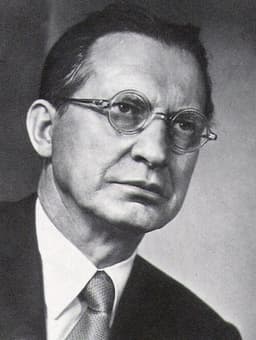
Alcide De Gasperi
Politician · Modern
55.5Total
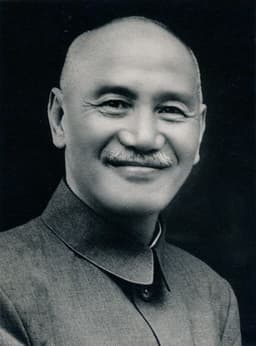
Chiang Kai-shek
Politician · Modern
60.6Total
Basic Information
Born
1881
1887
Died
1954
1975
Era
Modern
Modern
Nationality
Italy
China
Occupation
Politician
Politician
Civilization
Western
Eastern
Score Comparison
Military (10%)
12.4
70.0
Political (20%)
85.0
62.7
Influence (20%)
65.0
65.0
Legacy (20%)
40.0
52.0
Leadership (15%)
80.7
66.0
Strategy (15%)
31.5
50.0
TOTAL
55.5
60.6
Alcide De Gasperi — Complete Timeline
1946 AD
First Prime Minister of the Italian RepublicPolitical Action
De Gasperi became the first prime minister of the newly proclaimed Italian Republic in December 1945. He led a coalition government that included Christian Democrats, Socialists, and Communists. His government oversaw the transition from monarchy to republic.
RepublicGovernmentTransition
Impact: nationalconstructive
1947 AD
Peace Treaty of ParisPolitical Action◆ Major
De Gasperi signed the Treaty of Paris, which formally ended World War II for Italy. Italy lost its colonies, ceded territory to Yugoslavia and France, and paid reparations. The treaty was unpopular but allowed Italy to regain sovereignty and join the Western alliance.
TreatyWorld War IIDiplomacy
Impact: global
Expulsion of Communists from GovernmentPolitical Action
De Gasperi expelled the Italian Communist Party and Socialist Party from his coalition government in May 1947. This move aligned Italy with the United States and the Marshall Plan, deepening the Cold War divide. It solidified Christian Democratic dominance for decades.
Cold WarMarshall PlanCoalition
Impact: global
1949 AD
Italian Membership in NATOPolitical Action◆ Major
De Gasperi led Italy into the North Atlantic Treaty Organization (NATO) as a founding member. This decision anchored Italy in the Western bloc during the Cold War and secured U.S. military and economic support. It was opposed by the Communist Party.
NATOCold WarAlliance
Impact: globalconstructive
Chiang Kai-shek — Complete Timeline
1926 AD
Northern ExpeditionWar◆ Major
Chiang Kai-shek led the National Revolutionary Army in the Northern Expedition to defeat warlords and unify China. The campaign succeeded in capturing Beijing and establishing Kuomintang control over most of the country.
UnificationMilitary campaign
Impact: national
1927 AD
Shanghai Massacre of 1927Political Action◆ Major
Chiang Kai-shek ordered the purge of communists and leftists in Shanghai, resulting in thousands of deaths. This event broke the First United Front between the Kuomintang and the Communist Party, leading to civil war.
PurgeCivil war
Impact: nationaldestructive
1937 AD
Leadership during the Second Sino-Japanese WarWar
Chiang Kai-shek, as leader of the Kuomintang, commanded Chinese forces during the Second Sino-Japanese War. He directed the defense of Shanghai and the relocation of the capital to Chongqing, maintaining resistance against Japan.
World War IIChinese resistance
Impact: global
1945 AD
Signing of the Sino-Soviet Treaty of 1945Political Action◆ Major
Chiang Kai-shek signed the Sino-Soviet Treaty of Friendship and Alliance, which recognized Soviet interests in Manchuria in exchange for Soviet support against Japan. The treaty later facilitated Communist gains in the civil war.
DiplomacySoviet Union
Impact: global
1949 AD
Retreat to TaiwanPolitical Action
After losing the Chinese Civil War to the Communists, Chiang Kai-shek retreated to Taiwan with the remnants of the Kuomintang government and military. He established the Republic of China on Taiwan, claiming legitimacy over all of China.
TaiwanExileCold War
Impact: globaltragic
Expert Analysis
Alcide De Gasperi vs Chiang Kai-shek
# The General and the Builder
In the winter of 1949, as Chiang Kai-shek boarded a plane for Taiwan with the tattered remnants of his army, Alcide De Gasperi was presiding over a cabinet meeting in Rome, calmly discussing Italy's place in a new Atlantic alliance. Both men had risen from the ashes of world war. Both faced the specter of communism at their doorstep. Yet one would end his days on a small island, a ghost of a lost empire, while the other would be remembered as the architect of a democratic republic. What explains the difference? The answer lies not in the force of their arms, but in the nature of their vision.
Origins
Chiang Kai-shek was born in 1887 in Fenghua, a provincial town in Zhejiang, to a family of modest merchant gentry. His father died when he was nine, and his mother raised him with a stern Confucian emphasis on discipline and duty. He entered a military academy in Baoding at nineteen, then traveled to Japan for further training. The world he inherited was one of collapse—the Qing dynasty was crumbling, warlords carved up the country, and foreign powers held treaty ports like daggers to China's throat. For Chiang, power meant survival, and survival meant unity through force.
Alcide De Gasperi was born in 1881 in the Trentino, then part of the Austro-Hungarian Empire. His father was a local tax official, and the family spoke both Italian and German. He studied literature and philosophy at the University of Vienna, where he absorbed the traditions of Catholic social thought and parliamentary politics. His world was one of empires in decline too, but also of multinational negotiation and gradual reform. For De Gasperi, power meant building consensus, and consensus required compromise.
Rise to Power
Chiang's path was forged in war. In 1926, at the head of the National Revolutionary Army, he launched the Northern Expedition—a military campaign to crush the warlords and unify China under the Kuomintang. It was a stunning success. By 1928, he was the nominal ruler of most of China, a position he secured not only through battlefield victories but through a ruthless willingness to eliminate rivals. In 1927, he ordered the Shanghai Massacre, purging thousands of communists and leftists from the streets of the city. It was a decisive act, but it also planted seeds of hatred that would never die.
De Gasperi rose through the corridors of parliament, not the smoke of battle. A founding member of the Italian People's Party, he spent the Fascist years in obscurity and even imprisonment in the Vatican, quietly working in the library. When Mussolini fell in 1943, De Gasperi emerged not with a sword, but with a plan. He helped found the Christian Democracy party and, in December 1945, became the first prime minister of the Italian Republic. His power came not from conquest, but from the trust of a fractured nation.
Leadership & Governance
As a leader, Chiang was a military man first and a politician second. He commanded China during the Second Sino-Japanese War from 1937 to 1945, directing a vast and brutal conflict that cost millions of lives. He was capable of strategic vision—his decision to move the capital to Chongqing and fight a war of attrition kept China in the fight—but his governance was brittle. He relied on personal loyalty, nepotism, and secret police. Corruption festered in his regime. He saw democracy as a luxury China could not afford.
De Gasperi governed through coalition, negotiation, and patience. He signed the Peace Treaty of Paris in 1947, accepting harsh terms—loss of colonies, reparations, and territorial cessions—because he understood that peace was more important than pride. In May of that same year, he expelled the Italian Communist Party from his government, a move that required immense political courage and skill. He did not shoot them; he voted them out. He then led Italy into NATO in 1949, anchoring the nation in the West. His leadership was not about commanding armies, but about building institutions.
Triumph & Tragedy
Chiang's greatest moment was the survival of China during the Sino-Japanese War. Against overwhelming odds, he kept a unified front—at least on paper—and ensured that China remained an Allied power. His tragedy came immediately after. In the Chinese Civil War, his armies collapsed before Mao Zedong's communists. By 1949, he was a refugee on Taiwan, ruling a rump state that the world increasingly ignored.
De Gasperi's triumph was the creation of the Italian Republic itself. He shepherded Italy from monarchy to democracy, from fascism to freedom, from isolation to alliance. His tragedy was personal: he died in 1954, before he could see the full flowering of the economic miracle he helped set in motion. But his nation lived on.
Character & Destiny
Chiang was proud, suspicious, and rigid. He saw history as a struggle of wills, and he believed his will was unbreakable. But he could not adapt. When the communists offered a united front in 1945, he rejected it. When land reform was needed, he stalled. When his generals failed, he blamed them. His character, forged in the crucible of warlord China, was ill-suited for the subtler demands of peacetime governance.
De Gasperi was humble, pragmatic, and patient. He once said, "Politics is the art of the possible." He understood that rebuilding a nation required forgiveness, compromise, and time. He did not seek personal glory; he sought a stable framework for freedom. His character, shaped by the multicultural world of the Habsburg Empire and the moral discipline of Catholic social teaching, was perfectly suited for the task of democratic reconstruction.
Legacy
Chiang Kai-shek is remembered today as a tragic figure—a man who unified China only to lose it, who fought the Japanese only to be defeated by his own countrymen. On Taiwan, his statues still stand, but they are increasingly contested. In mainland China, he is a footnote, a villain, or a ghost. His legacy is the unresolved question of Chinese identity: one China, two systems, and a century of bitterness.
Alcide De Gasperi is remembered as a founding father—one of the architects of modern Europe. His face once graced the 1,000 lire note. His name adorns streets, foundations, and the European Parliament building in Strasbourg. His legacy is the Italian Republic itself: a democracy that survived corruption, terrorism, and political crisis, anchored in the West and committed to peace.
Conclusion
Standing at the edge of the abyss, both men chose opposite paths. Chiang chose the sword and lost. De Gasperi chose the ballot and won. Their stories remind us that leadership is not merely about strength, but about the kind of world one wishes to build. One man built a fortress; the other built a republic. One ended in exile; the other in the foundation of a nation. History, in the end, is not a test of will, but of wisdom.
Rankings
🥇
Chiang Kai-shekLeader
Mil: 70.0Pol: 62.7Inf: 65.0
60.6
🥈
Alcide De Gasperi
Mil: 12.4Pol: 85.0Inf: 65.0
55.5
+5.1 behind
How This Comparison Works
Algorithm
Each figure is scored on 6 dimensions (0—100 scale) based on structured historical data: Military (10%), Political (20%), Influence (20%), Legacy (20%), Leadership (15%), Strategy (15%). The weighted total produces the final ranking.
Data Sources
Scores are computed from structured sub-indicators in the database. Scale factors adjust for era (Ancient ×0.85, Modern ×1.0) and civilization size (Eastern ×1.05, Other ×0.80) to account for differences in population and military scale.
Maximum 3 Figures
Comparisons are limited to 2—3 figures to ensure readability and statistical meaningfulness.
Error Margins
±5 points per dimension — Sub-scores are derived from historical records with inherent uncertainty. Two figures within 5 points on a dimension should be considered roughly equivalent in that area.
Total Score Accuracy
±3 points overall — The weighted combination of 6 dimensions produces a total score with approximately ±3 points of uncertainty. Differences of less than 3 points are not statistically significant— the figures are effectively tied.
Known Limitations
- Historical records are incomplete and uneven across civilizations
- Figures from oral-tradition societies may be underrepresented
- Occupation labels can misclassify multi-role figures
- Scores measure capability and impact, not moral character
- Quantitative scoring is a comparison tool, not absolute truth
Capability Radar
Military (10%) — Battles & Warfare
Battles
11
75
Win Rate
15
35
Expansion
17
65
Political (20%) — Governance & Reform
Reform
85
55
Diplomacy
80
60
Economy
70
40
Influence (20%) — Cultural & Global Reach
Cultural
60
60
Global
65
65
Legacy (20%) — Historical Impact
Historical
70
70
Longevity
65
55
Leadership (15%) — Power & Stability
Tenure
75
85
Stability
75
30
Strategy (15%) — Tactics & Innovation
Strategy
21
60
Tactics
23
55
Reform
27
50
Similar Comparisons
Comments & Discussion
No comments yet. Be the first to share your thoughts!