Loading...
Chiang Kai-shek vs Napoleon Bonaparte
Napoleon Bonaparte leads by 10.3 pts · 2 figures compared
…
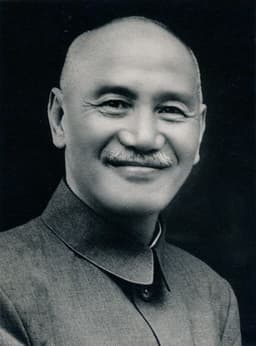
Chiang Kai-shek
Politician · Modern
60.6Total

Napoleon Bonaparte
General · Modern
70.9Total
Basic Information
Born
1887
1769
Died
1975
1821
Era
Modern
Modern
Nationality
China
France
Occupation
Politician
General
Civilization
Eastern
Western
Score Comparison
Military (10%)
70.0
94.0
Political (20%)
62.7
72.0
Influence (20%)
65.0
40.0
Legacy (20%)
52.0
80.0
Leadership (15%)
66.0
78.0
Strategy (15%)
50.0
90.0
TOTAL
60.6
70.9
Chiang Kai-shek — Complete Timeline
1926 AD
Northern ExpeditionWar◆ Major
Chiang Kai-shek led the National Revolutionary Army in the Northern Expedition to defeat warlords and unify China. The campaign succeeded in capturing Beijing and establishing Kuomintang control over most of the country.
UnificationMilitary campaign
Impact: national
1927 AD
Shanghai Massacre of 1927Political Action◆ Major
Chiang Kai-shek ordered the purge of communists and leftists in Shanghai, resulting in thousands of deaths. This event broke the First United Front between the Kuomintang and the Communist Party, leading to civil war.
PurgeCivil war
Impact: nationaldestructive
1937 AD
Leadership during the Second Sino-Japanese WarWar
Chiang Kai-shek, as leader of the Kuomintang, commanded Chinese forces during the Second Sino-Japanese War. He directed the defense of Shanghai and the relocation of the capital to Chongqing, maintaining resistance against Japan.
World War IIChinese resistance
Impact: global
1945 AD
Signing of the Sino-Soviet Treaty of 1945Political Action◆ Major
Chiang Kai-shek signed the Sino-Soviet Treaty of Friendship and Alliance, which recognized Soviet interests in Manchuria in exchange for Soviet support against Japan. The treaty later facilitated Communist gains in the civil war.
DiplomacySoviet Union
Impact: global
1949 AD
Retreat to TaiwanPolitical Action
After losing the Chinese Civil War to the Communists, Chiang Kai-shek retreated to Taiwan with the remnants of the Kuomintang government and military. He established the Republic of China on Taiwan, claiming legitimacy over all of China.
TaiwanExileCold War
Impact: globaltragic
Napoleon Bonaparte — Complete Timeline
1799 AD
Coup of 18 BrumaireOther◆ Major
Napoleon Bonaparte, with support from his brother Lucien and key political figures, overthrew the Directory in a bloodless coup. He established the Consulate with himself as First Consul, effectively becoming the ruler of France. This event ended the French Revolution's most unstable period.
French RevolutionCoupRise to Power
Impact: regional
1804 AD
Promulgation of the Napoleonic CodeOther◆ Major
Napoleon enacted the Civil Code of the French, known as the Napoleonic Code, a comprehensive set of laws that replaced the fragmented feudal legal systems. The code established legal equality, protected property rights, and secularized law. It became the basis for legal systems in many European and world countries.
Legal ReformNapoleonic CodeCivil Law
Impact: globalconstructive
1805 AD
Battle of AusterlitzWar◆ Major
Napoleon's Grande Arm
Napoleonic WarsBattleDecisive Victory
Impact: global
1812 AD
Invasion of RussiaWar◆ Major
Napoleon led the Grande Arm
Napoleonic WarsInvasionDisaster
Impact: globaldestructive
1815 AD
Battle of WaterlooWar◆ Major
Napoleon's French army was defeated by the combined forces of the Duke of Wellington's Anglo-Allied army and Gebhard Leberecht von Bl
Napoleonic WarsBattleFinal Defeat
Impact: globaldestructive
Expert Analysis
chiang-kai-shek-vs-napoleon-bonaparte
### The Corsican and the General: Two Paths to Modernity
In the spring of 1815, Napoleon Bonaparte, exiled on the island of Elba, slipped past British patrols and landed on the French coast. Within weeks, he had reclaimed his empire without firing a shot. In the autumn of 1949, Chiang Kai-shek, his armies shattered, boarded a plane in Chengdu and fled to Taiwan, never to see the Chinese mainland again. Both men sought to forge a nation from chaos; both were consumed by the very forces they tried to master. The question is not merely why one succeeded and the other failed, but what their divergent destinies reveal about the nature of power itself.
### Origins
Napoleon was born in 1769 on Corsica, a recently acquired French island where his family had fought for independence. He was a provincial outsider in a rigid, aristocratic society—short, intense, and hungry. The French Revolution of 1789 shattered the old order and opened the military to talent. Napoleon, a young artillery officer, was perfectly positioned: he had the skills of a gunner, the ambition of a parvenu, and the ideology of a revolutionary. He was a creature of the Enlightenment, believing that reason and will could reshape society.
Chiang Kai-shek was born in 1887 in Zhejiang province, into a family of declining gentry. He grew up in a China humiliated by foreign powers, its imperial system crumbling. Unlike Napoleon, he was not a product of revolution but of a long, agonizing decay. He studied in Japan, absorbing its militarism, and joined the Kuomintang (KMT) under Sun Yat-sen. His world was not one of new ideas sweeping away the old, but of warlords, foreign concessions, and a desperate search for a unifying principle. Where Napoleon saw a blank slate, Chiang saw a broken vessel.
### Rise to Power
Napoleon’s rise was meteoric. At 24, he drove the British out of Toulon. At 26, he crushed a royalist uprising in Paris with a "whiff of grapeshot." By 30, he had conquered Italy and Egypt. His path was military, and his legitimacy came from victory. The Directory, corrupt and weak, needed him more than he needed them. In 1799, he staged a coup and became First Consul. His power was personal, earned through audacity and victory.
Chiang’s ascent was more tortuous. After Sun Yat-sen’s death in 1925, he maneuvered through the KMT’s factions, using a mix of military command and political cunning. His great moment came in 1926 with the Northern Expedition, a campaign to unify China by defeating the warlords. He led the National Revolutionary Army, but he was never a conqueror in the Napoleonic mode. He was a coalition-builder, relying on local strongmen, foreign loans, and the fragile loyalty of his generals. His legitimacy was not from victory alone, but from his claim to Sun Yat-sen’s mantle—a more tenuous foundation.
### Leadership & Governance
Napoleon governed with a fury of reform. The Napoleonic Code standardized French law, abolished feudalism, and established meritocracy. He built schools, roads, and a centralized bureaucracy. He was a military genius—his campaigns at Austerlitz (1805) and Jena (1806) remain textbook examples of speed and deception. His political wisdom, however, was flawed. He believed he could impose order on Europe by force, creating a family empire of puppet kingdoms. He scored 94 in military but only 75 in political acumen—a gap that would prove fatal.
Chiang’s leadership was more reactive. He commanded China during the Second Sino-Japanese War (1937-1945), a brutal conflict that killed millions. He directed a fragmented nation, often prioritizing the fight against the Communists over the Japanese—a strategy that cost him popular support. His military score of 68.4 reflects a general who was competent but not brilliant. His political score of 65.8 reveals a leader who relied on patronage and repression. The Shanghai Massacre of 1927, where he purged thousands of Communists, secured his power but poisoned his legitimacy. He was a better manager of factions than a builder of nations.
### Triumph & Tragedy
Napoleon’s greatest moment was Austerlitz in 1805, where he destroyed a combined Russian and Austrian army, ending the Holy Roman Empire. His tragedy was the invasion of Russia in 1812. He marched 600,000 men into the vastness, but the Russians refused to fight a decisive battle. Winter, starvation, and guerrilla attacks annihilated his army. He lost 500,000 men, and with them, his aura of invincibility. He was exiled to Elba, returned for the Hundred Days, and was finally defeated at Waterloo in 1815. His ambition overreached his resources.
Chiang’s triumph was surviving the war with Japan. He kept China in the fight, securing Allied support and a seat at the postwar table. His tragedy was the Chinese Civil War. After 1945, his regime collapsed under corruption, hyperinflation, and military incompetence. The Communists, led by Mao Zedong, won the countryside while Chiang held the cities. By 1949, his armies were routed, and he retreated to Taiwan. He lost a country of 500 million people. Where Napoleon fell from a peak, Chiang fell from a plateau.
### Character & Destiny
Napoleon was a man of immense will, convinced that he could shape history. "Impossible is a word to be found only in the dictionary of fools," he said. His personality drove him to constant expansion, but also to isolation. He divorced Josephine for a strategic marriage, alienated his allies, and crushed dissent at home. His destiny was to create a modern state, but also to provoke a coalition that would destroy him.
Chiang was more cautious, even paranoid. He trusted no one fully, and his generals often betrayed him. His personality was shaped by the Confucian values of hierarchy and order, but also by a deep insecurity. "The enemy is at the gate, but the wolf is in the house," he said of the Communists. He could not decide whether to fight the Japanese or the Maoists, and that indecision cost him everything. His destiny was to be a transitional figure, the last ruler of a dying order.
### Legacy
Napoleon’s legacy is monumental. The Napoleonic Code influenced legal systems across Europe and the Americas. His military innovations—mass conscription, corps organization, rapid movement—became standard. He is remembered as a genius and a tyrant, a liberator and a conqueror. His score of 82.4 overall reflects his enduring fascination.
Chiang’s legacy is more contested. In Taiwan, he is remembered as the father of the nation, the architect of its economic miracle. On the mainland, he is dismissed as a failed warlord. His score of 70.2 shows a figure who was competent but not transformative. He left behind a divided China, a bitter legacy of civil war, and a small island that would become a democracy—ironically, the very thing he never allowed.
### Conclusion
Napoleon and Chiang both faced the impossible task of building a modern nation in a world of empires and revolutions. Napoleon succeeded in France because he had the raw materials: a unified culture, a revolutionary ideology, and a continent ripe for conquest. Chiang failed in China because he had too many fractures: a vast territory, a fragmented society, and a civil war he could not win. Their stories remind us that history is not a test of will alone, but of context. The Corsican general, for all his flaws, knew how to ride the wave of his time. The Chinese general, for all his endurance, was swept away by a tide he could not control. One became a legend; the other, a lesson.
Rankings
🥇
Napoleon BonaparteLeader
Mil: 94.0Pol: 72.0Inf: 40.0
70.9
🥈
Chiang Kai-shek
Mil: 70.0Pol: 62.7Inf: 65.0
60.6
+10.3 behind
How This Comparison Works
Algorithm
Each figure is scored on 6 dimensions (0—100 scale) based on structured historical data: Military (10%), Political (20%), Influence (20%), Legacy (20%), Leadership (15%), Strategy (15%). The weighted total produces the final ranking.
Data Sources
Scores are computed from structured sub-indicators in the database. Scale factors adjust for era (Ancient ×0.85, Modern ×1.0) and civilization size (Eastern ×1.05, Other ×0.80) to account for differences in population and military scale.
Maximum 3 Figures
Comparisons are limited to 2—3 figures to ensure readability and statistical meaningfulness.
Error Margins
±5 points per dimension — Sub-scores are derived from historical records with inherent uncertainty. Two figures within 5 points on a dimension should be considered roughly equivalent in that area.
Total Score Accuracy
±3 points overall — The weighted combination of 6 dimensions produces a total score with approximately ±3 points of uncertainty. Differences of less than 3 points are not statistically significant— the figures are effectively tied.
Known Limitations
- Historical records are incomplete and uneven across civilizations
- Figures from oral-tradition societies may be underrepresented
- Occupation labels can misclassify multi-role figures
- Scores measure capability and impact, not moral character
- Quantitative scoring is a comparison tool, not absolute truth
Capability Radar
Military (10%) — Battles & Warfare
Battles
75
95
Win Rate
35
90
Expansion
65
95
Political (20%) — Governance & Reform
Reform
55
95
Diplomacy
60
80
Economy
40
85
Influence (20%) — Cultural & Global Reach
Cultural
60
85
Global
65
90
Legacy (20%) — Historical Impact
Historical
70
95
Longevity
55
90
Leadership (15%) — Power & Stability
Tenure
85
85
Stability
30
70
Strategy (15%) — Tactics & Innovation
Strategy
60
95
Tactics
55
98
Reform
50
92
Similar Comparisons
Comments & Discussion
海峡铁砧6/17/2026
拿破仑是欧洲旧制度裂变出的异数,靠概率与个人野心引爆;蒋介石却是北洋军阀混战筛下的一粒沙,自始至终被历史格局裹挟。拿氏从炮兵少尉爬上帝位,是理性与意志的神话,而蒋氏从宁波盐商之子到黄埔校长再到台湾流亡,每一步都透着制度溃败下的无奈与挣扎。
Bonaparte's Barometer6/17/2026
This comparison wildly overstates the symmetry. Napoleon was not merely a military leader, he was a state-building revolutionary who rewrote Europe’s legal codes. Chiang never achieved that level of institutional overhaul. In Taiwan, he preserved the KMT's authoritarian structure, but he didn't found a new political order—he just transplanted an old one. Napoleon gave France the Bank of France and the civil code; Chiang gave Taiwan martial law.
岭南兵棋6/17/2026
将两者并列非常牵强。拿破仑在1805年奥斯特里茨以少胜多,用炮兵与机动撕裂联军;蒋介石在抗战、内战中的败绩,从淞沪会战撤退到淮海溃败,都暴露其战略短视与战场指挥的致命缺陷。一个敢在冰天雪地远征莫斯科,一个只能守着长江防线寸步难行。军事天才与侥幸苟全之间,差的不只是一个时代。
Data Pedant6/17/2026
Please stop romanticizing "success." Napoleon’s wars killed an estimated 3-6 million people across Europe, and his final act—the Hundred Days—ended in Waterloo, exile, and death. Chiang lost mainland China, but his rule in Taiwan oversaw one of the 20th century’s fastest economic growth spurts, averaging over 8% GDP through the 1960s-70s. If we measure by post-war stability and prosperity for the population actually governed, Chiang arguably outperformed.