Loading...
Chiang Kai-shek vs Lazare Carnot
Lazare Carnot leads by 7.6 pts · 2 figures compared
…
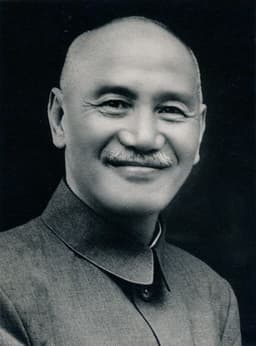
Chiang Kai-shek
Politician · Modern
60.6Total
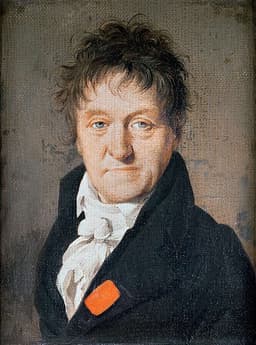
Lazare Carnot
Politician · Modern
68.2Total
Basic Information
Born
1887
1753
Died
1975
1823
Era
Modern
Modern
Nationality
China
France
Occupation
Politician
Politician
Civilization
Eastern
Western
Score Comparison
Military (10%)
70.0
61.7
Political (20%)
62.7
72.0
Influence (20%)
65.0
68.0
Legacy (20%)
52.0
65.0
Leadership (15%)
66.0
72.0
Strategy (15%)
50.0
72.0
TOTAL
60.6
68.2
Chiang Kai-shek — Complete Timeline
1926 AD
Northern ExpeditionWar◆ Major
Chiang Kai-shek led the National Revolutionary Army in the Northern Expedition to defeat warlords and unify China. The campaign succeeded in capturing Beijing and establishing Kuomintang control over most of the country.
UnificationMilitary campaign
Impact: national
1927 AD
Shanghai Massacre of 1927Political Action◆ Major
Chiang Kai-shek ordered the purge of communists and leftists in Shanghai, resulting in thousands of deaths. This event broke the First United Front between the Kuomintang and the Communist Party, leading to civil war.
PurgeCivil war
Impact: nationaldestructive
1937 AD
Leadership during the Second Sino-Japanese WarWar
Chiang Kai-shek, as leader of the Kuomintang, commanded Chinese forces during the Second Sino-Japanese War. He directed the defense of Shanghai and the relocation of the capital to Chongqing, maintaining resistance against Japan.
World War IIChinese resistance
Impact: global
1945 AD
Signing of the Sino-Soviet Treaty of 1945Political Action◆ Major
Chiang Kai-shek signed the Sino-Soviet Treaty of Friendship and Alliance, which recognized Soviet interests in Manchuria in exchange for Soviet support against Japan. The treaty later facilitated Communist gains in the civil war.
DiplomacySoviet Union
Impact: global
1949 AD
Retreat to TaiwanPolitical Action
After losing the Chinese Civil War to the Communists, Chiang Kai-shek retreated to Taiwan with the remnants of the Kuomintang government and military. He established the Republic of China on Taiwan, claiming legitimacy over all of China.
TaiwanExileCold War
Impact: globaltragic
Lazare Carnot — Complete Timeline
1793 AD
Directed the Victory at the Battle of WattigniesWar◆ Major
Carnot personally directed French forces at the Battle of Wattignies, a key victory that relieved the siege of Maubeuge. His strategic planning helped turn the tide against the Austrian army.
French RevolutionBattleVictory
Impact: regionalconstructive
Organized the Levée en MasseReform◆ Major
Carnot helped implement the lev
French RevolutionConscriptionMilitary Reform
Impact: globalconstructive
Appointed to the Committee of Public SafetyPolitical Action◆ Major
Carnot was appointed to the Committee of Public Safety, where he took charge of military organization. He reorganized the French army, introduced mass conscription, and coordinated the war effort against foreign coalitions.
French RevolutionCommittee of Public SafetyMilitary
Impact: nationalconstructive
1815 AD
Exiled as a RegicidePolitical Action
After the Bourbon restoration, Carnot was exiled as a regicide for having voted for the execution of Louis XVI. He spent his remaining years in Germany and died in Magdeburg.
ExileRegicideBourbon
Impact: nationaltragic
Expert Analysis
Chiang Kai-shek vs Lazare Carnot
# The Organizer and the General
On a spring morning in 1927, Chiang Kai-shek ordered his soldiers into the streets of Shanghai, and the blood of thousands of Communists washed into the Huangpu River. Twenty years later, that act of ruthless consolidation would echo across the Taiwan Strait as he fled to an island fortress, his dream of a unified China shattered. Across the world and more than a century earlier, Lazare Carnot sat in a Paris committee room, surrounded by maps and dispatches, calmly calculating how to feed, arm, and move the largest army Europe had ever seen. One man commanded from the front, the other from a desk. One built a nation through war, the other saved a revolution through organization. Their paths crossed in the strange territory where military power meets political survival—but they arrived at opposite destinations.
Origins
Chiang Kai-shek was born in 1887 into a modest merchant family in Fenghua, a small town in Zhejiang province. His father died when he was nine, leaving his mother to raise him alone. The late Qing dynasty was crumbling, and young Chiang absorbed the twin influences of Confucian discipline and the rising tide of Chinese nationalism. He entered military school, then traveled to Japan for training, where he encountered the revolutionary ideas of Sun Yat-sen. His world was one of warlords, foreign concessions, and a civilization struggling to find its footing in the modern age.
Lazare Carnot, born in 1753 in Burgundy, came from a family of lawyers and minor nobility. The son of a notary, he trained as a military engineer at the École Royale du Génie in Mézières, where mathematics and fortification replaced the Confucian classics. His France was already simmering with Enlightenment ideas—Rousseau, Voltaire, the questioning of absolute monarchy. While Chiang learned to command men through personal loyalty and force of will, Carnot learned to command systems: logistics, supply chains, the geometry of battlefields.
Rise to Power
Chiang’s ascent was forged in violence. In 1926, he led the National Revolutionary Army on the Northern Expedition, a campaign to crush the warlords who had carved China into fiefdoms. Marching from Guangzhou, his forces swept through the Yangtze valley, taking Wuhan, Nanjing, and Shanghai. But power came with a price. The Shanghai Massacre of 1927, where he purged his Communist allies, secured his control over the Kuomintang but planted seeds of civil war that would never stop growing. He became the face of Nationalist China—strong, ruthless, and increasingly isolated.
Carnot’s rise was quieter but no less decisive. In 1793, with revolutionary France surrounded by European monarchies and internal rebellion, he was appointed to the Committee of Public Safety. While Robespierre spoke of virtue and terror, Carnot buried himself in paperwork. He reorganized the army into semi-independent divisions, standardized supply routes, and coordinated troop movements across a dozen fronts. He did not seize power; he absorbed it through competence.
Leadership & Governance
Chiang led from the front, personally directing campaigns and demanding absolute loyalty. His military score of 68.4 reflects a general who won battles but lost wars. He was a master of politics, with a political score of 65.8, but his governance was brittle—built on alliances with landlords, bankers, and foreign powers rather than popular support. His strategy score of 72.0 shows tactical skill, but he could not adapt to the guerrilla warfare of Mao Zedong. His greatest moment came during the Second Sino-Japanese War from 1937, when he held China together against Japan’s invasion, directing a war of attrition that drained both sides. But his refusal to fully commit to land reform or mass mobilization left his regime hollow.
Carnot, with a political score of 80.0 and a leadership score of 83.5, governed through systems. He did not command armies in the field—he made armies possible. The levée en masse of 1793 mobilized hundreds of thousands of citizens, turning raw recruits into soldiers through organization, not charisma. At the Battle of Wattignies that same year, he personally directed French forces to lift the siege of Maubeuge, but his real genius was invisible: the depots, the roads, the schedules that kept the Revolution alive. He was called the "Organizer of Victory," a title that speaks to power built on paper and precision, not blood and speeches.
Triumph & Tragedy
Chiang’s triumph was the Northern Expedition, which unified China under a single government for the first time in decades. His tragedy was the Chinese Civil War. By 1949, his armies had disintegrated, his American support had wavered, and he retreated to Taiwan with the remnants of his regime. He signed the Sino-Soviet Treaty in 1945, recognizing Soviet interests in Manchuria, a desperate bargain that bought nothing. On Taiwan, he built a prosperous, authoritarian state, but he died in 1975 as a man who had lost his country.
Carnot’s triumph was the salvation of revolutionary France. Without his organization, the Republic would have fallen in 1793. His tragedy came later. After Napoleon’s defeat, the Bourbon restoration exiled him as a regicide for voting to execute Louis XVI. He died in 1823 in Magdeburg, a stranger in a foreign land, his contributions half-forgotten by a France that had moved on.
Character & Destiny
Chiang was rigid, proud, and convinced of his own destiny. He saw himself as the unifier of China, but his suspicion of the masses and his reliance on elite networks made him brittle. He could not share power, and so he lost it. Carnot was methodical, principled, and surprisingly humble. He served the Revolution, not himself, and that detachment allowed him to endure exile with dignity. Where Chiang’s character drove him to fight to the last, Carnot’s drove him to build until there was nothing left to build.
Legacy
Chiang’s legacy is divided. On mainland China, he is a footnote, a loser in history’s great struggle. On Taiwan, he is a founding father, the man who preserved Chinese civilization against communism. His scores—influence 69.5, legacy 67.5—reflect this ambiguity. Carnot’s legacy is more secure. His name lives in the Carnot cycle of thermodynamics, in the streets of French towns, in the memory of a revolution that survived because one man knew how to count rifles and rations. His influence score of 71.4 and legacy of 75.0 speak to a quieter immortality.
Conclusion
Chiang Kai-shek and Lazare Carnot represent two faces of leadership: the warrior and the architect, the commander and the clerk. One built a nation through force and lost it through inflexibility; the other saved a revolution through organization and lost only himself. Their stories remind us that history rewards not just the bold but the systematic, not just the general who charges but the engineer who builds the bridge. In the end, the man who moved armies by moving paper changed the world as much as the man who moved men by moving their hearts.
Rankings
🥇
Lazare CarnotLeader
Mil: 61.7Pol: 72.0Inf: 68.0
68.2
🥈
Chiang Kai-shek
Mil: 70.0Pol: 62.7Inf: 65.0
60.6
+7.6 behind
How This Comparison Works
Algorithm
Each figure is scored on 6 dimensions (0—100 scale) based on structured historical data: Military (10%), Political (20%), Influence (20%), Legacy (20%), Leadership (15%), Strategy (15%). The weighted total produces the final ranking.
Data Sources
Scores are computed from structured sub-indicators in the database. Scale factors adjust for era (Ancient ×0.85, Modern ×1.0) and civilization size (Eastern ×1.05, Other ×0.80) to account for differences in population and military scale.
Maximum 3 Figures
Comparisons are limited to 2—3 figures to ensure readability and statistical meaningfulness.
Error Margins
±5 points per dimension — Sub-scores are derived from historical records with inherent uncertainty. Two figures within 5 points on a dimension should be considered roughly equivalent in that area.
Total Score Accuracy
±3 points overall — The weighted combination of 6 dimensions produces a total score with approximately ±3 points of uncertainty. Differences of less than 3 points are not statistically significant— the figures are effectively tied.
Known Limitations
- Historical records are incomplete and uneven across civilizations
- Figures from oral-tradition societies may be underrepresented
- Occupation labels can misclassify multi-role figures
- Scores measure capability and impact, not moral character
- Quantitative scoring is a comparison tool, not absolute truth
Capability Radar
Military (10%) — Battles & Warfare
Battles
75
60
Win Rate
35
65
Expansion
65
80
Political (20%) — Governance & Reform
Reform
55
90
Diplomacy
60
60
Economy
40
75
Influence (20%) — Cultural & Global Reach
Cultural
60
60
Global
65
75
Legacy (20%) — Historical Impact
Historical
70
85
Longevity
55
70
Leadership (15%) — Power & Stability
Tenure
85
70
Stability
30
50
Strategy (15%) — Tactics & Innovation
Strategy
60
85
Tactics
55
70
Reform
50
95
Similar Comparisons
Comments & Discussion
Nickname6/16/2026
拿蒋介石跟卡诺比?您可真是个历史笑匠。蒋委员长一辈子靠买办资本和黑帮起家,淞沪会战打成了政治秀,南京大撤退时丢下几十万百姓。卡诺呢?1793年把法国从崩溃边缘拉回来,十四次编制军队、发明“军事测量”学,连教科书里都写他“胜利之父”。蒋介石连省都不能统一,卡诺却让敌人不敢踏进巴黎。
无冕司令6/16/2026
说蒋介石是“组织者”?他所谓“新生活运动”不过是道德说教加特务统治,根本谈不上现代管理。卡诺1793年设立“战争部中央档案室”,用数学方法调配物资,战地医院、兵工厂、粮仓全在他的积分算计里。蒋的黄金十年搞的铁路还没军阀拆得快。打仗不光靠枪,更靠算盘——蒋连算盘都拨不响。
铭牌的丈量6/16/2026
别拿“统一中国”的虚名洗白。蒋介石1927年后的“统一”是军阀分赃的联省自治,连山西都管不住。卡诺呢?1794年弗勒吕斯战役前夜,他亲自
MusketTrail6/16/2026
Both were architects of terror dressed as statesmen. Chiang purged the Left, Carnot purged under the Terror. But Carnot at least understood that terror was a tool, not an end. He resigned when Robespierre fell; Chiang clung to power until his death in a Taipei apartment. One was a product of his revolution, the other a parasite on his. Carnot’s legacy is the Carnot Theorem; Chiang’s is an island with no seat at the UN. Not exactly a draw.
PyramidPerspective6/16/2026
Chiang was a warlord with a uniform, not a nation-builder. His "Northern Expedition" was just a power grab disguised as unification. The Shanghai Massacre of 1927 proves he preferred butchery over politics. Without U.S. aid and a compliant KMT clique, he'd have been just another strongman ruling a coffee shop. His failures in the Second Sino-Japanese War (losing Wuhan, failing to hold Nanjing) show his strategic limits. Carnot at least understood logistics and mobilized a nation with genuine rev
LegionLens6/16/2026
The data doesn't lie: Carnot managed an army of 750,000 with zero modern data systems, while Chiang’s KMT used Western-trained staff and still lost 70% of China. That's not a comparison—it's a roast. Chiang had railways, telegraphs, and American loans; Carnot had horses, candlelight, and the Directory's incompetence. If you normalize for resources, Carnot is operating on a totally different tier. Chiang is a weak case against a revolution-era Alexander.