Loading...
Chiang Kai-shek vs Franklin D. Roosevelt
Franklin D. Roosevelt leads by 10.4 pts · 2 figures compared
…
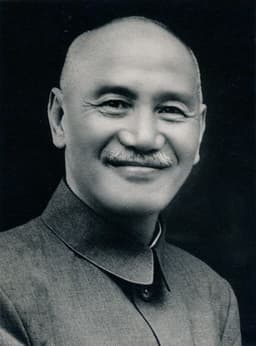
Chiang Kai-shek
Politician · Modern
60.6Total
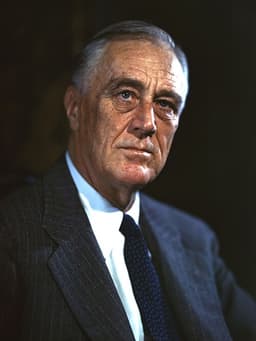
Franklin D. Roosevelt
Politician · Modern
71.0Total
Basic Information
Born
1887
1882
Died
1975
1945
Era
Modern
Modern
Nationality
China
United States
Occupation
Politician
Politician
Civilization
Eastern
Western
Score Comparison
Military (10%)
70.0
45.0
Political (20%)
62.7
85.0
Influence (20%)
65.0
75.0
Legacy (20%)
52.0
65.0
Leadership (15%)
66.0
85.0
Strategy (15%)
50.0
60.0
TOTAL
60.6
71.0
Chiang Kai-shek — Complete Timeline
1926 AD
Northern ExpeditionWar◆ Major
Chiang Kai-shek led the National Revolutionary Army in the Northern Expedition to defeat warlords and unify China. The campaign succeeded in capturing Beijing and establishing Kuomintang control over most of the country.
UnificationMilitary campaign
Impact: national
1927 AD
Shanghai Massacre of 1927Political Action◆ Major
Chiang Kai-shek ordered the purge of communists and leftists in Shanghai, resulting in thousands of deaths. This event broke the First United Front between the Kuomintang and the Communist Party, leading to civil war.
PurgeCivil war
Impact: nationaldestructive
1937 AD
Leadership during the Second Sino-Japanese WarWar
Chiang Kai-shek, as leader of the Kuomintang, commanded Chinese forces during the Second Sino-Japanese War. He directed the defense of Shanghai and the relocation of the capital to Chongqing, maintaining resistance against Japan.
World War IIChinese resistance
Impact: global
1945 AD
Signing of the Sino-Soviet Treaty of 1945Political Action◆ Major
Chiang Kai-shek signed the Sino-Soviet Treaty of Friendship and Alliance, which recognized Soviet interests in Manchuria in exchange for Soviet support against Japan. The treaty later facilitated Communist gains in the civil war.
DiplomacySoviet Union
Impact: global
1949 AD
Retreat to TaiwanPolitical Action
After losing the Chinese Civil War to the Communists, Chiang Kai-shek retreated to Taiwan with the remnants of the Kuomintang government and military. He established the Republic of China on Taiwan, claiming legitimacy over all of China.
TaiwanExileCold War
Impact: globaltragic
Franklin D. Roosevelt — Complete Timeline
1933 AD
Inaugurated as 32nd PresidentOther◆ Major
Franklin D. Roosevelt was inaugurated as President of the United States on March 4, 1933, during the Great Depression. His inaugural address declared 'the only thing we have to fear is fear itself,' and he immediately called Congress into special session to address the banking crisis.
Great DepressionPresidencyInauguration
Impact: national
Enacted the New DealOther◆ Major
Roosevelt launched the New Deal in 1933, a series of federal programs including the Civilian Conservation Corps, the Agricultural Adjustment Act, and the Tennessee Valley Authority. These measures aimed to provide relief, recovery, and reform during the Great Depression, fundamentally expanding the role of the federal government.
Great DepressionEconomic PolicySocial Reform
Impact: nationalconstructive
1935 AD
Signed the Social Security ActOther◆ Major
Roosevelt signed the Social Security Act into law on August 14, 1935, establishing a federal system of old-age pensions, unemployment insurance, and aid for dependent children. This created the modern American welfare state and provided a safety net for millions of citizens.
Social WelfareLegislationNew Deal
Impact: nationalconstructive
1941 AD
Lend-Lease ActOther◆ Major
Roosevelt signed the Lend-Lease Act on March 11, 1941, authorizing the transfer of military equipment and supplies to Allied nations, particularly Britain and the Soviet Union. This program provided critical material support to countries fighting the Axis powers before U.S. entry into World War II.
World War IIForeign PolicyMilitary Aid
Impact: globalconstructive
Declaration of War on JapanPolitical Action◆ Major
Following the Japanese attack on Pearl Harbor on December 7, 1941, Roosevelt delivered his 'Day of Infamy' speech to Congress the next day, requesting a declaration of war. Congress approved the declaration, bringing the United States into World War II.
World War IIPearl HarborDeclaration of War
Impact: globaldestructive
1942 AD
Executive Order 9066Other◆ Major
Roosevelt signed Executive Order 9066 on February 19, 1942, authorizing the forced relocation and internment of Japanese Americans living on the West Coast. Over 110,000 people, mostly U.S. citizens, were incarcerated in camps for the duration of the war, a decision later widely condemned as a violation of civil rights.
World War IICivil RightsInternment
Impact: nationaldestructive
1944 AD
Elected to Fourth TermOther◆ Major
Roosevelt was elected to an unprecedented fourth term as president in November 1944, defeating Republican Thomas E. Dewey. This election occurred during the final stages of World War II, and Roosevelt's continued leadership ensured stability in the war effort and post-war planning.
PresidencyElectionWorld War II
Impact: national
1945 AD
Yalta ConferenceOther◆ Major
Roosevelt met with Winston Churchill and Joseph Stalin at the Yalta Conference in February 1945 to discuss post-war Europe. Agreements included the division of Germany, Soviet entry into the war against Japan, and the creation of the United Nations, shaping the post-war world order.
World War IIDiplomacyPost-War Planning
Impact: global
Expert Analysis
Franklin D. Roosevelt vs Chiang Kai-shek
# The Two Wartime Presidents: Roosevelt and Chiang at the Crossroads of History
In the winter of 1943, two men met in Cairo, Egypt, to decide the fate of Asia. Franklin D. Roosevelt, confined to a wheelchair but radiating an almost theatrical optimism, sat across from Chiang Kai-shek, the stern-faced generalissimo of China, whose uniform seemed to carry the weight of a nation bleeding from a decade of war. They were allies, bound by a common enemy in Japan. Yet the paths that had brought them to this conference table, and the trajectories that would follow, could not have been more different. One would die a hero, his nation ascendant. The other would die in exile, his dream of a unified China shattered. What drove these two men—both born within five years of each other, both leading their countries through the same global cataclysm—to such divergent fates?
Origins
Franklin Delano Roosevelt was born in 1882 into the Hudson Valley aristocracy, a world of estates, servants, and unshakable confidence. His upbringing was one of privilege, but also of discipline: his mother, Sara, was a formidable presence, and his education at Groton and Harvard instilled in him a patrician sense of duty. He was a man of the Eastern seaboard, comfortable with power as an inheritance, not a conquest.
Chiang Kai-shek, born in 1887 in the coastal village of Xikou, came from a family of modest salt merchants. His father died when he was young, and his early life was marked by instability and the need to forge his own path. He entered a military academy in Japan, absorbing the samurai ethos of discipline and sacrifice, and returned to a China that was collapsing—the Qing dynasty crumbling, warlords carving up the land, foreign powers lording over treaty ports. Where Roosevelt inherited a stable republic, Chiang inherited chaos. This difference in origins was not merely biographical; it was the tectonic plate upon which their histories would shift.
Rise to Power
Roosevelt’s ascent was a study in patience and guile. He served as Assistant Secretary of the Navy under Woodrow Wilson, then ran for Vice President in 1920, losing badly. Then came polio in 1921, a disease that paralyzed him from the waist down. Most politicians would have retreated. Roosevelt rebuilt himself, learning to stand with heavy steel braces, projecting an image of vitality that was partly an act of will. He won the governorship of New York in 1928, and in 1932, as the Great Depression deepened, he swept into the presidency with a mandate to act.
Chiang’s rise was forged in fire. He joined the Kuomintang (KMT), the revolutionary party of Sun Yat-sen, and quickly distinguished himself as a military organizer. In 1926, he launched the Northern Expedition, a daring campaign to smash the warlords who had carved China into fiefdoms. By 1928, he had nominally unified the country. But the cost was high: in 1927, he ordered the Shanghai Massacre, purging thousands of Communists and leftists from the KMT’s ranks. It was a decision that bought him control of the party but sowed the seeds of a civil war that would consume his life. Roosevelt rose through persuasion; Chiang rose through conquest.
Leadership & Governance
Roosevelt’s leadership was defined by his ability to speak to a nation in crisis. Through his fireside chats, he made the American people feel seen. The New Deal was not a single program but a cascade of experiments—the Works Progress Administration, Social Security, the Tennessee Valley Authority—that redefined the relationship between government and citizen. His political score of 85 reflects a master of coalition-building, a man who could hold together Southern Democrats, urban liberals, and labor unions. Militarily, his score of 60 is modest, but he understood strategy: he chose to fight Germany first, he managed Churchill and Stalin, and he oversaw the Manhattan Project from afar.
Chiang’s governance was a different beast. As leader of the KMT, he presided over a China that was more a collection of provinces than a unified state. His political score of 65.8 reflects a man who was a brilliant tactician but a poor nation-builder. The KMT was riddled with corruption, and Chiang’s reliance on secret police and patronage alienated the intellectuals and peasants alike. Militarily, his score of 68.4 is higher than Roosevelt’s, but it masks a tragic paradox: he was a competent commander in the Northern Expedition, but during the Second Sino-Japanese War (1937–1945), his strategy of trading space for time—retreating into the interior while Japan took the coast—bled China dry. He refused to fully commit his best troops against the Japanese, hoarding them for the inevitable showdown with Mao Zedong’s Communists. Roosevelt could afford to be generous with his allies; Chiang could not afford to trust anyone.
Triumph & Tragedy
Roosevelt’s greatest moment was his leadership during the war. He rallied the nation after Pearl Harbor, forged the Grand Alliance, and lived to see the fall of Nazi Germany. His tragedy came in April 1945, just weeks before victory: he died of a cerebral hemorrhage at Warm Springs, Georgia, his body worn out by years of strain. He never saw the peace he had helped build.
Chiang’s triumph was survival itself. He held China together through eight years of brutal war—the Rape of Nanking, the bombing of Chongqing, the famine in Henan. He stood with the Allies at Cairo, a symbol of China’s endurance. But his tragedy was that victory over Japan in 1945 brought no peace. The civil war resumed, and his regime collapsed. In 1949, he retreated to Taiwan with the remnants of the KMT, a government-in-exile on an island he never fully accepted as his final home.
Character & Destiny
Roosevelt’s character was one of unflappable optimism—what Winston Churchill called “a man of robust good cheer.” His polio taught him empathy and resilience; he could listen, compromise, and charm. He believed in the arc of history bending toward justice, and he acted accordingly.
Chiang’s character was hardened by suspicion. He was a devout Christian and a disciple of Sun Yat-sen, but he saw the world as a zero-sum struggle. He trusted his family, his secret police, and his own judgment—little else. His diary, later published, reveals a man constantly brooding over betrayal. Where Roosevelt delegated, Chiang micromanaged. Where Roosevelt inspired, Chiang commanded. Their personalities were products of their worlds: one a secure aristocrat, the other a survivor of chaos.
Legacy
Roosevelt’s legacy is monumental. He is ranked among the greatest U.S. presidents, the architect of the modern welfare state and the postwar order. His total score of 75.7 reflects a figure whose influence permeates every corner of American life.
Chiang’s legacy is contested. In Taiwan, he is remembered as the father of the island’s development and a bulwark against communism. In mainland China, he is vilified as a corrupt dictator who lost the country. His score of 70.2 is lower, but it masks a deeper truth: he was a man who faced problems—foreign invasion, civil war, poverty, illiteracy—that would have crushed anyone. He failed, but the failure was not entirely his own.
Conclusion
Standing in Cairo in 1943, Roosevelt and Chiang were allies, but they were also mirrors of each other’s limitations. Roosevelt could not have saved China; Chiang could not have saved America. The difference between them was not talent or courage but circumstance. Roosevelt inherited a nation of institutions; Chiang inherited a nation of fragments. One died at the peak of his power; the other died in exile, still dreaming of return. History, in the end, is not a judgment of character alone—it is a lottery of time and place.
Rankings
🥇
Franklin D. RooseveltLeader
Mil: 45.0Pol: 85.0Inf: 75.0
71.0
🥈
Chiang Kai-shek
Mil: 70.0Pol: 62.7Inf: 65.0
60.6
+10.4 behind
How This Comparison Works
Algorithm
Each figure is scored on 6 dimensions (0—100 scale) based on structured historical data: Military (10%), Political (20%), Influence (20%), Legacy (20%), Leadership (15%), Strategy (15%). The weighted total produces the final ranking.
Data Sources
Scores are computed from structured sub-indicators in the database. Scale factors adjust for era (Ancient ×0.85, Modern ×1.0) and civilization size (Eastern ×1.05, Other ×0.80) to account for differences in population and military scale.
Maximum 3 Figures
Comparisons are limited to 2—3 figures to ensure readability and statistical meaningfulness.
Error Margins
±5 points per dimension — Sub-scores are derived from historical records with inherent uncertainty. Two figures within 5 points on a dimension should be considered roughly equivalent in that area.
Total Score Accuracy
±3 points overall — The weighted combination of 6 dimensions produces a total score with approximately ±3 points of uncertainty. Differences of less than 3 points are not statistically significant— the figures are effectively tied.
Known Limitations
- Historical records are incomplete and uneven across civilizations
- Figures from oral-tradition societies may be underrepresented
- Occupation labels can misclassify multi-role figures
- Scores measure capability and impact, not moral character
- Quantitative scoring is a comparison tool, not absolute truth
Capability Radar
Military (10%) — Battles & Warfare
Battles
75
10
Win Rate
35
10
Expansion
65
10
Political (20%) — Governance & Reform
Reform
55
95
Diplomacy
60
90
Economy
40
95
Influence (20%) — Cultural & Global Reach
Cultural
60
80
Global
65
90
Legacy (20%) — Historical Impact
Historical
70
90
Longevity
55
85
Leadership (15%) — Power & Stability
Tenure
85
90
Stability
30
75
Strategy (15%) — Tactics & Innovation
Strategy
60
65
Tactics
55
10
Reform
50
70
Similar Comparisons
Comments & Discussion
数据真相家6/16/2026
看卡萨布兰卡会议记录就知道罗斯福把中国当二流盟友。1942年给苏联60亿美元援助,中国才得6亿,还不够CC系贪的。更讽刺的是——美国给中国的租借物资,缅甸陷落后只有3%运到前线。罗斯福嘴上喊中国是大国,手里拨的军火还不如给英国一个零头。数据不说谎:蒋介石就是个收破烂的战争领袖。
Archimedes of Wartime6/16/2026
Classical comparison: FDR was Athens—naval empire, silver-tongued, democratic veneer over imperial ambition. Chiang was Sparta—landlocked, austere, martial honor warped by internal rot. But here’s the rub: Athens lost the Peloponnesian War to internal plague, not external enemy. FDR died before seeing his New Deal secured; Chiang saw his Sparta collapse to corruption. Both were masters of rhetoric—one in fireside chats, one in Yellow River floods. Self-destruction unites them more than victory e
民国煮酒客6/16/2026
别扯什么理想主义了。罗斯福说中国是大国,转头开罗公报就只字不提琉球和朝鲜独立。蒋介石的日记里写呢,1943年12月晚上他摔了杯子——美国人对日本保留天皇制点头,对中国收回满洲却敷衍。一个总统从不出门打仗却要他人当炮灰,一个将军撑了八年连盟友的面子都保不住。两个都是现实主义者,区别是一个装菩萨一个演烈士。
Rationalist Weary of Hagiograp6/16/2026
The real difference isn't character—it's institutional legacy. FDR inherited a functioning federal government and competent military. Chiang inherited a warlord confederacy and hollow army. Roosevelt's polio was managed by elite doctors; Chiang's "leadership" was managed by his wife convincing Congress. One ended polio; the other started the KMT failure. Let's stop romanticizing either. They were both wartime improvisers who lucked into—or failed to escape—their systemic contexts.
Historian4936/16/2026
As a military historian, I see the Cairo Conference as the pivot. Roosevelt charmed Chiang with promises of post-war Japan dismantled—yet gave Stalin everything at Yalta. FDR understood grand strategy: let others bleed. Chiang took Ichi-Go on the chin while still pushing Burma. One projected naval power from a wheelchair; the other commanded armies while constantly backstabbed by his own warlords. The verdict? FDR was ruthless in his idealism. Chiang was tragic in his loyalty to a nation that ne