Loading...
Chiang Kai-shek vs Elizabeth I
Elizabeth I leads by 5.1 pts · 2 figures compared
…
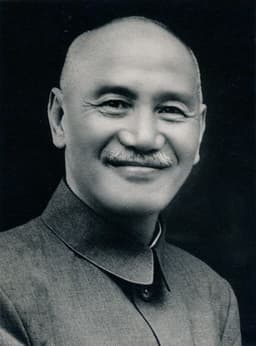
Chiang Kai-shek
Politician · Modern
60.6Total
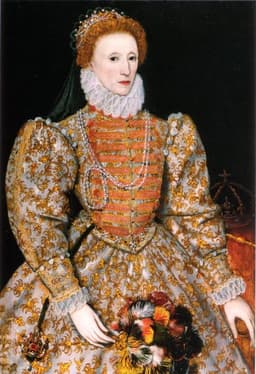
Elizabeth I
Politician · Modern
65.7Total
Basic Information
Born
1887
1533
Died
1975
1603
Era
Modern
Modern
Nationality
China
England
Occupation
Politician
Politician
Civilization
Eastern
Western
Score Comparison
Military (10%)
70.0
45.0
Political (20%)
62.7
78.0
Influence (20%)
65.0
65.0
Legacy (20%)
52.0
68.0
Leadership (15%)
66.0
75.0
Strategy (15%)
50.0
50.0
TOTAL
60.6
65.7
Chiang Kai-shek — Complete Timeline
1926 AD
Northern ExpeditionWar◆ Major
Chiang Kai-shek led the National Revolutionary Army in the Northern Expedition to defeat warlords and unify China. The campaign succeeded in capturing Beijing and establishing Kuomintang control over most of the country.
UnificationMilitary campaign
Impact: national
1927 AD
Shanghai Massacre of 1927Political Action◆ Major
Chiang Kai-shek ordered the purge of communists and leftists in Shanghai, resulting in thousands of deaths. This event broke the First United Front between the Kuomintang and the Communist Party, leading to civil war.
PurgeCivil war
Impact: nationaldestructive
1937 AD
Leadership during the Second Sino-Japanese WarWar
Chiang Kai-shek, as leader of the Kuomintang, commanded Chinese forces during the Second Sino-Japanese War. He directed the defense of Shanghai and the relocation of the capital to Chongqing, maintaining resistance against Japan.
World War IIChinese resistance
Impact: global
1945 AD
Signing of the Sino-Soviet Treaty of 1945Political Action◆ Major
Chiang Kai-shek signed the Sino-Soviet Treaty of Friendship and Alliance, which recognized Soviet interests in Manchuria in exchange for Soviet support against Japan. The treaty later facilitated Communist gains in the civil war.
DiplomacySoviet Union
Impact: global
1949 AD
Retreat to TaiwanPolitical Action
After losing the Chinese Civil War to the Communists, Chiang Kai-shek retreated to Taiwan with the remnants of the Kuomintang government and military. He established the Republic of China on Taiwan, claiming legitimacy over all of China.
TaiwanExileCold War
Impact: globaltragic
Elizabeth I — Complete Timeline
1559 AD
Act of Supremacy 1559Political Action◆ Major
Elizabeth I re-established the Church of England's independence from Rome, declaring herself Supreme Governor. This act, part of the Elizabethan Religious Settlement, restored Protestantism while maintaining some Catholic traditions, creating a via media that aimed to unify the nation.
Religious SettlementProtestantismChurch of England
Impact: nationalconstructive
1587 AD
Execution of Mary, Queen of ScotsPolitical Action◆ Major
After years of imprisonment, Elizabeth I signed the death warrant for Mary, Queen of Scots, who had been implicated in the Babington Plot to assassinate Elizabeth and claim the English throne. Mary's execution removed a major Catholic rival and solidified Elizabeth's position.
ExecutionCatholic RivalPlot
Impact: nationaltragic
1588 AD
Defeat of the Spanish ArmadaWar
The English navy under Lord Howard and Sir Francis Drake defeated the Spanish Armada, a massive invasion fleet sent by Philip II. Storms and English fireships scattered the Spanish fleet, preventing the invasion and establishing England as a major naval power.
Naval BattleSpainProtestantism
Impact: globalconstructive
1600 AD
Chartering of the East India CompanyPolitical Action◆ Major
Elizabeth I granted a royal charter to the East India Company, giving it a monopoly on English trade with Asia. This company would become a powerful instrument of British imperialism, eventually controlling large parts of India and shaping global trade.
TradeColonialismCharter
Impact: globalconstructive
1601 AD
Golden SpeechPolitical Action
In her final address to Parliament, Elizabeth I delivered the 'Golden Speech,' expressing her love for her subjects and her dedication to the realm. She addressed grievances over monopolies, promising reform, and cemented her image as a beloved monarch devoted to her people.
SpeechParliamentMonarchy
Impact: nationalconstructive
Expert Analysis
Elizabeth I vs Chiang Kai-shek
### The Virgin Queen and the Generalissimo: Two Paths to a Shared Score
History has a peculiar way of pairing figures who, on the surface, could not be more different, yet whose final tally of achievement seems eerily similar. Elizabeth I of England, the red-haired daughter of a beheaded queen, presided over a small island’s golden age. Chiang Kai-shek, the stern-faced son of a salt merchant, commanded a vast, wounded civilization through its darkest century. Both earned a total historical score of 70.2, a number that suggests parity. But the numbers are a trick of the light. What they reveal is not equality of outcome, but a profound divergence in the nature of power, the shape of a nation’s destiny, and the cruel arithmetic of timing.
### Origins
Elizabeth was born into a world of absolute certainty about a monarch’s role, yet her own place was a question mark. Her mother, Anne Boleyn, was executed when Elizabeth was not yet three; she was declared illegitimate, a princess without a title. Her England was a powder keg of religious war, caught between Catholic Europe and a nascent Protestant identity. She learned early that survival meant ambiguity, that a single clear answer could be a death sentence. Her education was rigorous—she read Latin, Greek, French, Italian—but her real schooling was in the art of silence, of waiting, of saying nothing while meaning everything.
Chiang was born in 1887, in a China that was collapsing. The Qing Dynasty was gasping its last, foreign powers carved up ports and railways, and the old Confucian order offered no answers to cannon fire. He was sent to military academies in Baoding and Tokyo, where he absorbed the brutal lesson that China’s weakness was a failure of will and organization. Unlike Elizabeth, who was forged in the crucible of courtly intrigue, Chiang was forged in the barracks. He saw the world not as a stage for subtle performance, but as a battlefield demanding decisive, often ruthless, action.
### Rise to Power
Elizabeth’s ascent was a slow, dangerous dance. Her half-sister, Mary I, imprisoned her in the Tower of London, suspecting her of Protestant plots. Elizabeth learned to play the victim, the loyal subject, the woman who posed no threat. When Mary died in 1558, Elizabeth inherited a kingdom bankrupt, divided, and weak. She did not conquer her throne; she survived her way into it.
Chiang’s rise was the opposite: a story of ambition, violence, and the deliberate seizure of opportunity. After Sun Yat-sen’s death in 1925, Chiang maneuvered to lead the Kuomintang. In 1926, he launched the Northern Expedition, a military campaign to crush the warlords and unify China. It was a triumph of organization and will. But at its heart was a choice. In 1927, in Shanghai, he ordered the massacre of thousands of communists and leftist allies—the very people who had helped him take the city. It was a cold, calculated act to eliminate rivals. Elizabeth had her rivals executed too—Mary, Queen of Scots, in 1587—but she signed the warrant only after years of agonizing delay, after the threat had become undeniable. Chiang pulled the trigger without hesitation.
### Leadership & Governance
Elizabeth’s genius was in restraint. She understood that a queen in a patriarchal age could not rule by force; she had to rule by symbol. She cultivated the image of the Virgin Queen, married to her people. Her Act of Supremacy in 1559 was a masterpiece of compromise—she declared herself Supreme Governor of the Church of England, not its head, a semantic distinction that allowed both Catholics and Protestants to find a home. She chartered the East India Company in 1600, not by conquering India, but by giving merchants a royal license to do business. Her military strategy in 1588 against the Spanish Armada was not to seek a grand battle, but to harass and scatter, to let the wind and the sea do the killing. Her leadership was a long game of patience.
Chiang’s leadership was a series of gambits. He was a brilliant organizer—the Northern Expedition proved that—but his governance was undermined by corruption, factionalism, and a reliance on warlord allies who were loyal only to themselves. During the Second Sino-Japanese War from 1937, he commanded the defense of China against a brutal invader, but his strategy was often defensive and attritional, sacrificing his own soldiers to preserve his army for the coming civil war against the Communists. He signed the Sino-Soviet Treaty of 1945, giving away interests in Manchuria to secure Stalin’s support, a deal that would haunt him. He was a general who saw politics as war by other means, and war as a tool of politics. Elizabeth saw politics as the art of not needing to fight.
### Triumph & Tragedy
Elizabeth’s greatest moment was the defeat of the Spanish Armada in 1588. It was a victory not of English strength, but of English resilience and luck—storms scattered the Spanish fleet, and the smaller English ships harried them to destruction. Elizabeth’s speech at Tilbury, where she declared she had “the heart and stomach of a king,” was a masterstroke of propaganda that transformed a near-disaster into a national myth. Her tragedy was personal: she never married, never produced an heir, and her reign ended with the crown passing to her rival’s son, James VI of Scotland.
Chiang’s greatest moment was leading China through eight years of war against Japan. He kept a fractured nation fighting when defeat seemed certain. But his tragedy was total. In 1949, after losing the Chinese Civil War to Mao Zedong, he fled to Taiwan, a general without an army, a leader of a country that no longer existed. He spent his remaining decades on an island, dreaming of a return that would never come. Elizabeth died in her bed, beloved. Chiang died in exile, embittered.
### Character & Destiny
Elizabeth’s caution was her strength; Chiang’s decisiveness was his flaw. She hesitated, and that hesitation saved her throne. He acted, and that action cost him a country. Elizabeth saw the world as a web of relationships to be managed; Chiang saw it as a hierarchy to be commanded. She was a master of the plausible denial, the ambiguous promise. He was a man of direct orders and purges. Their personalities were products of their eras: Elizabeth’s England was small and lucky, protected by the sea; Chiang’s China was vast and unlucky, invaded by Japan and torn by revolution. One could afford to wait; the other could not afford to fail.
### Legacy
Elizabeth’s legacy is a golden age: the English Renaissance, the works of Shakespeare, the foundation of the British Empire. She is remembered as Gloriana, the queen who made England matter. Chiang’s legacy is contested. In Taiwan, he is the father of the nation, the defender of free China. In mainland China, he is a footnote, a loser of history. His name is not on schools or streets; it is on a mausoleum in a provincial capital that few visit. Elizabeth’s score of 70.2 reflects a life that built something. Chiang’s same score reflects a life that tried and failed.
### Conclusion
The number 70.2 is a statistical ghost. It tells us that both figures were significant, but it cannot tell us why. Elizabeth I succeeded because she understood the limits of her power. Chiang Kai-shek failed because he did not. One ruled an island and shaped a world; the other ruled a continent and lost it. History is not a scorecard. It is a story of choices, and the same number can mean very different things. Elizabeth’s 70.2 is the sound of a queen’s steady heartbeat. Chiang’s is the echo of a general’s last, unanswered order.
Rankings
🥇
Elizabeth ILeader
Mil: 45.0Pol: 78.0Inf: 65.0
65.7
🥈
Chiang Kai-shek
Mil: 70.0Pol: 62.7Inf: 65.0
60.6
+5.1 behind
How This Comparison Works
Algorithm
Each figure is scored on 6 dimensions (0—100 scale) based on structured historical data: Military (10%), Political (20%), Influence (20%), Legacy (20%), Leadership (15%), Strategy (15%). The weighted total produces the final ranking.
Data Sources
Scores are computed from structured sub-indicators in the database. Scale factors adjust for era (Ancient ×0.85, Modern ×1.0) and civilization size (Eastern ×1.05, Other ×0.80) to account for differences in population and military scale.
Maximum 3 Figures
Comparisons are limited to 2—3 figures to ensure readability and statistical meaningfulness.
Error Margins
±5 points per dimension — Sub-scores are derived from historical records with inherent uncertainty. Two figures within 5 points on a dimension should be considered roughly equivalent in that area.
Total Score Accuracy
±3 points overall — The weighted combination of 6 dimensions produces a total score with approximately ±3 points of uncertainty. Differences of less than 3 points are not statistically significant— the figures are effectively tied.
Known Limitations
- Historical records are incomplete and uneven across civilizations
- Figures from oral-tradition societies may be underrepresented
- Occupation labels can misclassify multi-role figures
- Scores measure capability and impact, not moral character
- Quantitative scoring is a comparison tool, not absolute truth
Capability Radar
Military (10%) — Battles & Warfare
Battles
75
45
Win Rate
35
70
Expansion
65
55
Political (20%) — Governance & Reform
Reform
55
80
Diplomacy
60
85
Economy
40
80
Influence (20%) — Cultural & Global Reach
Cultural
60
85
Global
65
80
Legacy (20%) — Historical Impact
Historical
70
85
Longevity
55
85
Leadership (15%) — Power & Stability
Tenure
85
90
Stability
30
75
Strategy (15%) — Tactics & Innovation
Strategy
60
75
Tactics
55
60
Reform
50
65
Similar Comparisons
Comments & Discussion
No comments yet. Be the first to share your thoughts!