Loading...
Chiang Kai-shek vs Cleisthenes of Athens
Cleisthenes of Athens leads by 7.9 pts · 2 figures compared
…
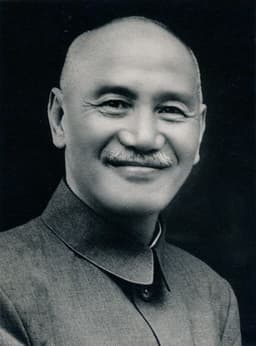
Chiang Kai-shek
Politician · Modern
60.6Total
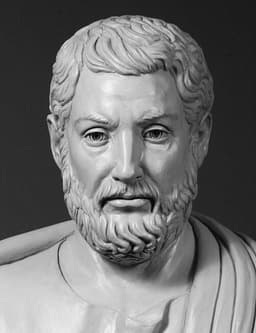
Cleisthenes of Athens
Politician · Ancient
68.5Total
Basic Information
Born
1887
-570
Died
1975
-508
Era
Modern
Ancient
Nationality
China
Athens
Occupation
Politician
Politician
Civilization
Eastern
Western
Score Comparison
Military (10%)
70.0
50.0
Political (20%)
62.7
62.7
Influence (20%)
65.0
80.0
Legacy (20%)
52.0
82.0
Leadership (15%)
66.0
62.0
Strategy (15%)
50.0
42.7
TOTAL
60.6
68.5
Chiang Kai-shek — Complete Timeline
1926 AD
Northern ExpeditionWar◆ Major
Chiang Kai-shek led the National Revolutionary Army in the Northern Expedition to defeat warlords and unify China. The campaign succeeded in capturing Beijing and establishing Kuomintang control over most of the country.
UnificationMilitary campaign
Impact: national
1927 AD
Shanghai Massacre of 1927Political Action◆ Major
Chiang Kai-shek ordered the purge of communists and leftists in Shanghai, resulting in thousands of deaths. This event broke the First United Front between the Kuomintang and the Communist Party, leading to civil war.
PurgeCivil war
Impact: nationaldestructive
1937 AD
Leadership during the Second Sino-Japanese WarWar
Chiang Kai-shek, as leader of the Kuomintang, commanded Chinese forces during the Second Sino-Japanese War. He directed the defense of Shanghai and the relocation of the capital to Chongqing, maintaining resistance against Japan.
World War IIChinese resistance
Impact: global
1945 AD
Signing of the Sino-Soviet Treaty of 1945Political Action◆ Major
Chiang Kai-shek signed the Sino-Soviet Treaty of Friendship and Alliance, which recognized Soviet interests in Manchuria in exchange for Soviet support against Japan. The treaty later facilitated Communist gains in the civil war.
DiplomacySoviet Union
Impact: global
1949 AD
Retreat to TaiwanPolitical Action
After losing the Chinese Civil War to the Communists, Chiang Kai-shek retreated to Taiwan with the remnants of the Kuomintang government and military. He established the Republic of China on Taiwan, claiming legitimacy over all of China.
TaiwanExileCold War
Impact: globaltragic
Cleisthenes of Athens — Complete Timeline
508 BC
Reform of the Athenian Tribes (Cleisthenes' Reforms)Reform
Cleisthenes reorganized the Athenian citizen body into ten new tribes based on demes (local districts), replacing the old four Ionian tribes. This broke the power of aristocratic clans and created a new political structure that formed the basis of Athenian democracy.
DemocracyPolitical ReformAthens
Impact: globalprogressive
Introduction of OstracismReform◆ Major
Cleisthenes introduced the practice of ostracism, allowing citizens to vote annually to exile a prominent figure for ten years. This mechanism was designed to prevent tyranny and remove threats to democracy. The first ostracism occurred in 487 BC.
DemocracyPolitical ReformExile
Impact: globalprogressive
Creation of the Council of 500 (Boule)Reform◆ Major
Cleisthenes established the Boule, a council of 500 citizens (50 from each tribe) chosen by lot. This body prepared legislation for the Assembly and oversaw daily administration. It replaced the aristocratic Areopagus as the main governing body, expanding citizen participation.
DemocracyPolitical ReformGovernment
Impact: globalprogressive
Exile of Isagoras and Spartan InterventionPolitical Action◆ Major
Cleisthenes' rival Isagoras called on Spartan king Cleomenes I to intervene in Athens. The Spartans expelled Cleisthenes and attempted to dissolve the Boule, but the Athenian people revolted, besieging the Acropolis and forcing the Spartans to withdraw. Cleisthenes was recalled.
Spartan InterventionDemocracyAthens
Impact: nationalconstructive
Expert Analysis
Chiang Kai-shek vs Cleisthenes of Athens
# The Architect and the Warlord: Cleisthenes and Chiang Kai-shek
On a spring morning in 508 BC, an exiled Athenian politician slipped back into his city under cover of darkness, his heart pounding with a gamble that would reshape Western civilization. Twenty-five centuries later, on a December day in 1949, a defeated Chinese general stood on a windswept airstrip in Chengdu, watching his world collapse around him before boarding a plane to an island he would never leave. Both men sought to build something lasting. One succeeded in ways he could never have imagined; the other failed in ways he could never escape.
Origins
Cleisthenes was born into the aristocratic Alcmaeonid family of Athens around 570 BC, a clan both powerful and cursed. His ancestors had been implicated in a sacrilegious massacre of political opponents, and the family had endured generations of exile and suspicion. This shadow of inherited disgrace may have shaped Cleisthenes' understanding that power built on fear alone could not endure. Growing up in an Athens still ruled by aristocratic clans, he witnessed the bloody feuds between noble houses that kept the city weak and divided.
Chiang Kai-shek was born in 1887 in a coastal village in Zhejiang province, China, into a family of modest means that had once been prosperous. His father died when he was young, and his mother raised him with a fierce ambition that bordered on obsession. The China of his youth was a dying empire, humiliated by foreign powers and torn apart by warlords. Chiang absorbed both the Confucian classics and the brutal realities of a world where only the strong survived. Where Cleisthenes inherited a curse that taught him caution, Chiang inherited a desperation that taught him ruthlessness.
Rise to Power
Cleisthenes entered history's stage through the narrow door of aristocratic competition. In the turbulent years after Athens overthrew its tyrant Hippias, Cleisthenes found himself locked in a power struggle with his rival Isagoras. When Isagoras called in Spartan troops to expel him, Cleisthenes did something unprecedented: he appealed to the common people. He promised them power in exchange for their support. The Athenian demos—the ordinary citizens—rose up, besieged the Spartans on the Acropolis, and brought Cleisthenes back in triumph. His rise was not a conquest but a bargain.
Chiang Kai-shek rose through the ranks of the Kuomintang, the revolutionary party founded by Sun Yat-sen. After Sun's death in 1925, Chiang maneuvered through a web of rivals, using a combination of military force, political cunning, and sheer will. In 1926, he launched the Northern Expedition, leading the National Revolutionary Army against the warlords who had carved up China. By 1928, he had nominally unified the country. His rise was a campaign of iron and blood, not negotiation.
Leadership & Governance
Cleisthenes' genius lay in architecture—the architecture of institutions. In a single year, 508 BC, he fundamentally rewired Athenian politics. He abolished the old four tribes based on kinship and replaced them with ten new tribes based on local districts called demes. This shattered the power of aristocratic clans and gave every citizen a political identity rooted in place, not blood. He created the Council of 500, chosen by lot, to prepare legislation. He introduced ostracism, a peaceful mechanism to exile dangerous politicians without civil war. His reforms were not about accumulating power for himself but about distributing it so broadly that no faction could seize control.
Chiang Kai-shek's leadership was the opposite. He governed through personal loyalty, patronage, and military command. During the Second Sino-Japanese War from 1937 to 1945, he directed Chinese forces against Japan with courage but also with a paranoid micromanagement that often undermined his own generals. He was a master of strategy on paper but struggled to execute it on the ground. The Shanghai Massacre of 1927, where he ordered the slaughter of thousands of communists and leftists, revealed a leader who saw compromise as weakness and extermination as governance. Where Cleisthenes built systems to contain conflict, Chiang built a system that depended on his own survival.
Triumph & Tragedy
Cleisthenes' greatest triumph was invisible at the time: he created a political system flexible enough to survive its own creator. When he was exiled by the Spartans and his rival Isagoras, the institutions he had built—the demes, the council, the assembly—continued to function. The demos had learned to govern themselves. The tragedy of Cleisthenes is that we know almost nothing of his later life; he disappears from history, perhaps because his reforms worked so well that he was no longer necessary.
Chiang's greatest triumph was leading China through eight years of brutal war against Japan, keeping a fractured nation in the fight when many predicted its collapse. He stood with the Allies and secured China's place at the table of victors. But his greatest tragedy followed immediately: the Chinese Civil War. In 1945, he signed the Sino-Soviet Treaty, granting Stalin concessions in Manchuria that fatally weakened his position. By 1949, his armies had disintegrated, and he fled to Taiwan, a ruler without a country.
Character & Destiny
Cleisthenes was a man who understood that power shared is power multiplied. His personality—calculating, patient, visionary—allowed him to think beyond his own lifetime. He was not a conqueror but a gardener, planting institutions that would outgrow him.
Chiang Kai-shek was a man who believed that power hoarded is power preserved. His diary entries reveal a leader constantly betrayed, constantly disappointed, constantly blaming others. He was a gardener who insisted on watering every plant himself and then wondered why the garden withered when he turned his back.
Legacy
Cleisthenes is remembered as the Father of Athenian Democracy. His reforms laid the foundation for the golden age of Pericles, for Socrates and Plato, for the idea that ordinary people could govern themselves. His legacy is not a statue but a system—one that echoes in every parliament and congress today.
Chiang Kai-shek is remembered as a tragic figure: the man who unified China and lost it, who fought Japan and fled from Mao. His legacy is the island of Taiwan, where his regime created a prosperous, democratic society that his mainland rule never achieved. The irony is that on Taiwan, his party eventually embraced the very democracy Cleisthenes invented.
Conclusion
One man built a house that others could live in; the other built a fortress that could only hold one. Cleisthenes created a system that made himself unnecessary. Chiang Kai-shek created a system that could not survive without him. The difference between them is not intelligence or courage but a deeper question: Do you trust the people you claim to lead? Cleisthenes bet everything on that trust and won a civilization. Chiang Kai-shek never placed that bet, and lost a country.
Rankings
🥇
Cleisthenes of AthensLeader
Mil: 50.0Pol: 62.7Inf: 80.0
68.5
🥈
Chiang Kai-shek
Mil: 70.0Pol: 62.7Inf: 65.0
60.6
+7.9 behind
How This Comparison Works
Algorithm
Each figure is scored on 6 dimensions (0—100 scale) based on structured historical data: Military (10%), Political (20%), Influence (20%), Legacy (20%), Leadership (15%), Strategy (15%). The weighted total produces the final ranking.
Data Sources
Scores are computed from structured sub-indicators in the database. Scale factors adjust for era (Ancient ×0.85, Modern ×1.0) and civilization size (Eastern ×1.05, Other ×0.80) to account for differences in population and military scale.
Maximum 3 Figures
Comparisons are limited to 2—3 figures to ensure readability and statistical meaningfulness.
Error Margins
±5 points per dimension — Sub-scores are derived from historical records with inherent uncertainty. Two figures within 5 points on a dimension should be considered roughly equivalent in that area.
Total Score Accuracy
±3 points overall — The weighted combination of 6 dimensions produces a total score with approximately ±3 points of uncertainty. Differences of less than 3 points are not statistically significant— the figures are effectively tied.
Known Limitations
- Historical records are incomplete and uneven across civilizations
- Figures from oral-tradition societies may be underrepresented
- Occupation labels can misclassify multi-role figures
- Scores measure capability and impact, not moral character
- Quantitative scoring is a comparison tool, not absolute truth
Capability Radar
Military (10%) — Battles & Warfare
Battles
75
22
Win Rate
35
27
Expansion
65
28
Political (20%) — Governance & Reform
Reform
55
95
Diplomacy
60
70
Economy
40
40
Influence (20%) — Cultural & Global Reach
Cultural
60
85
Global
65
80
Legacy (20%) — Historical Impact
Historical
70
90
Longevity
55
95
Leadership (15%) — Power & Stability
Tenure
85
30
Stability
30
60
Strategy (15%) — Tactics & Innovation
Strategy
60
35
Tactics
55
34
Reform
50
40
Similar Comparisons
Comments & Discussion
红太阳阴影里的历史6/16/2026
数据上更有意思:Cleisthenes改革的雅典人口不到30万,却影响了西方两千五百年的政治架构。老蒋统治的是当时世界人口最多的国家,结果呢?1949年溃退时他手下还有近60万军队,纸面实力比不少欧洲国家都强,结果一个月就崩了。规模越大,失败越响。
Warlord's Grave6/16/2026
Comparing a failed 20th-century strongman to the father of Athenian democracy is an insult to Cleisthenes. Chiang crushed dissent, mismanaged the economy under hyperinflation, and fled to Taiwan without ever building lasting institutions. Cleisthenes, by contrast, engineered the demokratia—not just a word but a system with ostracism, demes, and citizen councils. One founded a legacy; the other lost a continent.
军统不养史官6/16/2026
论操作,Cleisthenes好歹搞出了陶片放逐法,让老百姓自己决定赶谁走。老蒋呢?他在台湾搞戒严,连自家人都没法批评他。一个用制度防止独裁,一个用独裁防制度。别拿秦始皇比,Cleisthenes都不乐意跟你提鞋。
Polis Punk6/16/2026
Chiang couldn't even hold onto the mainland with US backing and a million-man army. Cleisthenes took on Athenian aristocrats with nothing but political cunning and redistricting. The former ran a client state; the latter invented citizenship that outlasted empires. One's legacy is Taiwan's shaky status; the other's is the Parthenon and Plato. Apples and oranges, but only one bore fruit.
Revisionist's Corner6/16/2026
Let's not canonize Cleisthenes too fast. Yes, he broke aristocratic power—but his reforms still excluded women, slaves, and most laborers. Athens was a democracy for a minority. Meanwhile, Chiang at least fought a real war against Japan, unlike Cleisthenes who dodged Persia until Marathon. One man’s "foundation" is another’s elite re-branding. Context matters, even across millennia.