Loading...
Chen Qun vs Themistocles
Themistocles leads by 12.5 pts · 2 figures compared
…
Chen Qun
Politician · Ancient
55.9Total
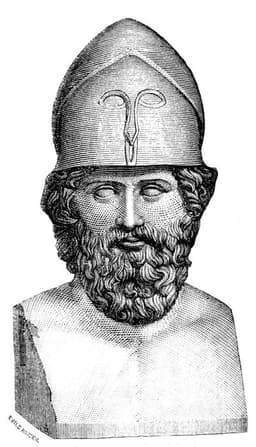
Themistocles
Politician · Ancient
68.4Total
Basic Information
Born
160
-524
Died
237
-459
Era
Ancient
Ancient
Nationality
China
Greece
Occupation
Politician
Politician
Civilization
Eastern
Western
Score Comparison
Military (10%)
10.0
80.0
Political (20%)
72.0
72.0
Influence (20%)
40.0
40.0
Legacy (20%)
75.0
80.0
Leadership (15%)
72.0
79.8
Strategy (15%)
45.5
76.0
TOTAL
55.9
68.4
Chen Qun — Complete Timeline
220 AD
Proposed the Nine-rank SystemReform◆ Major
Chen Qun proposed the Nine-rank system for civil service appointments to Cao Pi, the first emperor of Wei. This system ranked candidates based on family background and personal merit, replacing the earlier recommendation system and becoming the standard for official selection in China for centuries.
Civil Service ReformWei DynastyBureaucracy
Impact: nationalconstructive
Advised Cao Pi on Legal CodeReform
Chen Qun assisted Cao Pi in drafting the new legal code for the Wei dynasty. He advocated for clearer laws and more consistent punishments, contributing to the legal framework that helped stabilize Wei's early rule.
Legal ReformWei DynastyLaw
Impact: nationalconstructive
226 AD
Served as Minister over the MassesPolitical Action
Chen Qun was appointed Minister over the Masses (Sikong) under Emperor Cao Rui of Wei. In this high-ranking position, he oversaw civil administration and continued to refine the implementation of the Nine-rank system, solidifying its role in Wei governance.
AppointmentWei DynastyGovernment
Impact: nationalconstructive
Themistocles — Complete Timeline
483 BC
Construction of the Athenian FleetReform◆ Major
Themistocles persuaded the Athenian assembly to use silver from the Laurion mines to build a fleet of 200 triremes. This naval expansion transformed Athens into a major maritime power and was crucial for the victory at Salamis.
AthensNaval PowerReform
Impact: nationalconstructive
480 BC
Battle of SalamisWar
Themistocles commanded the Greek navy against the Persian fleet at Salamis. He lured the Persians into the narrow straits, where the Greek ships destroyed the larger Persian fleet. This victory ended the Persian threat to Greece and preserved Greek independence.
Greco-Persian WarsNaval BattleAthens
Impact: regionalconstructive
472 BC
Ostracism from AthensPolitical Action◆ Major
Themistocles was ostracized by the Athenian assembly, likely due to political rivalries and accusations of arrogance. He went into exile, first to Argos, then to Persia, where he was received by King Artaxerxes I.
AthensExileOstracism
Impact: nationaltragic
465 BC
Service under the Persian KingPolitical Action
After his ostracism, Themistocles fled to Persia and offered his services to King Artaxerxes I. He was granted governorship of Magnesia and other cities in Asia Minor, where he lived until his death. This act was seen as treason by many Athenians.
PersiaExileTreason
Impact: regional
Expert Analysis
Chen Qun vs Themistocles
### The Architect and the Bureaucrat: Two Paths to Immortality
History remembers its great men in starkly different ways. One, a brash Athenian who tricked an empire into ruin, died a fugitive in the very palace he had once defied. The other, a meticulous Chinese minister who spent decades perfecting a system of selection, died in his bed, his creation destined to shape a civilization for four centuries. Themistocles and Chen Qun never met, spoke no common language, and inhabited worlds separated by a continent and seven hundred years. Yet both were master politicians who solved the same fundamental problem: how to harness the chaos of human ambition for the stability of the state. Their different outcomes—one a flash of glory, the other a slow burn of influence—tell us as much about the societies they served as about the men themselves.
### Origins
Themistocles was born around 524 BCE into a world of fragile city-states, where a man’s worth was measured by his cunning in the assembly and his courage on the battlefield. His father was a minor aristocrat, his mother a non-Athenian, a stain that followed him like a shadow. He learned early that in democratic Athens, influence belonged to those who could persuade the crowd. He was not a man of deep learning; Plutarch later wrote that he “was possessed by an insatiable desire for fame.” The world of Chen Qun, born in 160 CE, could not have been more different. He entered a China already unified under the Han dynasty, a land where order came from written edicts and hereditary rank. His family were scholar-officials, steeped in Confucian texts. Where Themistocles learned to shout in the agora, Chen Qun learned to write in the court.
### Rise to Power
Their paths to power were mirrors of their eras. Themistocles rose by seizing a moment of crisis. In 483 BCE, when a rich vein of silver was discovered at Laurion, other politicians proposed distributing the wealth to the citizens. Themistocles saw something else: a fleet. He persuaded the assembly to spend the silver on two hundred triremes, the sleek warships that would become Athens’s sword. It was a gamble—against the Persians, against the Spartans, against common sense. Chen Qun, by contrast, rose through patient service. He served under the warlord Cao Cao, then under Cao Pi, who in 220 CE declared himself the first emperor of the Wei dynasty. It was in that year, amid the blood-soaked chaos of the Three Kingdoms, that Chen Qun made his move. He proposed the Nine-rank System, a bureaucratic framework that would assign every official a grade based on merit, not birth. It was not a speech to a crowd; it was a memorandum to a throne.
### Leadership & Governance
Themistocles governed like a naval commander—bold, deceptive, and utterly focused on the immediate threat. His greatest moment came in 480 BCE. The Persian fleet, under Xerxes, had crushed the Greeks at Thermopylae and was bearing down on Athens. Themistocles evacuated the city, then lured the Persians into the narrow strait of Salamis. In the cramped waters, the heavy Persian ships became tangled and useless. The Greek triremes, faster and more maneuverable, rammed them to pieces. It was a victory so complete that it ended the Persian invasion of Europe. Themistocles’s strategy was brilliant, but his governance was brittle. He was arrogant, boastful, and quick to remind everyone of his genius. The Athenians, who invented ostracism precisely to humble the over-mighty, sent him into exile in 472 BCE. Chen Qun’s leadership was the opposite. He was a builder, not a destroyer. As Minister over the Masses under Emperor Cao Rui, he helped draft a legal code that emphasized clarity and consistency. The Nine-rank System did not win battles; it won administrators. It allowed the Wei state to select capable men from across its territories, creating a bureaucracy that could outlast any single emperor. Chen Qun’s power was quiet, incremental, and institutional. He did not need to be loved; he needed to be needed.
### Triumph & Tragedy
Themistocles’s triumph was Salamis—a single day that saved Greece and, arguably, Western civilization. His tragedy was the rest of his life. After his ostracism, he fled to the one place no Greek should go: Persia. He offered his services to King Artaxerxes I, the son of the very man he had defeated. The king, with a grim sense of irony, granted him governorships in Asia Minor. Themistocles, the savior of Greece, died in 459 BCE as a Persian courtier, far from the sea he had once commanded. Chen Qun’s triumph was far less dramatic: the quiet adoption of his system by the Wei, then the Jin, then every major dynasty that followed. His tragedy was that the system eventually ossified. The “merit” it measured became a mask for hereditary privilege. By the time of the Sui and Tang dynasties, the Nine-rank System had to be replaced by the imperial examinations. But even then, Chen Qun’s ghost lingered: the idea that a state should select its officials by objective standards, not by blood.
### Character & Destiny
Themistocles’s character was his fate. He was too clever for his own good, too proud to be loved, too useful to be killed. He lived by his wits and died by them. Chen Qun’s character was his legacy. He was patient, methodical, and self-effacing—the perfect bureaucrat. He understood that power in a vast empire does not come from a single victory but from the daily, tedious work of administration. One man changed history in an afternoon; the other changed it over a lifetime.
### Legacy
Themistocles is remembered as a name, a battle, a story. His tomb, according to legend, was built in the harbor of Piraeus, so that the Athenians could see it as they sailed out to fight. Chen Qun is remembered as a system. His name is less known, but his Nine Ranks governed China for four hundred years. One gave the West its defining naval victory; the other gave the East its defining civil service. Both were politicians. One was a flame; the other was a foundation.
### Conclusion
What drove their different outcomes? Not talent—both were brilliant. Not opportunity—both seized the moment. What drove them was the nature of the worlds they inhabited. Themistocles lived in a world of city-states, where one man could sway an assembly and one battle could decide a war. Chen Qun lived in a world of empires, where influence flowed through channels and power was measured in decades, not days. The Athenian built a fleet; the Chinese built a machine. And in the end, the machine outlasted the fleet, but the fleet still sails in our imagination. Perhaps that is the deepest difference: Themistocles gave us a story, and Chen Qun gave us a structure. We remember the story; we live in the structure.
Rankings
🥇
ThemistoclesLeader
Mil: 80.0Pol: 72.0Inf: 40.0
68.4
🥈
Chen Qun
Mil: 10.0Pol: 72.0Inf: 40.0
55.9
+12.5 behind
How This Comparison Works
Algorithm
Each figure is scored on 6 dimensions (0—100 scale) based on structured historical data: Military (10%), Political (20%), Influence (20%), Legacy (20%), Leadership (15%), Strategy (15%). The weighted total produces the final ranking.
Data Sources
Scores are computed from structured sub-indicators in the database. Scale factors adjust for era (Ancient ×0.85, Modern ×1.0) and civilization size (Eastern ×1.05, Other ×0.80) to account for differences in population and military scale.
Maximum 3 Figures
Comparisons are limited to 2—3 figures to ensure readability and statistical meaningfulness.
Error Margins
±5 points per dimension — Sub-scores are derived from historical records with inherent uncertainty. Two figures within 5 points on a dimension should be considered roughly equivalent in that area.
Total Score Accuracy
±3 points overall — The weighted combination of 6 dimensions produces a total score with approximately ±3 points of uncertainty. Differences of less than 3 points are not statistically significant— the figures are effectively tied.
Known Limitations
- Historical records are incomplete and uneven across civilizations
- Figures from oral-tradition societies may be underrepresented
- Occupation labels can misclassify multi-role figures
- Scores measure capability and impact, not moral character
- Quantitative scoring is a comparison tool, not absolute truth
Capability Radar
Military (10%) — Battles & Warfare
Battles
19
75
Win Rate
22
85
Expansion
25
60
Political (20%) — Governance & Reform
Reform
85
75
Diplomacy
50
85
Economy
60
65
Influence (20%) — Cultural & Global Reach
Cultural
70
70
Global
65
75
Legacy (20%) — Historical Impact
Historical
80
85
Longevity
85
80
Leadership (15%) — Power & Stability
Tenure
40
70
Stability
65
60
Strategy (15%) — Tactics & Innovation
Strategy
31
90
Tactics
32
95
Reform
36
80
Similar Comparisons
Comments & Discussion
红衣铁笔6/16/2026
陈群简直是官僚主义的祖师爷!九品中正制听着高大上,实际上就是给豪门世袭特权开了合法后门。比起狄米斯托克利在萨拉米斯海战前用诡计骗波斯舰队进入狭窄海峡的军事天才,陈群只会坐在案牍前慢慢磨制度,结果拖垮了魏晋的活力。一个用刀剑赌国运,一个用笔墨锁阶层,高下立判。
ナマクベイビー6/16/2026
Themistocles was a gambler who risked everything on naval victory at Salamis—a high-stakes bluff that paid off. Chen Qun? A glorified HR manager who invented the nine-rank system to keep aristocrats in power. One changed the course of history with a single battle; the other wrote bureaucratic paperwork that lasted four centuries. Give me the guy who outsmarted Xerxes over the guy who outorganized a civil service exam any day. Real power isn't in memos.
Salaminian Revenant6/16/2026
Data skeptic here: Themistocles didn't build a system—he built a navy with silver from the Laurion mines and a desperate coalition of Greek city-states. Chen Qun created a talent selection framework that lasted 400 years. You can't compare a tactical flash with a structural legacy. The Athenian won a war; the Chinaman designed how a civilization selects its leaders for centuries. Long-term impact? Chen Qun by a mile. Themistocles died serving a Persian king he once defeated—talk about legacy vol
金石辨伪6/16/2026
古典学角度:你们把两个完全不同语境的人硬凑一起。狄米斯托克利生活在直接民主的雅典,政治是广场上的口才和海军舰队的博弈;陈群处在士族门阀逐渐成型的汉末,政治是家族同盟和察举制度的改良。陈群的九品中正制其实是在混乱中建立秩序的一种尝试,不是单纯的"官僚主义"。狄米斯托克利被陶片放逐时,陈群却能善终,这背后是两种政治生态的根本差异。
Legacy Architect6/16/2026
History buff perspective: Chen Qun didn't just "perfect selection"—he solved a crisis. After the Han collapse, meritocracy was a joke; warlords promoted their cousins. The nine-rank system at least created a standardized framework for evaluating talent, even if it degraded later. Themistocles? Brilliant tactician, awful long-term thinker. He built Athens' naval empire, then got exiled, then defected to Persia. Chen Qun built something that outlived his own dynasty. That's real immortality.