Loading...
Chen Qun vs Cleisthenes
Cleisthenes leads by 22.4 pts · 2 figures compared
…
Chen Qun
Politician · Ancient
55.9Total
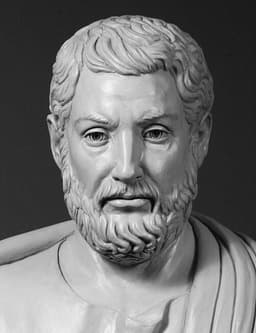
Cleisthenes
Politician · Ancient
78.3Total
Basic Information
Born
160
-570
Died
237
-508
Era
Ancient
Ancient
Nationality
China
Greece
Occupation
Politician
Politician
Civilization
Eastern
Western
Score Comparison
Military (10%)
10.0
49.4
Political (20%)
72.0
62.7
Influence (20%)
40.0
92.0
Legacy (20%)
75.0
92.0
Leadership (15%)
72.0
72.0
Strategy (15%)
45.5
71.3
TOTAL
55.9
78.3
Chen Qun — Complete Timeline
220 AD
Proposed the Nine-rank SystemReform◆ Major
Chen Qun proposed the Nine-rank system for civil service appointments to Cao Pi, the first emperor of Wei. This system ranked candidates based on family background and personal merit, replacing the earlier recommendation system and becoming the standard for official selection in China for centuries.
Civil Service ReformWei DynastyBureaucracy
Impact: nationalconstructive
Advised Cao Pi on Legal CodeReform
Chen Qun assisted Cao Pi in drafting the new legal code for the Wei dynasty. He advocated for clearer laws and more consistent punishments, contributing to the legal framework that helped stabilize Wei's early rule.
Legal ReformWei DynastyLaw
Impact: nationalconstructive
226 AD
Served as Minister over the MassesPolitical Action
Chen Qun was appointed Minister over the Masses (Sikong) under Emperor Cao Rui of Wei. In this high-ranking position, he oversaw civil administration and continued to refine the implementation of the Nine-rank system, solidifying its role in Wei governance.
AppointmentWei DynastyGovernment
Impact: nationalconstructive
Cleisthenes — Complete Timeline
510 BC
Expulsion of the PeisistratidsPolitical Action◆ Major
Cleisthenes, with the support of the Alcmaeonid family and Spartan assistance, led the overthrow of the tyrant Hippias, son of Peisistratus. This ended the Peisistratid tyranny in Athens and opened the way for democratic reforms.
Tyranny OverthrownAthensSparta
Impact: nationalconstructive
508 BC
Reforms of CleisthenesReform
Cleisthenes reorganized the Athenian citizen body into ten new tribes based on demes, replacing the old four Ionian tribes. He established the Council of 500 (Boule) and introduced ostracism, creating a system of isonomia (equal rights) that is considered the foundation of Athenian democracy.
Athenian DemocracyConstitutional ReformAncient Greece
Impact: globalprogressive
507 BC
Introduction of OstracismReform◆ Major
Cleisthenes instituted ostracism, a procedure allowing Athenian citizens to vote annually to exile a prominent citizen deemed a threat to democracy for ten years. This mechanism aimed to prevent the rise of a new tyrant and stabilize the democratic system.
Athenian DemocracyPolitical MechanismExile
Impact: national
Expert Analysis
Chen Qun vs Cleisthenes
### The Architect and the Administrator: Cleisthenes and Chen Qun
In the fading light of the sixth century BCE, the Athenian Acropolis still bore the scars of tyranny. A single man, Cleisthenes, stood before the citizen assembly, his voice rising above the murmur of a people newly freed from the Peisistratids. Across the world, nearly eight hundred years later, in the court of the fledgling Cao Wei dynasty, another man, Chen Qun, knelt before Emperor Cao Pi, presenting a scroll that would redefine the very nature of governance. Both were reformers, but their canvases were entirely different: one painted on the volatile clay of direct democracy, the other on the rigid parchment of imperial bureaucracy. One sought to empower the many; the other, to stabilize the few. Why did their paths diverge so profoundly, and what drove their contrasting outcomes?
### Origins
Cleisthenes was born into the aristocratic Alcmaeonid family of Athens around 570 BCE, a clan both powerful and cursed—tainted by the ancient "Cylonian pollution." His world was one of city-state rivalries, shifting alliances, and the constant threat of populist tyrants. The Greek polis was a small, face-to-face society where every male citizen could theoretically have a voice. This intimate scale made radical political experiments possible. Chen Qun, born in 160 CE in the waning days of the Han Dynasty, inherited a vastly different legacy. He was a product of a crumbling empire, a world of vast territories, entrenched literati families, and a centuries-old tradition of imperial rule. His China was not a city but a continent, and its problems were not about freeing a populace from a single tyrant, but about managing a sprawling state after a century of chaos. His era—the Three Kingdoms—was one of survival, where merit and order were not philosophical ideals but existential necessities.
### Rise to Power
Cleisthenes’s rise was a dramatic, high-stakes gamble. In 510 BCE, with Spartan spears behind him, he led the expulsion of the tyrant Hippias, ending the Peisistratid dynasty. But power did not simply fall into his lap. He faced a fierce rival, Isagoras, who appealed to conservative aristocrats and even called in Spartan intervention. Cleisthenes was forced into exile, his reforms seemingly dead. Yet the Athenian demos—the common people—rose up, expelling Isagoras and the Spartans. They recalled Cleisthenes not as a tyrant, but as a reformer. This popular uprising was the crucial turning point. Chen Qun’s ascent was more measured, a steady climb through the ranks of a collapsing Han bureaucracy, then into the service of the rising warlord Cao Cao. His key moment came in 220 CE, when Cao Pi was about to formally establish the Wei dynasty. Chen Qun proposed the Nine-rank System, a radical overhaul of civil service selection. He did not need a popular revolt; he needed the emperor’s ear. His rise was not a revolution from below, but a strategic proposal from within.
### Leadership & Governance
Cleisthenes’s reforms of 508 BCE were a surgical strike against kinship-based politics. He dissolved the old four Ionian tribes, which were rooted in family and clan, and reorganized the Athenian citizen body into ten new, artificial tribes based on local demes (villages). This broke the power of aristocratic factions. He then instituted ostracism in 507 BCE, a peaceful, institutionalized method for exiling a dangerously popular citizen without bloodshed. His leadership was about creating a system where the masses could govern themselves—a radical, fragile trust in the common man. Chen Qun’s governance was the opposite. His Nine-rank System, implemented in 220 CE, created a hierarchy of local officials who graded candidates into nine classes of talent and family standing. It was a way to bring order to a chaotic meritocracy, to ensure that capable men from respected families filled the empire’s vast bureaucracy. He also advised Cao Pi on drafting a clearer legal code, emphasizing consistency over arbitrary rule. His leadership was about building a stable, predictable pyramid of authority from the top down. Cleisthenes built a stage for the people; Chen Qun built a ladder for the official.
### Triumph & Tragedy
Cleisthenes’s triumph was the creation of Athenian democracy itself. The system he designed, with its Council of 500 and popular assembly, would endure for nearly two centuries, fueling the Golden Age of Pericles. His tragedy was that he did not live to see its full flowering. Exiled again after his reforms, he faded from history, his personal fate unknown. The system outlived the man. Chen Qun’s triumph was equally monumental: the Nine-rank System became the cornerstone of Chinese civil service for over three hundred years, stabilizing the Wei dynasty and influencing later dynasties. His tragedy was more subtle. The system, intended to judge merit, gradually ossified into a tool of the great aristocratic families, stifling social mobility. The ladder he built became a wall. Where Cleisthenes’s reforms unleashed volatile energy, Chen Qun’s created a stable but increasingly rigid order.
### Character & Destiny
Cleisthenes was a risk-taker, a political innovator who gambled on the wisdom of the crowd. His destiny was to be a catalyst, not a ruler. He was the man who lit the fuse of democracy, then stepped back. Chen Qun was a builder, a cautious institutionalist who believed in the power of structure. His destiny was to be the architect of a system that would both serve and constrain generations. One character was forged in the crucible of a small, competitive city-state; the other in the vast, collapsing empire that demanded order above all else. Their different personalities were perfectly suited to their different worlds.
### Legacy
Cleisthenes is remembered as the "Father of Athenian Democracy," his name synonymous with the birth of a political ideal that still shapes the West. His legacy is a living idea, constantly debated and reimagined. Chen Qun, with a total score of 71.3 compared to Cleisthenes’s 78.4, is less a household name, but his influence is arguably more tangible. The Nine-rank System, for all its flaws, was a foundational step toward the world’s first true civil service examination system. His legacy is a system, not a slogan.
### Conclusion
Standing on the Pnyx in Athens, a citizen could shout his opinion to the sky. Kneeling in the court of Luoyang, a minister could present a memorial to his emperor. One man built a space for voices; the other, a channel for talent. Cleisthenes and Chen Qun never met, but they faced the same eternal question: how do you govern a people? Their answers—one radical and democratic, the other pragmatic and hierarchical—were written not just in laws, but in the very geography and history of their worlds. The Athenian sun set, but the idea of democracy endured. The Wei dynasty fell, but the Chinese bureaucracy grew. In the end, both architects left behind a blueprint for power that outlasted their own ambitions, a reminder that the deepest reforms are not about the men who make them, but about the systems they leave behind.
Rankings
🥇
CleisthenesLeader
Mil: 49.4Pol: 62.7Inf: 92.0
78.3
🥈
Chen Qun
Mil: 10.0Pol: 72.0Inf: 40.0
55.9
+22.4 behind
How This Comparison Works
Algorithm
Each figure is scored on 6 dimensions (0—100 scale) based on structured historical data: Military (10%), Political (20%), Influence (20%), Legacy (20%), Leadership (15%), Strategy (15%). The weighted total produces the final ranking.
Data Sources
Scores are computed from structured sub-indicators in the database. Scale factors adjust for era (Ancient ×0.85, Modern ×1.0) and civilization size (Eastern ×1.05, Other ×0.80) to account for differences in population and military scale.
Maximum 3 Figures
Comparisons are limited to 2—3 figures to ensure readability and statistical meaningfulness.
Error Margins
±5 points per dimension — Sub-scores are derived from historical records with inherent uncertainty. Two figures within 5 points on a dimension should be considered roughly equivalent in that area.
Total Score Accuracy
±3 points overall — The weighted combination of 6 dimensions produces a total score with approximately ±3 points of uncertainty. Differences of less than 3 points are not statistically significant— the figures are effectively tied.
Known Limitations
- Historical records are incomplete and uneven across civilizations
- Figures from oral-tradition societies may be underrepresented
- Occupation labels can misclassify multi-role figures
- Scores measure capability and impact, not moral character
- Quantitative scoring is a comparison tool, not absolute truth
Capability Radar
Military (10%) — Battles & Warfare
Battles
19
58
Win Rate
22
62
Expansion
25
59
Political (20%) — Governance & Reform
Reform
85
95
Diplomacy
50
70
Economy
60
40
Influence (20%) — Cultural & Global Reach
Cultural
70
85
Global
65
85
Legacy (20%) — Historical Impact
Historical
80
90
Longevity
85
95
Leadership (15%) — Power & Stability
Tenure
40
30
Stability
65
60
Strategy (15%) — Tactics & Innovation
Strategy
31
62
Tactics
32
67
Reform
36
72
Similar Comparisons
Comments & Discussion
SkepticalHistorian6/16/2026
Look, comparing Cleisthenes to Chen Qun is like comparing a startup founder to a corporate CEO. Cleisthenes redesigned Athens from scratch with 139 demes—but it affected maybe 30,000 citizens total. Chen Qun's nine-rank system evaluated millions across China. The Athenian assembly could fit in a modern football stadium; Cao Wei ruled a bureaucracy of 50,000 officials. Scale matters, and Chen Qun's solution was far more complex and practical for a real empire. Don't romanticize the Greek experime
民主解构师6/16/2026
拿克利斯提尼和陈群比,简直是拿茶馆辩论和国务院会议相提并论。克利斯提尼把雅典分成139个德谟,听着很革命,但那是给三万人看的政治秀。陈群搞九品中正制,那是给一个等级社会输液——他承认世族力量存在,用制度去驯化它,而不是假装人人平等。希腊人搞的是"广场民主秀",中国人在做"治大国如烹小鲜"的苦活。历史不选俏皮的幻想,只选务实的结果。
MilitaryStrategist6/16/2026
Cleisthenes' reforms made Athens agile for war—the tribal system crosscut old loyalties, boosting hoplite cohesion. That's how they beat Persia at Marathon. But Chen Qun's nine-rank system solved the Han collapse problem: how to recruit talent when the center is weak. Cleisthenes sharpened a spear; Chen Qun built the forge. Both worked in their context, but Chen Qun's system lasted 400 years—Cleisthenes' reforms were dead by the Peloponnesian War. Stability beats flash every time.
古典文献控6/16/2026
读《雅典政制》时,你会被克利斯提尼的陶片放逐法惊艳——多聪明啊,让人民自己流放暴君!但读《三国志·陈群传》呢?陈群对曹丕说,"若推行九品,中正官须选贤良之士,否则天下怨嗟。"他的谨慎像老中医把脉,而克利斯提尼像魔术师放烟火。雅典民主是玻璃制,好看但易碎;九品中正制是铸铁的,粗糙但扛得住千年风雨。历史教我们的,别光看谁更炫,要看谁更耐用。
RevisionistEyes6/16/2026
Everyone praises Cleisthenes as the father of democracy, but he was just reshuffling aristocratic power. The Alcmaeonids had been exiled; he needed a new power base. His demes and tribes were brilliant gerrymandering to break his rivals' influence. Meanwhile, Chen Qun was honest: he built a system that entrenched the scholar-gentry because that was the only stable foundation left after the Han collapse.