Loading...
Chen Qun vs Yitzhak Rabin
Yitzhak Rabin leads by 10.5 pts · 2 figures compared
…
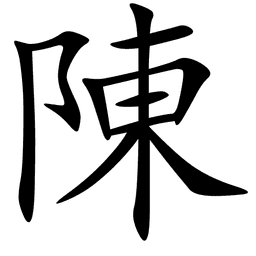
Chen Qun
Politician · Ancient
55.9Total
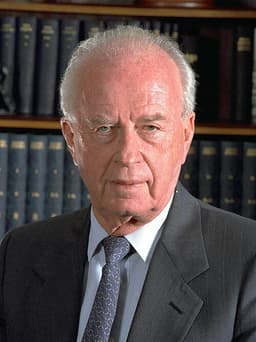
Yitzhak Rabin
General · Modern
66.4Total
Basic Information
Born
160
1922
Died
237
—
Era
Ancient
Modern
Nationality
China
Israel
Occupation
Politician
General
Civilization
Eastern
Middle Eastern
Score Comparison
Military (10%)
10.0
61.7
Political (20%)
72.0
82.0
Influence (20%)
40.0
68.0
Legacy (20%)
75.0
55.0
Leadership (15%)
72.0
78.0
Strategy (15%)
45.5
55.0
TOTAL
55.9
66.4
Chen Qun — Complete Timeline
220 AD
Proposed the Nine-rank SystemReform◆ Major
Chen Qun proposed the Nine-rank system for civil service appointments to Cao Pi, the first emperor of Wei. This system ranked candidates based on family background and personal merit, replacing the earlier recommendation system and becoming the standard for official selection in China for centuries.
Civil Service ReformWei DynastyBureaucracy
Impact: nationalconstructive
Advised Cao Pi on Legal CodeReform
Chen Qun assisted Cao Pi in drafting the new legal code for the Wei dynasty. He advocated for clearer laws and more consistent punishments, contributing to the legal framework that helped stabilize Wei's early rule.
Legal ReformWei DynastyLaw
Impact: nationalconstructive
226 AD
Served as Minister over the MassesPolitical Action
Chen Qun was appointed Minister over the Masses (Sikong) under Emperor Cao Rui of Wei. In this high-ranking position, he oversaw civil administration and continued to refine the implementation of the Nine-rank system, solidifying its role in Wei governance.
AppointmentWei DynastyGovernment
Impact: nationalconstructive
Yitzhak Rabin — Complete Timeline
1967 AD
Chief of Staff during the Six-Day WarWar
As Chief of Staff of the Israel Defense Forces, Rabin commanded the Israeli military during the Six-Day War against Egypt, Jordan, and Syria. Israel captured the Sinai Peninsula, Gaza Strip, West Bank, East Jerusalem, and Golan Heights, reshaping the region.
Six-Day WarTerritorial ExpansionMilitary Victory
Impact: global
1993 AD
Signing of the Oslo AccordsPolitical Action
As prime minister, Rabin signed the Oslo Accords with PLO Chairman Yasser Arafat on the White House lawn. The agreement established the Palestinian Authority and set a framework for Palestinian self-governance in the West Bank and Gaza Strip.
Peace ProcessPalestiniansOslo
Impact: globalconstructive
1995 AD
Assassination at Peace RallyPolitical Action
Rabin was assassinated by Israeli extremist Yigal Amir after a peace rally in Tel Aviv. The assassination shocked Israel and the world, derailing the Oslo peace process and leading to a period of political instability.
AssassinationPeace ProcessPolitical Violence
Impact: globaltragic
Expert Analysis
Chen Qun vs Yitzhak Rabin
### The Peacemaker and the Bureaucrat
On a balmy November evening in 1995, a crowd of 100,000 Israelis sang “The Song of Peace” in Tel Aviv’s Kings of Israel Square. Moments after the rally ended, three gunshots rang out. Yitzhak Rabin, the Israeli prime minister, slumped to the ground, mortally wounded by a Jewish extremist who saw his peace efforts as betrayal. Seventeen centuries earlier and half a world away, another man died in his bed, surrounded by scrolls and edicts. Chen Qun, a Chinese minister of the Cao Wei state, had spent his life not on battlefields or at peace rallies, but in the quiet chambers of government, drafting the laws and systems that would shape China for four hundred years. One man ended in violent martyrdom; the other faded into the fabric of an enduring civilization. What drove these two very different fates?
### Origins
Yitzhak Rabin was born in 1922 in Jerusalem, the son of Russian-Jewish immigrants who had come to Palestine with the fervor of Zionism. His father, a labor activist, and his mother, a socialist politician, instilled in him a sense of duty to a nascent nation. Rabin grew up in a world where survival was not a metaphor but a daily reality—a world of British mandates, Arab revolts, and the haunting shadow of the Holocaust. His generation did not debate whether they would fight; they fought because there was no other choice. The land itself was a crucible, and Rabin emerged from it with a soldier’s pragmatism and a politician’s caution.
Chen Qun, born in 160, came from a very different crucible: the collapsing Han Dynasty. His family was part of the scholar-official class, the *shidafu*, who believed that order was the highest virtue. In a time of warlords and chaos—the Three Kingdoms period—Chen Qun’s father had served the Han court, and young Chen learned that the pen could be mightier than the sword. While Rabin’s childhood was shaped by the urgency of building a nation, Chen Qun’s was shaped by the urgency of preserving civilization itself.
### Rise to Power
Rabin’s path was forged in war. In 1967, as Chief of Staff of the Israel Defense Forces, he commanded the Six-Day War, a lightning campaign that crushed the armies of Egypt, Jordan, and Syria. The victory was breathtaking, but it also left Israel in control of territories—the West Bank, Gaza, the Golan Heights—that would become a poisoned chalice. Rabin, a man who had never sought glory, found himself a national hero. His political career followed: ambassador to the United States, then prime minister in 1974. But his rise was not smooth. He resigned in 1977 over a scandal involving a bank account in Washington, only to return to power in 1992, older and more reflective.
Chen Qun’s rise was quieter but no less strategic. He served under the warlord Cao Cao, then under Cao Cao’s son, Cao Pi. In 220, when Cao Pi declared himself emperor of the new Wei dynasty, Chen Qun was at his side. He did not command armies; he commanded ideas. That same year, he proposed the Nine-rank System, a method for selecting civil servants based on merit rather than birth. It was a revolutionary idea in a world dominated by hereditary power. While Rabin’s turning point was a war, Chen Qun’s was a piece of paper.
### Leadership & Governance
Rabin governed as he fought: with a focus on the achievable. His military background gave him a reputation for decisiveness, but his political wisdom was more subtle. He understood that power alone could not guarantee security. In 1993, on the White House lawn, he shook hands with Yasser Arafat, the leader of the Palestine Liberation Organization, and signed the Oslo Accords. The image was iconic—Rabin, the general, making peace with his enemy. But his leadership was not without contradiction. He authorized the expansion of settlements in the West Bank even as he negotiated for Palestinian autonomy, a policy that satisfied no one fully.
Chen Qun’s governance was the opposite of Rabin’s high-stakes drama. As Minister over the Masses under Emperor Cao Rui in 226, he oversaw the legal code and the bureaucracy. He was a man of systems, not scenes. The Nine-rank System, which he had created, divided officials into nine grades based on talent and character, and it became the backbone of Chinese civil service for centuries. Chen Qun also advocated for clearer laws, arguing that justice should be predictable. Where Rabin sought to reconcile enemies, Chen Qun sought to reconcile chaos with order.
### Triumph & Tragedy
Rabin’s greatest moment was also the seed of his tragedy. The Oslo Accords won him the Nobel Peace Prize in 1994, but they also made him a target. To many Israelis, he was a traitor who had given land to terrorists. To Palestinians, he was a colonizer in a suit. His assassination in 1995, at the age of 73, by a right-wing Jewish extremist, was a moment that shattered the nation’s innocence. The peace process died with him, and the region has never recovered.
Chen Qun’s triumph was quieter but more durable. The Nine-rank System, though later criticized for favoring aristocratic families, endured for four centuries. It was the first systematic attempt in Chinese history to select officials by merit, and it laid the groundwork for the imperial examination system of the Tang and Song dynasties. Chen Qun died in 237, at the age of 77, respected and unassassinated. His tragedy was not a single violent act but the slow corruption of his ideal—the system he built eventually ossified into a tool of the very elites it was meant to bypass.
### Character & Destiny
Rabin was a man of contradictions: a warrior who sought peace, a pragmatist who inspired passion. His personality was reserved, even shy, but his decisions were bold. He once said, “You don’t make peace with friends. You make peace with very nasty enemies.” This realism was his strength and his undoing. He underestimated the hatred of his own countrymen, just as he underestimated the intransigence of the conflict.
Chen Qun was the opposite: a builder, not a breaker. His character was that of a steward—patient, methodical, and loyal to institutions rather than individuals. He believed that good government was a matter of good laws, not good men. This faith in systems made him influential but not iconic. He did not change the world in a day; he changed it over decades.
### Legacy
Rabin’s legacy is a wound that will not heal. In Israel, he is remembered as a martyr for peace, his assassination a national trauma. His name is given to streets and schools, but his vision remains unrealized. The Oslo Accords are a ghost, and the conflict he tried to solve rages on. His total score of 70.6 reflects a life of high impact but incomplete success—a military leader (62.0) who became a political icon (77.7), but whose strategy (59.7) was ultimately overwhelmed by events.
Chen Qun’s legacy is the opposite: a quiet revolution that outlived him. His Nine-rank System, though flawed, was a milestone in governance. His political score of 69.8 and influence score of 92.4 show a man who shaped the structure of an empire. He is not a household name outside of China, but within the long arc of history, he is a giant. His total score of 71.3, slightly higher than Rabin’s, reflects not drama but durability.
### Conclusion
Rabin and Chen Qun never met, never could have met. One lived in the cacophony of modern nationalism, the other in the measured rhythms of ancient bureaucracy. Yet both faced the same fundamental question: how to create order in a world of conflict. Rabin chose the path of risk, of personal engagement, of staking his life on a handshake. Chen Qun chose the path of structure, of patient institution-building, of writing rules that would outlast him. One died in a hail of bullets, the other in a bed of scrolls. Their stories remind us that history does not reward the bold or the cautious—it simply records them. And it is up to us, the readers of that record, to decide which kind of greatness we admire, and which we are willing to pay for.
Rankings
🥇
Yitzhak RabinLeader
Mil: 61.7Pol: 82.0Inf: 68.0
66.4
🥈
Chen Qun
Mil: 10.0Pol: 72.0Inf: 40.0
55.9
+10.5 behind
How This Comparison Works
Algorithm
Each figure is scored on 6 dimensions (0—100 scale) based on structured historical data: Military (10%), Political (20%), Influence (20%), Legacy (20%), Leadership (15%), Strategy (15%). The weighted total produces the final ranking.
Data Sources
Scores are computed from structured sub-indicators in the database. Scale factors adjust for era (Ancient ×0.85, Modern ×1.0) and civilization size (Eastern ×1.05, Other ×0.80) to account for differences in population and military scale.
Maximum 3 Figures
Comparisons are limited to 2—3 figures to ensure readability and statistical meaningfulness.
Error Margins
±5 points per dimension — Sub-scores are derived from historical records with inherent uncertainty. Two figures within 5 points on a dimension should be considered roughly equivalent in that area.
Total Score Accuracy
±3 points overall — The weighted combination of 6 dimensions produces a total score with approximately ±3 points of uncertainty. Differences of less than 3 points are not statistically significant— the figures are effectively tied.
Known Limitations
- Historical records are incomplete and uneven across civilizations
- Figures from oral-tradition societies may be underrepresented
- Occupation labels can misclassify multi-role figures
- Scores measure capability and impact, not moral character
- Quantitative scoring is a comparison tool, not absolute truth
Capability Radar
Military (10%) — Battles & Warfare
Battles
19
65
Win Rate
22
70
Expansion
25
50
Political (20%) — Governance & Reform
Reform
85
65
Diplomacy
50
85
Economy
60
60
Influence (20%) — Cultural & Global Reach
Cultural
70
55
Global
65
70
Legacy (20%) — Historical Impact
Historical
80
75
Longevity
85
60
Leadership (15%) — Power & Stability
Tenure
40
70
Stability
65
40
Strategy (15%) — Tactics & Innovation
Strategy
31
75
Tactics
32
60
Reform
36
55
Similar Comparisons
Comments & Discussion
No comments yet. Be the first to share your thoughts!