Loading...
Alcide De Gasperi vs Chen Qun
Chen Qun leads by 0.4 pts · 2 figures compared
…
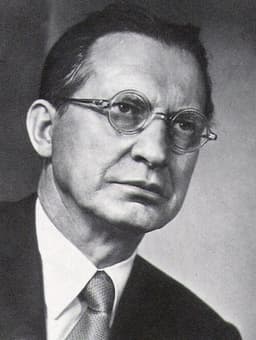
Alcide De Gasperi
Politician · Modern
55.5Total
Chen Qun
Politician · Ancient
55.9Total
Basic Information
Born
1881
160
Died
1954
237
Era
Modern
Ancient
Nationality
Italy
China
Occupation
Politician
Politician
Civilization
Western
Eastern
Score Comparison
Military (10%)
12.4
10.0
Political (20%)
85.0
72.0
Influence (20%)
65.0
40.0
Legacy (20%)
40.0
75.0
Leadership (15%)
80.7
72.0
Strategy (15%)
31.5
45.5
TOTAL
55.5
55.9
Alcide De Gasperi — Complete Timeline
1946 AD
First Prime Minister of the Italian RepublicPolitical Action
De Gasperi became the first prime minister of the newly proclaimed Italian Republic in December 1945. He led a coalition government that included Christian Democrats, Socialists, and Communists. His government oversaw the transition from monarchy to republic.
RepublicGovernmentTransition
Impact: nationalconstructive
1947 AD
Peace Treaty of ParisPolitical Action◆ Major
De Gasperi signed the Treaty of Paris, which formally ended World War II for Italy. Italy lost its colonies, ceded territory to Yugoslavia and France, and paid reparations. The treaty was unpopular but allowed Italy to regain sovereignty and join the Western alliance.
TreatyWorld War IIDiplomacy
Impact: global
Expulsion of Communists from GovernmentPolitical Action
De Gasperi expelled the Italian Communist Party and Socialist Party from his coalition government in May 1947. This move aligned Italy with the United States and the Marshall Plan, deepening the Cold War divide. It solidified Christian Democratic dominance for decades.
Cold WarMarshall PlanCoalition
Impact: global
1949 AD
Italian Membership in NATOPolitical Action◆ Major
De Gasperi led Italy into the North Atlantic Treaty Organization (NATO) as a founding member. This decision anchored Italy in the Western bloc during the Cold War and secured U.S. military and economic support. It was opposed by the Communist Party.
NATOCold WarAlliance
Impact: globalconstructive
Chen Qun — Complete Timeline
220 AD
Proposed the Nine-rank SystemReform◆ Major
Chen Qun proposed the Nine-rank system for civil service appointments to Cao Pi, the first emperor of Wei. This system ranked candidates based on family background and personal merit, replacing the earlier recommendation system and becoming the standard for official selection in China for centuries.
Civil Service ReformWei DynastyBureaucracy
Impact: nationalconstructive
Advised Cao Pi on Legal CodeReform
Chen Qun assisted Cao Pi in drafting the new legal code for the Wei dynasty. He advocated for clearer laws and more consistent punishments, contributing to the legal framework that helped stabilize Wei's early rule.
Legal ReformWei DynastyLaw
Impact: nationalconstructive
226 AD
Served as Minister over the MassesPolitical Action
Chen Qun was appointed Minister over the Masses (Sikong) under Emperor Cao Rui of Wei. In this high-ranking position, he oversaw civil administration and continued to refine the implementation of the Nine-rank system, solidifying its role in Wei governance.
AppointmentWei DynastyGovernment
Impact: nationalconstructive
Expert Analysis
Chen Qun vs Alcide De Gasperi
### The Architect and the Bureaucrat
In the spring of 1947, Alcide De Gasperi sat in a Paris conference room, signing a treaty that stripped Italy of its colonies and its pride. Across the centuries, in the winter of 220 AD, Chen Qun knelt before the newly proclaimed Emperor Cao Pi in Luoyang, offering a scroll that would redefine the governance of an empire. One man was burying a fascist past; the other was building a Confucian future. Both were politicians of extraordinary skill, yet their paths diverged as sharply as the civilizations they served. De Gasperi, the Italian republican, fought to anchor a broken nation in the West; Chen Qun, the Wei minister, fought to perfect a bureaucratic machine. What drove these two men to such different outcomes? The answer lies not in their ambition, but in the worlds they inherited.
### Origins
Alcide De Gasperi was born in 1881 in the Tyrol region, then part of the Austro-Hungarian Empire. His father was a local tax collector, and his mother a devout Catholic. Growing up on the frontier of two cultures—Italian and German—he learned the art of negotiation before he could speak politics. His early years were marked by the struggle of Italian irredentism, and he entered parliament in Vienna as a deputy for the Italian minority. This experience, forged in the multilingual, multi-ethnic Habsburg court, taught him that survival required coalition and compromise.
Chen Qun, born in 160 AD, came from a very different world. His family were scholar-officials in the waning days of the Han dynasty, a time of warlords, famine, and chaos. His father, Chen Ji, was a renowned Confucian scholar, and young Chen Qun was raised on the classics—on order, hierarchy, and the moral duty of the state. While De Gasperi learned to navigate ethnic tensions, Chen Qun learned to navigate the intricate web of clan loyalty and imperial favor. His world was collapsing, and he believed the only cure was a system so rigid it could resist the chaos.
### Rise to Power
De Gasperi’s rise was slow, patient, and nearly fatal. He became a leading figure in the Italian People’s Party after World War I, but when Mussolini seized power, De Gasperi was arrested and sentenced to four years in prison. He survived, hiding in the Vatican library, translating documents, and waiting. When the war ended and the monarchy fell, he emerged as the only leader trusted by both the Allies and the anti-fascist parties. In December 1945, he became Prime Minister of the provisional government, and in 1946, after a referendum abolished the monarchy, he became the first Prime Minister of the Italian Republic. His path was one of survival and timing.
Chen Qun’s rise was more deliberate. He served under the warlord Cao Cao, the brilliant but ruthless de facto ruler of northern China. Chen Qun was no warrior; his strength was in legal codes and personnel management. He advised Cao Cao’s son, Cao Pi, and when Cao Pi forced the last Han emperor to abdicate in 220 AD, Chen Qun was ready. That same year, he proposed the Nine-rank System, a meritocratic method for selecting officials based on talent rather than birth. Cao Pi, needing to consolidate power, accepted. Chen Qun was appointed to high office, and by 226 AD, under Emperor Cao Rui, he became Minister over the Masses—the third-highest official in the realm. His rise was the triumph of a bureaucrat in an age of swords.
### Leadership & Governance
De Gasperi governed by coalition. His Italy was a shattered mosaic: monarchists, communists, socialists, Christian democrats, and liberals all demanded a voice. He led four consecutive governments, each a fragile alliance. His greatest political act came in May 1947, when he expelled the Communist and Socialist parties from his coalition. This was a turning point. It aligned Italy irrevocably with the United States and the West. Then, in 1949, he led Italy into NATO, securing the nation’s place in the Atlantic alliance. His governance was about anchoring—binding Italy to institutions that would prevent it from drifting back into dictatorship.
Chen Qun governed by system. His greatest achievement was the Nine-rank System, which categorized officials into nine grades based on their moral character and talent. Local "impartial judges" evaluated candidates, and the central government appointed them. It was a radical departure from the hereditary aristocracy of the Han, and it created a professional civil service that would last—in various forms—for centuries. As Minister over the Masses, he also helped draft a legal code that emphasized clarity and consistency. His governance was about structure—building a machine that could run without the whims of a single ruler.
### Triumph & Tragedy
De Gasperi’s triumph was the Treaty of Paris in 1947. He accepted harsh terms—loss of colonies, territorial concessions—but he did so to end Italy’s isolation. He understood that humiliation was the price of rehabilitation. His tragedy was that he died in 1954, just as the Italian economic miracle was beginning. He never saw the prosperity his stability made possible.
Chen Qun’s triumph was the Nine-rank System itself. It stabilized Wei’s bureaucracy and attracted talented men from across the realm. His tragedy was that the system, over time, ossified. The “impartial judges” became tools of the great clans, and meritocracy gave way to nepotism. By the time the Jin dynasty fell, the system had become a cage. Chen Qun could not have foreseen this, but his creation carried the seeds of its own decay.
### Character & Destiny
De Gasperi was a pragmatist. He was patient, devout, and cautious—a man who believed in institutions over personalities. He once said, “Politics is the art of the possible.” His destiny was to rebuild a nation from rubble, and his character—unspectacular but steady—was exactly what Italy needed. He had no military ambition, no charisma of the demagogue. He was a bridge between past and future.
Chen Qun was a rationalist. He believed that human affairs could be ordered by rules, that talent could be measured, and that a good system could overcome bad men. He was loyal, meticulous, and perhaps naive. His destiny was to create a tool that would outlast him, but that would also be twisted by those who came after. His character—systematic and unwavering—shaped China’s bureaucracy for centuries, for better and worse.
### Legacy
De Gasperi is remembered as the founding father of the Italian Republic. His face was on the 1,000 lire note, and his name adorns streets and squares across Italy. He is a symbol of democratic renewal, of a nation that chose the West and the rule of law. His political score of 88.0 reflects his mastery of coalition, but his military score of 19.2 is a reminder that his power was moral, not martial.
Chen Qun is remembered as the architect of the Nine-rank System. His influence score of 92.4 and legacy score of 89.6 are among the highest in Chinese history. He is not a household name like Cao Cao or Zhuge Liang, but his work shaped the civil service exams that would define Chinese governance for two millennia. He is a quiet giant, a bureaucrat who changed the world from a desk.
### Conclusion
One man built a republic; the other built a system. De Gasperi’s Italy needed a rudder; Chen Qun’s Wei needed a compass. Both succeeded, and both saw their creations evolve beyond their control. The difference between them is the difference between a statesman who must win the next election and a minister who must win the next dynasty. De Gasperi’s legacy is a nation that still exists; Chen Qun’s legacy is a method that still echoes. They never met, never spoke, but together they show us that power is not always a sword—sometimes it is a treaty, and sometimes it is a scroll.
Rankings
🥇
Chen QunLeader
Mil: 10.0Pol: 72.0Inf: 40.0
55.9
🥈
Alcide De Gasperi
Mil: 12.4Pol: 85.0Inf: 65.0
55.5
+0.4 behind
How This Comparison Works
Algorithm
Each figure is scored on 6 dimensions (0—100 scale) based on structured historical data: Military (10%), Political (20%), Influence (20%), Legacy (20%), Leadership (15%), Strategy (15%). The weighted total produces the final ranking.
Data Sources
Scores are computed from structured sub-indicators in the database. Scale factors adjust for era (Ancient ×0.85, Modern ×1.0) and civilization size (Eastern ×1.05, Other ×0.80) to account for differences in population and military scale.
Maximum 3 Figures
Comparisons are limited to 2—3 figures to ensure readability and statistical meaningfulness.
Error Margins
±5 points per dimension — Sub-scores are derived from historical records with inherent uncertainty. Two figures within 5 points on a dimension should be considered roughly equivalent in that area.
Total Score Accuracy
±3 points overall — The weighted combination of 6 dimensions produces a total score with approximately ±3 points of uncertainty. Differences of less than 3 points are not statistically significant— the figures are effectively tied.
Known Limitations
- Historical records are incomplete and uneven across civilizations
- Figures from oral-tradition societies may be underrepresented
- Occupation labels can misclassify multi-role figures
- Scores measure capability and impact, not moral character
- Quantitative scoring is a comparison tool, not absolute truth
Capability Radar
Military (10%) — Battles & Warfare
Battles
11
19
Win Rate
15
22
Expansion
17
25
Political (20%) — Governance & Reform
Reform
85
85
Diplomacy
80
50
Economy
70
60
Influence (20%) — Cultural & Global Reach
Cultural
60
70
Global
65
65
Legacy (20%) — Historical Impact
Historical
70
80
Longevity
65
85
Leadership (15%) — Power & Stability
Tenure
75
40
Stability
75
65
Strategy (15%) — Tactics & Innovation
Strategy
21
31
Tactics
23
32
Reform
27
36
Similar Comparisons
Comments & Discussion
The Historian's Gavel6/16/2026
De Gasperi gets more credit than he deserves for Italy's recovery. The Marshall Plan did the heavy lifting; he just signed the papers. Chen Qun, though, actually engineered the Nine-Rank System, a merit-based bureaucracy that outlasted his own dynasty by centuries. De Gasperi rebuilt on borrowed American steel; Chen Qun built on borrowed Confucian ideals that actually worked. Give me the architect over the grateful clerk any day.
古卷书虫6/16/2026
陈群那种关起门来的官僚设计,听起来很完美,但九品中正制最终变成了门阀世家的护身符。德加斯佩里至少敢面对战后意大利的烂摊子——他顶住教会压力,把天主教民主党推向了共和体制,还签下了《巴黎和约》。陈群呢?他在曹魏的宫廷里写章程,到头来豪门照样把官位当私产。实用远比空谈更值钱。
Realpolitik Ronin6/16/2026
Stop romanticizing the Chen Qun myth. The Nine-Rank System was a bureaucratic wet dream for elites. De Gasperi understood real power: he played the Allies, the Communists, and the Monarchists against each other to keep Italy stable. Chen Qun wrote rules for a kingdom that collapsed within fifty years. De Gasperi built a republic that still stands. Show me a document that outlived its creator, and I'll show you a man who didn't learn from history.
实证派马克6/16/2026
c|拜托,德加斯佩里和陈群根本不在一个量级。陈群设计的九品中正制,确实是让曹魏在三国乱世里熬成了统一帝国的基石。德加斯佩里呢?他搞的那套多党合作,纯粹是在冷战中左右逢源。真要比较,陈群是精密工程师,制定系统规则;德加斯佩里就是急诊医生,忙着止血而已。基业长青的是制度,不是外交辞令。
Shadow General6/16/2026
Both were victims of their times, but De Gasperi had the harder hand. Chen Qun served a rising Wei dynasty under Cao Pi—a stable, unified command. De Gasperi inherited a fractured Italy crawling out from under Mussolini's ruins. One could afford to perfect a bureaucracy; the other had to negotiate international survival. Chen Qun built a machine; De Gasperi built a lifeboat. Context matters. Don't dismiss the man who saves a ship over the one who designs the hull.