Loading...
Chen Qun vs William Pitt the Elder
William Pitt the Elder leads by 14.3 pts · 2 figures compared
…
Chen Qun
Politician · Ancient
55.9Total
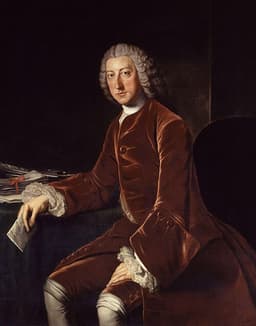
William Pitt the Elder
Politician · Modern
70.2Total
Basic Information
Born
160
1708
Died
237
1778
Era
Ancient
Modern
Nationality
China
United Kingdom
Occupation
Politician
Politician
Civilization
Eastern
Western
Score Comparison
Military (10%)
10.0
67.3
Political (20%)
72.0
72.0
Influence (20%)
40.0
68.0
Legacy (20%)
75.0
68.0
Leadership (15%)
72.0
80.0
Strategy (15%)
45.5
67.2
TOTAL
55.9
70.2
Chen Qun — Complete Timeline
220 AD
Proposed the Nine-rank SystemReform◆ Major
Chen Qun proposed the Nine-rank system for civil service appointments to Cao Pi, the first emperor of Wei. This system ranked candidates based on family background and personal merit, replacing the earlier recommendation system and becoming the standard for official selection in China for centuries.
Civil Service ReformWei DynastyBureaucracy
Impact: nationalconstructive
Advised Cao Pi on Legal CodeReform
Chen Qun assisted Cao Pi in drafting the new legal code for the Wei dynasty. He advocated for clearer laws and more consistent punishments, contributing to the legal framework that helped stabilize Wei's early rule.
Legal ReformWei DynastyLaw
Impact: nationalconstructive
226 AD
Served as Minister over the MassesPolitical Action
Chen Qun was appointed Minister over the Masses (Sikong) under Emperor Cao Rui of Wei. In this high-ranking position, he oversaw civil administration and continued to refine the implementation of the Nine-rank system, solidifying its role in Wei governance.
AppointmentWei DynastyGovernment
Impact: nationalconstructive
William Pitt the Elder — Complete Timeline
1756 AD
Led Britain in Seven Years' WarWar
William Pitt the Elder served as Secretary of State from 1756 to 1761, directing British strategy in the Seven Years' War. His policies focused on naval supremacy and colonial campaigns, leading to victories in Canada, India, and the Caribbean.
Seven Years' WarColonial EmpireMilitary Strategy
Impact: global
1759 AD
Conquest of QuebecWar◆ Major
Under Pitt's direction, British forces under General James Wolfe captured Quebec City on September 13, 1759, after the Battle of the Plains of Abraham. This victory secured British control over Canada and marked a turning point in the Seven Years' War.
Seven Years' WarCanadaMilitary Victory
Impact: global
1766 AD
Became Prime MinisterPolitical Action
Pitt was appointed Prime Minister on July 30, 1766, forming a government. However, his health declined and he was elevated to the House of Lords as Earl of Chatham, which weakened his political base. His second ministry was less effective than his wartime leadership.
Prime MinisterGovernment18th Century
Impact: national
Opposed American TaxationPolitical Action◆ Major
Pitt argued for the repeal of the Stamp Act in 1766, asserting that Parliament had no right to tax the American colonies without representation. His speech in the Commons helped secure repeal, though he maintained Parliament's authority to legislate for the colonies.
American ColoniesTaxationParliamentary Debate
Impact: global
Expert Analysis
Chen Qun vs William Pitt the Elder
### The Architect of Empire and the Architect of Bureaucracy
On a September morning in 1759, as British redcoats scaled the cliffs beneath Quebec, a man in London—racked with gout and fury—paced a map-strewn room. William Pitt the Elder did not fire a musket that day, but his will had aimed every one. Across the globe and a millennium and a half earlier, in the court of a burgeoning Chinese dynasty, another man sat calmly drafting a proposal that would shape governance for centuries. Chen Qun, a minister of the Cao Wei state, had no armies at his command. His weapon was a document—the Nine-rank System. One man conquered continents; the other conquered the machinery of state. Both reshaped their worlds, but their paths, driven by radically different circumstances, tell us how power is won, held, and lost.
### Origins
William Pitt was born in 1708 into a wealthy but politically marginal family—his grandfather had been a colonial governor in India, but the Pitts were not part of the landed aristocracy that dominated British politics. Pitt’s early life was marked by chronic illness and a fierce, almost obsessive ambition. He entered Parliament in 1735 as a rebellious backbencher, railing against the corruption of Prime Minister Robert Walpole. His voice, described as “terrible and magnificent,” could fill the House of Commons and whip crowds into frenzy. He was a man of the people in an age of privilege, earning the nickname “The Great Commoner.”
Chen Qun, born in 160 during the twilight of the Han Dynasty, came from a scholarly lineage. His father, a noted official, had died in prison for opposing a tyrannical eunuch. Chen Qun grew up in a world of chaos—warlords, famine, and the collapse of imperial order. His education was Confucian: the purpose of government was moral order, not conquest. Where Pitt learned to command a room, Chen Qun learned to draft a decree. Both men were shaped by crisis, but Pitt’s crisis was external (French expansion), while Chen Qun’s was internal (dynastic decay).
### Rise to Power
Pitt’s rise was a masterclass in political theater. He attacked the government so fiercely that King George II personally despised him. Yet by 1756, with Britain losing the Seven Years’ War, the king had no choice but to appoint Pitt Secretary of State. Pitt did not become Prime Minister until 1766, but from 1756 to 1761, he was the de facto war leader. His power came from public opinion—the press, the merchants, the mob—and from his ability to articulate a vision of British greatness. He famously declared, “I know that I can save this country, and that no one else can.”
Chen Qun’s rise was quieter but no less strategic. He served under the warlord Cao Cao, who recognized his administrative brilliance. When Cao Cao’s son, Cao Pi, founded the Wei dynasty in 220, Chen Qun proposed the Nine-rank System. This was not a dramatic coup but a bureaucratic coup—a plan to replace hereditary appointments with a merit-based ranking of officials. Cao Pi, needing to consolidate power against rival kingdoms, adopted it immediately. Chen Qun became a trusted advisor, later serving as Minister over the Masses (Sikong) under Emperor Cao Rui. His power was the power of the pen.
### Leadership & Governance
Pitt governed through sheer force of personality. He micromanaged the Seven Years’ War, selecting generals like James Wolfe and Admiral Edward Hawke, and funneling subsidies to Prussia’s Frederick the Great. He understood that global war required global coordination—naval blockades, colonial campaigns, European alliances. His strategy was aggressive, even reckless, but it worked. By 1759, the “Year of Miracles,” Britain had captured Quebec, won at Minden, and shattered the French fleet at Quiberon Bay. Pitt’s military score of 69.6 reflects a man who was not a battlefield commander but a grand strategist.
Chen Qun’s governance was the opposite: slow, deliberate, institutional. His Nine-rank System did not conquer territory but conquered time. It created a hierarchy of nine grades for civil servants, assessed by local “impartial judges.” Over centuries, it evolved into the imperial examination system that would define Chinese bureaucracy. Chen Qun also advised on legal codes, pushing for clarity and consistency. His political score of 69.8 is modest, but his influence score of 92.4 is staggering. He did not lead armies; he led the system that selected the men who would.
### Triumph & Tragedy
Pitt’s greatest triumph was the conquest of Quebec in 1759, a victory that secured British dominance in North America. His greatest tragedy came later. In 1766, when he finally became Prime Minister, his health was shattered by gout and mental instability. He was elevated to the House of Lords as the Earl of Chatham, a move that betrayed his “Commoner” identity. Worse, he could not manage the American crisis. Though he had opposed the Stamp Act in 1766, arguing that “taxation without representation is tyranny,” his government collapsed, and he spent his final years in bitter opposition, watching the American Revolution unfold.
Chen Qun’s triumph was the Nine-rank System itself, which lasted until the Sui dynasty (581–618) and influenced Chinese governance for nearly four centuries. His tragedy was subtler: the system, intended to select talent, gradually became a tool for aristocratic families to monopolize office. By the time of the Jin dynasty, the “impartial judges” were often corrupt, and the nine ranks reflected family status more than merit. Chen Qun died in 237, likely unaware that his creation would betray his ideals.
### Character & Destiny
Pitt was a man of fire—volatile, proud, and prone to dramatic collapses. He once fainted in the House of Commons. His character drove him to overreach: he could not compromise, could not delegate, and could not accept defeat. This made him a brilliant war leader but a disastrous peacetime politician. His destiny was to be a hammer, not a builder.
Chen Qun was a man of water—patient, methodical, and adaptive. He survived the fall of the Han, the rise of Cao Cao, and the transition to the Wei dynasty. His character was Confucian: he believed in order, hierarchy, and the slow cultivation of virtue. His destiny was to build a system that outlasted him, even if it eventually degraded.
### Legacy
Pitt’s legacy is the British Empire at its zenith. His strategy in the Seven Years’ War gave Britain Canada, India, and naval supremacy. He is remembered as a statue in London, a name on street signs, and a symbol of patriotic fervor. But his failure to manage the American colonies haunts his reputation. His total score of 73.6 reflects a man of immense power but flawed judgment.
Chen Qun’s legacy is invisible but omnipresent. The Nine-rank System was the ancestor of China’s civil service exams, which selected officials by merit for over a thousand years. He is not a household name like Pitt, but his influence score of 92.4 places him among the most consequential administrators in history. He is remembered by scholars, not crowds.
### Conclusion
Standing on the Plains of Abraham in 1759, William Pitt saw a world to be conquered. Sitting in a court in Luoyang in 220, Chen Qun saw a world to be ordered. One needed a navy, the other needed a document. Both succeeded; both failed. Pitt conquered Canada but lost America. Chen Qun created a meritocracy that became an aristocracy. Their stories remind us that power is not one thing—it is the ability to move men in battle or to move paper in a bureau. The Great Commoner and the quiet minister each answered the question of their age, and their answers shaped the centuries that followed.
Rankings
🥇
William Pitt the ElderLeader
Mil: 67.3Pol: 72.0Inf: 68.0
70.2
🥈
Chen Qun
Mil: 10.0Pol: 72.0Inf: 40.0
55.9
+14.3 behind
How This Comparison Works
Algorithm
Each figure is scored on 6 dimensions (0—100 scale) based on structured historical data: Military (10%), Political (20%), Influence (20%), Legacy (20%), Leadership (15%), Strategy (15%). The weighted total produces the final ranking.
Data Sources
Scores are computed from structured sub-indicators in the database. Scale factors adjust for era (Ancient ×0.85, Modern ×1.0) and civilization size (Eastern ×1.05, Other ×0.80) to account for differences in population and military scale.
Maximum 3 Figures
Comparisons are limited to 2—3 figures to ensure readability and statistical meaningfulness.
Error Margins
±5 points per dimension — Sub-scores are derived from historical records with inherent uncertainty. Two figures within 5 points on a dimension should be considered roughly equivalent in that area.
Total Score Accuracy
±3 points overall — The weighted combination of 6 dimensions produces a total score with approximately ±3 points of uncertainty. Differences of less than 3 points are not statistically significant— the figures are effectively tied.
Known Limitations
- Historical records are incomplete and uneven across civilizations
- Figures from oral-tradition societies may be underrepresented
- Occupation labels can misclassify multi-role figures
- Scores measure capability and impact, not moral character
- Quantitative scoring is a comparison tool, not absolute truth
Capability Radar
Military (10%) — Battles & Warfare
Battles
19
60
Win Rate
22
75
Expansion
25
80
Political (20%) — Governance & Reform
Reform
85
75
Diplomacy
50
80
Economy
60
70
Influence (20%) — Cultural & Global Reach
Cultural
70
60
Global
65
75
Legacy (20%) — Historical Impact
Historical
80
80
Longevity
85
70
Leadership (15%) — Power & Stability
Tenure
40
70
Stability
65
65
Strategy (15%) — Tactics & Innovation
Strategy
31
85
Tactics
32
65
Reform
36
70
Similar Comparisons
Comments & Discussion
PittProphet6/16/2026
William Pitt didn't just win battles—he invented modern war strategy from a sickbed. While his generals took Quebec, Pitt micromanaged troop movements across three continents, creating global logistics that prefigured NATO command structures. That's not just empire-building; that's the birth of operational warfare. Chen Qun drafted a hiring form. Pitt orchestrated the Seven Years' War like a chess master. There's no comparison.
官僚破壁者6/16/2026
说陈群是"官僚建筑师"纯属西方中心论的谬误。九品中正制不是 bureaucratic efficiency,而是门阀政治的终极武器。曹魏用它收买士族,埋下东汉以后三百年分裂的伏笔。对比之下,皮特的战争至少打出了不列颠治世;陈群的设计却是制度性腐败的开端。真正的建筑师是张居正,不是这个玩弄姓氏的政客。
SkepticalScribe6/16/2026
Let's pump the brakes on the Pitt myth. "The Great Commoner" spent his later years accepting a massive pension and peerage for his son—hardly a man of the people. And that Quebec victory? More luck than genius: James Wolfe disobeyed direct orders to scale those cliffs. Chen Qun's system, meanwhile, lasted 400 years precisely because it adapted to local realities. Pitt's glory is a Hollywood narrative; Chen Qun's legacy is institutional resilience.
古典考据狂6/16/2026
你们忘了历史语境。陈群生于汉末乱世,曹操挟天子令诸侯时,他要的不是帝国而是秩序。九品中正制表面分士庶,实际上遏制了东汉宦官、外戚交替乱政的痼疾。对比皮特,他的"帝国"建立在贩卖黑奴的三角贸易上,1759年的糖税直接喂饱了利物浦的奴隶商。谁更文明?陈群至少让中国安定了一个半世纪。
GlobalGambitGuy6/16/2026
Pitt didn't just win Canada—he understood that the Seven Years' War was a global chess game. While France obsessed over European land, Pitt sent fleets to India, West Africa, and the Philippines simultaneously. That's modern strategy: asymmetric pressure across multiple theaters. Chen Qun's system gave you stable county officials. Pitt gave you an empire where the sun never set. Different universes, different tools. Pitt wins by scale alone.