Loading...
Chen Qun vs Sitiveni Rabuka
Chen Qun leads by 4.2 pts · 2 figures compared
…
Chen Qun
Politician · Ancient
55.9Total
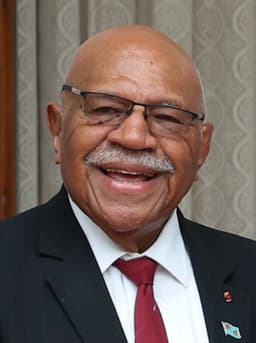
Sitiveni Rabuka
General · Modern
51.7Total
Basic Information
Born
160
1948
Died
237
—
Era
Ancient
Modern
Nationality
China
Fiji
Occupation
Politician
General
Civilization
Eastern
Other
Score Comparison
Military (10%)
10.0
10.2
Political (20%)
72.0
60.0
Influence (20%)
40.0
53.3
Legacy (20%)
75.0
46.7
Leadership (15%)
72.0
85.0
Strategy (15%)
45.5
39.6
TOTAL
55.9
51.7
Chen Qun — Complete Timeline
220 AD
Proposed the Nine-rank SystemReform◆ Major
Chen Qun proposed the Nine-rank system for civil service appointments to Cao Pi, the first emperor of Wei. This system ranked candidates based on family background and personal merit, replacing the earlier recommendation system and becoming the standard for official selection in China for centuries.
Civil Service ReformWei DynastyBureaucracy
Impact: nationalconstructive
Advised Cao Pi on Legal CodeReform
Chen Qun assisted Cao Pi in drafting the new legal code for the Wei dynasty. He advocated for clearer laws and more consistent punishments, contributing to the legal framework that helped stabilize Wei's early rule.
Legal ReformWei DynastyLaw
Impact: nationalconstructive
226 AD
Served as Minister over the MassesPolitical Action
Chen Qun was appointed Minister over the Masses (Sikong) under Emperor Cao Rui of Wei. In this high-ranking position, he oversaw civil administration and continued to refine the implementation of the Nine-rank system, solidifying its role in Wei governance.
AppointmentWei DynastyGovernment
Impact: nationalconstructive
Sitiveni Rabuka — Complete Timeline
1987 AD
1987 Fijian Coup d'étatPolitical Action
Rabuka, as a colonel in the Fijian military, led a coup overthrowing the elected government of Timoci Bavadra. The coup was motivated by ethnic Fijian opposition to Indo-Fijian political influence. Rabuka declared Fiji a republic.
CoupMilitary InterventionEthnic Tension
Impact: nationaldestructive
1992 AD
1992 Election as Prime MinisterPolitical Action◆ Major
Rabuka transitioned from military leader to civilian politician, winning the 1992 general election as leader of the Fijian Political Party. He became Prime Minister, serving until 1999.
ElectionCivilian GovernmentPolitical Transition
Impact: national
1997 AD
1997 Constitution ReformReform◆ Major
Rabuka's government oversaw the adoption of a new constitution that removed ethnic-based voting and provided for a multi-ethnic government. The constitution aimed to reduce ethnic tensions and promote national unity.
ConstitutionReformEthnic Reconciliation
Impact: nationalconstructive
1999 AD
1999 General Election DefeatPolitical Action◆ Major
Rabuka's government was defeated in the general election by the Labour Party led by Mahendra Chaudhry. Rabuka stepped down as Prime Minister, marking the end of his first period in power.
Election DefeatGovernment ChangeChaudhry
Impact: national
2022 AD
2022 Return as Prime MinisterPolitical Action◆ Major
Rabuka led the People's Alliance to victory in the 2022 general election, forming a coalition government. He became Prime Minister again, 23 years after his previous tenure, promising democratic reforms.
ElectionReturn to PowerCoalition Government
Impact: national
Expert Analysis
Chen Qun vs Sitiveni Rabuka
### The General and the Scholar: Two Paths to Power, Two Legacies of Reform
In 1987, a Fijian colonel in camouflage stormed parliament, ending a fledgling democracy with a single, decisive act. Just over seventeen centuries earlier and half a world away, a Chinese official in silken robes presented a scroll to his emperor, proposing a system that would quietly reshape the bureaucracy of an empire. One man seized power with a rifle; the other, with a memorandum. Yet both, Sitiveni Rabuka and Chen Qun, would become architects of political systems, their names forever linked to the machinery of governance. How did a coup leader and a court scholar end up on such parallel, yet profoundly different, historical tracks?
### Origins
Sitiveni Rabuka was born in 1948 on the island of Vanua Levu, a child of the Fijian colonial era. His father was a farmer and lay preacher; his upbringing was steeped in the traditions of indigenous Fijian chiefly society, but also in the discipline of the British military. He joined the army, trained in New Zealand and Australia, and rose through the ranks as a man of action, not of letters. His world was one of hierarchy, loyalty, and the raw assertion of power.
Chen Qun, born in 160, entered a very different world: the dying embers of the Han Dynasty, a civilization already ancient. His family were scholar-officials, steeped in Confucian classics and the art of administration. From youth, Chen Qun was trained to advise, to write, and to codify. His path was not the barracks but the court, where influence flowed from knowledge, not force.
### Rise to Power
Rabuka’s rise was sudden, violent, and spectacular. In 1987, as a 39-year-old colonel, he led a coup against the newly elected multi-ethnic government of Timoci Bavadra, which he and many indigenous Fijians feared would marginalize their land rights and political dominance. It was a raw political act, a seizure of power from below. His path to leadership was forged in the crucible of ethnic tension and military discipline, not in the slow climb of electoral politics.
Chen Qun’s ascent was the opposite: gradual, patient, and intellectual. He served under the warlord Cao Cao, but his true moment came in 220 when Cao Cao’s son, Cao Pi, founded the Wei dynasty. Chen Qun did not seize power; he proposed a system for distributing it. His Nine-rank system was a bureaucratic revolution, designed to select officials based on merit, not noble birth, a radical idea in a world of entrenched aristocratic privilege. His rise was the triumph of a paper over a sword.
### Leadership & Governance
As a leader, Rabuka was a paradox. After his coup, he ruled as a military strongman, but he quickly realized that raw power was unsustainable. In 1992, he transformed himself, winning election as Prime Minister. His greatest act of governance was the 1997 Constitution Reform, which abolished ethnic-based voting and created a multi-racial system. This was the coup leader as democrat, a man who broke a system and then tried to mend it. His leadership score of 77.4 reflects a pragmatic, if flawed, ability to adapt.
Chen Qun, by contrast, never held supreme power. He was the consummate insider, serving as Minister over the Masses under Emperor Cao Rui. His leadership was the quiet authority of the administrator. He advised on legal codes, promoted consistency in punishment, and, above all, championed the Nine-rank system. His political score of 69.8 is comparable to Rabuka’s 72.0, but his influence and legacy scores—92.4 and 89.6—far outstrip the Fijian’s 70.3 and 61.2. Chen Qun built a machine that outlived him; Rabuka built a career that required constant reinvention.
### Triumph & Tragedy
Rabuka’s triumph was his return. After his 1999 electoral defeat, he faded from power, only to stage a remarkable political resurrection in 2022, at age 74, leading a coalition to victory and becoming Prime Minister again. It was a vindication of his democratic conversion. But his tragedy remains the 1987 coup itself—a violent act that set a precedent for future instability, including another coup in 2000. He is the man who gave Fiji democracy, after first taking it away.
Chen Qun’s triumph was the Nine-rank system, which became the backbone of Chinese civil service for nearly four centuries. His tragedy is more subtle: the system, intended to select for merit, eventually ossified into a tool of aristocratic privilege. The reformer’s creation became the conservative’s fortress. And unlike Rabuka, Chen Qun never experienced a second act. He died in 237, his work done, his legacy already being transformed by forces he could not control.
### Character & Destiny
Rabuka was a man of action, impulsive and decisive. He once said, “I am a soldier, not a politician,” yet he spent his life proving the opposite. His character was shaped by the tension between his military training and his political ambitions. Destiny, for him, was a series of contradictions: the coup leader who became a democrat, the strongman who embraced pluralism.
Chen Qun was a man of deliberation, cautious and methodical. He understood that lasting power comes not from a single act of force, but from the slow, patient construction of institutions. His destiny was to be the architect, not the king. He did not seek the throne; he sought to define who would sit near it.
### Legacy
Today, Rabuka is remembered as a complex figure: a father of Fijian democracy, yet also its violator. His legacy is contested, a mirror of Fiji’s own struggles with ethnicity and governance. His total score of 61.0 reflects a life of dramatic highs and lows, of a man who reshaped his nation but could not fully escape his past.
Chen Qun’s legacy is quieter but more enduring. The Nine-rank system shaped Chinese governance for centuries and influenced the later imperial examination system. He is a footnote in the grand narrative of the Three Kingdoms, but a giant in the history of bureaucracy. His total score of 71.3, driven by immense influence and legacy, places him among the great administrative minds of history.
### Conclusion
One man seized a parliament; the other wrote a constitution. One ruled by decree; the other ruled by decree. In the end, both were reformers, but of radically different kinds. Rabuka’s reforms were born of crisis, a response to the failure of his own coup. Chen Qun’s reforms were born of vision, a blueprint for an empire he would never lead. Their stories remind us that power can be taken by force, but lasting change is almost always written in ink. The general and the scholar: one changed a nation overnight, the other changed a civilization over centuries. Which path is more admirable? Perhaps the answer lies not in the deed, but in the durability of what remains.
Rankings
🥇
Chen QunLeader
Mil: 10.0Pol: 72.0Inf: 40.0
55.9
🥈
Sitiveni Rabuka
Mil: 10.2Pol: 60.0Inf: 53.3
51.7
+4.2 behind
How This Comparison Works
Algorithm
Each figure is scored on 6 dimensions (0—100 scale) based on structured historical data: Military (10%), Political (20%), Influence (20%), Legacy (20%), Leadership (15%), Strategy (15%). The weighted total produces the final ranking.
Data Sources
Scores are computed from structured sub-indicators in the database. Scale factors adjust for era (Ancient ×0.85, Modern ×1.0) and civilization size (Eastern ×1.05, Other ×0.80) to account for differences in population and military scale.
Maximum 3 Figures
Comparisons are limited to 2—3 figures to ensure readability and statistical meaningfulness.
Error Margins
±5 points per dimension — Sub-scores are derived from historical records with inherent uncertainty. Two figures within 5 points on a dimension should be considered roughly equivalent in that area.
Total Score Accuracy
±3 points overall — The weighted combination of 6 dimensions produces a total score with approximately ±3 points of uncertainty. Differences of less than 3 points are not statistically significant— the figures are effectively tied.
Known Limitations
- Historical records are incomplete and uneven across civilizations
- Figures from oral-tradition societies may be underrepresented
- Occupation labels can misclassify multi-role figures
- Scores measure capability and impact, not moral character
- Quantitative scoring is a comparison tool, not absolute truth
Capability Radar
Military (10%) — Battles & Warfare
Battles
19
5
Win Rate
22
5
Expansion
25
5
Political (20%) — Governance & Reform
Reform
85
50
Diplomacy
50
45
Economy
60
40
Influence (20%) — Cultural & Global Reach
Cultural
70
30
Global
65
20
Legacy (20%) — Historical Impact
Historical
80
40
Longevity
85
30
Leadership (15%) — Power & Stability
Tenure
40
55
Stability
65
35
Strategy (15%) — Tactics & Innovation
Strategy
31
10
Tactics
32
10
Reform
36
5
Similar Comparisons
Comments & Discussion
CoupCounter6/16/2026
Put down the romanticism — Rabuka stormed parliament, sure, but he wasn’t some Clausewitzian genius. He was a mid-ranking colonel who gambled on ethnic fear and won by sheer timing. Fiji’s 1987 crisis was less a military masterstroke and more a panic move dressed as nationalism. Compare that to Chen Qun, who spent decades refining the Nine-Rank System — a quiet, intellectual coup that outlasted any gun. One broke democracy in an afternoon; the other built a bureaucracy that shaped dynasties for
StatSkeptic6/16/2026
You’re comparing a coup leader in a country of 700,000 people with a reformer who engineered a system that governed 60 million across a continent. The raw scale difference tells you everything. Rabuka’s 1987 putsch affected maybe 3 million lives short-term; Chen Qun’s civil service grading system influenced selection for officials in a civilization that then held a quarter of humanity. One was a local power grab with ethnic undertones, the other a structural rewrite of elite recruitment. Don’t l
文明裁缝师6/16/2026
别拿西方那套“民主vs独裁”的尺子量陈群。他推出九品中正制时,汉末已经烂透了——黄巾乱后豪强割据,曹操都只能“唯才是举”凑合着用。陈群不是要制造阶级固化,而是要替一个破碎帝国重建人才管道。你说他强化士族?可史料里明文记载,九品制的初衷是“盖以论人才优劣,非谓世族高卑”。后来跑偏是他死后的事。反观兰布卡,1987年政变直接把斐济宪法撕了,十年后才勉勉强强还政于民。谁是真改革家,一目了然。
斐济老兵的叹息6/16/2026
你们都在聊制度,我想聊聊人。兰布卡后来去当总理,亲手推动1997年宪法,废除了自己当年政变要捍卫的种族至上体制。这个人改了三次立场——从白人至上主义的捍卫者,到民族主义旗手,最后变成多元民主的打工人。陈群呢?一辈子安安稳稳做魏国官僚,从未背叛过门阀利益。我就想问:那个愿意承认错误、把自己打碎重组的军人,难道不比那个永远端庄的士大夫更值得尊敬?历史欠兰布卡一句“谢谢你的后悔”。
分裂的史官6/16/2026
陈群和兰布卡都是“封建”的产物,但本质完全不同。陈群活在天子为中心的华夏秩序里——他的改革是自上而下的,为的是让帝国机器更平稳运转。兰布卡面对的斐济呢?殖民者留下的“印度人