Loading...
Chen Qun vs Qin Shi Huang
Qin Shi Huang leads by 29.3 pts · 2 figures compared
…
Chen Qun
Politician · Ancient
55.9Total
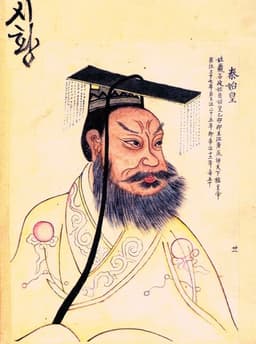
Qin Shi Huang
Emperor · Ancient
85.2Total
Basic Information
Born
160
-259
Died
237
-210
Era
Ancient
Ancient
Nationality
China
China
Occupation
Politician
Emperor
Civilization
Eastern
Eastern
Score Comparison
Military (10%)
10.0
80.0
Political (20%)
72.0
90.0
Influence (20%)
40.0
85.0
Legacy (20%)
75.0
90.0
Leadership (15%)
72.0
78.0
Strategy (15%)
45.5
82.0
TOTAL
55.9
85.2
Chen Qun — Complete Timeline
220 AD
Proposed the Nine-rank SystemReform◆ Major
Chen Qun proposed the Nine-rank system for civil service appointments to Cao Pi, the first emperor of Wei. This system ranked candidates based on family background and personal merit, replacing the earlier recommendation system and becoming the standard for official selection in China for centuries.
Civil Service ReformWei DynastyBureaucracy
Impact: nationalconstructive
Advised Cao Pi on Legal CodeReform
Chen Qun assisted Cao Pi in drafting the new legal code for the Wei dynasty. He advocated for clearer laws and more consistent punishments, contributing to the legal framework that helped stabilize Wei's early rule.
Legal ReformWei DynastyLaw
Impact: nationalconstructive
226 AD
Served as Minister over the MassesPolitical Action
Chen Qun was appointed Minister over the Masses (Sikong) under Emperor Cao Rui of Wei. In this high-ranking position, he oversaw civil administration and continued to refine the implementation of the Nine-rank system, solidifying its role in Wei governance.
AppointmentWei DynastyGovernment
Impact: nationalconstructive
Qin Shi Huang — Complete Timeline
246 BC
Construction of the Mausoleum and Terracotta ArmyOther◆ Major
Qin Shi Huang commissioned a vast mausoleum complex near Xi'an, guarded by thousands of life-sized terracotta soldiers, horses, and chariots. The project employed hundreds of thousands of workers and reflected his obsession with immortality and imperial power.
Impact: global
230 BC
Conquest of the Six Warring StatesWar
From 230 to 221 BCE, Ying Zheng led the Qin state in a series of campaigns that conquered the Han, Zhao, Wei, Chu, Yan, and Qi states. This unified China under a single ruler for the first time, ending the Warring States period.
Impact: global
221 BC
Standardization of Writing, Currency, and MeasurementsReform◆ Major
Qin Shi Huang ordered the standardization of Chinese script, currency, and weights and measures across the unified empire. This facilitated administration, trade, and cultural integration, laying a foundation for future dynasties.
Impact: globalconstructive
Proclamation of the Qin DynastyPolitical Action
After conquering the last independent state, Ying Zheng declared himself Shi Huangdi (First Emperor), founding the Qin Dynasty. He adopted a new title to signify his supreme authority and initiated centralized imperial rule.
Impact: global
214 BC
Initiation of the Great Wall ConstructionOther◆ Major
Qin Shi Huang ordered the connection and extension of existing northern fortifications to create a unified defensive wall against nomadic Xiongnu raids. This project involved massive conscripted labor and became the precursor to the later Great Wall.
Impact: regional
213 BC
Burning of Books and Burying of ScholarsPolitical Action◆ Major
On the advice of Li Si, Qin Shi Huang ordered the burning of historical records and philosophical texts not aligned with Legalist doctrine. He also had 460 Confucian scholars buried alive to suppress dissent and consolidate ideological control.
Impact: nationaldestructive
Expert Analysis
chen-qun-vs-qin-shi-huang
# The Emperor and the Bureaucrat: Two Visions of Chinese Power
On a winter morning in 221 BC, Ying Zheng stood before his assembled generals in the captured palace of the last independent kingdom, his eyes sweeping across a continent that had finally bent to his will. He was thirty-eight years old, and he had just accomplished what no one before him had dared to imagine: the unification of all China under a single rule. He declared himself Shi Huangdi, the First Emperor, and set about remaking the world in his image. Four centuries later, in 220 AD, a different kind of man stood before a different emperor. Chen Qun, a scholar-official of the newly proclaimed Wei dynasty, presented Cao Pi with a proposal that seemed almost modest by comparison—a system for ranking civil servants. No armies, no walls, no burning of books. Just paper, ink, and a careful hierarchy of talent. Yet these two men, so different in ambition and method, each shaped China’s destiny in ways that would echo for millennia.
Origins
Qin Shi Huang was born into war. The year was 259 BC, and the seven kingdoms of the Warring States period had been locked in a brutal struggle for supremacy for over two centuries. His father, King Zhuangxiang of Qin, ruled a state that had already embraced Legalist philosophy—a harsh doctrine that placed the state above all else, rewarded military merit, and punished dissent without mercy. Young Ying Zheng grew up in a court where survival required cunning, where the weak were devoured, and where the ultimate prize was total domination. He learned early that power was not given; it was taken.
Chen Qun entered a different world. Born in 160 AD, he came of age during the twilight of the Han dynasty, when the empire had grown so vast and complex that no single ruler could manage it alone. His family were scholars and officials, men who understood that governing required more than swords. The Han had experimented with various methods of selecting officials—recommendations from local elites, examinations of filial piety, even patronage networks. But by Chen Qun’s time, these systems had decayed into corruption and nepotism. The empire was fragmenting, and someone needed to find a way to hold it together with something stronger than brute force.
Rise to Power
The First Emperor’s ascent was a story of relentless military conquest. From 230 to 221 BC, he unleashed his armies in a series of campaigns that historians would later call the “Conquest of the Six Warring States.” Kingdom after kingdom fell: Han in 230, Zhao in 228, Wei in 225, Chu in 223, Yan in 222, and finally Qi in 221. Each victory was not merely a military triumph but a political annihilation. Ying Zheng absorbed their territories, dismantled their aristocracies, and imposed the Qin system of law and administration. He did not negotiate; he obliterated.
Chen Qun’s rise was quieter but no less significant. He served under Cao Cao, the warlord who had carved out the most powerful state in northern China during the chaos of the late Han. When Cao Cao died in 220, his son Cao Pi faced the delicate task of transforming military dominance into legitimate imperial rule. Chen Qun, by then a trusted advisor, understood that the new Wei dynasty needed more than a throne—it needed a bureaucracy that could govern effectively across vast distances. His proposal for the Nine-rank System was a masterstroke of political engineering. It created nine grades of officials, from the highest ministers to the lowest clerks, with appointments based on a combination of family background and personal merit. The system was not perfect, but it gave the Wei state a framework for selecting talent that would outlast the dynasty itself.
Leadership & Governance
Qin Shi Huang governed as he had conquered: with an iron fist. He standardized writing, currency, and measurements across his unified empire, imposing a single script that allowed communication from the Yellow River to the Yangtze. He ordered the connection and extension of northern fortifications into what would become the Great Wall, a project that consumed countless lives but created a symbol of Chinese unity that endures to this day. Yet his rule also had a dark side. In 213 BC, on the advice of his chief minister Li Si, he ordered the Burning of Books and the Burying of Scholars—a systematic destruction of historical records and philosophical texts that did not align with Legalist orthodoxy. Hundreds of scholars were executed, and centuries of intellectual diversity were lost. The First Emperor believed that unity required uniformity, and he was willing to pay any price for it.
Chen Qun’s governance was the opposite: patient, procedural, and designed to outlast any single ruler. As Minister over the Masses under Emperor Cao Rui from 226, he helped draft a new legal code for Wei, advocating for clearer laws and more consistent punishments. His Nine-rank System was not a revolutionary break with the past but an evolution of existing practices, codifying what had worked and discarding what had not. Where the First Emperor had sought to control minds through terror, Chen Qun sought to channel talent through structure. He understood that an empire could not be held together by fear alone; it needed institutions that could survive the death of any individual emperor.
Triumph & Tragedy
The First Emperor’s greatest triumph was also his greatest tragedy. He unified China, but his methods sowed the seeds of his dynasty’s destruction. When he died in 210 BC during an eastern inspection tour, his empire was already fraying. The forced labor, the harsh laws, the suppression of dissent—all had created a reservoir of resentment that would explode within four years of his death. His mausoleum, guarded by the thousands of life-sized terracotta soldiers he had commissioned in 246 BC, stands as a monument to his ambition and his isolation. He wanted to conquer death itself, but he could not even secure his dynasty.
Chen Qun’s triumph was quieter but more lasting. The Nine-rank System he proposed in 220 AD became the foundation of Chinese civil service selection for over three centuries, surviving the fall of Wei and continuing through the Jin dynasty and beyond. It was not perfect—it favored aristocratic families and eventually became a tool of the very nepotism it was meant to combat—but it represented a crucial step in the evolution of Chinese governance. Chen Qun died in 237 AD, his reforms still intact, his legacy secure. He had not conquered kingdoms or built walls, but he had built a system that outlasted empires.
Character & Destiny
Qin Shi Huang was a man possessed by a single idea: total control. His personality was shaped by the violence of his era and the philosophy of Legalism, which taught that human nature was inherently selfish and could only be restrained by harsh laws and severe punishments. He trusted no one, not even his own sons, and spent his final years obsessed with finding an elixir of immortality. His destiny was to create something unprecedented—a unified China—but also to demonstrate the limits of pure power. His dynasty lasted only fifteen years after his death, a warning to all who would rule through fear alone.
Chen Qun was a man who understood that power needed structure. His personality reflected the intellectual traditions of Confucianism, which emphasized order, hierarchy, and the cultivation of virtue. He did not seek to control everything; he sought to create systems that would allow talent to rise and governance to continue. His destiny was to build something that would outlast any single ruler, a bureaucratic framework that would influence Chinese civilization for centuries. He was not a conqueror, but he was a builder—and builders often leave deeper marks than destroyers.
Legacy
Qin Shi Huang is remembered as the First Emperor, the man who gave China its name and its shape. His standardization of writing made Chinese civilization possible across vast distances, and his Great Wall became a symbol of national identity. But he is also remembered as a tyrant who burned books and buried scholars, a cautionary tale about the dangers of absolute power. His legacy is a paradox: he created the framework for imperial China, but his methods ensured that his own empire would be the shortest of all the major dynasties.
Chen Qun is less famous, but his influence may be deeper. The Nine-rank System he created was a precursor to the imperial examination system that would later define Chinese bureaucracy for over a thousand years. He helped establish the principle that government should be staffed by trained professionals, not just aristocrats or warriors. In a world where military might often determined who ruled, Chen Qun argued that administration mattered just as much. His legacy is quieter than the First Emperor’s, but it is woven into the very fabric of Chinese governance.
Conclusion
Standing before the terracotta army in Xi’an, a visitor feels the weight of Qin Shi Huang’s ambition—the sheer audacity of a man who believed he could conquer time itself. And reading the historical records of Chen Qun’s reforms, one feels something different: the patient wisdom of a man who understood that empires are not built by soldiers alone. The First Emperor wanted to control everything; Chen Qun wanted to organize something. One created a monument to power; the other created a system for governance. Both were necessary, and both were incomplete. China needed the sword to unite it, but it needed the brush to govern it. In the end, the bureaucrat outlasted the emperor, not because he was stronger, but because he was wiser. And that may be the deepest lesson of all: the most enduring power is not the power to destroy, but the power to build something that others can sustain.
Rankings
🥇
Qin Shi HuangLeader
Mil: 80.0Pol: 90.0Inf: 85.0
85.2
🥈
Chen Qun
Mil: 10.0Pol: 72.0Inf: 40.0
55.9
+29.3 behind
How This Comparison Works
Algorithm
Each figure is scored on 6 dimensions (0—100 scale) based on structured historical data: Military (10%), Political (20%), Influence (20%), Legacy (20%), Leadership (15%), Strategy (15%). The weighted total produces the final ranking.
Data Sources
Scores are computed from structured sub-indicators in the database. Scale factors adjust for era (Ancient ×0.85, Modern ×1.0) and civilization size (Eastern ×1.05, Other ×0.80) to account for differences in population and military scale.
Maximum 3 Figures
Comparisons are limited to 2—3 figures to ensure readability and statistical meaningfulness.
Error Margins
±5 points per dimension — Sub-scores are derived from historical records with inherent uncertainty. Two figures within 5 points on a dimension should be considered roughly equivalent in that area.
Total Score Accuracy
±3 points overall — The weighted combination of 6 dimensions produces a total score with approximately ±3 points of uncertainty. Differences of less than 3 points are not statistically significant— the figures are effectively tied.
Known Limitations
- Historical records are incomplete and uneven across civilizations
- Figures from oral-tradition societies may be underrepresented
- Occupation labels can misclassify multi-role figures
- Scores measure capability and impact, not moral character
- Quantitative scoring is a comparison tool, not absolute truth
Capability Radar
Military (10%) — Battles & Warfare
Battles
19
85
Win Rate
22
90
Expansion
25
90
Political (20%) — Governance & Reform
Reform
85
95
Diplomacy
50
75
Economy
60
90
Influence (20%) — Cultural & Global Reach
Cultural
70
95
Global
65
85
Legacy (20%) — Historical Impact
Historical
80
95
Longevity
85
95
Leadership (15%) — Power & Stability
Tenure
40
70
Stability
65
65
Strategy (15%) — Tactics & Innovation
Strategy
31
85
Tactics
32
80
Reform
36
95
Similar Comparisons
Comments & Discussion
数据狂人6/17/2026
"别被‘汉承秦制’的漂亮话骗了。数据不会撒谎:秦朝只存在15年,而‘九品中正制’催生了300年的士族政治。秦始皇统一文字是硬性垄断,但陈群的选官系统是软性割据——数据上,魏晋门阀垄断了80%以上高官位置。陈群看似温和,实际制造了更顽固的阶级固化。秦始皇用暴力破局,陈群用制度筑墙。谁更‘成功’?看谁的系统存活更久:秦法死得快,九品活到隋唐。这仗,草包赢了。"
反骨考据派6/17/2026
"别吹陈群的‘九品中正制’了。本考据狂告诉你:这道制度直接让‘上品无寒门,下品无势族’成了千年痛疾。曹魏搞这套,不过是为了收买豪门支持,跟秦始皇焚书坑儒本质一样——都是维稳工具。但秦始皇至少公开暴政,陈群则用温柔刀杀人。史料里‘中正官’几乎全由世家把持,晋朝九品选官90%出自几十个家族。陈群设计了一个漂亮的阶级牢笼,而秦始皇只是砸烂旧秩序。哪个更虚伪?你猜。"
Historian7486/17/2026
"Classics scholar here: Qin Shi Huang burned the classics and buried scholars alive. Chen Qun, by contrast, codified talent through the ‘nine-rank system’ based on moral and literary merit. Sure, the First Emperor gave us the Great Wall, but Chen Qun gave us a bureaucratic tradition that outlasted any wall. The Han empire survived 400 years partly because officials could rise through merit, not birth. Qin fell in 15 years because Legalist terror crushed any dissent. I’ll take a system of ink and
Historian4716/17/2026
"History buff perspective: Both men built empires—one in stone, one in paper. Qin Shi Huang’s legacy is the Great Wall and the Terracotta Army; Chen Q
Chronicler61346/17/2026
"Qin Shi Huang conquered China with iron and fire, while Chen Qun just shuffled papers. As a military historian, I respect the First Emperor’s brutal efficiency—standardizing script, weights, and roads across a fractured land in a decade. Chen Qun’s ‘nine-rank system’ sounds nice, but it’s unproven in battle. Compare that to the Qin army’s terracotta warriors standing guard for eternity. Paper leaders didn’t win the Warring States; sword-wielding kings did. Chen Qun is just a clerk playing admin