Loading...
Chen Qun vs Napoleon Bonaparte
Napoleon Bonaparte leads by 15.0 pts · 2 figures compared
…
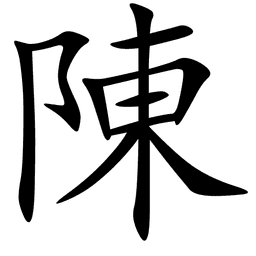
Chen Qun
Politician · Ancient
55.9Total

Napoleon Bonaparte
General · Modern
70.9Total
Basic Information
Born
160
1769
Died
237
1821
Era
Ancient
Modern
Nationality
China
France
Occupation
Politician
General
Civilization
Eastern
Western
Score Comparison
Military (10%)
10.0
94.0
Political (20%)
72.0
72.0
Influence (20%)
40.0
40.0
Legacy (20%)
75.0
80.0
Leadership (15%)
72.0
78.0
Strategy (15%)
45.5
90.0
TOTAL
55.9
70.9
Chen Qun — Complete Timeline
220 AD
Proposed the Nine-rank SystemReform◆ Major
Chen Qun proposed the Nine-rank system for civil service appointments to Cao Pi, the first emperor of Wei. This system ranked candidates based on family background and personal merit, replacing the earlier recommendation system and becoming the standard for official selection in China for centuries.
Civil Service ReformWei DynastyBureaucracy
Impact: nationalconstructive
Advised Cao Pi on Legal CodeReform
Chen Qun assisted Cao Pi in drafting the new legal code for the Wei dynasty. He advocated for clearer laws and more consistent punishments, contributing to the legal framework that helped stabilize Wei's early rule.
Legal ReformWei DynastyLaw
Impact: nationalconstructive
226 AD
Served as Minister over the MassesPolitical Action
Chen Qun was appointed Minister over the Masses (Sikong) under Emperor Cao Rui of Wei. In this high-ranking position, he oversaw civil administration and continued to refine the implementation of the Nine-rank system, solidifying its role in Wei governance.
AppointmentWei DynastyGovernment
Impact: nationalconstructive
Napoleon Bonaparte — Complete Timeline
1799 AD
Coup of 18 BrumaireOther◆ Major
Napoleon Bonaparte, with support from his brother Lucien and key political figures, overthrew the Directory in a bloodless coup. He established the Consulate with himself as First Consul, effectively becoming the ruler of France. This event ended the French Revolution's most unstable period.
French RevolutionCoupRise to Power
Impact: regional
1804 AD
Promulgation of the Napoleonic CodeOther◆ Major
Napoleon enacted the Civil Code of the French, known as the Napoleonic Code, a comprehensive set of laws that replaced the fragmented feudal legal systems. The code established legal equality, protected property rights, and secularized law. It became the basis for legal systems in many European and world countries.
Legal ReformNapoleonic CodeCivil Law
Impact: globalconstructive
1805 AD
Battle of AusterlitzWar◆ Major
Napoleon's Grande Arm
Napoleonic WarsBattleDecisive Victory
Impact: global
1812 AD
Invasion of RussiaWar◆ Major
Napoleon led the Grande Arm
Napoleonic WarsInvasionDisaster
Impact: globaldestructive
1815 AD
Battle of WaterlooWar◆ Major
Napoleon's French army was defeated by the combined forces of the Duke of Wellington's Anglo-Allied army and Gebhard Leberecht von Bl
Napoleonic WarsBattleFinal Defeat
Impact: globaldestructive
Expert Analysis
chen-qun-vs-napoleon-bonaparte
# The Architect and the Conqueror: Chen Qun and Napoleon Bonaparte
On a dusty battlefield in Belgium in June 1815, Napoleon Bonaparte watched his Imperial Guard crumble before the Duke of Wellington’s redcoats, the dream of a united Europe dying with every cannon blast. Eighteen centuries earlier and half a world away, in the court of Cao Pi in Luoyang, a Chinese minister named Chen Qun presented a scroll that would reshape the largest civilization on earth—not through conquest, but through a system of paper and ink. Two men, both builders of empires, yet one built with steel and the other with bureaucracy. Why did one end in exile on a remote Atlantic island while the other died in honored old age, his creation outlasting his dynasty by centuries?
Origins
Napoleon Bonaparte was born in 1769 on Corsica, an island of fierce independence recently annexed by France. His family was minor nobility, poor enough to feel the sting of poverty but well-connected enough to send him to French military academies. At Brienne-le-Château, the young Corsican was mocked for his accent and his small stature—a humiliation that forged a will of iron. The French Revolution shattered the old order just as he came of age, offering unprecedented opportunity to a talented outsider.
Chen Qun, born in 160, came from a different world entirely. His family were scholar-officials of the Eastern Han dynasty, part of a literate elite that had governed China for four centuries. His grandfather had served as a provincial governor, his father as a magistrate. From childhood, Chen Qun was steeped in the Confucian classics, trained to see governance as a moral art. Where Napoleon’s world was one of revolution and upheaval, Chen’s was one of collapse—the Han dynasty was dying, warlords carving up the empire, and chaos threatened to erase everything his family valued.
Rise to Power
Napoleon’s ascent was meteoric and violent. At 24, he drove the British out of Toulon with a brilliant artillery plan. At 26, he crushed a royalist uprising in Paris with a "whiff of grapeshot." At 27, he commanded the Army of Italy and turned starving soldiers into a conquering force, winning six battles in as many weeks. Each victory brought promotion, wealth, and fame. By 1799, at 30, he was First Consul of France. By 1804, at 35, he crowned himself Emperor.
Chen Qun’s path was slower, more deliberate. He first served the warlord Liu Bei, but found his talents unappreciated. He then joined Cao Cao, the most powerful warlord of the north, and rose through careful competence—serving as a magistrate, then a censor, then a minister. His key moment came in 220, when Cao Cao died and his son Cao Pi prepared to found a new dynasty. The empire needed a civil service, not just an army. Chen Qun proposed the Nine-rank System: a method to recruit officials based on merit, assessed by local notables, with nine grades of talent. Cao Pi accepted, and Chen Qun became the architect of Wei’s bureaucracy.
Leadership & Governance
Napoleon governed through force of personality and relentless energy. He worked eighteen-hour days, dictated letters to multiple secretaries simultaneously, and personally oversaw every detail of his empire. His Napoleonic Code reformed French law, establishing equality before the law and protecting property rights—a system that spread across Europe. But his governance was ultimately autocratic: he centralized power, suppressed dissent, and crowned himself emperor. His military genius was unmatched—his strategy of concentrating forces at the decisive point, his use of speed and surprise, his ability to inspire soldiers—but he could not govern what he conquered.
Chen Qun governed through systems and consensus. As Minister over the Masses (Sikong) from 226, he advised Emperor Cao Rui on legal reform, advocating for clearer laws and more consistent punishments. His Nine-rank System was not a revolutionary break but a gradual evolution: it formalized existing practices, created a ladder for talented men regardless of birth, and gave the central government control over local elites. Where Napoleon imposed his will, Chen Qun built institutions that outlasted him.
Triumph & Tragedy
Napoleon’s greatest triumph was Austerlitz in 1805, where he destroyed the combined armies of Austria and Russia, a masterpiece of military deception and timing. His greatest tragedy was the invasion of Russia in 1812: 600,000 men marched east, only 100,000 returned. The disaster broke his aura of invincibility, led to his first abdication in 1814, and ended finally at Waterloo in 1815, where his genius failed him on a rainy Sunday.
Chen Qun’s triumph was quieter but more enduring: the Nine-rank System became the foundation of Chinese civil service for nearly four centuries, surviving the fall of Wei and passing to the Jin dynasty. His tragedy was more subtle—the system he designed to select talent gradually ossified, with high-ranking families dominating the assessments, creating a hereditary aristocracy of officials. But Chen Qun did not live to see this corruption; he died in 237, honored and respected.
Character & Destiny
Napoleon’s character was a storm: ambition without limit, confidence that bordered on arrogance, a restless energy that could not be contained. “Impossible is a word to be found only in the dictionary of fools,” he once said. This drive made him master of Europe, but it also led him to overreach—to invade Russia, to fight the Peninsular War, to refuse any compromise that would have preserved his dynasty. His destiny was to burn bright and fast, consumed by his own fire.
Chen Qun’s character was a river: patient, methodical, deep. He understood that lasting change comes not from one dramatic act but from systems that shape behavior over generations. He was a builder, not a conqueror. His destiny was to create something that outlasted him, to be remembered not as a hero but as an architect.
Legacy
Napoleon’s legacy is written in blood and stone: the Napoleonic Code still governs much of Europe, his military campaigns are studied in every war college, and his name remains synonymous with ambition and genius. But his empire crumbled within a decade of his death.
Chen Qun’s legacy is written in ink and bureaucracy: the Nine-rank System shaped Chinese governance for 400 years, and its spirit—selecting officials by merit—influenced the later civil service examinations that lasted until 1905. His name is less famous, but his work touched more lives.
Conclusion
Standing on the deck of the *Bellerophon* as it carried him to Saint Helena, Napoleon might have envied Chen Qun’s quiet death in bed, surrounded by family and honors. But Chen Qun, watching his system take root, might have envied Napoleon’s glory. The difference between them is the difference between the lightning strike and the slow rain—one illuminates the sky, the other makes the crops grow. History needs both, but it remembers the lightning better.
Rankings
🥇
Napoleon BonaparteLeader
Mil: 94.0Pol: 72.0Inf: 40.0
70.9
🥈
Chen Qun
Mil: 10.0Pol: 72.0Inf: 40.0
55.9
+15.0 behind
How This Comparison Works
Algorithm
Each figure is scored on 6 dimensions (0—100 scale) based on structured historical data: Military (10%), Political (20%), Influence (20%), Legacy (20%), Leadership (15%), Strategy (15%). The weighted total produces the final ranking.
Data Sources
Scores are computed from structured sub-indicators in the database. Scale factors adjust for era (Ancient ×0.85, Modern ×1.0) and civilization size (Eastern ×1.05, Other ×0.80) to account for differences in population and military scale.
Maximum 3 Figures
Comparisons are limited to 2—3 figures to ensure readability and statistical meaningfulness.
Error Margins
±5 points per dimension — Sub-scores are derived from historical records with inherent uncertainty. Two figures within 5 points on a dimension should be considered roughly equivalent in that area.
Total Score Accuracy
±3 points overall — The weighted combination of 6 dimensions produces a total score with approximately ±3 points of uncertainty. Differences of less than 3 points are not statistically significant— the figures are effectively tied.
Known Limitations
- Historical records are incomplete and uneven across civilizations
- Figures from oral-tradition societies may be underrepresented
- Occupation labels can misclassify multi-role figures
- Scores measure capability and impact, not moral character
- Quantitative scoring is a comparison tool, not absolute truth
Capability Radar
Military (10%) — Battles & Warfare
Battles
19
95
Win Rate
22
90
Expansion
25
95
Political (20%) — Governance & Reform
Reform
85
95
Diplomacy
50
80
Economy
60
85
Influence (20%) — Cultural & Global Reach
Cultural
70
85
Global
65
90
Legacy (20%) — Historical Impact
Historical
80
95
Longevity
85
90
Leadership (15%) — Power & Stability
Tenure
40
85
Stability
65
70
Strategy (15%) — Tactics & Innovation
Strategy
31
95
Tactics
32
98
Reform
36
92
Similar Comparisons
Comments & Discussion
No comments yet. Be the first to share your thoughts!