Loading...
Chen Qun vs Muhammadu Buhari
Chen Qun leads by 4.4 pts · 2 figures compared
…
Chen Qun
Politician · Ancient
55.9Total
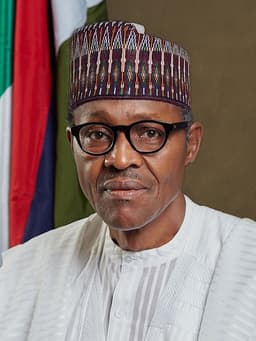
Muhammadu Buhari
General · Modern
51.5Total
Basic Information
Born
160
1942
Died
237
—
Era
Ancient
Modern
Nationality
China
Nigeria
Occupation
Politician
General
Civilization
Eastern
Other
Score Comparison
Military (10%)
10.0
22.6
Political (20%)
72.0
68.0
Influence (20%)
40.0
53.3
Legacy (20%)
75.0
43.3
Leadership (15%)
72.0
72.0
Strategy (15%)
45.5
41.0
TOTAL
55.9
51.5
Chen Qun — Complete Timeline
220 AD
Proposed the Nine-rank SystemReform◆ Major
Chen Qun proposed the Nine-rank system for civil service appointments to Cao Pi, the first emperor of Wei. This system ranked candidates based on family background and personal merit, replacing the earlier recommendation system and becoming the standard for official selection in China for centuries.
Civil Service ReformWei DynastyBureaucracy
Impact: nationalconstructive
Advised Cao Pi on Legal CodeReform
Chen Qun assisted Cao Pi in drafting the new legal code for the Wei dynasty. He advocated for clearer laws and more consistent punishments, contributing to the legal framework that helped stabilize Wei's early rule.
Legal ReformWei DynastyLaw
Impact: nationalconstructive
226 AD
Served as Minister over the MassesPolitical Action
Chen Qun was appointed Minister over the Masses (Sikong) under Emperor Cao Rui of Wei. In this high-ranking position, he oversaw civil administration and continued to refine the implementation of the Nine-rank system, solidifying its role in Wei governance.
AppointmentWei DynastyGovernment
Impact: nationalconstructive
Muhammadu Buhari — Complete Timeline
1983 AD
1983 Nigerian coup d'étatPolitical Action
Major General Muhammadu Buhari led a military coup that overthrew the civilian government of President Shehu Shagari. Buhari cited corruption and economic mismanagement as justifications, and he became the head of state.
CoupMilitary RuleCorruption
Impact: nationaldestructive
1984 AD
War Against Indiscipline (WAI)Reform◆ Major
Buhari launched the War Against Indiscipline, a campaign to enforce discipline and order in Nigerian society. It included harsh penalties for minor offenses, such as queue-jumping, and was criticized for human rights abuses.
DisciplineSocial PolicyHuman Rights
Impact: nationaldestructive
1985 AD
Overthrow by Ibrahim BabangidaPolitical Action◆ Major
Buhari was overthrown in a palace coup led by his Chief of Army Staff, Ibrahim Babangida. Babangida cited Buhari's authoritarian style and failure to address the economy as reasons for the coup.
CoupOverthrowBabangida
Impact: national
2015 AD
Anti-corruption campaignReform◆ Major
Buhari launched a high-profile anti-corruption campaign, targeting government officials and recovering stolen assets. The campaign was praised internationally but criticized for being selective and politically motivated.
Anti-CorruptionReformGovernance
Impact: nationalconstructive
Election as President of NigeriaPolitical Action
Buhari won the 2015 Nigerian presidential election, defeating incumbent Goodluck Jonathan. This was the first time an opposition candidate had defeated a sitting president in Nigeria's history, marking a democratic milestone.
ElectionDemocracyOpposition Victory
Impact: nationalprogressive
Expert Analysis
Chen Qun vs Muhammadu Buhari
### The General and the Bureaucrat
In 1984, Muhammadu Buhari, a stern-faced general who had seized power in Nigeria, ordered citizens to line up in neat rows at bus stops. Failure to do so meant public humiliation or a jail sentence. Half a world away and nearly two millennia earlier, Chen Qun, a Chinese minister in the court of Cao Wei, was drafting a system that would decide who could become a government official—not by birth, but by a ranked assessment of talent. One man used a whip to enforce order in the present; the other used ink to shape governance for centuries. What drives a ruler to command bodies, and another to build institutions? The answer lies in the worlds they inherited—and the tools they chose to reshape them.
### Origins
Muhammadu Buhari was born in 1942 in Daura, a dusty town in northern Nigeria, into a Fulani family steeped in Islamic tradition and military service. His world was one of colonial aftermath and ethnic fractures. The British had left a patchwork of regions—Hausa-Fulani north, Yoruba west, Igbo east—barely stitched together. Buhari’s father was a chief, but the young man’s path was forged in the Nigerian Army, where he trained in Ethiopia, India, and the United Kingdom. He learned the language of command, not compromise. Chen Qun, by contrast, was born in 160 AD into the chaos of China’s late Han dynasty. His father, Chen Ji, was a Confucian scholar-official known for integrity. The Han empire was crumbling under warlords, famine, and rebellion. Chen Qun was raised on classical texts, not drill fields. He studied the *Analects* and the *Book of Documents*, absorbing a worldview where order came from virtue and hierarchy—not from force.
### Rise to Power
Buhari’s ascent was sudden and violent. On December 31, 1983, as Major General, he led a coup that toppled President Shehu Shagari, whom he accused of corruption and economic mismanagement. The tanks rolled into Lagos, and within hours, Buhari was the head of state. His power was born from a gun barrel. Chen Qun’s rise was slower, woven through service. He first served as a local official under the Han, then attached himself to the rising warlord Cao Cao. Chen’s breakthrough came in 220 AD, when Cao Cao’s son, Cao Pi, founded the Wei dynasty. Chen Qun proposed the Nine-rank System—a method to classify candidates for office based on moral character, talent, and family background. Cao Pi, hungry for legitimacy and competent administrators, adopted it. Chen’s power came not from a coup, but from a proposal.
### Leadership & Governance
Buhari governed like a drill sergeant. In 1984, he launched the War Against Indiscipline (WAI), a campaign that punished lateness, littering, and queue-jumping with forced labor or public flogging. He arrested journalists, banned strikes, and detained political opponents. His goal was order, but his methods bred resentment. He cut government spending and jailed corrupt officials, yet the economy—plagued by falling oil prices—only worsened. His military score of 20.7 reflects his lack of battlefield glory, but his political score of 61.0 hints at a stubborn integrity. Chen Qun governed like a master architect. As Minister over the Masses under Emperor Cao Rui from 226 AD onward, he advised on legal codes, advocating for clearer laws and consistent punishments. But his masterwork was the Nine-rank System. It did not abolish aristocratic privilege—local lords still recommended candidates—but it created a ladder of merit where intelligence and conduct could outweigh blood. His political score of 69.8 and influence of 92.4 reflect a system that would shape Chinese bureaucracy for over 300 years.
### Triumph & Tragedy
Buhari’s triumph was his 2015 election victory. After years in exile, he ran as a democrat and won, defeating incumbent Goodluck Jonathan in Nigeria’s first peaceful transfer of power to an opposition party. He launched an anti-corruption campaign, recovering billions in stolen assets. Yet his tragedy was also his own making: his first regime in 1985 was overthrown by his own chief of army staff, Ibrahim Babangida, who cited Buhari’s “authoritarian” rule. The general who demanded discipline could not keep his own house in order. Chen Qun’s triumph was the Nine-rank System itself, which outlived him by centuries. His tragedy was subtler: the system eventually ossified into a tool of the very aristocracy it was meant to check. By the Tang dynasty, the “nine ranks” were often inherited, not earned. Chen’s legacy became a cautionary tale of how good ideas can be corrupted.
### Character & Destiny
Buhari was a man of iron will and narrow vision. He once said, “I belong to everyone, and I belong to no one.” This detachment helped him resist bribery but also made him aloof. He trusted few, and his leadership score of 77.5 reflects a commander’s resolve, not a coalition-builder’s flexibility. His strategy score of 62.4 suggests he could plan, but not adapt. Chen Qun was a man of subtle persistence. He did not seek glory; he sought function. His political score of 69.8 and leadership of 80.0 show a man who guided from behind, shaping laws and institutions rather than commanding armies. His strategy score of 39.8 is low, but that is because his battlefield was the court, not the field. One man’s character was forged in the barracks; the other’s, in the library.
### Legacy
Buhari’s legacy is a paradox. He is remembered as both a dictator and a democrat, a crusader against corruption who left office in 2023 with the economy in tatters and insecurity rampant. His total score of 60.7 reflects a figure of considerable influence but mixed success. In Nigeria, his name still stirs debate—some see a stern father, others a failed strongman. Chen Qun’s legacy is quieter but deeper. The Nine-rank System became the blueprint for China’s civil service exams, which later spread to Korea, Japan, and Vietnam. His influence score of 92.4 and legacy of 89.6 place him among the great institutional architects of history. Yet he remains obscure outside academic circles. One man’s name is shouted in streets; the other’s is written in archives.
### Conclusion
Standing at the gates of history, Buhari and Chen Qun offer two answers to the same question: how do you rule a fractured land? Buhari reached for the whip, believing that order must be forced. Chen Qun reached for the brush, believing that order must be structured. The general’s empire crumbled with his reign; the bureaucrat’s empire of ideas lasted centuries. In the end, the hardest thing to build is not a government—but a system that outlasts the builder. Buhari built a wall; Chen Qun built a staircase. Both sought to climb, but only one left steps for others to follow.
Rankings
🥇
Chen QunLeader
Mil: 10.0Pol: 72.0Inf: 40.0
55.9
🥈
Muhammadu Buhari
Mil: 22.6Pol: 68.0Inf: 53.3
51.5
+4.4 behind
How This Comparison Works
Algorithm
Each figure is scored on 6 dimensions (0—100 scale) based on structured historical data: Military (10%), Political (20%), Influence (20%), Legacy (20%), Leadership (15%), Strategy (15%). The weighted total produces the final ranking.
Data Sources
Scores are computed from structured sub-indicators in the database. Scale factors adjust for era (Ancient ×0.85, Modern ×1.0) and civilization size (Eastern ×1.05, Other ×0.80) to account for differences in population and military scale.
Maximum 3 Figures
Comparisons are limited to 2—3 figures to ensure readability and statistical meaningfulness.
Error Margins
±5 points per dimension — Sub-scores are derived from historical records with inherent uncertainty. Two figures within 5 points on a dimension should be considered roughly equivalent in that area.
Total Score Accuracy
±3 points overall — The weighted combination of 6 dimensions produces a total score with approximately ±3 points of uncertainty. Differences of less than 3 points are not statistically significant— the figures are effectively tied.
Known Limitations
- Historical records are incomplete and uneven across civilizations
- Figures from oral-tradition societies may be underrepresented
- Occupation labels can misclassify multi-role figures
- Scores measure capability and impact, not moral character
- Quantitative scoring is a comparison tool, not absolute truth
Capability Radar
Military (10%) — Battles & Warfare
Battles
19
10
Win Rate
22
10
Expansion
25
5
Political (20%) — Governance & Reform
Reform
85
30
Diplomacy
50
25
Economy
60
20
Influence (20%) — Cultural & Global Reach
Cultural
70
25
Global
65
25
Legacy (20%) — Historical Impact
Historical
80
30
Longevity
85
20
Leadership (15%) — Power & Stability
Tenure
40
45
Stability
65
15
Strategy (15%) — Tactics & Innovation
Strategy
31
15
Tactics
32
15
Reform
36
20
Similar Comparisons
Comments & Discussion
WarLens886/16/2026
Buhari's bus-stop order wasn't reform—it was theater. A general demanding orderly lines while Nigeria's oil-bloated economy bled out. Chen Qun built the nine-rank system, a blueprint that outlasted dynasties. Buhari's legacy is "queue if you want," Chen's is hierarchy by meritocracy—one timeless, the other a footnote. Give me the bureaucrat over the whip any day. Fascism fades; systems endure.
军史墨客6/16/2026
布哈里就是个马背上治国的典型,1984年排队政策除了羞辱百姓还能干啥?看看尼日利亚当时的经济崩溃,这种命令连止痛药都算不上。陈群比他高一个层次,九品中正制虽然不完美,至少给乱世提供了人才选拔框架。军人治国和文官理政的区别就在这儿——一个靠恐吓维持表面秩序,一个靠制度铺路百年。
DataSkeptic_Ben6/16/2026
Everyone romanticizes Chen Qun's nine-rank system, but let's call it what it is: an elite gatekeeping scheme dressed in Confucian robes. The ranks were decided by local notables—exactly the same families that already held power. Buhari's queue law was crude but transparent: everyone waits, no exceptions. Chen's system baked aristocracy into law for centuries. Which is the real tyranny? The visible whip or the invisible bottleneck?
考古老李6/16/2026
从史料细节看,陈群提出九品中正制是在曹魏刚刚代汉的关键节点,他不是简单想搞人才评估,而是要安抚世家大族、稳定政局。黄初元年(220年)的奏疏里有明确的政治算计。布哈里那个排队令呢?纯粹是1984年石油价格暴跌后财政破产的瞎折腾。一个是为了组织的长远存活,一个是为了眼前的暴躁维稳。高下立判。