Loading...
Chen Qun vs Louis XI of France
Louis XI of France leads by 10.3 pts · 2 figures compared
…
Chen Qun
Politician · Ancient
55.9Total
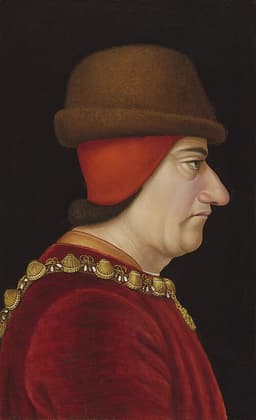
Louis XI of France
Emperor · Medieval
66.2Total
Basic Information
Born
160
1423
Died
237
1483
Era
Ancient
Medieval
Nationality
China
France
Occupation
Politician
Emperor
Civilization
Eastern
Western
Score Comparison
Military (10%)
10.0
47.5
Political (20%)
72.0
78.0
Influence (20%)
40.0
65.0
Legacy (20%)
75.0
65.0
Leadership (15%)
72.0
78.0
Strategy (15%)
45.5
55.0
TOTAL
55.9
66.2
Chen Qun — Complete Timeline
220 AD
Proposed the Nine-rank SystemReform◆ Major
Chen Qun proposed the Nine-rank system for civil service appointments to Cao Pi, the first emperor of Wei. This system ranked candidates based on family background and personal merit, replacing the earlier recommendation system and becoming the standard for official selection in China for centuries.
Civil Service ReformWei DynastyBureaucracy
Impact: nationalconstructive
Advised Cao Pi on Legal CodeReform
Chen Qun assisted Cao Pi in drafting the new legal code for the Wei dynasty. He advocated for clearer laws and more consistent punishments, contributing to the legal framework that helped stabilize Wei's early rule.
Legal ReformWei DynastyLaw
Impact: nationalconstructive
226 AD
Served as Minister over the MassesPolitical Action
Chen Qun was appointed Minister over the Masses (Sikong) under Emperor Cao Rui of Wei. In this high-ranking position, he oversaw civil administration and continued to refine the implementation of the Nine-rank system, solidifying its role in Wei governance.
AppointmentWei DynastyGovernment
Impact: nationalconstructive
Louis XI of France — Complete Timeline
1464 AD
Established the Postal ServiceReform
Louis XI established a royal postal service, creating a network of relay stations for rapid communication across France. This system improved administrative efficiency and royal control over the realm.
Postal ServiceAdministrationCommunication
Impact: nationalconstructive
1465 AD
Defeated the League of the Public WealWar◆ Major
Louis XI defeated the League of the Public Weal, a coalition of rebellious nobles led by the Duke of Burgundy and the Duke of Berry. The victory at the Battle of Montlh
Civil WarNobilityRoyal Authority
Impact: national
1469 AD
Imprisoned Cardinal BaluePolitical Action
Louis XI imprisoned his own minister, Cardinal Jean Balue, for treason after discovering his secret correspondence with Charles the Bold. Balue was held in an iron cage for over a decade, demonstrating Louis's ruthless treatment of disloyal officials.
ImprisonmentTreasonIron Cage
Impact: nationaldestructive
1474 AD
Supported the Swiss Confederacy against BurgundyWar
Louis XI provided financial and diplomatic support to the Swiss Confederacy in their war against Charles the Bold of Burgundy. This alliance contributed to Burgundy's defeat and the eventual collapse of the Burgundian state.
AllianceSwissBurgundian Wars
Impact: regionalconstructive
1475 AD
Signed the Treaty of PicquignyPolitical Action◆ Major
Louis XI signed the Treaty of Picquigny with King Edward IV of England, ending the Hundred Years' War. The treaty included a payment to Edward IV to withdraw his invading army, securing peace and saving France from invasion.
TreatyHundred Years' WarDiplomacy
Impact: regionalconstructive
1477 AD
Acquired the Duchy of BurgundyWar◆ Major
After the death of Charles the Bold at the Battle of Nancy, Louis XI seized the Duchy of Burgundy and other Burgundian territories. This acquisition significantly expanded the French crown's lands and reduced Burgundian power.
Territorial ExpansionBurgundyRoyal Domain
Impact: regionalconstructive
Expert Analysis
Chen Qun vs Louis XI of France
# The Spider and the Scholar
In the winter of 220, as the Han dynasty breathed its last, a middle-aged official named Chen Qun presented a scroll to the new Emperor Cao Pi. On it was a scheme so radical it would reshape Chinese governance for centuries. Forty-four years later and six thousand miles away, King Louis XI of France sat in his fortified castle at Plessis-lès-Tours, spinning a web of spies and letters that would strangle the power of his nobles. One man wrote a system; the other wove a kingdom. Both sought order from chaos. But why did the scholar succeed where the spider left a divided legacy?
Origins
Chen Qun was born in 160, a child of the dying Han. His family were scholar-officials, steeped in Confucian ideals of merit and duty. The world he knew was collapsing into the Three Kingdoms—a brutal era of warlords, famine, and shifting alliances. Chen Qun’s father had served as a provincial governor, and young Chen learned early that survival depended not on swords but on systems. He was a bookish man in an age of heroes, and that was his strength.
Louis XI was born in 1423, a prince of the House of Valois. His father, Charles VII, was a king who had been saved by Joan of Arc, but the France of Louis’s youth was a patchwork of feudal lords more powerful than the crown. Louis grew up suspicious, cunning, and patient. He rebelled against his own father twice, was forced into exile, and learned the art of waiting. Where Chen Qun inherited a tradition of bureaucratic order, Louis inherited a kingdom of warring dukes.
Rise to Power
Chen Qun entered history not through battle but through paperwork. He served under the warlord Cao Cao, who valued talent over noble birth. In 220, when Cao Cao’s son Cao Pi declared himself emperor of Wei, Chen Qun seized the moment. He proposed the Nine-rank System, a method for selecting officials based on merit rather than blood. It was a quiet revolution. Cao Pi adopted it immediately, and Chen Qun became the architect of a new civil service.
Louis XI’s rise was anything but quiet. Crowned in 1461, he faced the League of the Public Weal—a coalition of dukes and princes who wanted to clip the monarchy’s wings. In 1465, Louis met them at the Battle of Montlhéry. It was a tactical draw, but Louis turned defeat into victory by negotiating, bribing, and dividing his enemies. He didn’t win wars; he won arguments and alliances. His nickname, the “Universal Spider,” came from the web of correspondence he spun across Europe.
Leadership & Governance
Chen Qun governed through institutions. As Minister over the Masses under Emperor Cao Rui from 226 onward, he drafted legal codes that clarified punishments and protections. He believed that a stable state depended on predictable rules, not the whims of rulers. His Nine-rank System assigned every candidate for office a grade from one to nine, based on moral character and ability. In theory, it opened doors to talent. In practice, it eventually ossified into a tool of aristocratic control—but Chen Qun could not see that future.
Louis XI governed through personality. He personally read reports from every corner of France, established a royal postal service in 1464 to speed communication, and imprisoned his own minister Cardinal Balue in 1469 for treason. He was paranoid and brilliant. He supported the Swiss Confederacy against his greatest rival, Charles the Bold of Burgundy, and when Charles died at Nancy in 1477, Louis seized Burgundy itself. He expanded the royal domain without fighting a single great battle. His weapon was patience, not the sword.
Triumph & Tragedy
Chen Qun’s triumph was the Nine-rank System itself. It lasted from 220 until the Sui dynasty replaced it with the imperial examination system nearly four centuries later. For a man who never led an army, his influence was immense. But his tragedy was the system’s corruption. Over time, the “merit” it measured became hereditary privilege. The scholar’s dream of a fair bureaucracy became a gatekeeper for the powerful.
Louis XI’s triumph was the unification of France. By the time he died in 1483, he had broken the great feudal houses, acquired Burgundy, and made the king the true master of the realm. But his tragedy was personal. He died in paranoid isolation, surrounded by astrologers and guards, terrified of poison. His own son, Charles VIII, was a child who nearly undid his father’s work. The spider died alone in his web.
Character & Destiny
Chen Qun was a man of order. His personality was cautious, methodical, and idealistic. He believed that good government was a matter of design. This shaped his destiny: he created a system that outlived him but could not control how it was used. His legacy was a blueprint that others could distort.
Louis XI was a man of chaos. He was secretive, vengeful, and pragmatic. He believed that power was a matter of will. This shaped his destiny: he achieved his goals through cunning, but his methods bred distrust and instability. His legacy was a stronger crown, but a court filled with fear.
Legacy
Today, Chen Qun is remembered as a quiet revolutionary. His Nine-rank System is studied as a precursor to modern civil service exams. His political score of 69.8 and influence score of 92.4 reflect a man who changed how China was governed, even if his name is obscure to most. He is a footnote in the Romance of the Three Kingdoms, but a giant in administrative history.
Louis XI is remembered as a king who transformed France. His legacy score of 80.0 and leadership score of 82.3 show a ruler who was effective if not beloved. He appears in literature as a cunning, almost villainous figure—the spider who trapped his enemies. He is a hero of state-building, but a cautionary tale about the costs of centralization.
Conclusion
Chen Qun and Louis XI never met, but they shared a question: how do you make a kingdom work? One answered with a system, the other with a web. The scholar believed that rules could replace violence; the king believed that cunning could replace honor. Both were right, and both were wrong. Chen Qun’s system became a cage; Louis XI’s web became a trap. In the end, they remind us that order and power are never pure. They are always woven from the flaws of the weaver.
Rankings
🥇
Louis XI of FranceLeader
Mil: 47.5Pol: 78.0Inf: 65.0
66.2
🥈
Chen Qun
Mil: 10.0Pol: 72.0Inf: 40.0
55.9
+10.3 behind
How This Comparison Works
Algorithm
Each figure is scored on 6 dimensions (0—100 scale) based on structured historical data: Military (10%), Political (20%), Influence (20%), Legacy (20%), Leadership (15%), Strategy (15%). The weighted total produces the final ranking.
Data Sources
Scores are computed from structured sub-indicators in the database. Scale factors adjust for era (Ancient ×0.85, Modern ×1.0) and civilization size (Eastern ×1.05, Other ×0.80) to account for differences in population and military scale.
Maximum 3 Figures
Comparisons are limited to 2—3 figures to ensure readability and statistical meaningfulness.
Error Margins
±5 points per dimension — Sub-scores are derived from historical records with inherent uncertainty. Two figures within 5 points on a dimension should be considered roughly equivalent in that area.
Total Score Accuracy
±3 points overall — The weighted combination of 6 dimensions produces a total score with approximately ±3 points of uncertainty. Differences of less than 3 points are not statistically significant— the figures are effectively tied.
Known Limitations
- Historical records are incomplete and uneven across civilizations
- Figures from oral-tradition societies may be underrepresented
- Occupation labels can misclassify multi-role figures
- Scores measure capability and impact, not moral character
- Quantitative scoring is a comparison tool, not absolute truth
Capability Radar
Military (10%) — Battles & Warfare
Battles
19
45
Win Rate
22
50
Expansion
25
60
Political (20%) — Governance & Reform
Reform
85
80
Diplomacy
50
90
Economy
60
75
Influence (20%) — Cultural & Global Reach
Cultural
70
60
Global
65
65
Legacy (20%) — Historical Impact
Historical
80
80
Longevity
85
75
Leadership (15%) — Power & Stability
Tenure
40
85
Stability
65
70
Strategy (15%) — Tactics & Innovation
Strategy
31
70
Tactics
32
55
Reform
36
65
Similar Comparisons
Comments & Discussion
Empire Builder6/16/2026
Chen Qun’s nine-rank system wasn’t just reform—it was the administrative equivalent of the steam engine. By codifying talent evaluation, he gave Cao Wei a meritocratic edge that outlasted its rivals. Louis XI’s spy network? Brilliant but brittle: it died with him. Systems beat spiders every time. The Ming’s civil exams prove it.
数据侦探6/16/2026
别吹什么“蛛网治国”——路易十一的经济账算过吗?他搞邮驿、促羊毛贸易,国库收入涨了三成,比平行时空的英国都强。陈群的九品中正制呢?门阀垄断人才,两晋烂到骨子里,就剩个空壳吹系统。数字不说话,路易务实,陈群空想。
Legacy Lens6/16/2026
The real measure is endurance. Chen Qun’s system survived 400 years, shaping Tang-Song bureaucracy. Louis XI’s centralization? It fed the absolutism that bankrupted Louis XIV and sparked revolution. One built a ladder; the other, a trap. I’ll take the scholar’s slow-burn legacy over the spider’s fragile web every time.
符号解码者6/16/2026
别光比政治,看文化符号:路易十一叫“蜘蛛”,阴暗、织网、残害对手;陈群成“学者”,写制度、开文运。法国人记得他囚禁奥尔良公爵的算计,中国人只引九品中正的框架。名字暴露人心:陈群是秩序,路易是恐惧。谁更高明?一目了然。
What-if Historian6/16/2026
Flip the map for a moment. Suppose Chen Qun had been born in Quercy in 1423: he’d have written a manual for tax collectors and died ignored. Louis XI in Luoyang in 160? He’d have bribed warlords for a decade, then got impaled during a coup. Their brilliance was location-specific. Chen’s system thrived in China’s literati soil; Louis’s cunning needed feudal rot. Pointless to compare—both were children of different worlds.