Loading...
Chen Qun vs Louis XI
Louis XI leads by 11.8 pts · 2 figures compared
…
Chen Qun
Politician · Ancient
55.9Total
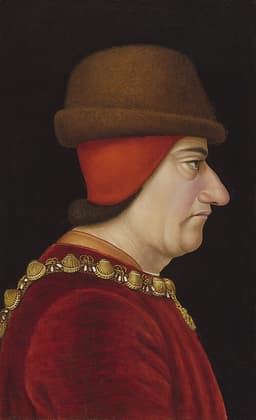
Louis XI
Emperor · Medieval
67.7Total
Basic Information
Born
160
1423
Died
237
1483
Era
Ancient
Medieval
Nationality
China
France
Occupation
Politician
Emperor
Civilization
Eastern
Western
Score Comparison
Military (10%)
10.0
45.0
Political (20%)
72.0
78.0
Influence (20%)
40.0
68.0
Legacy (20%)
75.0
65.0
Leadership (15%)
72.0
85.0
Strategy (15%)
45.5
55.0
TOTAL
55.9
67.7
Chen Qun — Complete Timeline
220 AD
Proposed the Nine-rank SystemReform◆ Major
Chen Qun proposed the Nine-rank system for civil service appointments to Cao Pi, the first emperor of Wei. This system ranked candidates based on family background and personal merit, replacing the earlier recommendation system and becoming the standard for official selection in China for centuries.
Civil Service ReformWei DynastyBureaucracy
Impact: nationalconstructive
Advised Cao Pi on Legal CodeReform
Chen Qun assisted Cao Pi in drafting the new legal code for the Wei dynasty. He advocated for clearer laws and more consistent punishments, contributing to the legal framework that helped stabilize Wei's early rule.
Legal ReformWei DynastyLaw
Impact: nationalconstructive
226 AD
Served as Minister over the MassesPolitical Action
Chen Qun was appointed Minister over the Masses (Sikong) under Emperor Cao Rui of Wei. In this high-ranking position, he oversaw civil administration and continued to refine the implementation of the Nine-rank system, solidifying its role in Wei governance.
AppointmentWei DynastyGovernment
Impact: nationalconstructive
Louis XI — Complete Timeline
1464 AD
Established the Postal SystemReform
Louis XI created a royal postal system with relay stations across France, enabling faster communication between the crown and provincial officials. This administrative reform improved governance and intelligence gathering.
AdministrationCommunicationReform
Impact: nationalconstructive
1465 AD
Defeated the League of the Public WealWar◆ Major
Louis XI faced a coalition of powerful nobles, the League of the Public Weal, led by Charles the Bold of Burgundy. Although the Battle of Montlh
Civil WarNoble RebellionBurgundy
Impact: national
1475 AD
Treaty of PicquignyPolitical Action◆ Major
Louis XI negotiated the Treaty of Picquigny with Edward IV of England, ending English military intervention in France. Louis paid a large pension to Edward in exchange for English withdrawal, avoiding a costly war and securing his northern border.
TreatyDiplomacyEngland
Impact: regionalconstructive
1477 AD
Acquired BurgundyPolitical Action
After Charles the Bold's death at the Battle of Nancy, Louis XI seized the Duchy of Burgundy and other Burgundian territories, including Picardy and the Somme towns. This expansion significantly increased royal domain and weakened the Burgundian state.
Territorial ExpansionBurgundyRoyal Domain
Impact: regionalconstructive
1481 AD
Annexed Anjou and MainePolitical Action
Louis XI annexed the counties of Anjou and Maine after the death of Charles of Anjou, incorporating them into the royal domain. This further consolidated French territory and reduced the power of the Angevin nobility.
Territorial ExpansionAnjouMaine
Impact: nationalconstructive
Expert Analysis
Chen Qun vs Louis XI
### The Spider and the Scholar
In the winter of 1475, two men sat across a negotiating table at Picquigny, a small town in northern France. One was Edward IV of England, a warrior king who had just led an army across the Channel. The other was Louis XI of France, a man who had never won a major battle in his life. Edward came with swords and banners; Louis came with gold and promises. By the time the treaty was signed, Edward had agreed to withdraw his army for a handsome pension, and Louis had achieved what no French king had managed for a century: the end of English military intervention on French soil without a single sword being drawn. This was the art of Louis XI—a king who conquered with treaties and coins. Half a world away and more than a millennium earlier, Chen Qun of China’s Cao Wei state was perfecting a different kind of power: the power of a system. Where Louis wove webs of intrigue, Chen Qun wove nets of regulation. Both men reshaped their civilizations, but their methods—and their fates—could not have been more different.
### Origins
Louis XI was born in 1423 into a France still bleeding from the Hundred Years’ War. His father, Charles VII, was a king who reclaimed his throne with the help of Joan of Arc, but Louis saw his father as weak and indecisive. The young prince grew up in a court rife with betrayal, where nobles held more power than the crown. He learned early that trust was a luxury he could not afford. His nickname, "the Universal Spider," was earned not for malice but for the intricate webs of alliances and spies he spun across Europe. Louis was a man of the late Middle Ages, an era when feudal bonds were fraying and centralized monarchy was rising. He understood that the old ways of chivalry and open warfare were giving way to a new game of diplomacy and finance.
Chen Qun was born in 160, near the end of China’s Han dynasty, a time of chaos and disintegration. The Han Empire, once the most sophisticated bureaucracy in the world, was collapsing under the weight of corruption, eunuch power, and peasant rebellion. Chen Qun was a scholar-official from an aristocratic family in Yingchuan. His father had served the Han, and Chen Qun was raised in the Confucian tradition that valued order, hierarchy, and merit. But he lived in an age of warlords, where the only law was the sword. The Three Kingdoms period was a crucible of violence and innovation, and Chen Qun’s challenge was to impose some rational order on a world that had lost its way.
### Rise to Power
Louis XI’s rise was a study in patience and manipulation. As Dauphin, he rebelled against his father, even fleeing to the court of his enemy, Philip the Good of Burgundy. When Charles VII died in 1461, Louis inherited a throne that was still weak. His first years as king were marked by constant threats from the great nobles, especially Charles the Bold of Burgundy. In 1465, the League of the Public Weal—a coalition of dukes and counts—forced Louis into a humiliating treaty. But Louis did not fight back with armies. He waited, bribed, and divided his enemies. By 1477, Charles the Bold lay dead at Nancy, and Louis seized Burgundy itself. He had turned his greatest defeat into his greatest victory.
Chen Qun’s rise was quieter but no less decisive. He served under Cao Cao, the brilliant warlord who controlled northern China, and later under Cao Pi, who founded the Wei dynasty in 220. Chen Qun was not a general; he was a counselor and administrator. His moment came when Cao Pi was about to ascend the throne. Chen Qun proposed the Nine-rank System, a method for selecting officials based on nine grades of merit, evaluated by local officials. It was a reform that aimed to replace the old system of patronage and family connections with something resembling objective assessment. Cao Pi accepted it, and Chen Qun became one of the most powerful ministers in Wei, eventually serving as Minister over the Masses under Emperor Cao Rui.
### Leadership & Governance
Louis XI governed through fear, reward, and relentless oversight. He established a royal postal system in 1464, with relay stations across France, so that his orders could travel faster than any noble’s. He surrounded himself with low-born advisors—merchants, lawyers, and clerks—rather than the high nobility. He taxed heavily, but he also invested in infrastructure and trade. His military strategy was almost entirely defensive and diplomatic: he avoided pitched battles, preferring to buy off enemies or starve them into submission. His political score of 69.6 reflects a man who understood that power was not about glory but about control.
Chen Qun governed through laws and systems. He assisted Cao Pi in drafting a new legal code, advocating for clearer laws and more consistent enforcement. But his greatest achievement was the Nine-rank System. In theory, this system was meritocratic: local officials would rate candidates on talent and virtue. In practice, it gradually became a tool for the aristocracy to entrench their power—but that was a later corruption. Chen Qun’s intention was to create a stable, predictable method for staffing the bureaucracy. His political score of 69.8 is almost identical to Louis’s, but his influence score of 92.4 dwarfs Louis’s 67.0. The reason is simple: Louis’s web died with him, while Chen Qun’s system lasted for centuries.
### Triumph & Tragedy
Louis XI’s greatest triumph was the acquisition of Burgundy in 1477. After Charles the Bold’s death, Louis moved with breathtaking speed to seize the duchy and its territories, annexing Anjou and Maine in 1481. By the time he died in 1483, France was nearly unified under the crown—a feat that had eluded his predecessors for generations. But his tragedy was personal. Louis spent his final years in a paranoid seclusion at his château of Plessis-lès-Tours, surrounded by guards and astrologers, terrified of poison and betrayal. He had won the kingdom, but he had lost himself.
Chen Qun’s triumph was the Nine-rank System itself. It was adopted by Wei and later by the Jin dynasty, and it became the foundation of Chinese civil service selection for nearly 400 years. His tragedy was subtler: the system he designed to promote merit was eventually captured by the aristocracy, becoming a tool for nepotism. By the time the Sui dynasty replaced it with the imperial examination system in the 6th century, the Nine-rank System had become a symbol of elite privilege. Chen Qun could not have foreseen this, but it was the fate of all systems to be corrupted by the humans who run them.
### Character & Destiny
Louis XI was cunning, suspicious, and ruthless. He was also deeply superstitious, wearing a hat full of lead medals and praying to the Virgin Mary obsessively. His personality drove him to micromanage every aspect of his kingdom, to trust no one, and to see every noble as a potential enemy. This made him effective but also isolated. He died at 60, worn out by a lifetime of intrigue. Chen Qun was the opposite: a Confucian scholar who believed in order, hierarchy, and the rule of law. He was not a revolutionary but a reformer, working within the system to make it better. He died at 77, respected and honored. Their personalities shaped their outcomes: Louis created a kingdom that would last, but he left no institutional legacy beyond his own will. Chen Qun created a system that would outlast him, but it was a system that could be bent by the powerful.
### Legacy
Louis XI is remembered as the king who unified France, the architect of the modern French state. His legacy score of 80.0 reflects this. But he is also remembered as a cold, calculating figure, the "Universal Spider" who wove his web across Europe. He is a figure of fascination, but not of love. Chen Qun’s legacy score of 89.6 is higher, and for good reason: his Nine-rank System shaped Chinese governance for centuries. Even after it was replaced, the idea of evaluating officials by merit remained central to Chinese political thought. He is not a household name like Louis XI, but his influence on the world’s largest civilization is deeper and more enduring.
### Conclusion
Louis XI and Chen Qun represent two poles of political genius: the spider and the scholar. One built a kingdom through cunning and force; the other built a system through reason and reform. Louis’s France became a centralized monarchy; Chen Qun’s China became a bureaucratic empire. Both succeeded, but their successes were of different kinds. Louis’s was personal and fleeting; Chen Qun’s was institutional and lasting. In the end, the question is not which was greater, but which we need more today. In an age of strongmen and fragile institutions, perhaps Chen Qun’s quiet, systematic legacy speaks louder than Louis’s glittering web.
Rankings
🥇
Louis XILeader
Mil: 45.0Pol: 78.0Inf: 68.0
67.7
🥈
Chen Qun
Mil: 10.0Pol: 72.0Inf: 40.0
55.9
+11.8 behind
How This Comparison Works
Algorithm
Each figure is scored on 6 dimensions (0—100 scale) based on structured historical data: Military (10%), Political (20%), Influence (20%), Legacy (20%), Leadership (15%), Strategy (15%). The weighted total produces the final ranking.
Data Sources
Scores are computed from structured sub-indicators in the database. Scale factors adjust for era (Ancient ×0.85, Modern ×1.0) and civilization size (Eastern ×1.05, Other ×0.80) to account for differences in population and military scale.
Maximum 3 Figures
Comparisons are limited to 2—3 figures to ensure readability and statistical meaningfulness.
Error Margins
±5 points per dimension — Sub-scores are derived from historical records with inherent uncertainty. Two figures within 5 points on a dimension should be considered roughly equivalent in that area.
Total Score Accuracy
±3 points overall — The weighted combination of 6 dimensions produces a total score with approximately ±3 points of uncertainty. Differences of less than 3 points are not statistically significant— the figures are effectively tied.
Known Limitations
- Historical records are incomplete and uneven across civilizations
- Figures from oral-tradition societies may be underrepresented
- Occupation labels can misclassify multi-role figures
- Scores measure capability and impact, not moral character
- Quantitative scoring is a comparison tool, not absolute truth
Capability Radar
Military (10%) — Battles & Warfare
Battles
19
45
Win Rate
22
40
Expansion
25
65
Political (20%) — Governance & Reform
Reform
85
80
Diplomacy
50
95
Economy
60
70
Influence (20%) — Cultural & Global Reach
Cultural
70
55
Global
65
60
Legacy (20%) — Historical Impact
Historical
80
75
Longevity
85
70
Leadership (15%) — Power & Stability
Tenure
40
75
Stability
65
65
Strategy (15%) — Tactics & Innovation
Strategy
31
70
Tactics
32
55
Reform
36
60
Similar Comparisons
Comments & Discussion
SpiderKingTakesAll6/16/2026
Louis XI was the ultimate pragmatist—his victory at Picquigny proves that a well-placed bribe beats a thousand swords. Edward IV walked away with French gold and never came back, while Chen Qun’s bureaucratic reforms merely papered over Wei’s cracks. The Spider crushed England’s ambition without spilling a drop of blood; Chen just made tax forms prettier. Give me a king who buys peace over a clerk who writes rules any day.
数据侦探6/16/2026
你们都被表面数字骗了。Picquigny条约看似精明,但路易十一每年付给爱德华四世的年金高达5万金币—这钱拿去养兵不香吗?陈群的九品中正制起码延续了四百年,影响了整个东亚官僚体系。路易的“蜘蛛网”呢?他一死,封建贵族马上反扑。短期买来的和平 vs 长期建立的结构,历史早已给出答案。
TogaAndQuill6/16/2026
Chen Qun’s "Ritual of the Nine Ranks" was a masterpiece of vertical integration, stitching local elites into imperial governance with legalist precision. Louis XI, by contrast, played a chaotic game of personal vendettas—hiring Swiss mercenaries, bribing Burgundian dukes, even siding with his own rebellious vassals. One man standardized merit; the other standardized treachery. I’ll take the scholar over the spider any day—order beats chaos when building an empire.
历史迷途者6/16/2026
你们把路易十一美化成了战略大师,可别忘了他是怎么对待人民的。1477年他亲自下令处死农民起义领袖—比起陈群在魏国推广的屯田制,路易连民生底线都踩碎了。陈群至少让百姓有饭吃、有官当,路易却用重税养他的间谍网。一个是系统化的治理,一个是赤裸裸的压迫。别说蜘蛛了,他更像一只吸血虫。
RevisionistQuill6/16/2026
少来这套东方智慧vs西方狡猾的对立。陈群的九品中正制本质上就是世家门阀的自我复制—曹操在世时就看出这玩意只会养出废物官员。路易十一至少打破了法国封建贵族的垄断,把权力集中到国王手里。两人都在筑墙:陈群为士族建了座象牙塔,路易为君主立了座绞刑架。选一个?我宁愿要一个会耍手段的国王,也不要一个会写文章的权贵。