Loading...
Chen Qun vs Julius Caesar
Julius Caesar leads by 26.9 pts · 2 figures compared
…
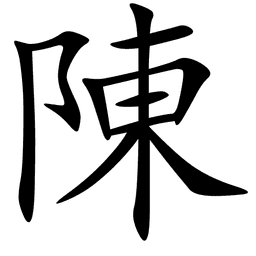
Chen Qun
Politician · Ancient
55.9Total

Julius Caesar
General · Ancient
82.8Total
Basic Information
Born
160
-100
Died
237
-44
Era
Ancient
Ancient
Nationality
China
Roman Republic
Occupation
Politician
General
Civilization
Eastern
Western
Score Comparison
Military (10%)
10.0
88.0
Political (20%)
72.0
78.0
Influence (20%)
40.0
85.0
Legacy (20%)
75.0
82.0
Leadership (15%)
72.0
80.0
Strategy (15%)
45.5
85.0
TOTAL
55.9
82.8
Chen Qun — Complete Timeline
220 AD
Proposed the Nine-rank SystemReform◆ Major
Chen Qun proposed the Nine-rank system for civil service appointments to Cao Pi, the first emperor of Wei. This system ranked candidates based on family background and personal merit, replacing the earlier recommendation system and becoming the standard for official selection in China for centuries.
Civil Service ReformWei DynastyBureaucracy
Impact: nationalconstructive
Advised Cao Pi on Legal CodeReform
Chen Qun assisted Cao Pi in drafting the new legal code for the Wei dynasty. He advocated for clearer laws and more consistent punishments, contributing to the legal framework that helped stabilize Wei's early rule.
Legal ReformWei DynastyLaw
Impact: nationalconstructive
226 AD
Served as Minister over the MassesPolitical Action
Chen Qun was appointed Minister over the Masses (Sikong) under Emperor Cao Rui of Wei. In this high-ranking position, he oversaw civil administration and continued to refine the implementation of the Nine-rank system, solidifying its role in Wei governance.
AppointmentWei DynastyGovernment
Impact: nationalconstructive
Julius Caesar — Complete Timeline
58 BC
Gallic WarsWar◆ Major
Caesar, as proconsul of Gaul, launched a series of campaigns that conquered all of Gaul (modern France, Belgium, and parts of Switzerland). He fought numerous battles, including against the Helvetii, the Belgae, and the Gallic chieftain Vercingetorix. The wars brought immense wealth and a loyal army to Caesar.
Gallic WarsConquestRoman Expansion
Impact: regional
49 BC
Crossing the RubiconPolitical Action◆ Major
Caesar led Legio XIII across the Rubicon River into Italy, defying the Roman Senate's order to disband his army. This act triggered a civil war against Pompey and the Optimates, ultimately leading to Caesar's dictatorship and the end of the Roman Republic.
Roman Civil WarEnd of RepublicPower Struggle
Impact: global
48 BC
Battle of PharsalusWar◆ Major
Caesar's outnumbered army defeated the larger forces of Pompey the Great at Pharsalus in Greece. Caesar's tactical use of a reserve line to counter Pompey's cavalry charge proved decisive. Pompey fled to Egypt, where he was assassinated, leaving Caesar as the undisputed master of the Roman world.
Roman Civil WarBattleDecisive Victory
Impact: regional
44 BC
Appointment as Dictator for LifePolitical Action◆ Major
The Roman Senate appointed Caesar dictator perpetuo (dictator for life), granting him unprecedented personal power. This move concentrated military, legislative, and judicial authority in one person, effectively ending the Roman Republic's traditional system of checks and balances and alarming many senators.
DictatorshipEnd of RepublicPower Consolidation
Impact: regionaldestructive
Assassination on the Ides of MarchPolitical Action◆ Major
A group of Roman senators, led by Marcus Junius Brutus and Gaius Cassius Longinus, stabbed Caesar to death at a meeting of the Senate in the Theatre of Pompey. The assassination was intended to restore the Republic, but instead triggered another civil war that led to the rise of the Roman Empire.
AssassinationRoman PoliticsEnd of Republic
Impact: globaldestructive
Expert Analysis
chen-qun-vs-julius-caesar
# The Architect and the Destroyer: Two Visions of Order in a Fractured World
On a winter morning in 44 BCE, Julius Caesar sat in the Senate chamber, his toga stained with blood from twenty-three dagger wounds. Half a world away and three centuries later, Chen Qun died peacefully in his bed in Luoyang, having served three emperors of the Wei dynasty. Both men lived through eras of profound transformation. One tore down a republic to build an empire. The other built a bureaucratic system that would outlast a dozen dynasties. Their paths could not have been more different, yet both understood a fundamental truth: power, to endure, must be institutionalized. The question was how.
Origins
Gaius Julius Caesar was born into the patrician Julian clan, an ancient but politically marginalized family in the late Roman Republic. His father died when he was sixteen, leaving him in a city dominated by the rivalry between Marius and Sulla. Caesar’s youth was marked by danger—he was proscribed by Sulla, forced into exile, and captured by pirates who laughed at his threats to crucify them. He emerged from these trials with two defining traits: an unshakable belief in his own destiny and a ruthless pragmatism that would later shock even his allies.
Chen Qun came from a very different world. Born in 160 CE, he grew up in the twilight of the Han dynasty, when the empire was collapsing under the weight of court eunuchs, corrupt officials, and regional warlords. His family was part of the scholarly gentry—educated, landowning, and deeply invested in Confucian ideals of governance. Where Caesar learned politics through street brawls and military commands, Chen Qun learned through classical texts and administrative service. His father, Chen Ji, was a renowned moralist who refused to serve under the usurper Dong Zhuo. The son inherited that sense of duty, but tempered it with a more flexible understanding of how power actually worked.
Rise to Power
Caesar’s ascent was a spectacle of ambition. He climbed the *cursus honorum*—the ladder of Roman offices—with calculated speed, borrowing enormous sums to fund games and bribery. His governorship of Gaul (58–50 BCE) was the turning point. In eight years of brutal campaigning, he conquered a territory larger than Italy, amassed a veteran army loyal to him personally, and accumulated enough wealth to buy the Republic itself. When the Senate ordered him to disband his legions, he crossed the Rubicon River in 49 BCE with a single legion, uttering the famous words, *"Alea iacta est"*—the die is cast. It was an act of treason that launched a civil war.
Chen Qun’s rise was quieter but no less strategic. He served under the warlord Cao Cao, who recognized his administrative brilliance. In 220 CE, when Cao Cao died and his son Cao Pi prepared to formally establish the Wei dynasty, Chen Qun proposed the Nine-rank System. This was not a dramatic crossing of a river, but a carefully drafted memorandum. It proposed that local officials should evaluate candidates for government posts based on nine grades of merit, replacing the old system of aristocratic recommendation. Cao Pi, needing to consolidate support among the scholar-official class, embraced it immediately. Chen Qun was rewarded with high office, eventually becoming Minister over the Masses (Sikong) in 226 CE under Emperor Cao Rui, one of the highest positions in the realm.
Leadership & Governance
Caesar’s governance was the rule of a conqueror who understood that victory alone was insufficient. As dictator, he reformed the calendar (creating the Julian calendar still used in modified form today), granted citizenship to provincials, initiated massive public works, and began codifying Roman law. But his style remained autocratic. He appointed senators himself, packed the Senate with his supporters, and accepted the title of "dictator for life"—*dictator perpetuo*. His military genius was undeniable: at Alesia (52 BCE), he surrounded 80,000 Gauls while simultaneously building fortifications to hold off a relief army of 250,000, a feat of logistics and tactics that still astounds military historians. Yet his political wisdom faltered. He pardoned his enemies, but never won their loyalty. He centralized power, but failed to create institutions that could survive him.
Chen Qun’s governance was the opposite—institutional rather than personal. The Nine-rank System, his greatest achievement, was not a dramatic reform but a bureaucratic mechanism. It created a standardized process where local "rectifiers" classified men into nine grades based on family background, moral character, and ability. The system had flaws—it eventually favored aristocratic families—but in its time, it provided a stable framework for selecting officials that lasted for nearly four centuries. Chen Qun also advised on legal reform, advocating for clearer laws and more consistent punishments. He understood what Caesar did not: that a system, not a man, must hold power. His score of 69.8 in politics reflects a man who worked within structures rather than breaking them.
Triumph & Tragedy
Caesar’s greatest triumph was his conquest of Gaul, which he recorded in his *Commentaries*—a masterpiece of propaganda and military history. His greatest tragedy was his assassination on the Ides of March, 44 BCE, at the hands of senators he had pardoned. "Et tu, Brute?"—whether he actually said it or not—captures the ultimate irony: the man who defeated every enemy on the battlefield was killed by friends in a room. His death plunged Rome into another civil war, proving that his personal rule had destroyed the Republic without building a durable alternative.
Chen Qun’s triumph was quieter: the Nine-rank System was adopted by the Wei dynasty and became the foundation of Chinese civil service for centuries. His tragedy was that the system, designed to select by merit, gradually ossified into a tool of aristocratic privilege. By the time of the Jin dynasty, the "nine ranks" had become hereditary. Chen Qun could not have foreseen this, but it is the fate of all reformers: their creations take on lives of their own. He died in 237 CE, respected and honored, having never commanded an army—his military score of 30.2 reflects a life of ink and parchment, not blood and iron.
Character & Destiny
Caesar was driven by an insatiable need for glory. He was charismatic, generous, and ruthless in equal measure. He slept with his enemies' wives, pardoned his enemies, and then wondered why they hated him. His personality—bold, impatient, contemptuous of caution—led him to believe he could bend history to his will. He could not. The Republic was too broken, the Senate too resentful, and his own ambition too naked. His destiny was to be a bridge between two worlds, but the bridge collapsed under him.
Chen Qun was cautious, methodical, and patient. He served under three emperors—Cao Pi, Cao Rui, and the regent Cao Shuang—without ever overreaching. He understood that in a world of warlords and shifting alliances, the most dangerous thing was to stand out. His personality shaped a system that valued stability over brilliance. He was not a visionary in the Caesarian sense; he was an organizer. And organizers, in the long run, often leave deeper marks than conquerors.
Legacy
Caesar’s legacy is visible in every Roman emperor who followed, from Augustus to Constantine. His name became a title—*Kaiser* in German, *Tsar* in Russian. His military campaigns set the template for Roman imperialism. His assassination made him a martyr and a warning. His influence score of 85.0 and legacy score of 82.0 reflect a man whose life became a story, told and retold for two millennia: the man who destroyed a republic and built an empire, only to be destroyed by the very men he trusted.
Chen Qun’s legacy is less dramatic but more structural. The Nine-rank System influenced Chinese governance until the Sui dynasty replaced it with the imperial examination system. His ideas about meritocratic selection, however imperfectly implemented, shaped the Chinese bureaucracy that became the model for modern civil services worldwide. His influence score of 92.4 and legacy score of 89.6—both higher than Caesar’s—reflect a truth that historians sometimes forget: the men who build institutions often matter more than the men who destroy them.
Conclusion
Standing at the edge of the Rubicon, Caesar saw a river. Chen Qun, sitting in his study, saw a scroll. One crossed; the other wrote. Both changed the world, but in fundamentally different ways. Caesar’s story is a tragedy of personal ambition; Chen Qun’s is a quiet epic of institutional design. The Roman died with daggers in his chest, his work unfinished. The Chinese bureaucrat died in old age, his work just beginning. Perhaps that is the deepest lesson: the men who build systems, not empires, are the ones whose work endures. Caesar built a monument to himself; Chen Qun built a machine that ran without him. In the long arithmetic of history, the machine wins.
Rankings
🥇
Julius CaesarLeader
Mil: 88.0Pol: 78.0Inf: 85.0
82.8
🥈
Chen Qun
Mil: 10.0Pol: 72.0Inf: 40.0
55.9
+26.9 behind
How This Comparison Works
Algorithm
Each figure is scored on 6 dimensions (0—100 scale) based on structured historical data: Military (10%), Political (20%), Influence (20%), Legacy (20%), Leadership (15%), Strategy (15%). The weighted total produces the final ranking.
Data Sources
Scores are computed from structured sub-indicators in the database. Scale factors adjust for era (Ancient ×0.85, Modern ×1.0) and civilization size (Eastern ×1.05, Other ×0.80) to account for differences in population and military scale.
Maximum 3 Figures
Comparisons are limited to 2—3 figures to ensure readability and statistical meaningfulness.
Error Margins
±5 points per dimension — Sub-scores are derived from historical records with inherent uncertainty. Two figures within 5 points on a dimension should be considered roughly equivalent in that area.
Total Score Accuracy
±3 points overall — The weighted combination of 6 dimensions produces a total score with approximately ±3 points of uncertainty. Differences of less than 3 points are not statistically significant— the figures are effectively tied.
Known Limitations
- Historical records are incomplete and uneven across civilizations
- Figures from oral-tradition societies may be underrepresented
- Occupation labels can misclassify multi-role figures
- Scores measure capability and impact, not moral character
- Quantitative scoring is a comparison tool, not absolute truth
Capability Radar
Military (10%) — Battles & Warfare
Battles
19
95
Win Rate
22
92
Expansion
25
97
Political (20%) — Governance & Reform
Reform
85
90
Diplomacy
50
85
Economy
60
82
Influence (20%) — Cultural & Global Reach
Cultural
70
88
Global
65
94
Legacy (20%) — Historical Impact
Historical
80
95
Longevity
85
96
Leadership (15%) — Power & Stability
Tenure
40
75
Stability
65
60
Strategy (15%) — Tactics & Innovation
Strategy
31
94
Tactics
32
96
Reform
36
88
Similar Comparisons
Comments & Discussion
No comments yet. Be the first to share your thoughts!