Loading...
Chen Qun vs J. B. M. Hertzog
J. B. M. Hertzog leads by 0.2 pts · 2 figures compared
…
Chen Qun
Politician · Ancient
55.9Total
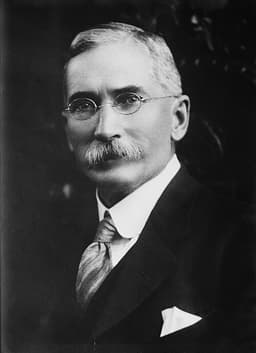
J. B. M. Hertzog
General · Modern
56.1Total
Basic Information
Born
160
1866
Died
237
1942
Era
Ancient
Modern
Nationality
China
South Africa
Occupation
Politician
General
Civilization
Eastern
Other
Score Comparison
Military (10%)
10.0
25.0
Political (20%)
72.0
60.0
Influence (20%)
40.0
56.7
Legacy (20%)
75.0
50.0
Leadership (15%)
72.0
79.8
Strategy (15%)
45.5
60.0
TOTAL
55.9
56.1
Chen Qun — Complete Timeline
220 AD
Proposed the Nine-rank SystemReform◆ Major
Chen Qun proposed the Nine-rank system for civil service appointments to Cao Pi, the first emperor of Wei. This system ranked candidates based on family background and personal merit, replacing the earlier recommendation system and becoming the standard for official selection in China for centuries.
Civil Service ReformWei DynastyBureaucracy
Impact: nationalconstructive
Advised Cao Pi on Legal CodeReform
Chen Qun assisted Cao Pi in drafting the new legal code for the Wei dynasty. He advocated for clearer laws and more consistent punishments, contributing to the legal framework that helped stabilize Wei's early rule.
Legal ReformWei DynastyLaw
Impact: nationalconstructive
226 AD
Served as Minister over the MassesPolitical Action
Chen Qun was appointed Minister over the Masses (Sikong) under Emperor Cao Rui of Wei. In this high-ranking position, he oversaw civil administration and continued to refine the implementation of the Nine-rank system, solidifying its role in Wei governance.
AppointmentWei DynastyGovernment
Impact: nationalconstructive
J. B. M. Hertzog — Complete Timeline
1899 AD
Boer War GeneralWar◆ Major
Hertzog served as a Boer general in the Second Boer War, commanding forces in the Orange Free State. He participated in several battles and became a prominent Afrikaner military leader.
Second Boer WarGeneralMilitary
Impact: regional
1914 AD
Founded the National PartyPolitical Action
Hertzog broke away from the South African Party and founded the National Party, which championed Afrikaner nationalism and opposed British imperial influence. The party would later implement apartheid.
National PartyAfrikaner NationalismFounding
Impact: nationalconstructive
1924 AD
Prime Minister of South AfricaPolitical Action◆ Major
Hertzog became Prime Minister after his National Party won the general election in coalition with the Labour Party. His government implemented policies to protect white workers and promote Afrikaner interests, including the 'civilized labour' policy.
Prime MinisterAfrikaner RightsLabour Policy
Impact: national
1934 AD
Merged with Smuts to Form United PartyPolitical Action◆ Major
Hertzog merged his National Party with Jan Smuts' South African Party to form the United Party. The coalition aimed to address the economic crisis of the Great Depression and promote national unity, but it alienated hardline Afrikaner nationalists.
United PartyCoalitionNational Unity
Impact: nationalconstructive
1936 AD
Passed the Representation of Natives ActReform◆ Major
Hertzog's government passed the Representation of Natives Act, which removed Black voters from the common voters' roll in the Cape Province and allowed them to elect white representatives instead. This further entrenched racial segregation.
SegregationDisenfranchisementLegislation
Impact: nationaldestructive
1939 AD
Resigned Over Neutrality in WWIIPolitical Action◆ Major
Hertzog advocated for South African neutrality in World War II, but his cabinet voted to enter the war on the Allied side. He resigned as Prime Minister and was succeeded by Jan Smuts, splitting the United Party.
World War IINeutralityResignation
Impact: national
Expert Analysis
Chen Qun vs J. B. M. Hertzog
### The Architect and the General: How Two Men Shaped Nations Through Order and Identity
On the surface, a Chinese bureaucrat from the third century and a South African general from the early twentieth century share little common ground. One spent his life refining the machinery of imperial governance, the other leading commandos across the veld. Yet Chen Qun and J. B. M. Hertzog both confronted a fundamental question of their times: how to build a stable society out of chaos. One answered with a system of merit, the other with a vision of ethnic solidarity. Their choices, born of different eras and different pressures, left marks that outlasted their own ambitions.
**Origins**
Chen Qun grew up in the twilight of the Han dynasty, a time when the great empire was crumbling into warlord fiefdoms. Born in 160 into a family of scholar-officials, he absorbed the Confucian ideals of order, hierarchy, and moral governance. His father had served the Han court, and young Chen was trained in the classics, learning that the health of a state depended on selecting the right men for office. The chaos around him—rebellions, warlord battles, the burning of the capital—made him yearn for stability through structure.
James Barry Munnik Hertzog was born in 1866 in the Cape Colony, a world shaped by British imperialism and the bitter memory of the Great Trek. His family were Boer farmers, fiercely independent and deeply resentful of British rule. Hertzog studied law in the Netherlands, but his heart remained with the Afrikaner people. When the Second Boer War erupted in 1899, he took up arms not as a soldier of an empire, but as a general of a republic fighting for survival. The war ended in defeat, and the sight of Boer women and children in British concentration camps burned into him a lifelong commitment to Afrikaner rights.
**Rise to Power**
Chen Qun’s path was that of the civil servant. He served under the warlord Cao Cao, who valued talent over noble birth. In 220, when Cao Cao’s son Cao Pi usurped the Han throne to found the Wei dynasty, Chen Qun seized the moment. He proposed the Nine-rank System, a method for selecting officials that rated candidates on their abilities and character, rather than simply their family connections. Cao Pi adopted it, and Chen Qun rose to become Minister over the Masses in 226, one of the highest offices in the land. His power came not from armies, but from the authority of a well-designed system.
Hertzog’s rise was forged in war and politics. After the Boer defeat in 1902, he entered politics to fight for Afrikaner interests within the new Union of South Africa. In 1914, frustrated with the conciliatory policies of Jan Smuts and the South African Party, he broke away to found the National Party. His message was simple: Afrikaners must unite to protect their language, their culture, and their rights against British dominance. The 1924 election brought him to power as Prime Minister, leading a coalition with the Labour Party. He had become the voice of a people who feared being swallowed by the British Empire.
**Leadership & Governance**
Chen Qun governed through systems, not speeches. The Nine-rank System was his masterpiece: local officials would assess candidates into nine grades, and those grades would determine their eligibility for office. It was an attempt to institutionalize meritocracy, to ensure that the best minds served the state. He also helped draft a new legal code for Wei, advocating for clear, consistent laws that could be applied fairly. His leadership was quiet, bureaucratic, but profoundly influential—he shaped the very structure of Chinese governance for centuries.
Hertzog governed through identity and power. As Prime Minister, he entrenched Afrikaans as an official language, protected white farmers with subsidies, and passed laws that systematically disenfranchised Black South Africans. His 1936 Representation of Natives Act removed Black voters from the common roll, a decisive step toward the apartheid system that would follow. Yet he also sought unity among white South Africans, merging his National Party with Smuts’ South African Party in 1934 to form the United Party. It was a pragmatic move, designed to strengthen white political dominance while papering over the bitter divisions between Boer and Briton.
**Triumph & Tragedy**
Chen Qun’s greatest triumph was the Nine-rank System itself. It spread beyond Wei to become the standard for civil service selection across China for nearly four centuries, influencing the later imperial examination system. Its tragedy was that meritocracy could never fully escape the pull of privilege—over time, the system became corrupted by powerful families who manipulated the rankings for their own benefit. Chen Qun died in 237, having seen his creation work, but unable to prevent its eventual decay.
Hertzog’s triumph was giving Afrikaners a political voice and a sense of national pride. His tragedy came in 1939, when World War II divided his cabinet. Hertzog, remembering British betrayal and the horrors of the Boer War, argued for neutrality. His cabinet voted to join the Allied side. He resigned, broken, and died in 1942, a man out of step with the global fight against fascism. His legacy of racial division, however, outlasted him, laying the groundwork for a system that would isolate South Africa from the world.
**Character & Destiny**
Chen Qun was a man of order, a rationalist who believed that good institutions could tame human chaos. His personality was cautious, methodical, and patient—he worked within the system to change the system. Hertzog was a man of passion, a fighter who saw the world as a struggle between peoples. His personality was defiant, proud, and uncompromising—he led by conviction, not consensus. One built a ladder for talent; the other built a wall for his tribe.
**Legacy**
Today, Chen Qun is remembered as a visionary administrator, his Nine-rank System a milestone in the long history of Chinese bureaucracy. Historians rate his influence and legacy among the highest of his era. Hertzog is remembered as a founder of Afrikaner nationalism, but also as an architect of racial segregation. His legacy is contested: some honor him as a defender of a people, others condemn him as a father of apartheid. Both men shaped their nations, but in opposite directions—one toward a system that sought to judge individuals by their merit, the other toward a system that judged them by their blood.
**Conclusion**
Chen Qun and J. B. M. Hertzog never met, never exchanged a word. Yet their lives illuminate a timeless tension in statecraft: whether to build a society on the principle of equal opportunity or on the defense of a particular identity. The Chinese bureaucrat believed that if you designed the right ladder, the best would climb. The Boer general believed that if you did not guard your own, you would be crushed. Both were partly right, and both were partly wrong. Their stories remain, not as simple lessons, but as mirrors held up to the choices that still confront every nation.
Rankings
🥇
J. B. M. HertzogLeader
Mil: 25.0Pol: 60.0Inf: 56.7
56.1
🥈
Chen Qun
Mil: 10.0Pol: 72.0Inf: 40.0
55.9
+0.2 behind
How This Comparison Works
Algorithm
Each figure is scored on 6 dimensions (0—100 scale) based on structured historical data: Military (10%), Political (20%), Influence (20%), Legacy (20%), Leadership (15%), Strategy (15%). The weighted total produces the final ranking.
Data Sources
Scores are computed from structured sub-indicators in the database. Scale factors adjust for era (Ancient ×0.85, Modern ×1.0) and civilization size (Eastern ×1.05, Other ×0.80) to account for differences in population and military scale.
Maximum 3 Figures
Comparisons are limited to 2—3 figures to ensure readability and statistical meaningfulness.
Error Margins
±5 points per dimension — Sub-scores are derived from historical records with inherent uncertainty. Two figures within 5 points on a dimension should be considered roughly equivalent in that area.
Total Score Accuracy
±3 points overall — The weighted combination of 6 dimensions produces a total score with approximately ±3 points of uncertainty. Differences of less than 3 points are not statistically significant— the figures are effectively tied.
Known Limitations
- Historical records are incomplete and uneven across civilizations
- Figures from oral-tradition societies may be underrepresented
- Occupation labels can misclassify multi-role figures
- Scores measure capability and impact, not moral character
- Quantitative scoring is a comparison tool, not absolute truth
Capability Radar
Military (10%) — Battles & Warfare
Battles
19
45
Win Rate
22
40
Expansion
25
20
Political (20%) — Governance & Reform
Reform
85
60
Diplomacy
50
55
Economy
60
50
Influence (20%) — Cultural & Global Reach
Cultural
70
50
Global
65
45
Legacy (20%) — Historical Impact
Historical
80
55
Longevity
85
40
Leadership (15%) — Power & Stability
Tenure
40
65
Stability
65
45
Strategy (15%) — Tactics & Innovation
Strategy
31
50
Tactics
32
45
Reform
36
30
Similar Comparisons
Comments & Discussion
Veldfilosoof6/16/2026
Hertzog's obsession with ethnic purity wasn't some quaint ideal—it was a deliberate wrecking ball. By pushing bilingualism and separate development, he literally laid the legal foundation for apartheid. Meanwhile, Chen Qun's merit-based nine-rank system, for all its flaws, at least tried to break aristocratic monopolies. One built a ladder; the other built a wall. History remembers which lasted longer—and which left deeper scars.
秩爵判官6/16/2026
说赫佐格和群哥能相提并论?笑话!曹魏的九品官人法好歹是为了从乱世里捞人才,虽然最后被士族玩成了门阀游戏,初衷总归是“唯才是举”。赫佐格那套“两种流”政策根本就是赤裸裸的种族隔离前身,把南非硬生生割成两个世界。一个是制度的理想主义,一个是排外的现实政治,拿什么比?
Gatvol Boer6/16/2026
You armchair historians conveniently forget: Hertzog was fighting for survival of his people after the British burned Boer farms and shoved women into concentration camps. Chen Qun was arranging kiss-ass bureaucrats for a warlord. One man defended his Volk against genocide-lite; the other perfected nepotism with Confucian gloss. Don't moralize from your safe seats—Hertzog's 'ethnic solidarity' was trauma, not theory.
历史拆解师6/16/2026
别被“治国”两个字骗了。陈群的九品中正制本质上是一场政治技术革命——把地方豪强的推荐权收归中央,用标准化的考核压制军阀化的分权。赫佐格的“布尔民族主义”则是反技术、反中央的:他要的是德兰士瓦的粗犷自治,拒绝英国化、拒绝工业化、甚至拒绝现代经济。一个在打造官僚帝国,一个在保卫田园牧歌。谁更“进步”?看你站哪边了。
Historian6316/16/2026
Speaking of metrics: the nine-rank system had 9 grades with sub-ranks, supposedly evaluating talent, virtue, and family background. But by the Western Jin, over 90% of high officials came from a handful of clans. Hertzog's policies? He pushed the 1913 Natives Land Act through Parliament—limiting black land ownership to 7% of South Africa. Both systems promised order; both delivered entrenchment of the ruling class. Same structural outcome, different cultural paint.