Loading...
Chen Qun vs Francisco Morazan
Francisco Morazan leads by 2.1 pts · 2 figures compared
…
Chen Qun
Politician · Ancient
55.9Total
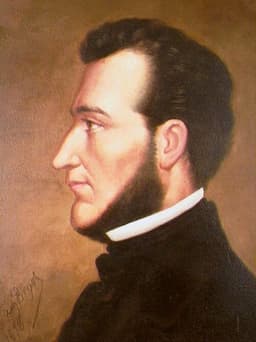
Francisco Morazan
General · Modern
58.0Total
Basic Information
Born
160
1792
Died
237
1842
Era
Ancient
Modern
Nationality
China
Honduras
Occupation
Politician
General
Civilization
Eastern
Western
Score Comparison
Military (10%)
10.0
52.5
Political (20%)
72.0
60.0
Influence (20%)
40.0
62.0
Legacy (20%)
75.0
50.0
Leadership (15%)
72.0
68.0
Strategy (15%)
45.5
55.0
TOTAL
55.9
58.0
Chen Qun — Complete Timeline
220 AD
Proposed the Nine-rank SystemReform◆ Major
Chen Qun proposed the Nine-rank system for civil service appointments to Cao Pi, the first emperor of Wei. This system ranked candidates based on family background and personal merit, replacing the earlier recommendation system and becoming the standard for official selection in China for centuries.
Civil Service ReformWei DynastyBureaucracy
Impact: nationalconstructive
Advised Cao Pi on Legal CodeReform
Chen Qun assisted Cao Pi in drafting the new legal code for the Wei dynasty. He advocated for clearer laws and more consistent punishments, contributing to the legal framework that helped stabilize Wei's early rule.
Legal ReformWei DynastyLaw
Impact: nationalconstructive
226 AD
Served as Minister over the MassesPolitical Action
Chen Qun was appointed Minister over the Masses (Sikong) under Emperor Cao Rui of Wei. In this high-ranking position, he oversaw civil administration and continued to refine the implementation of the Nine-rank system, solidifying its role in Wei governance.
AppointmentWei DynastyGovernment
Impact: nationalconstructive
Francisco Morazan — Complete Timeline
1824 AD
Abolition of slavery in Central AmericaReform◆ Major
As a key leader in the liberal movement, Moraz
AbolitionSlaveryLiberal Reform
Impact: regionalprogressive
1827 AD
Battle of La TrinidadWar◆ Major
Morazán led a liberal army to victory against conservative forces at La Trinidad, Honduras. This battle was a key turning point in the Central American civil war, allowing Morazán to consolidate power and eventually become president of the federation.
BattleLiberal VictoryCivil War
Impact: regional
1830 AD
Presidency of the Federal Republic of Central AmericaPolitical Action
Morazán was elected president of the Federal Republic of Central America, a union of Guatemala, El Salvador, Honduras, Nicaragua, and Costa Rica. He pursued liberal reforms including separation of church and state, free trade, and land reform, facing opposition from conservatives.
Federal RepublicLiberal ReformsCentral America
Impact: regionalconstructive
1842 AD
Execution by firing squadPolitical Action
After a failed attempt to restore the Federal Republic, Moraz
ExecutionEnd of FederationLiberal Defeat
Impact: regionaltragic
Expert Analysis
Chen Qun vs Francisco Morazan
The Paper and the Sword
On a summer day in 220 AD, a Chinese official named Chen Qun presented a scroll to Emperor Cao Pi. On it was written a new system for selecting government officials—not by birth, but by merit, evaluated through nine grades of talent. Half a world away and sixteen centuries later, in 1842, General Francisco Morazán faced a firing squad in Costa Rica, his dream of a united Central America dying with him. One man built a bureaucratic machine that would outlast dynasties; the other fought for a federation that crumbled in his hands. Both were reformers. Both sought to reshape their worlds. Why did one succeed where the other failed?
Origins
Chen Qun was born in 160 AD into the twilight of the Han Dynasty, a time when corruption and rebellion had hollowed out the empire. His family were scholars and officials—men who understood that the old system of patronage, in which noble families handed out posts to their sons, was rotting the state from within. Chen Qun grew up watching warlords tear China apart. He learned early that order required institutions, not just strongmen.
Francisco Morazán was born in 1792 in Tegucigalpa, Honduras, on the eve of Latin America’s wars of independence. His world was one of collapsing Spanish rule and rising local caudillos—military strongmen who ruled through personal loyalty. Morazán’s father was a merchant, not a noble, and the young man absorbed the liberal ideas sweeping the Atlantic: freedom, equality, and the belief that constitutions could remake societies. His era was one of revolution; Chen Qun’s was one of restoration.
Rise to Power
Chen Qun entered history not on a battlefield but in a council chamber. He served under Cao Cao, the brilliant warlord who had unified northern China, and later under Cao Cao’s son, Cao Pi. His key moment came in 220, when Cao Pi declared himself emperor of the new Wei dynasty. Chen Qun proposed the Nine-rank System: local officials would rate candidates for office on a scale from one to nine, based on talent and conduct. It was a quiet revolution, enacted with ink and edicts.
Morazán’s rise was louder. In 1827, he led a ragged liberal army to victory at the Battle of La Trinidad, a turning point in Central America’s civil wars. He rode into Guatemala City as a conqueror, and by 1830 he was president of the Federal Republic of Central America—a union of five states that had broken from Spain. His power came from the sword, not the scroll.
Leadership & Governance
Chen Qun governed as a builder of systems. As Minister over the Masses under Emperor Cao Rui from 226 onward, he helped draft a clearer legal code and insisted that laws be applied consistently, even to the powerful. His Nine-rank System was not perfect—it eventually favored aristocratic families—but it created a framework for merit-based selection that China would use for centuries. He was a politician who understood that lasting power lies in procedures, not personalities.
Morazán governed as a crusader. He abolished slavery in 1824, ended church privileges, promoted education, and tried to create a unified Central American state with a single legal system. But his reforms alienated conservatives, the clergy, and local strongmen who preferred their own fiefdoms. He fought war after war to hold the federation together, winning battles but losing the peace. His leadership was charismatic but brittle—it depended on his presence, not on institutions.
Triumph & Tragedy
Chen Qun’s triumph was the Nine-rank System itself. It outlived the Wei dynasty, persisting through the Jin and into the Tang, shaping how China selected its rulers for over three centuries. His tragedy was personal and quiet: he died in 237, having seen his system begin to calcify into a new aristocracy, much like the one it was meant to replace.
Morazán’s triumph was his vision. For a brief decade, he made a united Central America seem possible. His tragedy was total. By 1840, the federation had dissolved into warring states. He fled into exile, attempted a comeback, and was captured in Costa Rica. In 1842, he was executed by firing squad. His last words reportedly were: “I die with the conviction that my death will serve the cause of liberty.”
Character & Destiny
Chen Qun was patient, methodical, and cautious. He worked within the system, bending it slowly toward his ideals. His personality matched his era—a time when empire needed repair, not reinvention. Morazán was bold, idealistic, and impatient. He believed that a better world could be built quickly, by force if necessary. His personality matched his era too—a time when everything seemed possible, and nothing was stable.
Their different fates were not just a matter of skill but of context. Chen Qun built for a China that craved order after chaos. Morazán fought for a Central America torn between old hierarchies and new freedoms, where no single vision could hold. Chen Qun’s reforms were adopted by a strong emperor; Morazán’s were resisted by entrenched interests. One man’s system survived because it served the state; the other’s dream died because it challenged too many powers at once.
Legacy
Today, Chen Qun is remembered as a quiet architect of Chinese bureaucracy. His Nine-rank System is studied as an early attempt to institutionalize meritocracy, even if it later failed. Morazán is a hero to liberals across Central America, his face on currency and his name on streets. But his federation never returned. His legacy is a warning: that reform without institutional roots can be swept away.
Conclusion
Chen Qun and Francisco Morazán both believed that society could be improved by deliberate human action. One wrote a system; the other led a revolution. The paper outlasted the sword. But both understood something essential: that the work of building a just order is never finished. Their lives remind us that reform is a conversation between vision and patience—and that the most enduring changes are often the quietest.
Rankings
🥇
Francisco MorazanLeader
Mil: 52.5Pol: 60.0Inf: 62.0
58.0
🥈
Chen Qun
Mil: 10.0Pol: 72.0Inf: 40.0
55.9
+2.1 behind
How This Comparison Works
Algorithm
Each figure is scored on 6 dimensions (0—100 scale) based on structured historical data: Military (10%), Political (20%), Influence (20%), Legacy (20%), Leadership (15%), Strategy (15%). The weighted total produces the final ranking.
Data Sources
Scores are computed from structured sub-indicators in the database. Scale factors adjust for era (Ancient ×0.85, Modern ×1.0) and civilization size (Eastern ×1.05, Other ×0.80) to account for differences in population and military scale.
Maximum 3 Figures
Comparisons are limited to 2—3 figures to ensure readability and statistical meaningfulness.
Error Margins
±5 points per dimension — Sub-scores are derived from historical records with inherent uncertainty. Two figures within 5 points on a dimension should be considered roughly equivalent in that area.
Total Score Accuracy
±3 points overall — The weighted combination of 6 dimensions produces a total score with approximately ±3 points of uncertainty. Differences of less than 3 points are not statistically significant— the figures are effectively tied.
Known Limitations
- Historical records are incomplete and uneven across civilizations
- Figures from oral-tradition societies may be underrepresented
- Occupation labels can misclassify multi-role figures
- Scores measure capability and impact, not moral character
- Quantitative scoring is a comparison tool, not absolute truth
Capability Radar
Military (10%) — Battles & Warfare
Battles
19
55
Win Rate
22
60
Expansion
25
40
Political (20%) — Governance & Reform
Reform
85
70
Diplomacy
50
45
Economy
60
50
Influence (20%) — Cultural & Global Reach
Cultural
70
45
Global
65
35
Legacy (20%) — Historical Impact
Historical
80
50
Longevity
85
40
Leadership (15%) — Power & Stability
Tenure
40
55
Stability
65
30
Strategy (15%) — Tactics & Innovation
Strategy
31
55
Tactics
32
50
Reform
36
45
Similar Comparisons
Comments & Discussion
Historian5096/16/2026
Both men embody Plato's philosopher-king dilemma. Chen Qun, like a Confucian Aristotle, wrote the rules for a stable polis—the nine ranks are essentially his "Politics" in action. Morazán, more like Alexander, tried to weld warring states into one empire. Plato would have sided with Chen Qun: better a well-ordered hierarchy than a glorious failure. But Aristotle might have noted that Morazán's federation had more actual citizen participation, however brief.|en|柏拉图的哲学家王问题:陈群是书斋里的老子,用九品中正给帝国编了张永动机
Historian4466/16/2026
Morazán died young, but his institutions lived longer than Chen Qun's. Central American Federation lasted 16 years; the nine-rank system was abolished in 605 AD—that's 385 years of bureaucratic inertia. Morazán's military campaigns united five states temporarily; Chen Qun's paper reform entrenched regional elites for four centuries. Who had more actual impact on human lives? The general who died with his boots on, not the clerk who taught nepotism to wear a uniform.|en|莫拉桑的联邦昙花一现?九品中正可是苟延残喘到隋朝,整
Chronicler12246/16/2026
Chen Qun's nine-rank system wasn't a meritocracy—it was a codified oligarchy. He literally graded families, not individuals. Compare that to Morazán, who abolished slavery and religious privileges with the same liberal pen. Morazán lost because he fought entrenched powers; Chen Qun won because he gave them a ladder. The real question: why do we call the bureaucrat a success? He just painted the old cage a new color.|en|你管九品中正叫才能选拔?那是给士族量身定做的电梯!陈群把人才分九等,可考官全是地方豪强。莫拉桑废除奴隶制的时候,他在给地主发终身执照。一个用纸锁住王朝,一
Chronicler81546/16/2026
Let's stop romanticizing the nine-rank system. It was a political hack job—Chen Qun's family had been Han officials for generations,